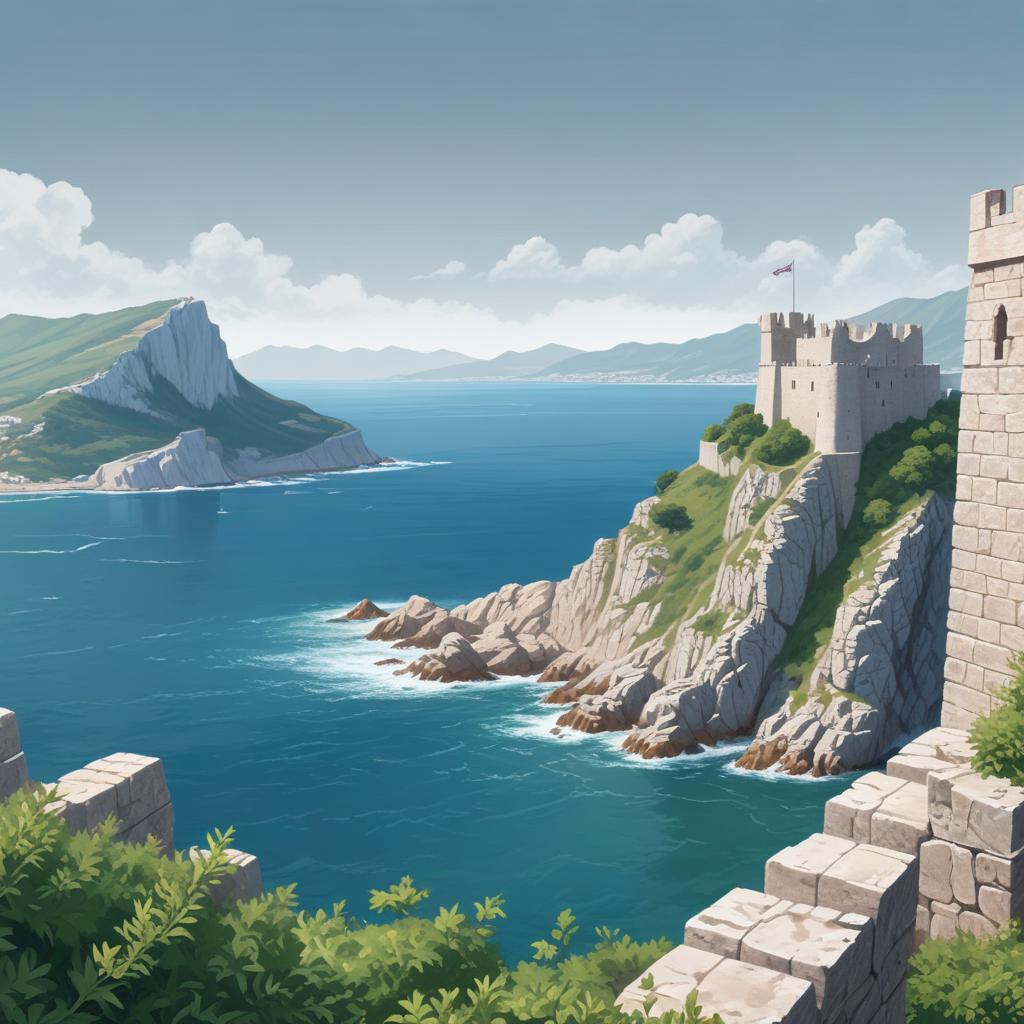
Historical Background of Gibraltar and Decolonization
Gibraltar, a rocky peninsula located at the southern tip of the Iberian Peninsula, has a rich and complex history that dates back centuries. It is a British Overseas Territory known widely for its strategic location at the entrance to the Mediterranean Sea. The history of Gibraltar is deeply intertwined with the broader history of European colonialism and the global movements for decolonization that emerged in the 20th century.
The identity of Gibraltar as a British territory began in 1713, following the Treaty of Utrecht, during which Spain ceded the territory to Great Britain. Since then, Gibraltar’s status has been a subject of contention, especially between Britain and Spain. During the colonial era, Gibraltar developed as a crucial naval base and military outpost for the British Empire, playing a vital role in various conflicts including the Napoleonic Wars and both World Wars. Its significance as a military stronghold contributed to the British intent to retain control despite shifting political landscapes.
The decolonization history of Gibraltar diverges from many other territories that gained independence during the mid-20th century. While numerous colonies around the world moved towards sovereignty, Gibraltar maintained a unique path. This was largely due to the geopolitical importance of its location and the preferences expressed by its residents, who repeatedly voted in referendums to remain under British sovereignty rather than becoming part of Spain. These expressions of local will became a defining factor in Gibraltar’s political status amid the global decolonization wave.
Key moments in the history of Gibraltar during the decolonization era include the border closures imposed by Spain in the late 1960s and early 1970s, which sought to pressure Gibraltar politically and economically. Despite these challenges, Gibraltar’s community showed resilience and a strong desire to maintain its identity as a British Overseas Territory. The ongoing debates and negotiations surrounding Gibraltar’s sovereignty have continued into the 21st century, reflecting the complex legacy of colonialism and the continuing strategic importance of Gibraltar in international relations.
Overall, the historical background of Gibraltar reveals a story marked by its colonial past, the strategic imperatives of empire, and the assertive will of its people amidst global movements for decolonization. This makes Gibraltar not only a unique case study in British colonial history but also an enduring example of how colonial legacies continue to influence contemporary geopolitics.
Gibraltar’s Colonial Establishment and Strategic Importance
Gibraltar’s colonization by the British Empire began in 1704, during the War of the Spanish Succession, when Anglo-Dutch forces captured the territory from Spain. Its strategic location at the southern tip of the Iberian Peninsula positioned Gibraltar as a vital naval base controlling access between the Atlantic Ocean and the Mediterranean Sea. This commanding position allowed the British Empire to monitor and control maritime traffic, providing a critical military advantage that has persisted throughout history.
The military significance of Gibraltar stemmed largely from its commanding views over the Strait of Gibraltar, one of the world’s most important natural chokepoints. Holding this fortress allowed Britain not only to secure its maritime trade routes but also to project power into the Mediterranean region and beyond. Gibraltar’s fortifications were continually strengthened over the centuries, reflecting its value as a key military outpost within the British Empire.
Moreover, the British colonization of Gibraltar provided a secure naval dockyard and resupply station for the Royal Navy, reinforcing its role in maintaining global maritime dominance. Gibraltar colonization was thus not merely a territorial acquisition; it was a calculated military and geopolitical move that underscored its enduring strategic location. Even today, Gibraltar remains a symbol of British military presence and influence in this crucial part of the world.
Global Decolonization Trends Post-World War II
The period following World War II marked a significant acceleration in post-war decolonization worldwide, reshaping the political landscape and redefining sovereignty. The devastation of the war weakened colonial powers and galvanized colonized peoples to intensify their demands for independence and self-determination. The United Nations played a pivotal role in promoting decolonization efforts by establishing frameworks and resolutions aimed at facilitating the transition from colonial rule to autonomous governance.
The UN decolonization efforts included the creation of the Special Committee on Decolonization, which monitored and supported territories aspiring to achieve colonial independence. This was complemented by the adoption of the Declaration on the Granting of Independence to Colonial Countries and Peoples in 1960, which underscored the right of all peoples to self-determination. Such global initiatives influenced various dependencies and territories, highlighting the imperative of ending colonial domination.
In the context of Gibraltar, these global trends intersected with local realities. Unlike many other territories moving toward full independence, Gibraltar’s status as a British Overseas Territory complicated the straightforward application of decolonization principles. The rise of self-determination movements globally encouraged Gibraltarians to assert their own political will, balancing between continued association with the UK and the aspirations of neighboring Spain. Hence, Gibraltar’s experience reflects the complexities inherent in the broader post-war decolonization wave.
The Political Status of Gibraltar in the Decolonization Era
During the decolonization era, Gibraltar’s political status was a subject of intense debate and diplomatic tension, primarily revolving around issues of sovereignty and governance. Gibraltar, a British Overseas Territory located at the southern tip of the Iberian Peninsula, found itself at the center of conflicting claims, especially from Spain, which asserted its right over the territory. The question of Gibraltar sovereignty became a focal point not only in local governance but also in international relations between the United Kingdom and Spain.
The era saw a series of referendums aimed at determining the will of the Gibraltarian people concerning their political future. These referendums underscored the population’s strong preference to remain under British governance rather than be integrated into Spain. The decisive votes demonstrated the inhabitants’ desire to maintain their distinct political identity and resist pressures from Spain, which pursued a persistent diplomatic campaign to regain control over Gibraltar.
Spain’s claims to Gibraltar were rooted in historical arguments and regional geopolitical interests. The Spanish government frequently raised the issue at international forums, insisting that the territory’s status should be resolved in accordance with decolonization principles and territorial integrity. However, British governance emphasized the importance of respecting the wishes of the local population, asserting that any change in sovereignty required their consent. This stance was reinforced by the outcomes of the referendums, which repeatedly rejected Spanish sovereignty.
Throughout the decolonization period, Gibraltar was also a symbol of broader struggles over colonial legacies and national identities. The sovereignty debates were not merely about territorial control but also about self-determination and the rights of the Gibraltarian people. Diplomatic tensions between Britain and Spain occasionally escalated, including border restrictions and disputes in bilateral talks, highlighting how Gibraltar’s status remained an unresolved and sensitive issue.
In summary, the political situation of Gibraltar during the decolonization era was characterized by a complex interplay of local referendums reflecting Gibraltarian sentiment, ongoing sovereignty debates, and persistent diplomatic friction with Spain. These dynamics ultimately underscored the territory’s unique position and the challenges involved in balancing competing national interests and the will of the people under British governance.
Sovereignty Disputes and International Diplomacy
The Gibraltar sovereignty dispute represents a significant point of contention in UK-Spain relations, rooted in historical claims and national identity. The United Kingdom maintains sovereignty over Gibraltar, having controlled the territory since 1713 following the Treaty of Utrecht. Spain, however, continues to assert its claim, arguing that Gibraltar should be returned to Spanish rule as part of its territorial integrity. This dispute has often complicated diplomatic interactions between the two countries.
International diplomacy has played a crucial role in attempting to resolve or at least manage the tensions surrounding Gibraltar. Both the UK and Spain have engaged in numerous bilateral diplomatic negotiations aimed at addressing sovereignty concerns, border controls, and cooperation on economic and security matters. These discussions frequently highlight the complexities of balancing national interests with the rights and wishes of Gibraltar’s residents, who overwhelmingly prefer to remain under British sovereignty.
Furthermore, the United Nations has been involved in the Gibraltar sovereignty dispute through its decolonization agenda. The UN Special Committee on Decolonization regularly examines the status of Gibraltar, promoting dialogue and urging respect for the principle of self-determination. However, the UK and Spain often differ in their interpretations of this principle as applied to Gibraltar, which complicates the Committee’s efforts.
Overall, the Gibraltar sovereignty dispute remains a delicate issue within international diplomacy. While the United Nations encourages peaceful resolution and respect for the democratic will of Gibraltar’s population, the ongoing diplomatic negotiations between the UK and Spain continue to reflect the deep-rooted and multifaceted nature of this territorial conflict.
Gibraltarian Identity and Referendums on Sovereignty
The Gibraltarian population has played a crucial role in asserting their unique identity and desire for autonomy through a series of self-determination referendums. These referendums have repeatedly demonstrated the community’s strong opposition to any proposed sovereignty changes by either Spain or the United Kingdom, underscoring the resilient spirit of Gibraltarian identity. The 1980 sovereignty referendum marked a significant moment in this ongoing struggle, where the majority of Gibraltarians voted overwhelmingly against the transfer of sovereignty to Spain, clearly expressing their wish to remain under British sovereignty while maintaining their distinct cultural and political identity.
Further reinforcing this sentiment, the 2002 referendum served as another pivotal assertion of self-determination. Faced with proposals that involved sharing sovereignty with Spain, the Gibraltarian electorate decisively rejected the idea, signaling a strong message of resistance to external pressures. These referendums reflect a community deeply committed to protecting their autonomy and preserving their unique heritage in the face of geopolitical challenges. The outcomes emphasize the importance of respecting the will of the Gibraltarian people and their right to determine their own future, as embodied in these democratic exercises.
Through these referendums, the Gibraltarian population has continuously showcased a vibrant and enduring identity, emphasizing that sovereignty issues cannot be resolved without their full participation and consent. Their steadfastness in defending their autonomy highlights the critical role of self-determination referendums in shaping Gibraltar’s political landscape and ensuring that the voice of the people remains central to any discussion on sovereignty.
Contemporary Implications of Gibraltar’s Decolonization Status
Gibraltar’s historical struggle with decolonization continues to play a pivotal role in shaping its contemporary political and legal status. As a British Overseas Territory, Gibraltar occupies a unique position where its colonial legacy intersects with modern sovereignty issues, especially in the wake of Brexit. The complex history of decolonization has left enduring implications on UK-Gibraltar relations and the future of Gibraltar as a self-governing entity.
Post-Brexit Gibraltar has seen its geopolitical significance intensify. The United Kingdom’s departure from the European Union has transformed the territory’s economic and diplomatic landscape, exacerbating unresolved debates about sovereignty and governance that date back to colonial times. Brexit introduced a new set of challenges regarding border controls, trade, and the rights of Gibraltarians, highlighting how historical decolonization questions remain deeply relevant in current affairs.
One of the key modern sovereignty issues involves Gibraltar’s status as a British territory on the southern tip of the Iberian Peninsula, contested by Spain. The legacy of incomplete decolonization means that despite Gibraltar’s democratic institutions and self-government, its ultimate sovereignty remains a contentious matter. Spain’s position is largely rooted in historical claims dating back centuries, yet Gibraltar’s population continues to express a strong desire to maintain their British identity, underscoring the enduring tension between historical claims and the principle of self-determination.
UK-Gibraltar relations have adapted to these evolving dynamics by emphasizing cooperation and diplomatic engagement alongside firm support for Gibraltar’s political status. The British government’s commitment to Gibraltar’s self-governance reflects an understanding of the delicate balance between respecting the territory’s right to decide its future and managing bilateral relations with Spain. Brexit negotiations showcased both the vulnerabilities and resilience of Gibraltar’s political arrangement, as issues such as border fluidity with Spain and access to EU markets required careful diplomacy.
Looking forward, the future of Gibraltar hinges on navigating these historical and contemporary challenges within a rapidly changing political context. The decolonization status that once seemed a relic of the past now directly impacts Gibraltar’s economic stability, identity, and international standing. As Gibraltar negotiates its path post-Brexit, its unique legacy of colonialism and the quest for greater sovereignty will remain central to discussions about its political future and its relationship with both the UK and neighboring Spain.
Impact of Brexit on Gibraltar’s Political and Economic Landscape
Brexit has brought significant changes to Gibraltar’s political and economic landscape, deeply affecting the region’s border control, economy, and territorial status. As the UK exited the European Union, Gibraltar, a British Overseas Territory, found itself navigating new challenges and complexities in maintaining its unique position.
One of the most immediate Brexit effects was on the Gibraltar-EU border. Previously open and fluid, the border between Gibraltar and Spain faced new regulatory and customs controls. This shift has led to increased border checks and delays, impacting daily commuters and cross-border workers. The border’s operational changes have fueled political tensions, given the long-standing sovereignty debate between the UK and Spain over this strategic territory.
Economically, Gibraltar has experienced both challenges and adaptations. Key sectors such as finance, online gaming, and tourism have felt the impact of altered market access and regulatory divergence from the EU. Businesses faced uncertainties and the need to adjust to new trade rules, affecting economic stability and growth prospects. However, Gibraltar has actively sought to mitigate economic downturns through bilateral agreements and maintaining strong ties with the UK.
The ongoing sovereignty debate remains a pivotal issue intensified by Brexit. Spain has reiterated claims over Gibraltar, leveraging Brexit as a strategic point in negotiations with the UK. Meanwhile, Gibraltar’s government continues to assert its right to self-determination, emphasizing the will of its people to remain under British sovereignty. Thus, Brexit has not only altered economic and border realities but also reinvigorated political discourse surrounding Gibraltar’s future.
Future Prospects for Decolonization and Sovereignty
The future sovereignty of Gibraltar remains a complex and evolving issue shaped by ongoing Gibraltar negotiations and shifting regional political pressures. While the decolonization process has advanced to grant significant self-governance to Gibraltar, the question of full sovereignty is still debated on international platforms. Future developments may hinge on evolving interpretations of international law and the willingness of involved parties to seek mutually acceptable solutions that respect the wishes of Gibraltar’s residents.
Given the strategic location of Gibraltar and its unique political status, future negotiations will likely require delicate balancing acts between the United Kingdom, Spain, and Gibraltar itself. Increased regional cooperation and confidence-building measures could pave the way for agreements that enhance Gibraltar’s autonomy while addressing sovereignty concerns in the spirit of peaceful coexistence. Furthermore, international law frameworks, including United Nations decolonization mandates, may provide legal guidance and pressure towards peaceful resolution.
Self-governance in Gibraltar is expected to deepen, potentially incorporating greater local decision-making powers and economic independence. This approach aligns with the broader trend of empowering territories to manage their internal affairs while navigating complex sovereignty debates. Ultimately, future prospects will depend on political will, international diplomatic efforts, and the capacity of Gibraltar’s people to assert their identity and aspirations in a highly contested geopolitical environment.

I have always been captivated by the unique cultural tapestry of the Rock, particularly how Moorish, Spanish, and British influences shaped its development over centuries. My passion lies in translating these complex historical narratives into engaging educational resources that make Gibraltar’s past accessible to everyone. I spend my free time exploring military fortifications and reading first-hand accounts of life at the Pillar of Hercules.