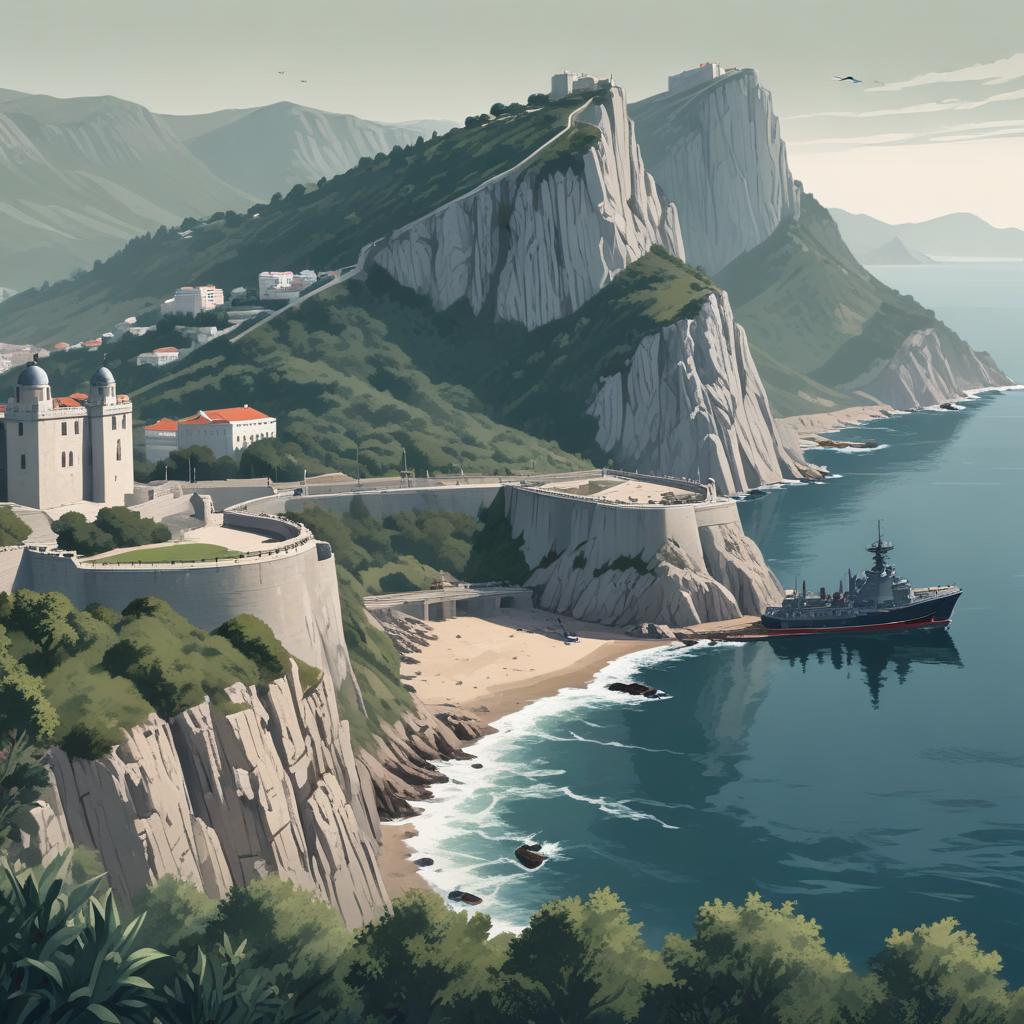
Strategic Importance of Gibraltar in World War I
Gibraltar WWI was a pivotal element in the Allied forces’ strategic planning due to its unparalleled geographical location. Nestled at the southern tip of the Iberian Peninsula, Gibraltar commands the entrance and exit to the Mediterranean Sea via the Strait of Gibraltar, making it a critical chokepoint for naval navigation and control during World War I. This strategic location allowed the Allies to monitor and regulate the flow of naval and merchant vessels traversing between the Atlantic Ocean and the Mediterranean, thereby securing vital shipping routes that were essential for military and trade movements.
The military base established in Gibraltar was not only a bastion of defense but also a launching point for naval operations that protected Allied interests in the region. The fortress-like nature of the Gibraltar base made it a formidable obstacle against enemy incursions, offering a safeguard against Central Powers’ attempts to disrupt maritime supply lines. The naval base housed significant fleets and facilitated swift communication and coordination of naval patrols, convoy escorts, and anti-submarine warfare tasks. This constant presence ensured that the Mediterranean shipping lanes remained open and secure for Allied forces throughout the war.
Beyond its defensive capabilities, Gibraltar’s strategic importance extended to intelligence gathering and reconnaissance activities. With commanding views over the strait and extensive fortifications, Allied forces could observe naval movements and deploy resources effectively to counter threats. Control over Gibraltar meant control over a gateway critical for the supply of troops, weapons, and resources to various fronts, including the Gallipoli campaign and the Middle Eastern theatres. This control significantly enhanced the operational reach and efficacy of the Allied naval and military commands.
In summary, Gibraltar WWI was more than just a military base; it was a linchpin in the Allied naval strategy, securing one of the world’s most crucial maritime passageways. Its strategic location and military infrastructure provided the Allies with the means to maintain dominance over Mediterranean shipping routes, protect vital supply lines, and maintain a powerful naval presence at a critical juncture in the war. The role of Gibraltar during World War I underscored its enduring significance as a commanding stronghold in global military operations.
Geographical Advantages of Gibraltar
Gibraltar’s unique geography has long been recognized as a critical strategic asset, particularly during World War I. Situated at the entrance to the Mediterranean Sea, Gibraltar commands a pivotal position that allows for extraordinary control over naval movement in the region. The strait linking the Atlantic Ocean to the Mediterranean is a narrow passage, and holding Gibraltar means controlling one of the busiest maritime chokepoints in the world.
This critical vantage point gave the British military significant tactical advantages during the war. By monitoring traffic through the strait, Gibraltar could effectively observe and regulate naval operations, limiting the movement of enemy vessels while ensuring safe passage for Allied forces. The natural defensive strength of the Rock, combined with its advanced fortifications and naval facilities, enhanced its role as a key maritime sentinel.
Moreover, Gibraltar’s geography facilitated rapid communication and coordination between the Atlantic and Mediterranean theaters, strengthening the Allied naval presence. Its control over Mediterranean access allowed for the deployment of naval resources to crucial points swiftly and contributed to maintaining supply lines and communication routes critical for war efforts. In essence, Gibraltar’s geographical advantages were a cornerstone in controlling the naval battlefield during World War I, giving the Allies a significant edge in maritime strategy and defense.
Role as a Naval Base and Military Outpost
During World War I, Gibraltar played a crucial role as a naval base and military outpost for the British military. Its strategic position at the entrance to the Mediterranean Sea made it an ideal location for controlling naval traffic and securing maritime routes vital to the British Empire. To support these operations, extensive military installations and naval infrastructure were developed and enhanced throughout the conflict.
The British established strong fortifications around Gibraltar, including coastal artillery batteries, searchlights, and underground tunnels, to defend against potential naval and land attacks. These fortifications allowed Gibraltar to serve not only as a defensive stronghold but also as a launching point for offensive naval missions. The naval base housed dockyards, warehouses, and repair facilities that ensured the maintenance and rapid deployment of warships during WWI.
The naval infrastructure included extensive dry docks and fueling stations that supported British naval vessels operating in the Mediterranean. Gibraltar’s military presence enabled constant monitoring and control over passage between the Atlantic Ocean and the Mediterranean Sea, safeguarding Allied shipping from enemy submarines and surface raiders. This robust defensive network was integral to the overall WWI defense strategy, leveraging Gibraltar’s unique geographical advantages to maintain British naval supremacy in the region.
In summary, Gibraltar’s role as a fortified naval base and military outpost was critical in sustaining British naval operations during World War I. The combination of advanced fortifications and comprehensive naval infrastructure ensured the security and effectiveness of British forces in this strategic maritime corridor.
Military Operations and Events in Gibraltar during WWI
During World War I, Gibraltar played a pivotal role as a strategic military hub in the Mediterranean, witnessing numerous significant military operations and events. Its location at the gateway between the Atlantic Ocean and the Mediterranean Sea made it an ideal naval base for the Allied forces, facilitating control over naval routes and enabling effective patrol missions in the region.
The fortress of Gibraltar was integral to various WWI battles and naval engagements. The Royal Navy established a strong presence there, launching patrols to monitor and intercept enemy vessels attempting to break through the Strait. These naval engagements were crucial for maintaining maritime dominance and safeguarding Allied supply lines. Gibraltar’s harbors served as operational bases for anti-submarine warfare, which became increasingly important given the threat posed by German U-boats targeting Allied shipping.
Throughout the war, Gibraltar was the scene of numerous patrol missions aimed at ensuring the security of maritime traffic. Naval vessels routinely scoured the waters around the Rock, deterring enemy submarines and warships. These missions were vital to the broader military strategy, contributing to the containment of Central Powers’ naval forces and protecting the vital sea lanes essential for the British and Allied war effort.
In addition to its naval significance, Gibraltar was a key point for troop movements and military logistics. The British military used the territory as a staging ground for forces being deployed to different theatres of war, including the Gallipoli campaign and the Western Front. The presence of garrisons and military installations supported the rapid mobilization and reinforcement of troops, which was a decisive factor in several wartime operations.
Gibraltar’s military history during WWI is marked by its role as a formidable fortress, a naval bastion, and a crucial logistic center. The combination of naval skirmishes, persistent patrol missions, and efficient troop movements helped maintain Allied control over a key maritime chokepoint. These Gibraltar events highlight the territory’s enduring strategic importance in the complex military landscape of World War I.
Naval Engagements Around Gibraltar
During World War I, Gibraltar was a pivotal point for naval battles and encounters due to its strategic location controlling access between the Atlantic Ocean and the Mediterranean Sea. The waters surrounding Gibraltar witnessed several key naval engagements involving the Allied fleets and the Central Powers’ navies, underscoring its critical defensive role in sea warfare.
Allied fleets, primarily British naval forces, maintained a strong presence around Gibraltar to safeguard maritime routes and prevent enemy ships from passing through the vital Strait of Gibraltar. Their efforts were crucial in ensuring the security of convoys carrying troops and supplies to various fronts. Central Powers, particularly German U-boats and surface raiders, sought to challenge this control by launching attacks aimed at disrupting Allied shipping lanes.
One notable aspect of these naval confrontations was the use of Gibraltar as a naval base and lookout post. Its fortifications and coastal artillery installations provided a robust defensive shield against potential incursions by enemy ships. The coordination between sea and shore defenses significantly diminished the threat posed by Central Powers’ attempts to breach this key maritime chokepoint.
Overall, the naval battles around Gibraltar were marked by intense sea warfare where control of the strait meant dominance over critical naval routes. The Allied fleets’ ability to leverage Gibraltar’s defenses played an essential part in thwarting the Central Powers’ naval ambitions in the region, thus contributing to the broader strategy of maintaining Allied superiority at sea during the war.
Support and Logistics for Allied Forces
During World War I, Gibraltar played a pivotal role as a strategic hub for military logistics in the Mediterranean theater. Its geographic position at the entrance to the Mediterranean Sea allowed it to serve as a critical node for controlling and facilitating troop movements and supply routes essential for the Allied forces. The fortress’s well-established naval facilities were integral to repairs and maintenance activities, ensuring that warships and transport vessels remained operational and ready to support military campaigns.
Gibraltar’s port was a bustling center for the coordination of supply lines, enabling the efficient delivery of food, ammunition, medical supplies, and equipment. This logistical network was vital in sustaining Allied forces as they engaged in various operations across the Mediterranean region, including in North Africa and the Middle East. The secure base provided a safe harbor for convoys, reducing the risk of enemy interception and ensuring steady reinforcement of troops and matériel.
Moreover, Gibraltar’s infrastructure supported quick turnaround times for vessels needing repairs and resupply, which had a significant impact on maintaining the tempo of military operations. The fortress’s capability to manage extensive troop support helped streamline the deployment and redeployment of soldiers, enhancing the overall effectiveness of the Allied war effort. In summary, Gibraltar’s role in military logistics, troop support, and supply chain management was indispensable to the success of Allied campaigns throughout World War I.
Impact of World War I on Gibraltar’s Civilian Life
World War I brought profound changes to Gibraltar’s civilian life, deeply affecting the local population and reshaping the wartime economy. As a strategic military outpost, Gibraltar had long been a bustling hub of military activity, but the onset of the war intensified the interaction between civilians and military personnel, as well as highlighted the vulnerabilities and resilience of the community living there. The wartime economy transformed significantly as both the military needs and the demands of the conflict influenced daily life and local commerce.
The influx of soldiers and military staff created both opportunities and challenges for the civilian population. Many locals found employment supporting the war effort, working in supply chains, construction of fortifications, and provisioning troops. This contributed to a shift in the local economy from traditional trades and fishing toward roles that supported the military infrastructure and operations. Although this shift helped to alleviate some economic hardships caused by the war, it also made the civilian economy heavily dependent on military expenditure and wartime requirements.
Social changes were also noticeable during this period, as the mingling of local civilians with military personnel from different parts of the British Empire created a diverse community dynamic. Relationships between the local population and soldiers introduced new cultural influences, but there were also tensions due to overcrowding, resource shortages, and differing lifestyles. The war catalyzed changes in social roles, particularly for women, who took on more active roles within the community and workforce, stepping into positions left vacant by men who had joined the armed forces.
The pressure of the war on civilian life extended beyond economics and social structure; it also fostered a strong sense of unity and resilience among Gibraltarians. Community efforts to support the military personnel and each other were common, with many civilians volunteering their time and resources to alleviate hardships caused by the conflict. Despite the hardships imposed by food rationing, security restrictions, and the constant presence of military operations, many locals maintained a steadfast spirit throughout the war years.
Overall, World War I altered civilian life in Gibraltar in lasting ways, intertwining the fate of the local population with the broader war effort. The wartime economy became a defining factor in local life, social changes reshaped community relationships, and ongoing interactions with stationed military personnel made Gibraltar a unique wartime society, marked by both challenge and cooperation.
Economic Changes in Gibraltar during the War
The wartime economy of Gibraltar during World War I experienced significant transformations driven primarily by the demands of the ongoing conflict. Trade, a vital component of Gibraltar’s economy, was heavily restricted due to naval blockades and military regulations, which disrupted traditional commercial routes and limited the import and export of goods. These trade restrictions compelled the territory to adapt its economic activities and find new ways to sustain itself under constrained conditions.
As military needs escalated, there was a substantial increase in employment opportunities related to the war effort. Many locals found jobs in military installations, ship repair yards, and provisioning services that supported both the British armed forces and naval operations. This shift toward military-related employment helped offset the decline in civilian trade activities and contributed to maintaining overall economic stability during a period of global uncertainty.
Despite these challenges, Gibraltar’s economy demonstrated resilience through swift economic adaptation. The population adjusted to new roles and industries centered around the war, with local businesses aligning themselves with military demands. Although conditions were tough, the wartime economy laid the groundwork for future economic shifts, emphasizing the importance of strategic flexibility in the face of wartime constraints on trade and resources.
Social and Cultural Effects on the Local Population
During World War I, Gibraltar experienced significant community impact as social changes reshaped everyday life. The presence of a large military force introduced new cultural dynamics that intertwined with the local population’s traditions. Daily routines were altered by wartime necessities such as rationing and blackouts, creating a shared sense of resilience among civilians and soldiers alike.
Wartime culture emerged as military personnel brought influences that affected entertainment, language, and social interactions. The mingling of servicemen with locals fostered cultural adaptations, including the blending of Gibraltar’s unique Llanito dialect with English and other languages from the British forces. This interaction also broadened the community’s outlook, integrating elements of military discipline and camaraderie into civilian society.
Population dynamics shifted as some families relocated to safer areas while others stayed, reinforcing communal bonds through shared hardship. Social activities increasingly revolved around supporting the war effort, with local groups organizing fundraisers, collecting supplies, and maintaining morale. These changes collectively enhanced a sense of unity and purpose among the inhabitants during the trying times of World War I.

I have always been captivated by the unique cultural tapestry of the Rock, particularly how Moorish, Spanish, and British influences shaped its development over centuries. My passion lies in translating these complex historical narratives into engaging educational resources that make Gibraltar’s past accessible to everyone. I spend my free time exploring military fortifications and reading first-hand accounts of life at the Pillar of Hercules.