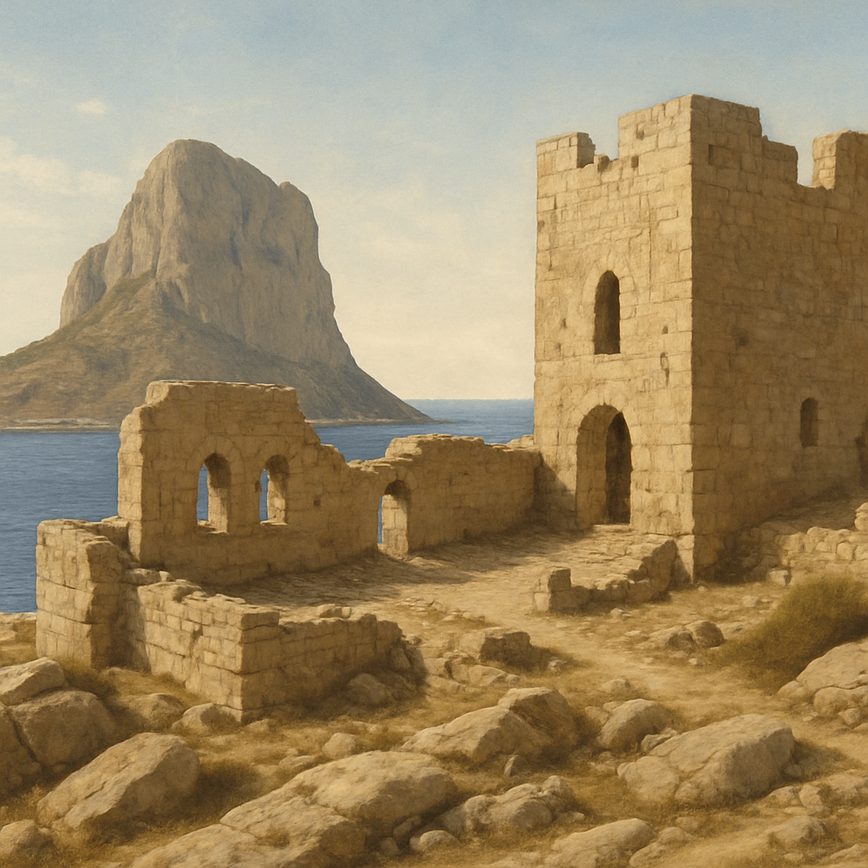
Overview of Calpe in Ancient Times
Calpe, known today as the Rock of Gibraltar, holds a significant place in ancient history due to its strategic geographical location. Situated at the southern tip of the Iberian Peninsula, Calpe served as a crucial gateway between the Atlantic Ocean and the Mediterranean Sea. This unique positioning made it a vital point for maritime navigation and military campaigns throughout antiquity.
The historical background of Calpe stretches back to ancient civilizations that recognized its value as a natural fortress and a hub of cultural exchange. It was considered one of the Pillars of Hercules in classical mythology, symbolizing the edge of the known world and marking the boundary between the familiar Mediterranean basin and the unknown Atlantic. This mythological significance highlighted Calpe’s importance not only geographically but also culturally in the ancient mindset.
Calpe’s geographical significance extended beyond mythology. Its towering limestone promontory offered natural defenses against invaders, making it a coveted stronghold for various empires. The Phoenicians, Carthaginians, and Romans all recognized Calpe as a key asset for controlling trade routes and military movements between Europe and Africa. Its location allowed control of sea traffic through the narrow Strait of Gibraltar, a critical junction facilitating connection between continents and civilizations.
Throughout ancient history, Calpe’s prominence was tied to its ability to influence commerce and military strategy. Its natural geography shaped the patterns of settlement and conquest, prompting diverse groups to fortify and inhabit the area. The integration of Calpe into larger empires underscored its ongoing relevance, as rulers sought to harness its strategic potential to secure their realms and expand their influence.
In setting this historical and geographical context, it becomes clear why Calpe is an enduring symbol in ancient history. Understanding its past provides invaluable insight into the ways geography can shape cultural and political developments. This introduction lays the groundwork for a deeper exploration of Calpe’s role through various historical epochs, revealing the layers of significance that make it a remarkable landmark in the ancient world.
Geographical Location and Strategic Importance
Calpe’s location was a critical factor that contributed to its strategic importance in the ancient Mediterranean world. Situated near the southern tip of the Iberian Peninsula, Calpe (modern-day Gibraltar) occupies a commanding position at the entrance to the Mediterranean Sea from the Atlantic Ocean. This narrow strait, known historically as the Strait of Gibraltar, serves as a natural gateway and maritime chokepoint, linking two major bodies of water and facilitating control over naval and trade routes.
The strategic position of Calpe made it a coveted stronghold for ancient civilizations such as the Phoenicians, Carthaginians, and Romans. Controlling Calpe meant dominance over naval passage, as ships traveling between the Mediterranean and the Atlantic had to navigate through this narrow corridor. Its towering limestone cliffs not only provided a natural defense but also allowed for early warning systems against incoming fleets or invasions.
Moreover, Calpe’s proximity to important trade networks across Europe, Africa, and the broader Mediterranean basin amplified its role as a hub for cultural exchange and military operations. The ability to monitor and regulate maritime traffic through this strategic position gave whoever held Calpe significant economic and military advantages during ancient times, shaping the geopolitical landscape of the region for centuries.
Early Settlements and Inhabitants
The history of Calpe as a place of human habitation dates back to ancient times, marked by the arrival of the earliest settlers who laid the foundations for its later development. These early settlers were part of distinct ancient tribes and peoples who found the region’s natural resources and strategic position highly favorable. Archaeological evidence suggests that Calpe was initially inhabited by Iberian tribes, known for their resilience and skill in adapting to the coastal environment.
Alongside the Iberians, other ancient tribes such as the Celts also played a significant role in the demographic composition of early Calpe. These groups brought their own customs, traditions, and ways of life, contributing to a diverse cultural mosaic. The inhabitants of Calpe at that time lived primarily in small, fortified settlements or villages, relying on agriculture, fishing, and trade to sustain their communities.
Furthermore, Calpe’s strategic location attracted attention from seafaring civilizations who interacted with these early tribes. As a result, the inhabitants of Calpe experienced influences from various Mediterranean cultures, enriching their cultural landscape. This early settlement period is crucial to understanding the ancient history of Calpe and the intricate tapestry of peoples who called it home in antiquity.
Calpe’s Role in Ancient Civilizations
Calpe, known today as the Rock of Gibraltar, holds a significant place in the history of ancient civilizations. Its strategic location at the entrance of the Mediterranean Sea attracted several major civilizations, each leaving their distinct mark on Calpe. The involvement of the Phoenicians, Romans, and Moors in this region reveals a rich tapestry of cultural and historical influences that shaped Calpe’s enduring legacy.
The Phoenicians were among the earliest recorded civilizations to recognize Calpe’s importance. Known as skilled seafarers and traders, the Phoenicians established trading posts across the Mediterranean, and Calpe was a vital stopover point. They used Calpe as a gateway for commerce and exploration, facilitating the exchange of goods and culture between the Atlantic and the Mediterranean worlds. The influence of the Phoenicians introduced new technologies and practices that contributed to Calpe’s early development and integration into wider trade networks of the ancient world.
Following the Phoenicians, the Romans expanded their empire into the Iberian Peninsula and fortified their presence in Calpe. For the Romans, Calpe was not just a strategic port but also a symbol of their territorial dominion. Roman infrastructure, such as roads, fortifications, and settlements, helped integrate Calpe more firmly into the Roman trade and military systems. The Roman period brought relative stability and prosperity, allowing Calpe to thrive under imperial governance. The remnants of Roman influence can still be traced in archaeological sites and historic accounts, emphasizing the sustained impact of Roman civilization on the region.
Later, the Moors, who ruled parts of the Iberian Peninsula for centuries, left a profound cultural and architectural legacy in Calpe. Moorish influence is evident in the agricultural advancements, fortifications, and urban planning introduced during their control. This era enriched Calpe with a blend of Islamic culture, science, and art, further diversifying its identity. The Moors recognized Calpe’s strategic maritime importance as well, controlling the passage between the Atlantic and Mediterranean. Their contributions are integral to understanding the complex cultural heritage of Calpe.
In summary, Calpe’s role throughout ancient history was shaped by its association with the Phoenicians, Romans, and Moors. Each civilization brought unique influences that enhanced Calpe’s strategic, economic, and cultural significance. The legacy of these Calpe civilizations continues to be a key part of its identity, making Calpe a remarkable crossroads of ancient history and civilization.
Phoenician and Carthaginian Era
The Phoenicians Calpe settlement played a crucial role during the Phoenician and Carthaginian periods as a strategic hub for ancient trade. Positioned advantageously by the Mediterranean Sea, Calpe served as a vital maritime trading post that connected the Phoenician trade routes with the Iberian Peninsula. This location allowed both the Phoenicians and later the Carthaginians to control and facilitate commerce, including the exchange of precious metals, goods, and cultural influences between different regions.
During this era, the Carthaginians expanded upon the foundation laid by the Phoenicians, strengthening Calpe’s significance as a settlement and a trading outpost. The area’s natural harbors and proximity to rich mineral resources made it an attractive site for establishing trading colonies. These colonies not only served economic purposes but also became centers of cultural and technological exchange, fostering development and consolidation of power in the western Mediterranean.
The influence of the Phoenicians Calpe settlement extended beyond trade, with archaeological finds suggesting the existence of well-organized communities and infrastructure tailored to support a bustling trade economy. The legacy of this period highlights Calpe as a remarkable example of how ancient civilizations like the Phoenicians and Carthaginians shaped the economic and cultural landscape of the Mediterranean through strategic settlement and commercial activities.
Roman Conquest and Integration
The Roman era marked a significant turning point for Calpe, as the town was conquered and systematically integrated into the vast Roman Empire. Following military campaigns that asserted Roman dominance over the region, Calpe was strategically incorporated due to its valuable coastal location and potential as a trading hub. This integration was not merely territorial but also administrative, bringing Calpe under Roman governance structures that emphasized order, taxation, and legal oversight consistent with Roman provincial management.
One of the most notable aspects of Calpe’s integration was the development of ancient infrastructure designed to consolidate Roman control and improve local life. Roads were constructed to link Calpe with other important Roman settlements, facilitating military movements and trade. Aqueducts and wells were also introduced, ensuring reliable water supply, which was crucial for both daily life and agricultural productivity. Public buildings such as forums, baths, and temples began to appear, reflecting typical Roman urban planning and cultural influence.
The governance of Calpe under Roman rule involved a local magistracy that reported to higher regional authorities appointed by Rome. These officials ensured the enforcement of Roman law, collection of taxes, and organization of public works. This framework helped integrate Calpe economically and politically within the empire, securing its role as a vital node in the network of Roman territories. Ultimately, the Roman conquest and subsequent integration transformed Calpe into a well-structured town, aligned with the empire’s administrative and infrastructural standards.
Archaeological Discoveries and Historical Legacy
The rich archaeological record of Calpe offers a fascinating glimpse into its ancient past, shedding light on the area’s historical legacy and cultural evolution. Excavations and studies have revealed numerous ancient artifacts that contribute significantly to our understanding of the region’s importance in antiquity. These findings provide critical insights into the everyday lives, trade practices, and societal structures of the ancient inhabitants of Calpe.
Among the most notable discoveries in archaeology Calpe are remnants of early settlements, pottery fragments, and tools that date back to various historical periods, including the Phoenician, Roman, and Moorish eras. These artifacts serve as tangible evidence of the continuous human presence and the strategic significance of Calpe as a coastal hub for commerce and cultural exchange in the Mediterranean basin. For instance, Roman coins and building foundations indicate the integration of Calpe into the expansive Roman trade networks and governance systems.
The archeological work has also uncovered burial sites and religious artifacts which have provided valuable information about the spiritual and ritualistic dimensions of ancient Calpe societies. These finds help historians and archaeologists piece together the complex mosaic of cultural influences that shaped the region, from indigenous Iberian tribes to Mediterranean civilizations.
Understanding the historical legacy of Calpe through these archaeological findings is essential not only for academic research but also for preserving the cultural heritage of the area. The ancient artifacts serve as a connection to the past, enabling both locals and visitors to appreciate the deep historical roots that define Calpe’s identity today. This knowledge fosters a greater appreciation of Calpe’s role in ancient history and emphasizes the importance of ongoing archaeological efforts to protect and study its heritage.
Ultimately, archaeology Calpe illuminates the layered historical narrative of the region, providing a testament to the enduring legacy of its ancient civilizations and ensuring their stories continue to be told through the artifacts they left behind.
Significant Archaeological Finds
Calpe has been a rich source of significant archaeological finds that offer deep insights into its ancient past. Excavations in the area have uncovered ancient ruins that reveal the strategic and cultural importance of Calpe throughout history. Among the most noteworthy discoveries are the remains of fortifications and dwellings, which speak to the settlement patterns and defensive strategies of its early inhabitants.
Artifacts found during these excavations include pottery fragments, tools, and ornaments that provide clues about the daily life and trade practices of the people who once lived in Calpe. These artifacts Calpe unearthed are not just relics but tell a story of cultural exchange, craftsmanship, and economic activity in this region. The style and composition of these objects have been instrumental in dating the ruins and understanding the socioeconomic dynamics of ancient Calpe.
The historical interpretations drawn from the archaeological findings suggest that Calpe was more than a simple settlement; it was a hub of interaction and influence, serving as a crossroads for various civilizations over centuries. Continuous excavations have enriched the narrative of Calpe’s past, shedding light on how these ancient ruins and artifacts connect to broader historical contexts in the Mediterranean.
Impact on Modern Understanding of Calpe
Archaeological discoveries in Calpe have profoundly influenced the modern understanding of its ancient history, providing invaluable insights into the region’s cultural and historical significance. These findings have enabled historians and archaeologists to reconstruct a more accurate picture of Calpe’s past, shedding light on its role as a strategic and cultural hub in antiquity. The historical impact of these discoveries extends beyond mere documentation; they have fueled modern studies that explore the social, economic, and geopolitical dynamics of ancient Calpe.
Artifacts and structural remnants uncovered during excavations have helped establish a timeline of habitation and development, highlighting the interactions between different civilizations that once thrived in the area. This enriched perspective facilitates a deeper appreciation of Calpe’s historical legacy, emphasizing its importance not only locally but also within the broader context of Mediterranean history. Modern studies benefit greatly from these tangible links to the past, allowing scholars to draw connections and refine theories related to trade, culture, and settlement patterns.
Moreover, the ongoing archaeological work in Calpe continues to inspire public interest and cultural pride, enhancing heritage conservation efforts. By illuminating the region’s ancient roots, these discoveries have significantly shaped contemporary narratives and educational frameworks, ensuring that Calpe’s history remains a vital component of both academic research and community identity. Ultimately, the historical impact of archaeological discoveries in Calpe underscores their pivotal role in expanding and deepening modern understanding of this ancient site.

I have always been captivated by the unique cultural tapestry of the Rock, particularly how Moorish, Spanish, and British influences shaped its development over centuries. My passion lies in translating these complex historical narratives into engaging educational resources that make Gibraltar’s past accessible to everyone. I spend my free time exploring military fortifications and reading first-hand accounts of life at the Pillar of Hercules.