Historical Context of the Evacuation of Gibraltar Civilians
The evacuation of civilians from Gibraltar during World War II was a significant event influenced by complex political and military factors. Gibraltar, a strategic British territory located at the southern tip of the Iberian Peninsula, held immense military importance due to its position controlling the entrance to the Mediterranean Sea. This pivotal location made Gibraltar a critical naval base for the Allied forces and a prime target for Axis powers during WWII.
In the years leading up to the evacuation, tensions in Europe were escalating rapidly. The outbreak of WWII in 1939 saw Gibraltar immediately recognized as a highly vulnerable yet indispensable military asset. The British government anticipated that the territory could face direct attacks or sieges, given its proximity to Spain—then officially neutral but politically unstable—and the Axis-controlled territories in North Africa. Consequently, the military authorities deemed it necessary to prioritize the security and operational capabilities of Gibraltar’s defenses over civilian presence.
The civilian population of Gibraltar, which included a mix of ethnicities with strong cultural ties to Spain and Britain, was initially allowed to remain during the early war period. However, as the war progressed and the threat of bombardment or invasion grew, military planners faced the challenge of balancing civilian safety with the strategic needs of the fortress. The decision to evacuate civilians was therefore driven by both humanitarian concerns and military strategy.
Strategically, clearing civilians allowed for the strengthening of Gibraltar’s fortifications and unrestricted military activity without the risk of civilian casualties or obstruction. Politically, the evacuation also sent a message about Britain’s commitment to defending its territories and maintaining control over this critical chokepoint. Additionally, the evacuation facilitated the relocation of military resources and the establishment of a stronger Allied presence in the region, which was crucial for operations in North Africa and the Mediterranean.
The evacuation was part of a broader pattern of civilian movements during wartime, reflecting the harsh realities and sacrifices imposed by global conflict. This civilian evacuation of Gibraltar became an emblematic episode in WWII history, highlighting the intersection of civilian life and military necessity. It forced families to leave their homes under uncertain conditions and shaped the social fabric of Gibraltar in the subsequent decades.
In summary, the Gibraltar evacuation was shaped by the need to secure a vital military hub amidst the broader context of WWII. Political concerns over territorial integrity and military demands for operational security were key drivers behind the relocation of civilians, making it a notable chapter in WWII history and Gibraltar evacuation efforts.
Strategic Importance of Gibraltar
Gibraltar’s strategic location at the entrance to the Mediterranean Sea has made it a critical military base for centuries. Positioned on the southern tip of the Iberian Peninsula, Gibraltar controls the narrow passage between the Atlantic Ocean and the Mediterranean, known as the Strait of Gibraltar. This unique geographic position has allowed whoever holds Gibraltar to monitor and regulate naval traffic moving between two of the world’s most important bodies of water.
During wartime, Gibraltar’s role as a military base is vital for controlling Mediterranean access and supporting naval operations. Its natural fortress features and deep-water harbors make it an ideal base for the British Royal Navy, enabling the projection of power across the region. Because of its military significance, Gibraltar has historically been heavily fortified and heavily garrisoned, serving as a key point for maintaining Allied supremacy in the Mediterranean during conflicts.
Evacuating civilians from Gibraltar was crucial during times of war to maximize military readiness and ensure the security of operations. Removing the civilian population reduced risks of collateral damage during military engagements, minimized distraction to defense forces, and allowed military infrastructure to expand without constraints. The safety and efficiency of the Gibraltar military base could thus be maintained, preserving its ability to influence Mediterranean control and secure vital naval routes essential for wartime logistics and strategy.
Decision to Evacuate Civilians
The decision to evacuate civilians from Gibraltar was driven by a complex interplay of safety concerns and pressing military needs during wartime. British authorities, fully aware of the strategic significance of Gibraltar, had to carefully weigh the risks posed to its civilian population against the overarching demands of the military defense. As the threat of enemy attacks intensified, it became clear that the dense civilian presence could hinder rapid military operations and put innocent lives at great risk. The evacuation decision was consequently made to prioritize civilian safety by relocating them to safer areas beyond the immediate conflict zone.
Military leaders and government officials collaborated closely in this process, reviewing intelligence reports and assessing the potential impact of wartime orders on the civilian populace. The evacuation was not merely a response to imminent danger but also a strategic measure to ensure that military personnel could operate unencumbered by concerns for non-combatants. This involved intricate logistical planning and communication efforts to execute the evacuation smoothly and maintain order amidst the disruption.
Ultimately, the evacuation decision reflected a balance between protecting civilian lives and maintaining the operational effectiveness of Gibraltar’s defenses. It underscored the British authorities’ commitment to civilian safety, recognizing that the safeguard of non-combatants was an essential component of wartime strategy. By removing civilians, the authorities were able to enhance the territory’s resilience against attacks while minimizing potential casualties and allowing military resources to be focused entirely on defense efforts.
The Evacuation Process and Destinations
The evacuation process of Gibraltar civilians during World War II was a complex and carefully coordinated operation undertaken to ensure the safety of the population amidst escalating military threats. As the strategic importance of Gibraltar grew, it became clear that civilian presence posed significant risks both to the individuals themselves and military operations. Consequently, the British authorities initiated a comprehensive evacuation plan designed to relocate civilians to safer locations while maintaining logistical control over the process.
The evacuation process began with detailed registration and selection of civilians eligible for relocation. Priority was often given to women, children, and elderly residents, as well as those deemed at higher risk due to proximity to military installations. Once identified, families were notified through local committees and given instructions about departure times and assembly points. This helped to manage the flow of evacuees and prevent chaos during transport stages.
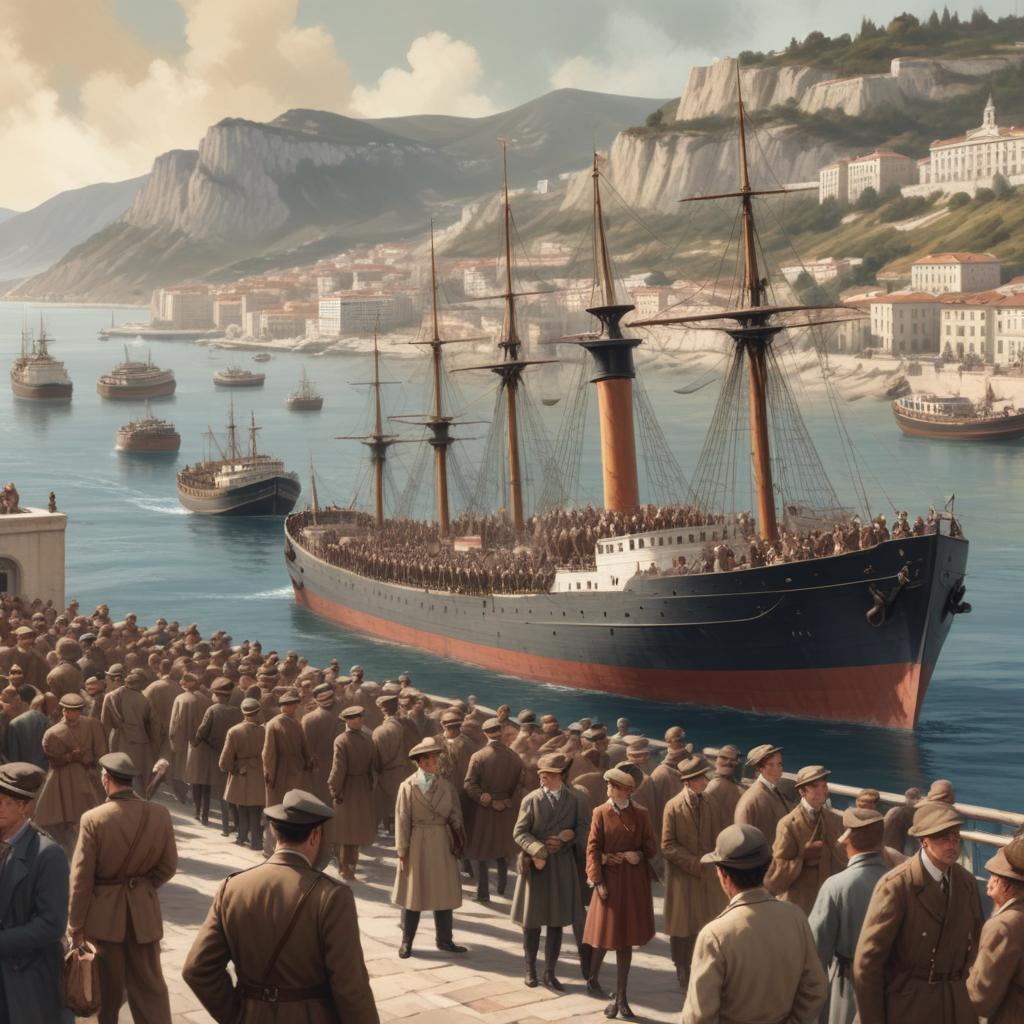
Transport methods were varied but predominantly relied on maritime vessels, given Gibraltar’s coastal position. Evacuees were gathered at designated embarkation points, where they boarded ships organized by the British Navy and other allied maritime units. These vessels ranged from larger troopships to smaller passenger ferries adapted for the evacuation purpose. Strict schedules ensured that trips were conducted efficiently and securely, minimizing waiting times and reducing exposure to any potential threat.
During the early stages, many Gibraltar civilians were evacuated to various destinations within the United Kingdom. Locations such as London and the southern counties provided temporary refuge with housing arranged through local government support. However, as the war progressed and aerial bombings increased, some evacuees were relocated again to safer areas further inland or to more rural settings to avoid the risks of urban attacks.
In addition to the United Kingdom, other evacuation destinations included British Overseas Territories and dominions, notably Jamaica and Madeira. These locations were selected for their relative safety from European theaters of war, availability of resources, and ability to accommodate large numbers of evacuees. The transfer to these destinations required coordination of multiple sea voyages and logistical support to provide food, shelter, and medical care upon arrival.
The evacuation process and destinations were carefully documented to allow for eventual repatriation and reunion of families. Despite the difficulties and dislocation, the systematic nature of the evacuation helped protect Gibraltar civilians from the immediate dangers of war and ensured their continued welfare in various refuge locations until it was safe to return.
Evacuation Routes and Transport Methods
During the conflict, the evacuation routes and transport methods used to evacuate civilians from Gibraltar were carefully planned to ensure safety and efficiency. The primary evacuation routes consisted of both sea and air corridors, utilizing a combination of ships and planes to transport civilians to safer locations. Maritime routes were particularly significant, with naval vessels and merchant ships operating from Gibraltar’s harbor to ferry evacuees to nearby ports such as Casablanca and Madeira.
Ships played a crucial role, offering the capacity to move large numbers of civilians at once, often under the protection of naval escorts due to the dangers posed by enemy submarines and aircraft. These evacuation ships were typically well-coordinated through Gibraltar’s military command, ensuring that embarkation points and schedules minimized congestion and exposure to risk. Additionally, smaller boats were sometimes used to transfer civilians from shore to larger vessels anchored offshore.
Alongside maritime transport, planes were employed to evacuate especially vulnerable groups or those requiring urgent relocation. Military and civilian aircraft operated flights from Gibraltar’s airstrip to various friendly territories. Air evacuation offered a faster alternative and was vital for cases where time was of the essence, although limited by the number of available aircraft and the need for secure airspace.
The combination of these evacuation routes—ships and planes—reflects the strategic Gibraltar transport network developed during the conflict. This multifaceted approach enabled the successful evacuation of thousands of civilians, balancing speed, safety, and logistical challenges to protect the population amidst wartime threats.
Major Destinations of Evacuated Civilians
The evacuation destinations for Gibraltar civilians during the turmoil primarily included the United Kingdom, Morocco, and a few other safe locations carefully chosen to provide security and support. Each of these destinations played a crucial role in ensuring the well-being and stability of displaced persons.
The United Kingdom was a significant resettlement area, offering refuge to many evacuees. The British government facilitated housing arrangements, access to healthcare, and employment opportunities for civilians, easing their transition despite the challenges of being far from home. Communities in various UK cities showed solidarity, helping maintain cultural ties and providing social support networks.
Morocco, due to its geographic proximity and relative safety, was another key destination. Evacuated civilians often found temporary shelter in Moroccan towns, where local authorities and aid organizations supplied food, shelter, and medical care. Although conditions varied, the support provided made Morocco a viable safe location for many families.
Other safe locations included several British colonies and territories where political stability allowed for the hosting of evacuees. These areas were equipped with basic facilities and were chosen to minimize risks from wartime conflicts. In all locations, efforts were made to maintain communal bonds and offer psychological support to those affected by displacement.
Overall, the coordinated response to evacuation destinations ensured that the civilians were safeguarded and supported throughout their displacements, reflecting the urgency and importance of providing relief in such critical times.
Impact and Legacy of the Civilian Evacuation
The evacuation of Gibraltar civilians during the war was a pivotal event that left a significant imprint on the territory’s history. The evacuation impact was immediately apparent as families were separated, and the close-knit Gibraltar community faced the challenges of displacement. In the short term, the evacuation caused disruptions in daily life, creating a sense of uncertainty and emotional distress among those evacuated as well as those who remained behind. The sudden shift altered social dynamics and strained resources in the areas where evacuees were settled, yet it also fostered resilience and adaptability both within and beyond Gibraltar.
In the long term, the evacuation’s effects continued to shape Gibraltar’s community in profound ways. The experience of displacement and return helped reinforce a collective identity among Gibraltarians, rooted in shared hardship and perseverance. This strengthened sense of community solidarity contributed to a robust social fabric that endured through subsequent decades. The evacuation also accelerated certain infrastructural and societal changes, as the territory rebuilt and modernized in the post-war period.
Furthermore, the legacy of the evacuation is reflected in Gibraltar’s historical narrative and cultural memory. It stands as a testament to the resilience of the Gibraltar community and their capacity to navigate profound challenges. The evacuation and its aftermath underscored the geopolitical importance of Gibraltar and influenced policy decisions related to its defense and civilian welfare. Understanding these long term effects allows modern observers to appreciate how the evacuation not only impacted individual lives but also shaped the destiny of the territory as a whole.
Overall, the evacuation impact extended beyond mere physical relocation. It transformed Gibraltar’s community, embedding lessons of unity and endurance that continue to resonate today. The civilian evacuation remains a defining chapter, illustrating how collective experience during times of crisis can profoundly influence both immediate circumstances and the broader historical trajectory of a community.
Social and Economic Effects on Gibraltar
The evacuation of Gibraltar civilians during World War II caused profound social impact, deeply altering the community’s structure. Families were separated, and with the mass relocation, traditional social networks and bonds were disrupted, leaving a lasting emotional toll. The tight-knit society, once centered around daily interactions within neighborhoods, faced fragmentation as residents were dispersed to various locations, both near and far. This dispersion affected not only personal relationships but also communal traditions and cultural practices that brought people together, weakening the social fabric of Gibraltar for years.
Economically, the evacuation led to significant disruption. Gibraltar’s local economy, heavily reliant on civilian activities such as small businesses, local trade, and services, faced abrupt challenges. With the population diminished and workforce depleted, many businesses shuttered or operated at minimal capacity. The strategic military focus of Gibraltar during the war shifted resources away from civilian economic development, causing shortages and inflation that further strained the community. Post-war recovery was slow, as returning residents had to rebuild homes, re-establish livelihoods, and adapt to changed economic realities.
Population changes brought by the evacuation also reshaped Gibraltar’s demographic profile. The temporary removal and subsequent return of civilians created fluctuations in population density and composition, impacting housing availability and social services. These shifts complicated efforts to restore normalcy after the war, requiring coordinated governmental and social efforts to address both economic recovery and the revival of community spirit. Overall, the evacuation left deep social and economic scars, underscoring the resilience of Gibraltar’s people in overcoming the war’s disruptions.
Return and Resettlement Post-War
The post-war return of Gibraltar’s civilian population marked a significant phase in the territory’s history, characterized by both hope and hardship. After years of displacement, civilians faced the complex process of reintegration into a community fundamentally altered by the war. The post-war return was not simply a matter of going back to pre-war homes; many found their properties damaged or repurposed for military use, complicating resettlement efforts.
Resettlement challenges were manifold. Infrastructure across Gibraltar had suffered during the conflict, necessitating extensive repairs to housing, utilities, and public services. This placed considerable strain on the returning population, who also had to rebuild their lives economically and socially. Employment opportunities were limited as the local economy adjusted from a wartime footing, further complicating civilian reintegration.
Additionally, the psychological impact of displacement lingered. Many civilians had endured years of uncertainty and separation from family and community networks, making the emotional aspects of return equally daunting. Despite these challenges, the resilience of Gibraltar’s people was evident as they worked collectively to restore their homes and reestablish a sense of normalcy.
Overall, the post-war return and resettlement period was marked by determination amid adversity. The process underscored the importance of coordinated efforts between the government and the community to address housing, economic, and social needs, facilitating the gradual and sustained reintegration of civilians into Gibraltar’s peacetime society.

I have always been captivated by the unique cultural tapestry of the Rock, particularly how Moorish, Spanish, and British influences shaped its development over centuries. My passion lies in translating these complex historical narratives into engaging educational resources that make Gibraltar’s past accessible to everyone. I spend my free time exploring military fortifications and reading first-hand accounts of life at the Pillar of Hercules.