Early Military Significance of Gibraltar
Gibraltar’s military importance dates back to ancient times, largely due to its strategic location at the entrance to the Mediterranean Sea. This narrow peninsula has served as a critical point of control for maritime traffic between the Atlantic Ocean and the Mediterranean, making it a highly coveted position for various civilizations throughout history.
One of the earliest indications of Gibraltar’s military significance can be traced to its ancient fortifications. Archaeological evidence reveals that even in prehistoric times, the area was used for defensive purposes, with natural caves and elevated terrain providing early inhabitants with protection against invaders. As civilizations advanced, more structured fortifications were established, serving as a deterrent and a stronghold to control passage through the region.
Throughout ancient history, Gibraltar saw numerous early battles that underscored its strategic value. The Phoenicians, Romans, and Moors each recognized the importance of Gibraltar as a military vantage point. They constructed fortresses and lookout posts to safeguard their realms, establishing it as a critical military base. The location allowed for surveillance over both sea and land routes, essential for defense and control.
The natural geography of Gibraltar, dominated by the Rock itself, meant that whoever held this position could monitor and control naval movement, project power, and defend against enemy incursions effectively. This made Gibraltar a focal point in various military campaigns and a prized asset for empires aiming to secure dominance in the western Mediterranean.
In sum, the early military significance of Gibraltar is deeply rooted in its remarkable natural fortifications and its strategic location, which together contributed to its role in numerous early battles. Its enduring importance through history highlights how geography often shapes military strategy and territorial control.
Ancient and Moorish Periods
The military history of Gibraltar was profoundly shaped by ancient civilizations and the Moors, whose influence is clearly evident in the region’s military architecture and defense strategies. Prior to the Moorish conquest, Gibraltar was already recognized for its strategic value, which led to the construction of ancient fortresses designed to protect the narrow gateway between the Mediterranean Sea and the Atlantic Ocean. These early fortifications laid the foundation for a complex defense system that would evolve over centuries.
With the arrival of the Moors in the early 8th century, Gibraltar witnessed significant enhancements in its military defenses. The Moors, skilled in medieval defense techniques, integrated robust walls, fortified towers, and intricate gate systems that improved the stronghold’s resilience against sieges and invasions. Their architectural style combined functionality with strategic placement, utilizing the natural terrain to maximize defensive advantage.
This blend of Moorish conquest methods and earlier military traditions created a formidable fortress that not only served as a military bastion but also as a symbol of control over the surrounding region. The incorporation of Moorish design principles with existing ancient fortresses resulted in a layered defense network that was adaptable to evolving military technologies and tactics, securing Gibraltar’s place as a pivotal point of medieval defense throughout subsequent centuries.
The Spanish and Early British Control
The history of Gibraltar’s control is marked by significant transitions between Spanish rule and British takeover, closely intertwined with military campaigns. Initially, Gibraltar was under Spanish control for centuries, serving as a strategic military outpost due to its location at the entrance of the Mediterranean. Spanish rule saw the development of fortifications and the establishment of Gibraltar as an important naval base.
The turning point came during the early 18th century amid the War of the Spanish Succession, when British forces seized Gibraltar in 1704 after a series of intense military campaigns. This British takeover was pivotal, as it shifted the control of the territory from Spain to Britain. The Spanish, unwilling to relinquish such a valuable stronghold, launched several military efforts to reclaim Gibraltar, including the Great Siege from 1779 to 1783, which ultimately failed due to the resilient British defense.
Throughout these transitions, the military campaigns highlighted Gibraltar’s critical strategic importance. Both Spanish and British forces invested heavily in its fortifications and garrison, recognizing that control over Gibraltar meant dominance over naval and trade routes in the region. This legacy of conflict and control firmly established Gibraltar as a symbol of military strength and geopolitical significance.
Gibraltar During the Great Sieges
The Great Siege of Gibraltar, spanning from 1779 to 1783, was one of the most defining moments in the military history of this strategic fortress. This prolonged siege was orchestrated by Spanish and French forces who sought to reclaim Gibraltar from British control during the American Revolutionary War. The siege tactics employed highlighted both innovation and resilience, setting a precedent for military defenses and offensive strategies in siege warfare.
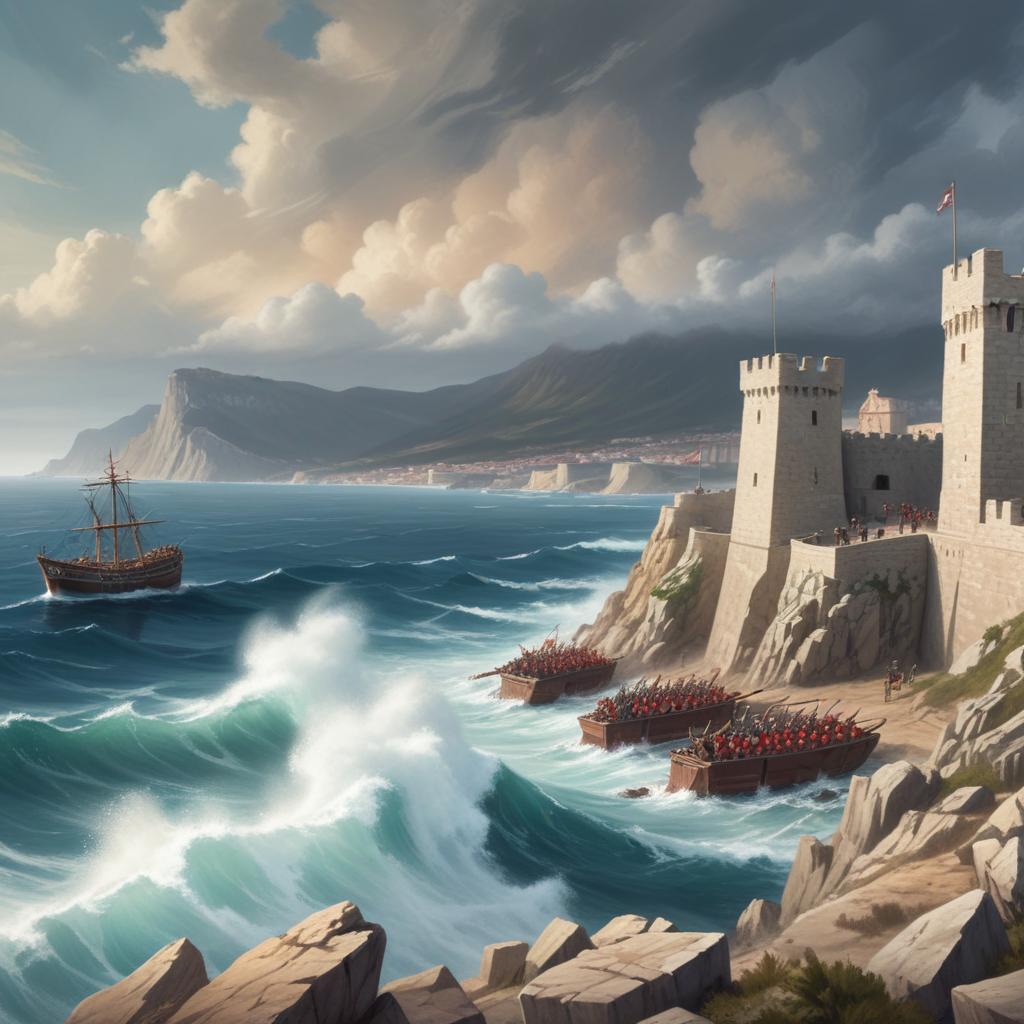
The attackers utilized a range of siege tactics including bombardment, attempts to blockade the fortress by sea, and continuous assaults designed to wear down the defenders. One of the most notable tactics was the use of floating batteries by the French, intended to sustain heavy cannon fire while approaching the fortifications. Despite their innovative design, these floating batteries were ultimately neutralized by the British defenders’ effective use of artillery and heated shot—cannonballs heated until red-hot to set the wooden batteries ablaze.
British defense under the command of Governor General George Augustus Eliott was characterized by exceptional coordination and engineering ingenuity. The defenders repaired and reinforced the extensive fortifications, notably enhancing the iconic Charles V Wall and constructing tunnels within the Rock of Gibraltar to shelter troops and facilitate movement under fire. The defenders also launched sorties to disrupt the besiegers’ siege works, keeping pressure on the opposing forces and preventing their complete encirclement.
The months and years of withstanding constant bombardment and assaults took a tremendous toll on both sides, with harsh conditions and shortages impacting the besiegers and besieged alike. The eventual lifting of the siege in 1783 marked a decisive British victory, solidifying Gibraltar’s reputation as a virtually impregnable fortress and as a symbol of British military tenacity.
The Great Siege of Gibraltar is remembered not only for its dramatic and prolonged confrontation but also for the evolution in siege tactics it showcased. It became a case study in the use of combined defensive engineering, naval supremacy, and innovative artillery tactics. This siege cemented British defense as a critical element in maintaining control over Gibraltar, influencing military doctrine and fortification strategy for decades to come.
The War of Spanish Succession and Gibraltar Capture
The War of Spanish Succession, which lasted from 1701 to 1714, was a significant conflict that shaped the future of many European territories, including Gibraltar. During this war, Gibraltar was strategically captured by Anglo-Dutch forces in 1704, marking a pivotal moment in its military history. The capture was executed following a siege that demonstrated both military ingenuity and the importance of Gibraltar’s geographic position as a gateway to the Mediterranean.
The military capture of Gibraltar involved a combined naval and land assault. The Anglo-Dutch fleet, supporting the claims of Archduke Charles of Austria to the Spanish throne, launched a surprise attack against the Bourbon-held fortress. The siege history of Gibraltar during this period is marked by intense fighting and strategic maneuvering, with the defenders ultimately overwhelmed by the superior forces and tactical planning of the attackers.
The implications of this military capture were profound. Gibraltar’s control gave the British a crucial naval base that allowed them to dominate maritime routes and exert influence over the western Mediterranean. This foothold would have lasting effects on European power dynamics and colonial ambitions. The War of Spanish Succession thus not only altered the territorial ownership of Gibraltar but also established its long-term military significance as a bastion of British naval power.
The 1779-1783 Great Siege
The 1783 siege of Gibraltar, known as the Great Siege, remains a pivotal chapter in the military history of the Rock. From 1779 to 1783, Spanish and French forces launched an unprecedented combined effort to wrest control of Gibraltar from the British, recognizing its strategic significance as the gateway to the Mediterranean. The siege was marked by relentless artillery bombardments, innovative siege tactics, and harrowing defensive operations. The attackers employed floating batteries, heavily fortified and designed to withstand British fire, in attempts to breach the Rock’s formidable defenses. However, these were ultimately neutralized by the British, who demonstrated remarkable resilience and adaptability throughout the conflict.
British military strategy was centered on both active defense and timely countermeasures. The garrison, under the command of Governor General George Augustus Eliott, utilized the Rock’s natural fortifications, enhancing them with robust artillery placements and effective supply lines. Nighttime sorties and aggressive reconnaissance missions disrupted enemy operations and maintained morale within the besieged fortress. The defenders’ ability to repair damage swiftly, coupled with their superior naval support, played a crucial role in withstanding the prolonged assault. Despite prolonged hardships, shortages, and continuous bombardments, the British resilience ensured that the siege ended in failure for the Spanish and French coalition.
The Great Siege not only showcased the strategic military importance of Gibraltar but also stands as a testament to British determination and tactical ingenuity. It solidified British control over the territory, securing the Rock’s status as an impregnable fortress and a key naval stronghold for decades to come in the face of European power struggles.
Modern Military Role of Gibraltar
Gibraltar has played a crucial role in military history due to its unparalleled strategic importance, particularly evident during World War II. The Rock of Gibraltar, located at the entrance to the Mediterranean Sea, served as a pivotal military base that allowed the Allied forces to control naval traffic between the Atlantic Ocean and the Mediterranean. Its location enabled effective surveillance and defense against Axis naval operations, making it a linchpin in the Allies’ Mediterranean strategy.
During World War II, Gibraltar was heavily fortified and transformed into a formidable military fortress. The British military established extensive tunnels and underground facilities, which housed troops, ammunition, and supplied naval and air forces. These fortifications allowed Gibraltar to withstand prolonged sieges and attacks, safeguarding vital supply routes essential for the success of Allied operations in North Africa and Southern Europe. The presence of a large military base on the Rock also provided a forward staging area for operations such as the successful invasion of North Africa in 1942.
Beyond World War II, Gibraltar continued to maintain its strategic military relevance throughout the Cold War and into the present day. The naval base supports operations for the British Royal Navy and NATO forces, allowing quick deployment and control over one of the world’s busiest maritime chokepoints. Its radar and communication installations serve as crucial monitoring points for maritime security in the region, reinforcing Gibraltar’s role as a key military outpost.
The military significance of Gibraltar has adapted to contemporary defense needs, including counter-terrorism and anti-piracy efforts in the Mediterranean. The base continues to provide logistical support for various military and humanitarian missions, underscoring its ongoing contribution to global security. Gibraltar’s strategic location, combined with its longstanding military infrastructure, ensures that it remains an indispensable asset in modern military planning and operations.
World War II Defenses and Operations
During World War II, Gibraltar played a critical role as a strategic naval base for the Allied forces. Positioned at the entrance to the Mediterranean Sea, it served as a vital point for controlling maritime traffic between the Atlantic Ocean and the Mediterranean, making it indispensable for Allied operations. The fortress was heavily fortified to defend against potential Axis attacks, with extensive networks of tunnels, anti-aircraft batteries, and coastal artillery emplacements established to secure the territory.
The military buildup included modernizing existing fortifications and constructing new defenses to withstand prolonged sieges. Gibraltar’s natural rock formation was extensively utilized to shelter troops, equipment, and supplies, creating a labyrinth of underground strongholds that could support sustained military efforts without vulnerability to surface bombardment. This made the rock an impregnable fortress that significantly bolstered the Allied war effort in the region.
Gibraltar’s naval base was crucial for launching and supporting Allied shipping convoys through the Mediterranean, protecting them from the threat of Axis submarines and aircraft. It also served as a staging ground for operations in North Africa and Southern Europe, providing essential logistics, repairs, and resupply. The effectiveness of Gibraltar’s WWII defenses and its multifaceted role in Allied operations underscored its strategic importance throughout the conflict, validating its reputation as an indispensable stronghold in the war effort.
Post-War Strategic Importance
During the Cold War, Gibraltar maintained its critical military relevance as a key strategic base for NATO forces. Its geographical position at the entrance to the Mediterranean Sea allowed for effective control and monitoring of naval traffic between the Atlantic Ocean and the Mediterranean, making it an essential point in countering Soviet naval movements. Gibraltar’s military base evolved to accommodate modern defense technologies, including advanced radar installations and communication systems that supported surveillance operations throughout the Cold War period.
As tensions shifted into the post-Cold War era, Gibraltar’s role transformed to adapt to new security challenges. While no longer at the forefront of a global standoff, the territory retained importance in regional defense due to its strategic location and well-established military infrastructure. The military base evolved to support joint exercises with allied forces and acted as a hub for maritime security operations, anti-smuggling efforts, and migration control in the region.
Today, Gibraltar remains a vital component of British and allied defense strategies. Its military facilities continue to be modernized, reflecting the evolving nature of defense in an era marked by asymmetric threats and the need for rapid deployment capabilities. Gibraltar’s strategic relevance extends beyond traditional military functions; it now plays a significant role in cooperation for counter-terrorism, intelligence gathering, and maritime security, ensuring that the territory remains a pivotal military base well into the 21st century.

I have always been captivated by the unique cultural tapestry of the Rock, particularly how Moorish, Spanish, and British influences shaped its development over centuries. My passion lies in translating these complex historical narratives into engaging educational resources that make Gibraltar’s past accessible to everyone. I spend my free time exploring military fortifications and reading first-hand accounts of life at the Pillar of Hercules.