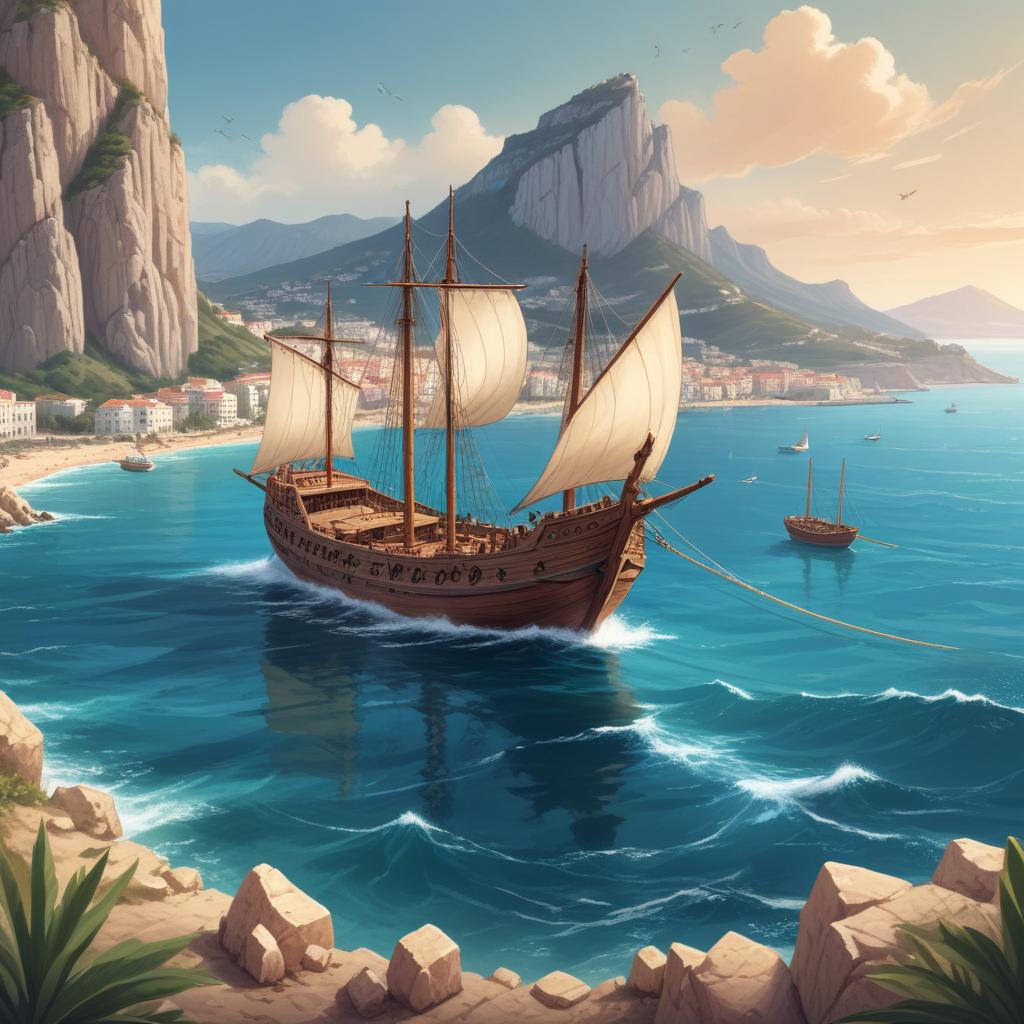
Historical Overview of Phoenician Presence in Gibraltar
The Phoenician history in Gibraltar marks an important chapter in the ancient Mediterranean narrative. As skilled seafarers and traders from the Levant, the Phoenicians began their expansion across the western Mediterranean around the 9th century BCE. Gibraltar, with its strategic location at the entrance to the Mediterranean Sea, became a significant site for their ancient settlements. This position allowed the Phoenicians to control maritime routes, facilitating trade and cultural exchange between the Mediterranean and the Atlantic regions.
Archaeological evidence in Gibraltar supports the notion of early Phoenician presence, including remains of settlements and artifacts that shed light on their way of life. These findings highlight the advanced nature of Phoenician society, known for their shipbuilding skills, navigation techniques, and establishment of trading hubs. Gibraltar served not only as a commercial outpost but also as a cultural crossroads, where traditions from different Mediterranean peoples blended.
The timeline of Phoenician activity in Gibraltar spans several centuries, starting with initial exploration and settlement in the early first millennium BCE. Over time, the Phoenicians developed fortified sites and engaged in extensive trade networks exporting valuable goods such as metals, glass, and textiles. Their settlements in Gibraltar contributed to the broader network of Phoenician colonies along the southern Iberian coast, influencing local populations and shaping the region’s historical trajectory.
Historically, the Phoenician presence in Gibraltar signifies more than mere occupation; it represents the diffusion of technological innovation, economic development, and cultural practices. The archaeological record of Gibraltar not only attests to the roots of ancient settlement but also underscores the Phoenicians’ role in connecting diverse peoples. Understanding this influence provides valuable insights into the early dynamics of Mediterranean history and emphasizes Gibraltar’s importance as a site of historical significance in Phoenician history.
Arrival and Establishment of Phoenician Settlements
The Phoenician colonization of ancient Gibraltar marks a significant chapter in the region’s history. Arriving around the 8th century BCE, the Phoenicians were skilled seafarers and traders renowned for establishing strategic trading outposts along the Mediterranean and Atlantic coastlines. Gibraltar’s geographical position at the entrance of the Mediterranean Sea made it an ideal location for a Phoenician settlement, offering control over vital sea routes and access to local resources.
The establishment of settlements in ancient Gibraltar was part of a broader Phoenician network of trade routes that connected the Levant to the western Mediterranean. These routes facilitated the exchange of goods such as metals, textiles, and foodstuffs. The first Phoenician settlers likely focused on securing safe harbors and creating bases that would support maritime trade and resource exploitation, including fishing and mining activities.
Historical and archaeological evidence suggests that the Phoenician presence in Gibraltar was not merely transient but involved the creation of durable communities. These settlements served as economic and cultural hubs where the Phoenicians could maintain their influence over maritime commerce and engage with indigenous populations. Thus, the Phoenician colonization of ancient Gibraltar laid the groundwork for the region’s integration into a network of Mediterranean trade and cultural exchange.
Archaeological Findings Supporting Phoenician Influence
Several significant archaeological discoveries in Gibraltar provide strong evidence of Phoenician occupation and cultural influence in the region. Excavations at various Gibraltar digs have unearthed a wealth of Phoenician artifacts that offer insights into the ancient civilization’s presence and activities. These artifacts include pottery shards, tools, and jewelry that are characteristic of Phoenician craftsmanship, confirming their trade and settlement patterns along the Mediterranean coastline.
One of the most remarkable findings is the ancient relics discovered at the Rock of Gibraltar itself. Among these relics are inscriptions and architectural remnants that align with known Phoenician styles, showcasing the cultural imprint left by the Phoenicians on local society. These archaeological treasures highlight the strategic importance of Gibraltar as a trading post and naval base for the Phoenicians, facilitating exchange between Africa, Europe, and the Near East.
Gibraltar digs have also revealed burial sites containing funerary goods typical of Phoenician customs, which further attest to their long-term settlement and social structures in the area. Together, these finds enrich our understanding of how the Phoenician civilization influenced Gibraltar’s development, anchoring its historical significance in the wider Phoenician maritime network across the ancient world.
Cultural and Economic Impact of Phoenicians in Gibraltar
The Phoenician culture left an indelible mark on Gibraltar, significantly shaping both the cultural landscape and the ancient economy of the region. Known for their seafaring abilities and advanced craftsmanship, the Phoenicians introduced a variety of cultural practices that enriched the local societies. Their influence extended beyond mere customs and touched the realms of language, religion, art, and daily social habits, integrating elements that would endure through generations.
In terms of cultural practices, the Phoenicians were instrumental in spreading their religious beliefs and architectural styles in Gibraltar. Temples dedicated to their gods and intricate burial rites highlighted their spiritual life, intertwining spirituality with community identity. Artistic expressions such as pottery, metalwork, and carved iconography introduced by the Phoenicians also reflected a high level of craftsmanship and aesthetic values that influenced local artisans and craftsmen. These cultural contributions provided a foundation that blended with indigenous traditions, creating a unique multicultural environment.
Economically, the Phoenician presence in Gibraltar was pivotal in bolstering the ancient economy. They established Gibraltar as a crucial trade hub due to its strategic geographic position at the entrance to the Mediterranean Sea. By controlling this vital point, the Phoenicians effectively facilitated the exchange of goods between Africa, Europe, and the Near East. This trade influence led to a prosperous economy based on the exchange of valuable commodities such as metals, textiles, and spices. The Phoenicians’ advanced maritime technology enabled them to dominate sea routes, ensuring the steady flow of trade and economic growth.
Moreover, the trade networks established by the Phoenicians contributed to the transfer of knowledge and resources, enhancing the economic resilience and cultural sophistication of Gibraltar. Their role as merchants helped develop local markets, crafts, and industries, encouraging economic diversification beyond simple subsistence practices. The economic vitality generated by trade under the Phoenicians laid the groundwork for Gibraltar’s lasting significance as a commercial and cultural crossroads.
In summary, the Phoenician culture and their influence on the ancient economy in Gibraltar were deeply intertwined. Their cultural practices enriched the social fabric while their trade influence catalyzed economic development. Together, these aspects highlight the enduring legacy of the Phoenicians in shaping Gibraltar’s historical trajectory.
Phoenician Trade Networks and Their Role in Gibraltar
The Phoenician trade networks were among the most sophisticated and far-reaching in the ancient Mediterranean world, and Gibraltar played a pivotal role within this commercial web. Situated at the strategic entrance to the Mediterranean Sea, the port of Gibraltar became a key hub for the Phoenician traders, enabling them to control and facilitate the movement of goods between diverse regions.
Through their established presence in Gibraltar, the Phoenicians not only secured access to valuable resources such as metals and coastal goods from Iberia but also strengthened their influence over Mediterranean commerce as a whole. Their maritime expertise and extensive trading routes allowed goods to flow efficiently from the western Mediterranean through Gibraltar and onward to major Mediterranean markets. This exchange fostered cultural and economic interactions, connecting distant communities through shared commercial interests.
The port of Gibraltar was instrumental as a logistical stopover where ships could resupply, repair, and exchange commodities, reinforcing Phoenician dominance in Mediterranean trade. This strategic position enhanced the region’s economic vitality and underscored the importance of Phoenician trade networks not only in local but also in broader Mediterranean commerce.
Overall, Phoenician trade networks extending through Gibraltar shaped ancient Mediterranean commerce by creating interconnected trade routes that facilitated the circulation of goods, culture, and ideas, effectively positioning Gibraltar as a cornerstone of Mediterranean economic history.
Influence on Local Culture and Settlements
The Phoenician presence in Gibraltar left a lasting imprint on local culture and settlements, blending their customs with indigenous traditions in meaningful ways. One of the key aspects of this cultural assimilation was the introduction of Phoenician customs related to trade and urban planning, which adapted to and enhanced existing local practices. Phoenician settlers brought advanced knowledge of shipbuilding, navigation, and commerce, which not only fostered economic growth but also influenced the social organization of Gibraltar’s early communities.
This merging of cultures is evident in the archaeological record, where artifacts display a fusion of Phoenician styles with local designs, reflecting a hybrid identity that shaped the region’s heritage. Religious practices, for instance, saw a blending of Phoenician deities with traditional local gods, creating worship customs unique to the area. Local traditions around festivals, craftsmanship, and daily life gradually incorporated Phoenician elements, demonstrating a dynamic exchange rather than a one-sided cultural imposition.
Moreover, the settlements themselves were influenced as Phoenician architectural techniques and city layouts were adapted to the local environment, creating communities that reflected the coexistence of different cultural influences. This cultural synthesis laid the foundation for Gibraltar’s rich, diverse identity, showcasing how Phoenician customs helped shape local traditions and everyday life in this strategic Mediterranean crossroads.
Legacy of the Phoenician Civilization in Modern Gibraltar
The Phoenician legacy in Gibraltar is a profound example of how ancient influences continue to shape modern culture and identity. As one of the earliest civilizations to establish trade routes and settlements along the Mediterranean coast, the Phoenicians laid down foundations that have echoed through Gibraltar’s history, persisting into present-day society. Their impact is evident not only in historical records but also in the cultural fabric and collective consciousness of Gibraltar’s people.
Gibraltar’s strategic location was first recognized and utilized by the Phoenicians, who saw the Rock as a pivotal maritime landmark. This recognition set a precedent for Gibraltar’s enduring role as a gateway between continents and cultures. The ancient harbor and trading partners of the Phoenicians evolved over centuries, eventually developing into the vibrant port city that Gibraltar is today. The city’s economic and cultural openness to various influences reflects the Phoenician spirit of trade, exploration, and connectivity.
Beyond geography and commerce, the Phoenician influence permeates Gibraltar’s cultural identity through language, traditions, and archaeological heritage. The unique Llanito dialect, spoken in Gibraltar, contains traces of languages introduced by successive waves of settlers, including elements linked to the Phoenician trade networks. This blending of linguistic influences testifies to Gibraltar’s long history of cultural integration that originated in part with these ancient seafarers.
Archaeological findings in Gibraltar, such as Phoenician pottery and artifacts, are tangible remnants of the civilization’s presence and underscore their role in the region’s historical narrative. These findings are carefully preserved and displayed in local museums, fostering a connection between modern residents and their ancient heritage. This visible legacy helps Gibraltar maintain a unique identity, one rooted in its rich past yet evolving dynamically in today’s world.
Ultimately, the Phoenician legacy in Gibraltar history serves as a bridge linking past and present. It reminds us that modern Gibraltar, with its distinctive culture and vibrant community, is deeply influenced by the ancient civilizations that recognized the significance of the Rock thousands of years ago. Appreciating these ancient influences today enriches Gibraltar’s cultural pride and underscores the enduring importance of its history on a global scale.
Historical Sites and Monuments Related to Phoenicians
Gibraltar is home to several key historical sites and monuments that provide insight into its Phoenician heritage. These landmarks offer a glimpse into the ancient civilization that once thrived here, reflecting the significance of the Phoenician era in shaping Gibraltar’s history.
- The Cave of Gorham: While primarily known for its Neanderthal connections, this cave also features remnants that suggest Phoenician use. It stands as one of Gibraltar’s oldest sites linked to early inhabitants, providing valuable archaeological context.
- The Phoenician Wall: Portions of this ancient defensive structure remain visible, showcasing the architectural skills of the Phoenicians. The wall played a crucial role in protecting the settlement from potential invaders and is a prominent Gibraltar landmark.
- The Moorish Castle: Although primarily built later, this fortress is believed to have foundations and strategic placement connected to earlier Phoenician fortifications, symbolizing the continuity of defense mechanisms throughout Gibraltar’s history.
- The Mediterranean Steps: This pathway contains traces of ancient construction techniques thought to originate from Phoenician times. The steps highlight the importance of maintaining access routes along the rocky terrain for trade and military purposes.
- Phoenician Pottery Finds: Various excavation sites across Gibraltar have uncovered Phoenician pottery and artifacts, displayed in local museums. These finds further attest to the daily life and culture of the Phoenician settlers.
These historical sites and Phoenician ruins are integral to understanding Gibraltar’s ancient past. They not only serve as points of cultural interest but also stand as enduring Gibraltar landmarks that narrate the tale of its early settlers and their lasting influence.
Phoenician Influence on Gibraltar’s Modern Identity
The Phoenician heritage has left an indelible mark on Gibraltar’s modern culture, shaping the local identity in profound ways. This ancient influence continues to resonate in the community’s daily life, traditions, and shared sense of history. The Phoenicians, renowned for their seafaring and trade expertise, established early connections that laid the foundation for Gibraltar’s strategic and cultural importance. Today, their legacy is celebrated and integrated into Gibraltar’s cultural narrative, reinforcing a unique identity that blends ancient heritage with contemporary life.
Modern culture in Gibraltar reflects this Phoenician heritage through various forms, including festivals, educational programs, and museum exhibitions that highlight the rich history of the region. Such initiatives foster a sense of pride among locals, who view the Phoenician past as a cornerstone of their community’s story. This connection to antiquity helps strengthen communal bonds and provides a distinct cultural identity that differentiates Gibraltar from neighboring areas.
Furthermore, the Phoenician influence is evident in local symbols, archaeological sites, and even aspects of language and art. These cultural markers serve as continuous reminders of the community’s origins and endurance. By embracing this heritage, Gibraltar not only honors its ancient roots but also enriches the social fabric of its modern identity, demonstrating how history can actively shape and inspire contemporary society.

I have always been captivated by the unique cultural tapestry of the Rock, particularly how Moorish, Spanish, and British influences shaped its development over centuries. My passion lies in translating these complex historical narratives into engaging educational resources that make Gibraltar’s past accessible to everyone. I spend my free time exploring military fortifications and reading first-hand accounts of life at the Pillar of Hercules.