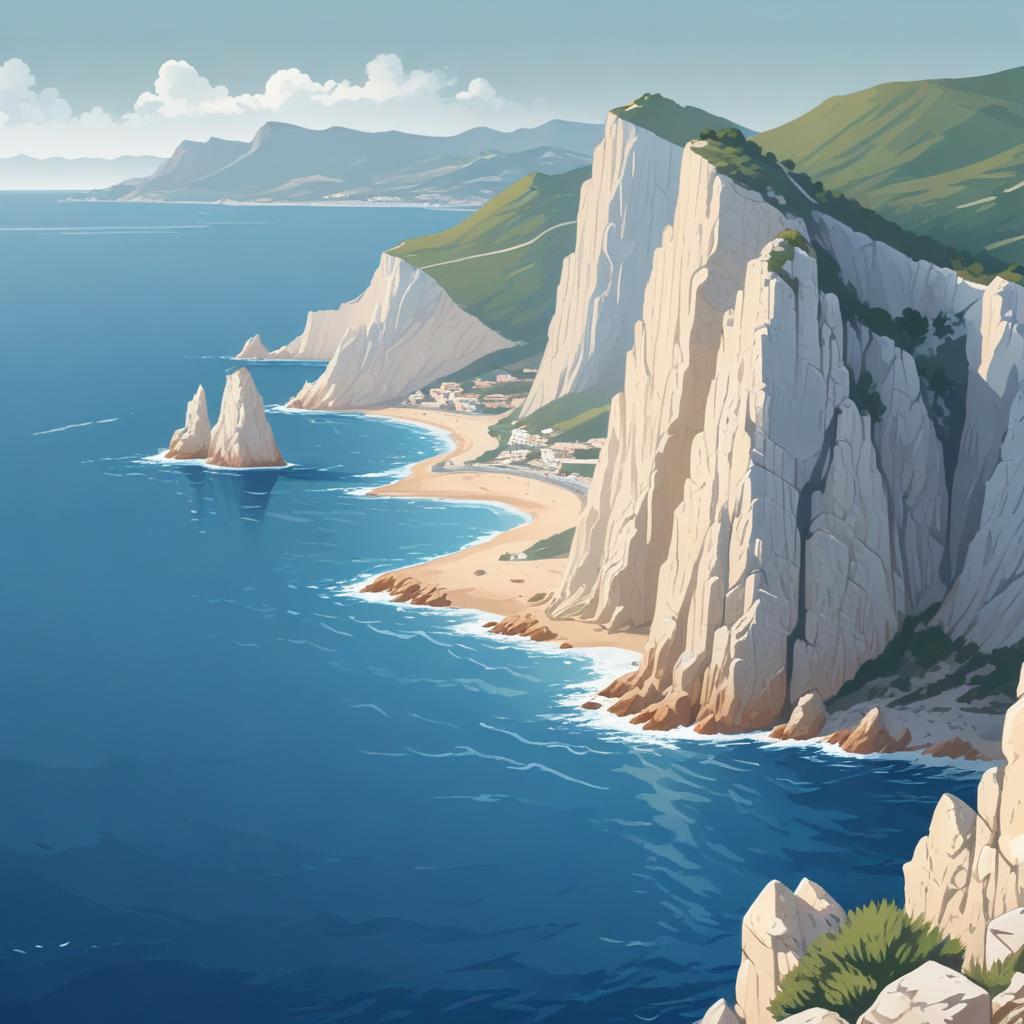
Geological Origins of Gibraltar
The geology of Gibraltar is a fascinating subject that reveals much about the complex natural history of this iconic region. Dominated by the imposing Rock of Gibraltar, the area is primarily composed of limestone, a sedimentary rock that formed millions of years ago. This limestone is the result of the accumulation and compression of marine organisms’ skeletal fragments, such as corals and shellfish, dating back to the Jurassic period. Its predominant white and pale gray hues give the Rock its distinctive appearance and contribute significantly to the geological features that characterize Gibraltar.
The formation history of Gibraltar is intricately linked to tectonic activity. The Rock of Gibraltar itself is part of the Betic Cordillera, a mountain range created by the collision of the African and Eurasian tectonic plates. This tectonic interaction caused significant uplift and folding, shaping the prominent limestone cliffs and ridges we see today. Over millions of years, these tectonic forces elevated the seabed, exposing the rock to the surface and allowing erosion to sculpt its dramatic features, including caves and steep escarpments.
One of the most remarkable geological features resulting from this tectonic activity is the series of caves within the Rock, some of which have significant archaeological importance. The porous nature of the limestone also contributes to groundwater movement and the creation of underground chambers. The blend of limestone composition and ongoing tectonic processes continue to shape Gibraltar’s geology, making it a dynamic and intriguing landscape for both scientists and visitors alike.
Understanding the geology of Gibraltar not only provides insight into the natural history of the region but also underscores the importance of the Rock of Gibraltar as a landmark formed through millions of years of geological evolution. Today, Gibraltar’s geology remains a key subject of study, highlighting the powerful forces that have shaped this strategic and picturesque territory.
Tectonic Activity and Rock Composition
The formation of the Rock of Gibraltar is a fascinating example of Mediterranean geology shaped by dynamic tectonic activity. The rock itself is primarily composed of limestone, which originated from sedimentation processes in an ancient marine environment. Millions of years ago, the area that is now Gibraltar was submerged under a shallow sea. Over time, the accumulation of marine organism remains, rich in calcium carbonate, compacted to form extensive limestone deposits.
Tectonic plates played a crucial role in transforming this sedimentary environment into the iconic rock formation visible today. The African and Eurasian tectonic plates converged, causing significant geological upheaval. This collision led to the uplift and folding of the limestone layers, pushing them upwards and out of the Mediterranean seabed. This tectonic pressure also resulted in fractures and faults within the rock, which have influenced its distinctive shape and structural integrity.
Thus, the Rock of Gibraltar stands as a geological monument born from the interplay of sedimentation and tectonic forces. Its limestone composition records a marine past, while the tectonic activity narrates the dynamic earth movements that sculpted this landmark. Understanding these processes not only highlights the geological heritage of Gibraltar but also offers insights into the broader tectonic complexities of the Mediterranean region.
Cave Systems and Natural Features
Gibraltar is renowned for its extensive cave systems, which form a crucial part of its unique geological landscape. Among the most famous natural caves is St. Michael’s Cave, a stunning network of limestone caves that has fascinated visitors and scientists alike. These natural caves are not only captivating due to their impressive rock formations but also significant for understanding the geological history of the region. The caves were formed over millennia by the gradual erosion of the limestone rock, creating intricate chambers and passageways that reveal much about the forces shaping the Gibraltar landscape.
St. Michael’s Cave, in particular, stands out with its spectacular stalactites and stalagmites, which have developed over thousands of years. The cave system has been historically important, serving various roles from prehistoric times to modern-day tourist attraction. Additionally, the geological features in these caves offer valuable insights into the natural evolution of the area, with sediment layers and mineral deposits recording environmental changes over vast timescales.
Beyond St. Michael’s Cave, Gibraltar hosts several other noteworthy natural caves that contribute to the diversity of its natural heritage. These caves collectively enhance the understanding of the rock formations that dominate Gibraltar and provide scientists with a natural laboratory for studying karst landscapes. The interplay between the caves and the striking Gibraltar Rock continues to shape the region’s natural beauty and geological significance.
Historical and Cultural Origins
Gibraltar’s history is a fascinating tapestry woven from early human presence, diverse cultural influences, and significant historical development throughout ancient times. From its earliest days, this strategic location has attracted various civilizations due to its unique geographical position at the crossroads of Europe and Africa. Early settlers left enduring marks on Gibraltar’s landscape, contributing richly to its cultural heritage.
Archaeological evidence points to the presence of human beings in Gibraltar dating back to the Paleolithic period. The famed Gorham’s Cave, for instance, provides insights into the lives of Neanderthals who inhabited the area around 40,000 years ago. This early human presence underscores Gibraltar history as a critical site for understanding human evolution and prehistoric life.
Moving from prehistoric times, Gibraltar’s cultural heritage was further shaped by the influence of ancient civilizations such as the Phoenicians, Romans, and Moors. Each brought new customs, languages, and architectural styles that blended with existing traditions to form a unique cultural mosaic. The Phoenicians, known for their seafaring skills, established Gibraltar as a trading post, highlighting its importance in regional networks.
During Roman rule, Gibraltar continued to thrive as a military and commercial hub, cementing its historical significance in the Mediterranean world. The Romans referred to the Rock of Gibraltar as “Mons Calpe,” one of the legendary Pillars of Hercules, symbolizing the boundary of the known world. This enriched Gibraltar’s cultural heritage and increased its prominence in ancient lore and history.
The successive arrival of the Moors in the early medieval period introduced Islamic culture and architecture to Gibraltar. Their occupation left profound cultural marks, including fortifications and urban developments. Through these layers of cultural influence, Gibraltar evolved into a vibrant melting pot of peoples and traditions, establishing its long-standing historical significance as a contested and treasured site.
Overall, the examination of Gibraltar history reveals a dynamic story of early settlers and diverse cultural influences that have shaped its identity over millennia. The ancient historical development of Gibraltar continues to fascinate scholars and visitors alike, emphasizing its enduring significance in human history and cultural heritage.
Ancient Civilizations and Early Settlements
Archaeological discoveries in Gibraltar reveal a rich tapestry of ancient civilizations that shaped its early history. The presence of Neanderthals is one of the most remarkable findings, with the nearby Gorham’s Cave complex yielding evidence of their habitation dating back tens of thousands of years. These early inhabitants provide critical insights into human evolution and the prehistoric era of the region.
The Phoenicians, famed for their maritime prowess, were among the first recorded ancient peoples to settle in Gibraltar around the first millennium BCE. Their strategic use of the territory helped establish Gibraltar as an important trading and naval outpost, influencing the Mediterranean trade routes significantly. Their legacy remained embedded in the cultural and economic foundations of the area.
Following the Phoenicians, the Romans arrived and further developed Gibraltar’s infrastructure. Roman archaeological remains, including roads and fortifications, reflect Gibraltar’s role as a key military and commercial hub within the Roman Empire. The early Gibraltar inhabitants thus contributed to the complex layers of cultural and historical influences, blending prehistoric significance with ancient Mediterranean civilizations.
Importance in Historical Trade and Warfare
Gibraltar’s importance as a strategic location has been recognized since antiquity, serving as a critical point controlling access to the Mediterranean. Its position at the entrance to the Mediterranean Sea made it a coveted military and trade outpost for various civilizations. Throughout ancient times, Gibraltar was a key landmark for Mediterranean trade routes, facilitating the movement of goods between Europe, Africa, and Asia. Its natural geography provided an excellent vantage point for monitoring naval traffic, which was essential in both commerce and defense.
The military history of Gibraltar is marked by its continuous role as a fortress and stronghold. Control over the rock meant dominance over maritime routes, so establishing fortifications was crucial for empires that sought to secure their influence in the region. During medieval times, Gibraltar’s fortress was a symbol of power and control, helping to protect territories from invasions and acting as a base for naval operations. The fortress walls were fortified and expanded over centuries, ensuring that Gibraltar remained a formidable military asset.
In summary, Gibraltar’s strategic location bridged major Mediterranean trade routes and military campaigns, making its fortress and control highly significant from ancient times through the medieval period. This dual role fortified its legacy as an essential site for controlling Mediterranean commerce and defense activities.
Etymology and Name Origins
The name “Gibraltar” has a fascinating linguistic history deeply rooted in Arabic influence. The origin of the Gibraltar name traces back to the Arabic term Jebel Tariq, which means “Mountain of Tariq.” This name was given in honor of Tariq ibn Ziyad, an Umayyad general who led the initial Muslim conquest of the Iberian Peninsula in 711 AD. Tariq’s landing at the rock marked a significant moment in history, giving rise to the enduring etymology associated with the territory.
The word Jebel (or Jabal) translates directly to “mountain” or “hill” in Arabic, while Tariq is a proper noun referring to the leader himself. When combined, these two elements formed the original name Jebel Tariq. Over centuries, this name evolved under various cultural and linguistic influences, gradually transforming into the modern-day “Gibraltar.” The linguistic transformation reflects a fusion of Arabic phonetics with Spanish and English adaptations.
Historically, the name Gibraltar was first recorded by European chroniclers during the Middle Ages who Latinized the Arabic name as Calpe or Mons Calpe, one of the legendary Pillars of Hercules. However, the Arabic heritage persisted, and with the Reconquista and successive occupations, the pronunciation and spelling shifted. The gradual transition through Old Spanish and English eventually settled on “Gibraltar,” preserving the essence of its Arabic roots.
Understanding the Gibraltar name origin highlights the significant Arabic influence in the region. It reflects not only a geographical landmark but also a historical narrative of conquest, settlement, and cultural integration. The etymology of Gibraltar serves as a reminder of how place names can encapsulate centuries of history and cultural exchange, blending diverse linguistic elements into a single, enduring identity.
Arabic Roots and Historical Naming
The name Gibraltar derives from the Arabic term “Jebel Tariq,” which translates to “Mountain of Tariq.” This name honors Tariq ibn Ziyad, the Moorish general who led the initial Islamic conquest of the Iberian Peninsula in 711 AD. The name’s origin is deeply rooted in the Arabic language, reflecting the strong Moorish influence on the region’s history and culture. Jebel Tariq referred specifically to the imposing rock formation that dominates the landscape and served as a strategic military stronghold during Moorish rule.
During their period of control, the Moors recognized the significance of this site both geographically and militarily, utilizing the natural fortress of the Rock of Gibraltar to oversee and protect the surrounding territory. The Arabic naming underscored the lasting cultural imprint of the Moorish presence, which shaped many aspects of local history and contributed to the rich linguistic heritage in the region. This enduring name connects the modern territory directly to its historical roots, linking Gibraltar’s identity to its Arabic and Moorish past.
Thus, the derivation from “Jebel Tariq” not only commemorates an important historical figure but also highlights the linguistic and cultural influence of the Arabic language in shaping place names and historical narratives within Gibraltar. The Moors’ legacy remains a vital part of understanding the history and significance of this unique Mediterranean landmark.
Evolution of the Name Through History
The name Gibraltar has undergone significant changes throughout history, reflecting the diverse cultures and empires that have influenced the territory. Its earliest known designation comes from the Arabic name “Jabal Ṭāriq,” meaning “Mountain of Tariq,” named after the Umayyad general Tariq ibn Ziyad who led the initial Muslim conquest in 711 AD. This name highlights the region’s early Islamic influence and underscores its importance as a strategic military and cultural landmark.
As control of the territory shifted over centuries, the name evolved in historical documents. During the period of Christian reconquest and Spanish rule, the name was Hispanicized to “Gibraltar,” a phonetic adaptation preserving its original reference while aligning with the linguistic patterns of the Iberian Peninsula. This change exemplifies how the linguistic evolution of the name mirrored the political and cultural shifts occurring in the region.
Following the British capture of the territory in 1704, the name Gibraltar became widely codified in English-language documents, maps, and treaties. The British administration maintained the established name but embedded it within a new colonial context, often referring to it as “British Gibraltar.” This nomenclature emphasized both its continued historical identity and its new status under British sovereignty. Throughout these transformations, the name Gibraltar provides a rich tapestry linking the region’s past to its present through a series of name changes documented rigorously in historical records.

I have always been captivated by the unique cultural tapestry of the Rock, particularly how Moorish, Spanish, and British influences shaped its development over centuries. My passion lies in translating these complex historical narratives into engaging educational resources that make Gibraltar’s past accessible to everyone. I spend my free time exploring military fortifications and reading first-hand accounts of life at the Pillar of Hercules.