Overview of the Sieges of Gibraltar
The sieges of Gibraltar are a pivotal chapter in the history of Gibraltar, marking the fortress as a strategic military stronghold of immense importance through the centuries. Situated at the southern tip of the Iberian Peninsula, Gibraltar’s location commands the entrance to the Mediterranean Sea from the Atlantic Ocean, making it a critical point of control for naval and trade routes. This geographical significance has led to numerous conflicts, with Gibraltar’s fortress enduring multiple sieges as competing powers sought to dominate this valuable gateway.
Throughout its history, Gibraltar has been besieged by various forces ranging from Moorish invaders to European powers such as Spain, Britain, and France. Each siege reflects the shifting political and military dynamics of the region, underscoring Gibraltar’s strategic value as well as its resilience. The fortress itself evolved over time, fortified with advanced defenses to withstand prolonged assaults, reiterating its essential role in controlling access between two critical maritime realms.
The significance of the sieges of Gibraltar extends beyond the immediate military confrontations; they represent the broader geopolitical struggles of empires vying for supremacy. Control of Gibraltar meant dominance over the naval routes that were crucial for trade, military supply lines, and colonial expansions. Hence, the fortress became a symbol of power as well as a heavily contested prize repeatedly targeted through sieges that tested the endurance and tactical ingenuity of its defenders.
These repeated sieges have left a lasting mark on the history of Gibraltar, shaping its identity and cultural heritage. The fortress stands today not just as a military bastion but as a testament to the complex history of Gibraltar, reflecting centuries of conflict and cooperation. Understanding the sieges of Gibraltar provides valuable insight into the region’s past and its enduring strategic importance in global maritime history.
Strategic importance of Gibraltar
Gibraltar’s strategic location at the southern tip of the Iberian Peninsula has made it a crucial military and naval point throughout history. Overlooking the narrow Strait of Gibraltar, it serves as the gateway between the Atlantic Ocean and the Mediterranean Sea. This unique position allowed various empires and powers to control naval traffic, monitor shipping routes, and establish defensive strongholds to protect their maritime interests. The Gibraltar importance lies in its ability to act as a natural choke point, where control of the territory translates into significant military and economic advantages.
The rock’s elevated terrain provided an ideal vantage point for observing enemy movements and deploying artillery, making it a formidable bastion in military defense. For centuries, powers such as the Moors, Spanish, and British recognized this advantage, fortifying Gibraltar to secure their dominance over the passage. Its strategic location enabled control over naval fleets, thus influencing trade and military campaigns across Europe, Africa, and beyond. Gibraltar’s military defense infrastructure, including extensive fortifications and tunnels, further reinforced its role as a key defensive point against invasions.
Ultimately, Gibraltar’s unique geographic position and its military and naval significance made it a highly contested and valued asset for different empires. The ability to control this vital maritime corridor ensured not only territorial security but also the power to project influence across regions, underlining the enduring strategic importance of Gibraltar in global military and naval history.
Timeline of major sieges
The history of Gibraltar is marked by a series of significant sieges that shaped its strategic importance. One of the earliest major sieges occurred in 1309 when the Kingdom of Castile captured Gibraltar from the Moors, marking the beginning of repeated conflicts over its control. This initiated a pattern of historical sieges that would span centuries.
In 1704, during the War of Spanish Succession, Anglo-Dutch forces seized Gibraltar. The siege that followed in 1727 saw Spain attempt to reclaim the rock, but the defenders successfully resisted, solidifying British control. This siege is a critical point in the siege timeline as it established Gibraltar as a key British naval base for centuries to come.
Another notable siege was during the Great Siege of Gibraltar from 1779 to 1783, when Spain and France allied to retake Gibraltar from the British. Despite heavy bombardment and starvation tactics, the British garrison held firm, marking one of the longest sieges in the history of Gibraltar battles.
The 20th century saw no traditional sieges but highlighted the enduring strategic value of Gibraltar. The pattern of these historical sieges underlines Gibraltar’s role as a military fortress contested by major European powers, each aiming to control access between the Atlantic and the Mediterranean.
The Great Siege of Gibraltar (1779-1783)
The Great Siege of Gibraltar, lasting from 1779 to 1783, stands as one of the most significant military engagements in European history. This prolonged British Gibraltar siege was primarily an effort by Spain, with French support, to wrest control of the strategic fortress from the British. The siege occurred during the broader context of the American Revolutionary War, where alliances and conflicts in Europe were intricately linked to colonial ambitions.
The participants in the Great Siege were mainly the British defenders stationed in Gibraltar, opposed by a combined force of Spanish and French troops. Spain sought to regain Gibraltar, which it had lost to Britain in the early 18th century, recognizing the fortress’s critical position controlling access to the Mediterranean Sea. France, allied with Spain against Britain, contributed naval and land forces in support of the siege operations.
Military strategies during the Great Siege were marked by innovation and endurance. The attackers employed a combination of land-based artillery bombardments, mining, and one of the earliest uses of floating batteries—heavily armored ships designed to withstand British fire while delivering heavy cannonades to the fortress walls. Despite these efforts, British forces, under well-prepared defenses and led by capable commanders such as General George Augustus Eliott, employed effective countermeasures including rapid repair of fortifications, use of superior artillery firepower, and maintaining supply lines via naval superiority.
The siege tested the limits of 18th-century military engineering and naval warfare. The defenders’ resilience and the failure of the floating batteries indicated the rise of British naval power and the fortitude of its garrisons. Notably, the British use of signal communication and the coordination between naval and land units were critical in repelling the prolonged assault.
Politically, the Great Siege of Gibraltar had a profound impact on European politics. The inability of Spain and France to capture Gibraltar reaffirmed British dominance in the Mediterranean and bolstered British morale during a time when they faced challenges in other colonial theaters. The siege also affected peace negotiations and territorial adjustments following the American Revolutionary War. Gibraltar remained a vital British naval base, continuing to influence Mediterranean geopolitics well into the future.
In summary, the Great Siege of 1779-1783 was a defining moment of the British Gibraltar siege narrative, showcasing evolving military strategies and the complex interplay of European power politics involving Spain and France. Its legacy endures as a symbol of British endurance and strategic advantage in a turbulent era.
Military tactics and fortifications
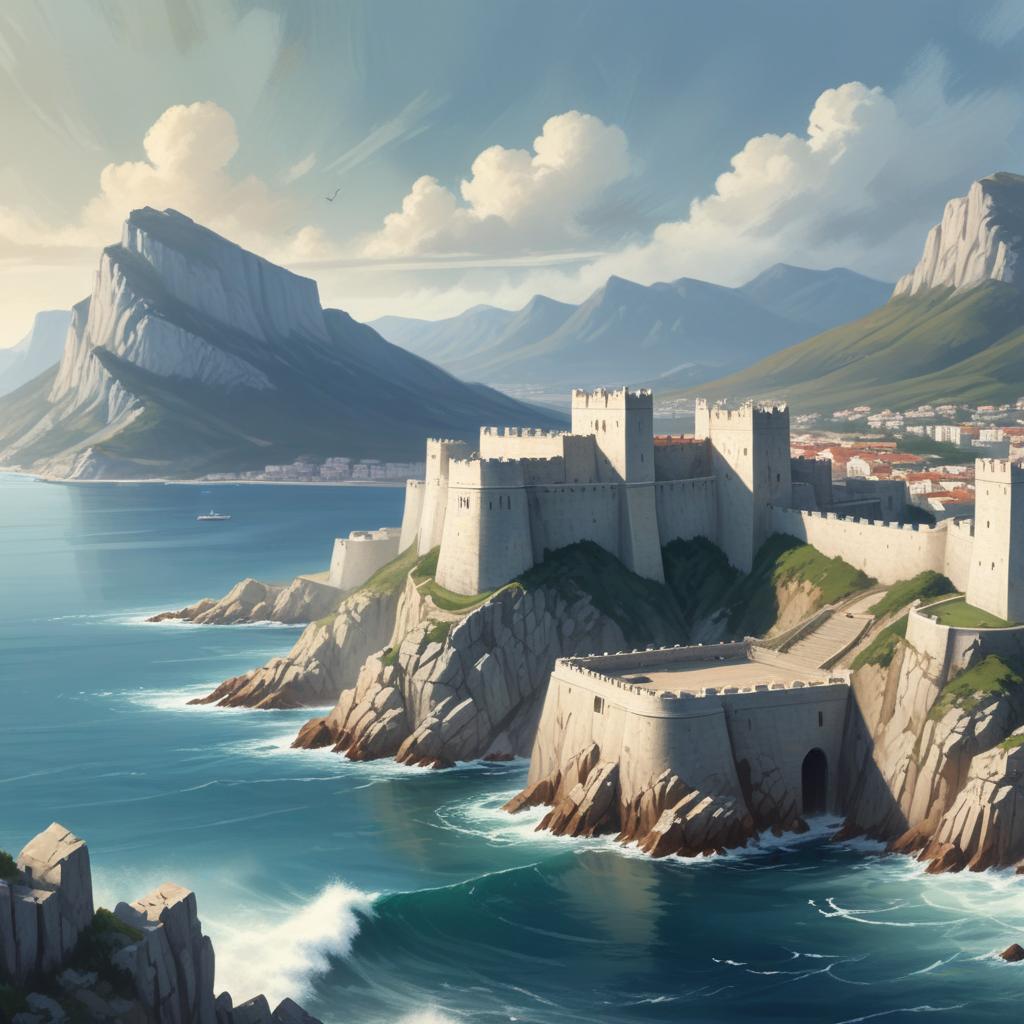
The Great Siege of Gibraltar showcased a remarkable interplay of siege tactics and fortress defense, with both sides employing sophisticated methods to gain advantage. The defenders relied heavily on the formidable fortifications, which included thick stone walls, bastions, and strategically placed artillery emplacements designed to repel assaults and control key approaches. These fortifications were continually reinforced throughout the siege to withstand relentless bombardments.
Artillery played a crucial role in the defensive strategy. The British forces stationed numerous cannons along the fortress walls, using them not only to target incoming troops but also to disrupt siege works and enemy artillery positions. Their effective use of artillery fire helped to maintain control over the harbor and surrounding land, making direct assaults costly and difficult.
On the offensive side, the besieging forces implemented extensive siege tactics, including constructing trenches and batteries positioned to weaken Gibraltar’s defenses gradually. They employed heavy artillery to bombard the fortress, attempting to breach walls and create entry points. The attackers also used innovative floating batteries intended to resist counter-battery fire while delivering sustained bombardment. Despite these efforts, the fortress’s strong defensive design and the defenders’ effective artillery use thwarted many of the attackers’ plans.
In summary, the Great Siege illustrated the significance of well-planned fortress defense integrated with effective artillery deployment, countered by sophisticated and persistent siege tactics. This dynamic underscored the evolving nature of military engineering and artillery in 18th-century warfare.
Outcome and historical significance
The siege of Gibraltar ultimately resulted in a decisive British victory, solidifying British control over this strategically critical fortress. Despite numerous and intense attempts by opposing forces to reclaim Gibraltar, the resilience and determination of the British garrison ensured that the territory remained firmly under British rule. This outcome not only secured a vital naval base controlling access to the Mediterranean but also demonstrated Britain’s growing military and naval prowess during that era.
The historical impact of this siege was profound. Holding Gibraltar allowed Britain to dominate key maritime routes and maintain a stronghold that influenced regional power balances in Europe and beyond. The British victory underscored the importance of well-fortified positions in colonial and military strategy, shaping how conflicts were approached in subsequent decades. Furthermore, the continuous British presence in Gibraltar contributed to shaping the region’s cultural and political landscape, fostering a unique blend of British and Mediterranean influences.
In a broader context, the siege outcome had lasting ramifications for international relations, highlighting the interplay between military strength and diplomacy. Gibraltar became a symbol of British resilience and strategic acumen, often cited as a pivotal factor in Britain’s imperial dominance. Overall, the British victory at Gibraltar not only secured a key military asset but also cemented its role in shaping the geopolitical history of the Mediterranean region.
Legacy and modern relevance of the Sieges
The sieges of Gibraltar have left an indelible mark on the territory, shaping its identity and influencing the way it is perceived and celebrated today. The Gibraltar legacy is deeply intertwined with these historic conflicts, which have contributed to the region’s unique cultural fabric and its steadfast political stance. These sieges have become foundational stories that continue to resonate in modern Gibraltar, forging a community that prides itself on resilience and strategic importance.
From a cultural perspective, the echoes of the sieges are evident in local traditions, commemorations, and the collective memory of the people. Gibraltar’s cultural impact is visible in annual events and historical reenactments that attract residents and visitors alike, fostering a strong sense of place and identity. The stories of endurance and defiance during the sieges are celebrated through museums, monuments, and educational programs that ensure the legacy is passed down through generations.
Politically, the sieges have cemented Gibraltar’s position as a symbol of sovereignty and protection. The historical experience of withstanding repeated attacks has underpinned Gibraltar’s self-governance and its assertions of autonomy within the broader geopolitical landscape. This legacy supports the territory’s ongoing pursuit of maintaining its distinct status while navigating complex relationships with neighboring governments.
Tourism in modern Gibraltar heavily leverages its rich siege history, drawing visitors from around the world eager to explore its fortifications, tunnels, and battlegrounds. The cultural impact of the sieges is thus also an economic driver, offering guided tours, museums, and heritage sites that bring the dramatic past to life. This infusion of historical tourism reinforces Gibraltar’s identity as a place of strategic and cultural significance beyond its size.
In conclusion, the sieges of Gibraltar have profoundly shaped the territory’s modern identity, embedding a powerful legacy that permeates its cultural expressions, political narrative, and economic initiatives. Through this enduring legacy, Gibraltar continues to honor its past while asserting its relevance and vitality in the present day.
Gibraltar’s cultural heritage and tourism
The historical sieges of Gibraltar have played a crucial role in shaping the territory’s rich cultural heritage and continue to be a significant draw for Gibraltar tourism. These dramatic events, spanning several centuries, have left behind an array of historic sites that tell the story of resilience and strategic importance. Fortifications, tunnels, and battlements from various sieges remain well-preserved, offering visitors a unique glimpse into the past. Walking through these sites, tourists can experience the legacy of the soldiers and communities who endured prolonged sieges, making the history vivid and tangible.
Gibraltar’s cultural heritage is deeply intertwined with its military history, and this connection attracts history enthusiasts and general tourists alike. Museums and guided tours dedicated to the sieges provide engaging narratives and artifacts, enriching the visitor experience. The various forts and the Great Siege Tunnels are iconic landmarks that serve as reminders of Gibraltar’s strategic importance and cultural survival through conflict. Many events and exhibitions also celebrate this heritage, further promoting Gibraltar tourism by inviting visitors to explore and appreciate the site’s historical significance.
Overall, the sieges have contributed not only to Gibraltar’s identity but also to its economy by making it a unique tourist destination. The blend of natural beauty, combined with a compelling story of endurance and military ingenuity, ensures that Gibraltar remains a fascinating location for those interested in cultural heritage and historic sites.

I have always been captivated by the unique cultural tapestry of the Rock, particularly how Moorish, Spanish, and British influences shaped its development over centuries. My passion lies in translating these complex historical narratives into engaging educational resources that make Gibraltar’s past accessible to everyone. I spend my free time exploring military fortifications and reading first-hand accounts of life at the Pillar of Hercules.