Historical Importance of Gibraltar as a Coaling Station
Gibraltar’s history as a coaling station is deeply intertwined with its strategic geographic location and its pivotal role in naval logistics during the height of the British Empire. Situated at the entrance of the Mediterranean Sea, Gibraltar offered a crucial refueling point for coal-powered ships, which were the backbone of naval fleets in the 19th and early 20th centuries. Its position enabled it to control the vital maritime choke point between the Atlantic Ocean and the Mediterranean, making it indispensable for the British Navy and merchant vessels alike.
As the British Empire expanded its global reach, maintaining a strong naval presence became paramount. Coal-powered ships required regular stops to replenish their coal supplies, and coaling stations became critical infrastructure in sustaining long-range naval operations. Gibraltar, equipped with extensive coaling facilities, emerged as a preferred stopover for the Royal Navy and commercial vessels traveling between Europe, Africa, and various colonies. This role highlighted Gibraltar’s strategic significance in ensuring naval superiority and efficient maritime communication within the empire.
During this age of coal, naval logistics were fundamentally dependent on timely resupply points. Gibraltar’s coaling station was not just a fueling depot but also a hub for ship repairs and crew rest, enabling extended naval campaigns and quick turnaround times. The station’s well-fortified position allowed it to serve as both a supply center and a defensive stronghold, ensuring British dominance over one of the most critical naval routes in the world.
The significance of Gibraltar in naval logistics also extended into its impact on military strategy and economic control. By securing Gibraltar as a coaling station, the British Empire ensured a reliable base for its coal-powered navy, supporting control over sea lanes essential for trade and military operations. This, in turn, reinforced Gibraltar’s status as a symbol of British naval power and colonial reach throughout history, shaping the geopolitics of the Mediterranean and beyond.
Strategic Location of Gibraltar
Gibraltar’s strategic location at the crossroads of the Mediterranean Sea and the Atlantic Ocean made it an ideal coaling station in the age of steam-powered naval and commercial vessels. Positioned at the narrow entrance of the Mediterranean, Gibraltar acts as a vital gateway controlling the flow of maritime traffic between the Mediterranean basin and the vast Atlantic shipping routes. This advantageous geographical position enabled it to become a crucial naval base for the British Empire and other maritime powers seeking to maintain influence over key global trade corridors.
As a coaling station, Gibraltar offered a secure and well-supplied harbor where ships could refuel and resupply, extending their operational reach and enabling continuous naval and commercial activities across regions. Its proximity to major shipping lanes allowed merchant fleets and military vessels convenient access to coal and necessary provisions, reducing downtime and ensuring swift passage through the Mediterranean Strait. The naval base established in Gibraltar further strengthened its role, providing strategic military advantages by enabling control and surveillance over this critical juncture.
The influence of Gibraltar’s strategic location extended beyond mere refueling; it served as a hub for coordinating naval operations and protecting vital maritime trade routes in the Mediterranean and Atlantic. This dual role boosted Gibraltar’s significance in international maritime commerce and defense, making it indispensable in maintaining the balance of naval power and securing the economic lifelines of empires engaged in global trade networks.
Role in British Naval Dominance
Gibraltar’s coaling facilities played a pivotal role in establishing and maintaining British naval dominance throughout the 19th and early 20th centuries. As steam-powered ships gradually replaced traditional sailing vessels, the need for reliable and strategically located coaling stations became critical. Gibraltar, positioned at the entrance to the Mediterranean Sea, offered an unmatched advantage for the British Navy by serving as a crucial refueling point for its fleets. This allowed warships to extend their operational range significantly, maintaining a presence far from home ports while remaining combat-ready.
The coaling facilities in Gibraltar were meticulously developed to support rapid and efficient refueling, enabling the British military to project power swiftly across global waters. By possessing such a vital logistical hub, the British Navy could support sustained naval operations without dependence on foreign ports, thereby reducing vulnerability and increasing strategic flexibility. This military advantage ensured that British warships had the coal supplies necessary to control critical sea lanes, protect trade routes, and respond quickly to emerging threats.
In essence, Gibraltar’s coaling facilities were not simply about fueling ships—they were instrumental in underpinning the British Empire’s broader strategy of naval dominance. The ability to maintain fleets at sea for extended periods, supported by Gibraltar’s coal reserves, solidified Britain’s position as the preeminent naval power of the era.
Infrastructure and Operations of the Gibraltar Coaling Station
The coaling infrastructure at Gibraltar was a vital component in maintaining the efficiency and operational readiness of both naval and merchant fleets passing through this strategic maritime hub. Given Gibraltar’s importance as a coaling station, extensive facilities were established to handle large volumes of coal with speed and organization, ensuring vessels could refuel quickly and continue their voyages without extended delays.
At the heart of Gibraltar’s fuel storage system were large coal bunkers positioned conveniently along the port facilities. These bunkers were designed to hold thousands of tons of coal, keeping supplies secure and readily available. The infrastructure included covered storage areas to protect the fuel from the elements, minimizing spillage and coal degradation caused by weather conditions. Efficient placement of these storage units allowed for rapid transfer of coal to supply vessels docked at the harbor.
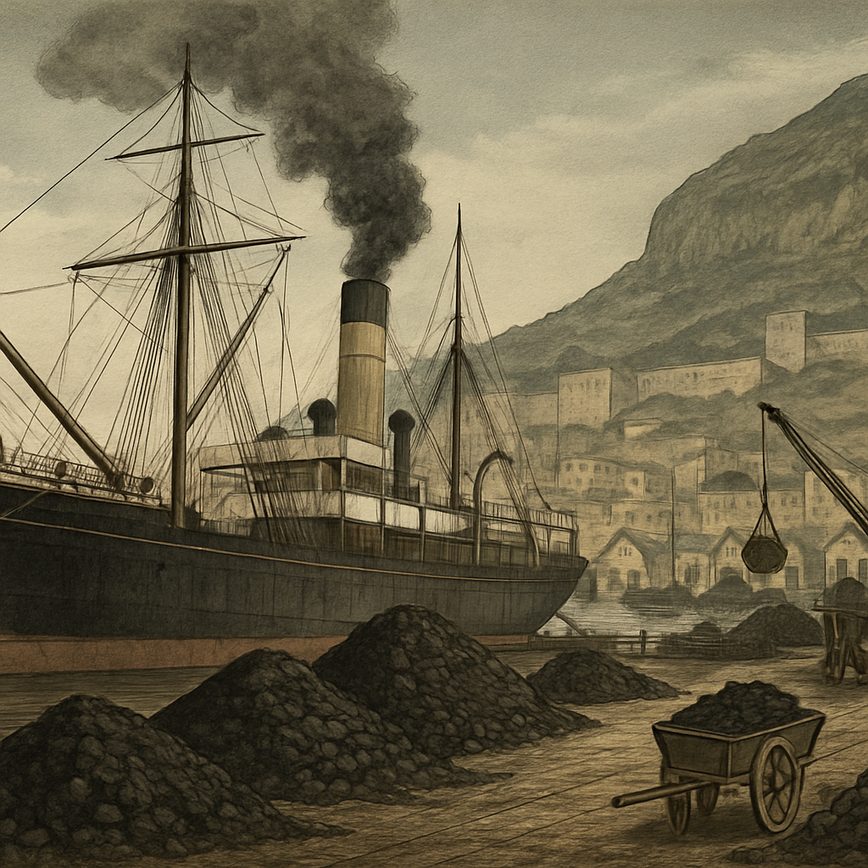
The port facilities themselves were enhanced with specialized coaling jetties equipped with derricks and cranes to lift and move the heavy coal sacks or loose coal bulk from storage to the ships. A network of rail tracks often fed coal directly from the storage yards to the docks, streamlining the loading process. This mechanized approach to coal handling was essential in reducing turnaround times, a critical factor for naval logistics where operational tempo necessitated fast resupply.
Daily operational procedures at the Gibraltar coaling station were well-coordinated and regimented to support the high volume of traffic. Teams of dockworkers and engineers worked in shifts to maintain an uninterrupted supply chain, managing tasks from coal inspection and quality control to loading and logistical planning. Communication between port authorities and ship captains ensured that coaling schedules synchronized effectively with each vessel’s departure and arrival times, allowing for smooth operations.
Moreover, Gibraltar’s coaling station played a critical role in naval logistics by providing not just fuel but also repair and maintenance support associated with coaling. The station was equipped with workshops and storage for spare parts, enabling quick turnarounds for essential repairs that might be required while vessels were in port. This comprehensive support system made Gibraltar an indispensable refueling point, enhancing the operational range and endurance of fleets navigating the Mediterranean and beyond.
Facilities and Storage Capabilities
Gibraltar’s coaling station was equipped with extensive coal storage and bunkering facilities designed to support the rapid and efficient refueling of ships. The port featured large coal bunkers that could store substantial quantities of coal, ensuring a steady supply for vessels docking at the harbor. These coal storage areas were strategically located near the waterfront to minimize the distance coal had to be moved, thus speeding up the loading process.
The port equipment included cranes and conveyor systems that facilitated the smooth transfer of coal from storage bunkers to the ships. These modern loading systems were capable of handling large volumes of coal swiftly, reducing waiting times for vessels. Gibraltar’s bunkering facilities were designed to cater to a variety of ship sizes, with ducting and piping systems that allowed coal to be delivered directly to a ship’s bunkers safely and efficiently.
Additionally, specialized handling equipment ensured that coal dust and spillage were minimized during the transfer process, maintaining cleanliness and safety within the port area. This combination of well-organized coal storage, advanced port equipment, and efficient loading systems enabled Gibraltar to serve as a vital coaling station, supporting naval and merchant fleets passing through the busy maritime routes. The effectiveness of these facilities underpinned Gibraltar’s reputation as a crucial refueling hub in the era of coal-powered shipping.
Logistics and Supply Chain Management
The coal supply for Gibraltar’s coaling station was a complex operation that required meticulous logistics and transportation planning to ensure uninterrupted service. Coal was primarily sourced from British coalfields, where it was carefully selected for quality and quantity to meet the demands of naval and commercial vessels frequenting the station. Once procured, the coal was transported via dedicated cargo ships directly to Gibraltar, leveraging the strategic location of the port to facilitate quick turnaround times.
Upon arrival, the coal was offloaded using cranes and conveyor systems designed to handle large volumes efficiently. The logistics chain included storage facilities equipped to keep the coal dry and accessible, preventing shortages during peak usage times. Skilled supply chain managers coordinated the scheduling of shipments and offloading to maintain a consistent inventory, thus avoiding any disruptions that might affect the coaling service.
Transportation within Gibraltar’s coaling station involved a network of rail systems and carts to move coal seamlessly from storage areas to ships. This intricate supply chain ensured a steady flow of fuel to vessels, minimizing delays in their voyages. The management team adapted to fluctuations in demand by optimizing inventory levels and streamlining logistics operations, thereby sustaining Gibraltar’s reputation as a reliable coaling hub in the Mediterranean.
Decline and Legacy of Gibraltar as a Coaling Station
The decline of Gibraltar as a coaling station was primarily driven by the global transition from coal to oil as the dominant fuel source for naval and commercial vessels. By the early 20th century, oil had emerged as a more efficient and powerful energy source, offering greater range and easier handling compared to coal. This shift significantly reduced the strategic necessity of coal depots such as Gibraltar, which had for decades served as a critical refueling hub for ships navigating the Atlantic and Mediterranean.
Several factors accelerated this decline. The technological advancements in ship engineering made oil-fired steam turbines and diesel engines increasingly popular, as they required less maintenance and fewer crew members to operate. Additionally, oil bunkering facilities, which were easier to manage and quicker to replenish, began to replace coal yards worldwide. Gibraltar, with its extensive coal infrastructure, found it challenging to adapt rapidly to these changing demands, leading to a gradual decrease in its role as a coaling station.
Despite this decline, Gibraltar’s legacy within naval history remains influential. It was a pivotal maritime choke point and refueling station during the height of the British Empire’s naval dominance. The harbor’s strategic location allowed it to support naval expeditions, commercial shipping, and military operations, contributing to global maritime security and control of important sea routes. Its role as a coaling station laid the groundwork for modern naval logistics and demonstrated the importance of maintaining overseas bases to project power.
Moreover, Gibraltar’s maritime legacy extends beyond its industrial function; it symbolizes the evolution of naval strategy and technology. As navies transitioned from coal to oil, Gibraltar adapted by serving different military and commercial roles, showcasing its resilience and enduring strategic importance. Today, it stands as a historical testament to an era when coal fuel was vital for naval supremacy and highlights the broader transition in maritime energy sources that reshaped 20th-century naval warfare and commerce.
Shift from Coal to Oil Fuel
The transition from coal to oil fuel marked a pivotal moment in naval modernization and the broader energy evolution of the early 20th century. Technological advancements made oil a more efficient and practical choice compared to coal, as oil-powered ships could travel faster, require less manpower for refueling, and operate with greater range and flexibility. This shift was driven by the strategic need for navies to maintain supremacy through improved ship performance and logistics.
Oil fuel allowed for quicker refueling and reduced the burden of coal storage and handling aboard ships. These improvements facilitated faster deployment and more extended missions, shaping naval tactics and global maritime strategy. As a result, traditional coaling stations, including Gibraltar, experienced a decline in their strategic importance and operational volume. Gibraltar’s coaling station, once a vital hub for refueling coal-powered fleets navigating through the Mediterranean, began to see a reduction in traffic as navies retooled their fleets for oil fuel consumption.
The closure of Gibraltar’s coaling station reflected this broader military and technological shift. While it had been essential for supporting the coal-powered vessels that formed the backbone of naval strength, the transition to oil undermined the station’s role. This change necessitated new infrastructure adaptations, such as oil storage and fueling facilities, or the repurposing of the site entirely. Ultimately, the shift from coal to oil fuel redefined Gibraltar’s naval and logistical significance in the evolving energy landscape of maritime power.
Preservation and Historical Significance
Efforts to preserve Gibraltar’s coaling station history have become a vital part of maintaining its rich naval heritage. As a strategic naval hub, Gibraltar played a crucial role during the age of steam-powered maritime travel, and preserving this history offers unique insights into the maritime past. Various restoration projects and conservation initiatives focus on safeguarding the physical structures of the coaling station, ensuring that future generations can witness and understand the mechanisms behind historical naval operations.
Gibraltar’s dedication to historical preservation extends beyond physical restoration. The site acts as a cornerstone for naval heritage tourism, attracting visitors interested in maritime history and the evolution of naval logistics. Local museums and maritime exhibitions frequently highlight the importance of the coaling station in supporting naval fleets, playing a significant role in educating the public about the strategic and economic importance of Gibraltar throughout history.
In addition, many educational programs collaborate with Gibraltar’s maritime museums to deepen public appreciation of the site’s historical significance. These programs emphasize the technological advancements in fueling naval vessels and the broader context of Gibraltar as a pivotal coaling station. By merging historical preservation with tourism and education, Gibraltar continues to honor its maritime heritage while fostering a vibrant cultural tourism sector.

I have always been captivated by the unique cultural tapestry of the Rock, particularly how Moorish, Spanish, and British influences shaped its development over centuries. My passion lies in translating these complex historical narratives into engaging educational resources that make Gibraltar’s past accessible to everyone. I spend my free time exploring military fortifications and reading first-hand accounts of life at the Pillar of Hercules.