Overview of the Great Siege of Gibraltar
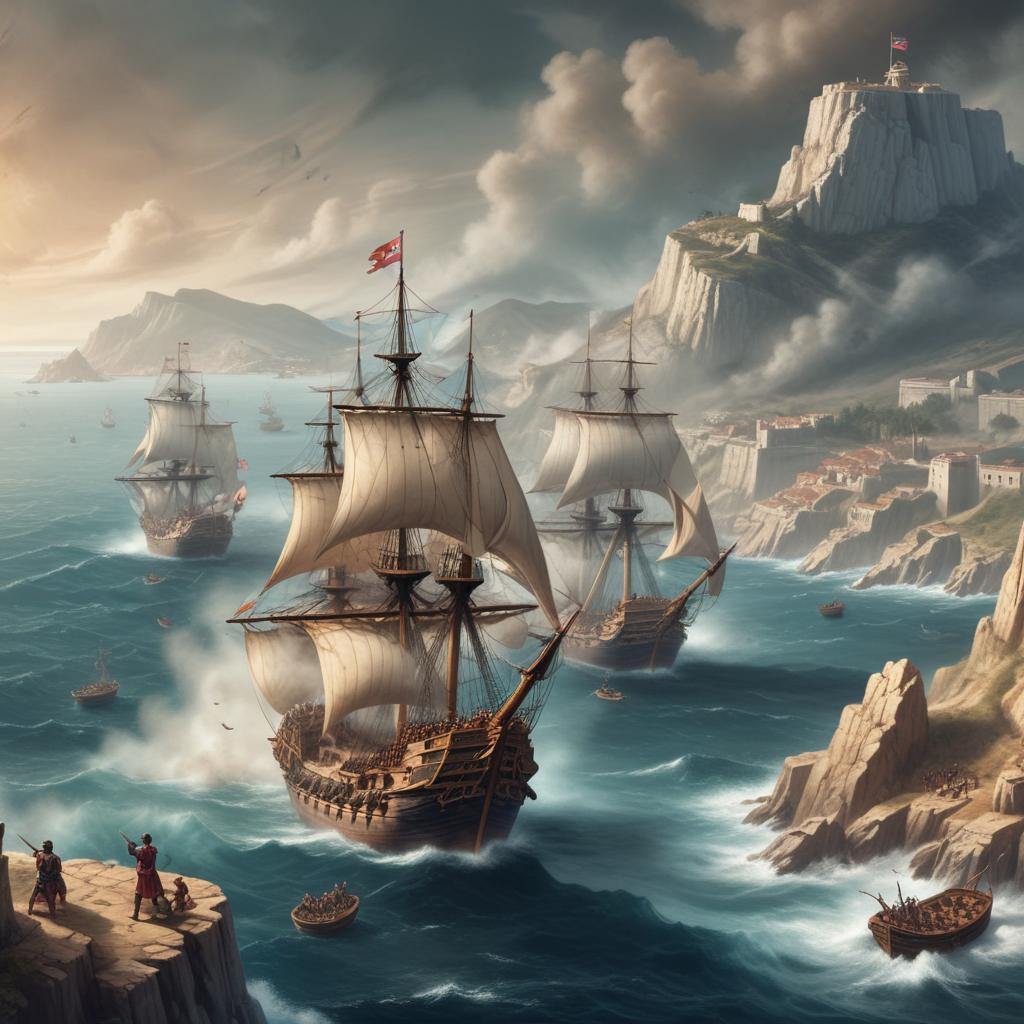
The Great Siege of Gibraltar stands as one of the most significant and prolonged military engagements in the history of Gibraltar. Lasting from 1779 to 1783, this historic siege was a monumental confrontation between British forces holding Gibraltar and the combined Spanish and French armies aiming to reclaim the territory during the American Revolutionary War. The siege not only tested the resilience and strategic importance of Gibraltar but also marked a pivotal moment in European military history.
Gibraltar’s strategic location at the entrance to the Mediterranean Sea made it a critical naval stronghold for the British Empire. The siege began in June 1779 when Spanish and French troops, supported by a fleet, initiated their efforts to capture the Rock. Over the course of four years, the defenders faced continuous bombardment, supply shortages, and numerous assaults. Despite these challenges, the British garrison, commanded by Governor George Augustus Eliott, managed to hold their ground, demonstrating remarkable courage and determination.
The Great Siege involved a series of intense battles and innovative military tactics, including the famous use of floating batteries by the Franco-Spanish forces, which ultimately failed against the resilient British defenses. The defenders’ successful resistance was crucial in maintaining British control over Gibraltar, which remains a British Overseas Territory to this day.
The historical significance of the Great Siege of Gibraltar extends beyond the military victory; it symbolizes the spirit of endurance and the strategic importance of Gibraltar in global naval dominance. The siege concluded in February 1783 with the signing of the Treaty of Paris, which reaffirmed British sovereignty over the territory. Today, the Great Siege is commemorated as a defining chapter in Gibraltar’s history and serves as a powerful reminder of its resilience in the face of adversity.
Background and Causes
The Great Siege of Gibraltar was the result of a complex interplay of political and military circumstances in the early 18th century. At the heart of the siege causes lies the aftermath of the War of the Spanish Succession, a major European conflict sparked by the death of the childless Charles II of Spain. This war fundamentally reshaped territorial control in Europe, especially affecting Spain, France, and Britain, and ultimately led to Gibraltar’s strategic significance becoming a focal point of contention.
Following the Treaty of Utrecht in 1713, Gibraltar was ceded to Britain, a decision that fueled resentment among Spain and its allies. The territory’s position at the entrance to the Mediterranean Sea granted it immense military and naval importance, allowing control over crucial maritime routes. This strategic importance made Gibraltar a coveted prize for Spain, eager to reclaim it and restore its influence in the region.
The broader context of 18th century conflicts contributed further to the conditions leading to the siege. The ongoing rivalry between European powers, particularly between Britain and the Bourbon allies of Spain and France, set the stage for renewed hostilities. The siege, therefore, can be understood as a direct consequence of these war-time dynamics, aimed at dislodging British control and asserting Spanish sovereignty over Gibraltar.
Timeline and Key Events
The Great Siege of Gibraltar, spanning from 1779 to 1783, was marked by a series of intense military events and key battles that shaped its outcome. The siege timeline begins in June 1779, when Spanish and French forces initiated the blockade, aiming to reclaim Gibraltar from British control. Early in the siege, the defenders faced relentless bombardments and multiple assaults, with the first major battle occurring in September 1779, where a combined land and sea attack was repelled.
In 1780, the siege intensified with the introduction of floating batteries designed to withstand British fire. The Battle of 1782, often considered a turning point, saw the bold yet ultimately unsuccessful assault by these batteries, which were decisively destroyed by British cannon fire. This defeat marked a significant setback to the besieging forces. Throughout these years, constant skirmishes and smaller battles also unfolded, keeping both sides on edge.
The British defenders, though outnumbered, successfully employed innovative defensive tactics, including superior artillery positioning and effective resupply efforts by sea, which played a crucial role in maintaining Gibraltar. The siege finally ended in early 1783 when the besieging forces withdrew, concluding one of the longest and most famous siege timelines in history. This period is renowned not only for its major battles but also for the resilience demonstrated by the military defenders amidst relentless pressure.
Military Strategies and Tactics
The Great Siege of Gibraltar was a prolonged and intense conflict that showcased a variety of siege tactics and defense strategies employed by both the British defenders and the Franco-Spanish attackers. Each side brought complex military approaches tailored to the unique geography and fortifications of Gibraltar, making the siege an important case study in siege warfare history.
On the defensive side, the British garrison focused heavily on fortifying Gibraltar’s natural rocky outcrops along with man-made fortifications such as bastions, walls, and batteries. The defenders exploited the high ground advantage to maximize artillery effectiveness, ensuring their cannons could target attackers from a protected, elevated position. Additionally, the British implemented an intricate network of tunnels and underground chambers, which allowed them to maneuver troops, store supplies, and launch counterattacks while avoiding enemy fire. These defense strategies were critical in maintaining supply lines and morale during the long siege.
British forces also adapted to the siege warfare by employing dynamic defense tactics. They frequently rotated troops to frontline positions to maintain vigilance and readiness. The defenders utilized mines and pre-prepared explosive charges to disrupt enemy advances and deter close assaults. Moreover, the British conducted reconnaissance and skirmishes to gather intelligence on Franco-Spanish troop movements and weaken their siege lines before a full assault could be mounted. Such proactive defense allowed the British to maintain control despite being outnumbered.
Conversely, the Franco-Spanish attackers applied classical siege tactics aimed at breaching Gibraltar’s defenses and exhausting the defenders. They relied heavily on constructing extensive trenches, artillery batteries, and siege works to encircle the fortress and cut off supplies. Siege warfare techniques included constant bombardment aimed at softening defensive positions and creating breaches in the walls. These attackers also attempted to exploit any weaknesses in Gibraltar’s defense layout and launched coordinated assaults to overwhelm specific fortifications.
Logistics played a major role in the attackers’ strategy, with efforts focused on maintaining long supply lines and ammunition stocks to sustain the prolonged siege. They frequently shifted artillery placements to find the most effective firing positions, adapting to the defenders’ countermeasures and natural terrain. Though their siege tactics were initially effective in applying pressure, the Franco-Spanish forces faced challenges from the resilient British defense, harsh weather, and limited resources.
In summary, the military strategies and tactics of the Great Siege of Gibraltar exemplify the complexity of siege warfare, showcasing how the interplay of fortified defense, active defense strategies, and persistent siege tactics form the core of protracted military engagements. The British defenders’ innovative defense strategies successfully withstood the Franco-Spanish siege tactics, highlighting the importance of preparation, adaptability, and resilience in historical siege warfare.
British Defensive Measures
During the Great Siege of Gibraltar, the British defense relied heavily on their ability to transform the fortress into an impregnable bastion. The Gibraltar garrison undertook extensive fortifications, reinforcing existing walls and constructing new defensive positions to withstand the relentless assaults. They employed a strategic layout of bastions, curtain walls, and redoubts that optimized their defensive capabilities.
Artillery played a crucial role in the British defense. The garrison mounted a vast array of cannons and mortars on well-fortified batteries positioned to cover the most vulnerable approaches to the fortress. These artillery placements enabled the British forces to deliver devastating firepower against enemy troops attempting to advance, significantly disrupting siege operations and repelling assaults with coordinated cannonades.
Manpower was another key element in the successful defense. The Gibraltar garrison fortified the morale and readiness of their troops, ensuring swift communication and effective deployment along the defensive lines. Soldiers were stationed at critical points, manning the artillery and maintaining vigilant watch duties. Their endurance and resilience under continuous bombardment and assault were vital in holding the fortress against superior enemy numbers.
By combining well-planned fortifications, powerful artillery, and steadfast manpower, the British defense of Gibraltar proved formidable. These measures allowed the garrison to repel repeated attacks, ensuring the fortress remained under British control despite intense and prolonged siege conditions.
Franco-Spanish Offensive Tactics
The Franco-Spanish army employed a combination of strategic techniques and siege weapons during the Great Siege of Gibraltar to overcome the well-fortified British garrison. Central to their offensive tactics was the extensive use of artillery bombardment. Massive siege guns were positioned to relentlessly shell the fortress, aiming to breach walls and weaken defensive positions. These heavy cannons, alongside mortars and other siege equipment, allowed the attackers to maintain a constant and punishing barrage on key targets within Gibraltar, causing significant structural damage and demoralizing defenders.
In addition to artillery, the Franco-Spanish forces implemented a comprehensive naval blockade designed to cut off Gibraltar from external supplies and reinforcements. Their fleet effectively restricted British access to the sea, preventing merchant vessels and relief ships from reaching the beleaguered garrison. This blockade was a critical element of the siege, as it aimed to starve the defenders into submission by limiting food, ammunition, and medical resources.
The combination of persistent artillery bombardment and a tight naval blockade showcased the Franco-Spanish army’s deliberate and coordinated approach to siege warfare. By applying pressure both from land and sea, they sought to exhaust the British defenders’ capability to resist over an extended period. These tactics underscored the importance of siege weapons and maritime control in 18th-century military operations and were instrumental in shaping the protracted and intense nature of the Great Siege of Gibraltar.
Aftermath and Historical Impact
The Great Siege of Gibraltar, which lasted from 1779 to 1783, ended with a decisive British victory, solidifying Gibraltar’s status as a key British military stronghold. The siege outcomes significantly shaped Gibraltar’s history, reinforcing its strategic importance at the southern tip of the Iberian Peninsula. Despite intense Spanish and French efforts to reclaim the territory, the British defense proved resilient and well-coordinated, marking a turning point in the region’s military and political landscape.
One of the most immediate results of the siege was the reinforcement of British control over Gibraltar. This outcome ensured that Gibraltar remained a vital naval base, controlling access to the Mediterranean Sea and influencing trade and military movements for centuries. The successful defense during the siege elevated Gibraltar’s importance, both militarily and symbolically, as a bastion of British resolve and strategic foresight.
Furthermore, the legacy of the siege affected the long-term relations between Britain and Spain. The failure to recapture Gibraltar left a lingering tension and unresolved territorial dispute that persisted well into modern times. Although Spain sought to negotiate and regain sovereignty over the territory through diplomacy, Britain maintained its stance, leading to a complex diplomatic relationship characterized by periodic disputes and negotiations.
The impact on Gibraltar itself extended beyond military and diplomatic spheres. The siege forged a unique cultural and social identity among the inhabitants, fostering resilience and loyalty to the British Crown. This identity remains integral to Gibraltar’s contemporary society, influencing its political affiliations and community dynamics.
In historical terms, the Great Siege is remembered as a defining episode that demonstrated the strategic value of Gibraltar and the tenacity of its defenders. It also highlighted the intense rivalry between Britain and Spain, which shaped the broader geopolitical landscape of Europe and the Mediterranean for decades. As a result, Gibraltar’s status and the enduring legacy of the siege continue to play a crucial role in discussions about sovereignty, defense, and international relations in the region.
Political and Territorial Consequences
The Great Siege of Gibraltar had profound political and territorial consequences that shaped the future of the region and influenced international diplomacy. Following the siege, territorial control of Gibraltar remained firmly in British hands, solidifying its strategic importance as a naval base and a gateway between the Atlantic Ocean and the Mediterranean Sea. This control was a vital component of British imperial power and military strategy for centuries to come.
Diplomatic agreements and treaty outcomes after the conflict reflected the new geopolitical reality established by the siege. The Treaty of Utrecht in 1713, which formally ended the War of Spanish Succession, recognized British sovereignty over Gibraltar, despite Spanish protests and ongoing contention. This treaty outcome was pivotal in defining national borders and establishing Gibraltar as a British territory under international law, leaving a lasting impact on territorial claims in the region.
The international impact of the siege extended beyond the immediate territorial adjustments. It served as a demonstration of British naval and military resilience, enhancing the nation’s diplomatic leverage in Europe. The siege also intensified rivalry between European powers, particularly Spain and Britain, and set the stage for future diplomatic and military confrontations regarding the control and status of Gibraltar.
Ultimately, the Great Siege reinforced British control over Gibraltar and shaped the diplomatic landscape through treaty outcomes that acknowledged this possession, with significant international ramifications enduring well beyond the 18th century.
Cultural and Military Legacy
The Great Siege of Gibraltar holds a prominent place in both the military legacy and cultural identity of Gibraltar. This historic event profoundly shaped Gibraltar culture, embedding a strong sense of resilience and defiance that continues to influence the territory’s character today. The siege not only marked a pivotal military confrontation but also became a symbol of endurance and strategic importance, celebrated and remembered through various commemorations.
From annual reenactments to dedicated museums and monuments, Gibraltar’s historical memory serves as a living tribute to the sacrifices and tactical ingenuity demonstrated during the siege. These commemorations reinforce the importance of the event in the collective consciousness of the people, preserving stories that underscore the military legacy that the siege imparted. Educational programs and cultural events often highlight these lessons, emphasizing the value of perseverance, strategic planning, and unity under pressure.
Moreover, the siege’s military legacy resonates beyond Gibraltar’s borders, influencing military studies and historical discourse worldwide. It offers critical insights into siege warfare, fortification effectiveness, and the broader geopolitical dynamics of the 18th century. The cultural significance and the lasting respect for the defenders of Gibraltar inculcate a rich appreciation of history and identity that continues to be a source of pride and inspiration.

I have always been captivated by the unique cultural tapestry of the Rock, particularly how Moorish, Spanish, and British influences shaped its development over centuries. My passion lies in translating these complex historical narratives into engaging educational resources that make Gibraltar’s past accessible to everyone. I spend my free time exploring military fortifications and reading first-hand accounts of life at the Pillar of Hercules.