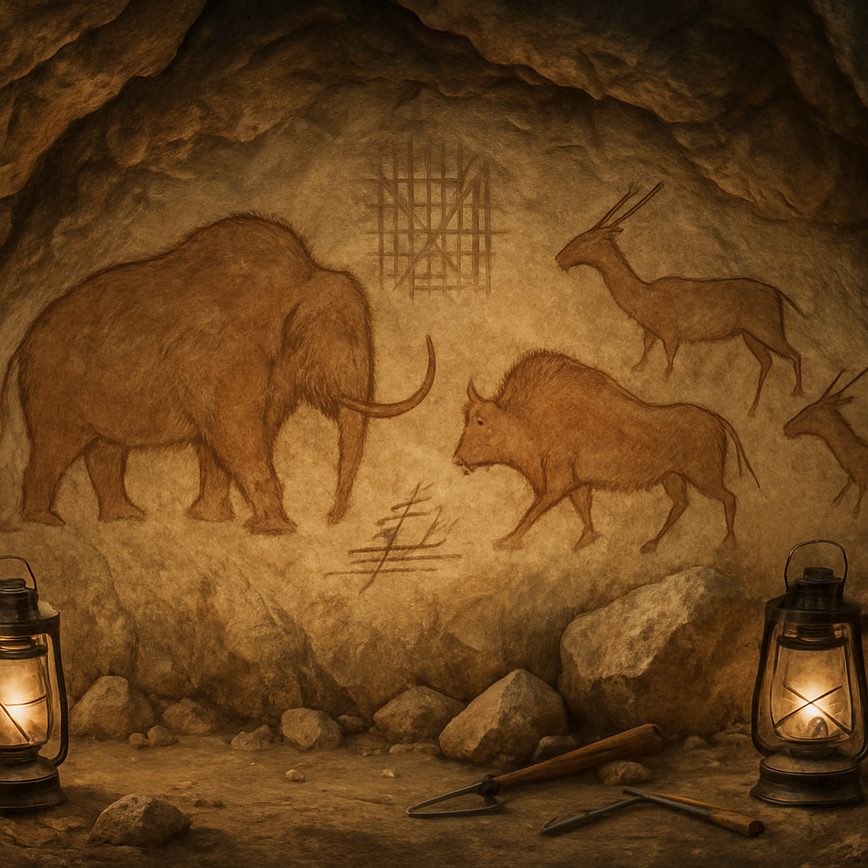
Discovery of Neanderthal Art in Gibraltar Caves
The discovery of Neanderthal art in the caves of Gibraltar marks a groundbreaking archaeological discovery that has reshaped our understanding of prehistoric art and Neanderthal cognitive abilities. These caves, nestled in a strategic location at the southern tip of the Iberian Peninsula, have long been a focus of archaeological interest due to their rich history of human occupation. Initial findings of Neanderthal art in the Gibraltar caves have shed light on the sophisticated symbolic behavior of Neanderthals, challenging earlier assumptions that such creativity was exclusive to Homo sapiens.
The initial excavation efforts that brought these findings to light began in the mid-20th century, but it wasn’t until recent decades that the significance of the artistic elements was fully appreciated. Archaeologists carefully uncovered engravings and patterns on cave walls, as well as abstract shapes and representations that suggest deliberate artistic expression. These artifacts were discovered in several key caves, including Gorham’s Cave, Vanguard Cave, and Ibex Cave, each contributing unique pieces of evidence to the overall archaeological discovery of Neanderthal art.
Excavations employed meticulous stratigraphic methods to preserve the context of the art, enabling researchers to accurately date the findings. Radiocarbon dating and other advanced dating techniques confirmed that the artworks predate the arrival of modern humans in Europe, firmly attributing them to Neanderthal inhabitants. This timeline is critical, as it highlights that Neanderthals engaged in creating art tens of thousands of years ago, using the natural formations of the caves as their canvas.
The discovery also includes evidence of pigment use, with traces of ochre and other mineral-based colors found near the art sites. This indicates that the Neanderthals may have not only engraved their environment but also adorned it with colors, adding a dimension of aesthetic consideration to their creations. These initial findings from the Gibraltar caves have opened a new chapter in the study of prehistoric art, demonstrating that Neanderthals possessed a rich cultural and symbolic life that rivaled that of their Homo sapiens contemporaries.
Overall, the archaeological discovery of Neanderthal art in the Gibraltar caves is a testament to the complexity of these ancient human relatives, providing a crucial glimpse into the origins of artistic expression and the shared heritage of humanity’s distant past.
Significance of the Gibraltar Caves
The Gibraltar caves are of immense significance as they provide a unique window into the prehistoric habitat and cultural life of Neanderthals. These caves represent some of the most important Neanderthal sites discovered, offering valuable archaeological evidence that helps researchers piece together how these ancient hominins lived, survived, and interacted with their environment. The geological formations themselves have preserved artifacts, fossils, and remnants of daily activities, allowing scientists to study the physical and behavioral characteristics of Neanderthal populations with remarkable detail.
Situated at the crossroads of Europe and Africa, the Gibraltar caves served as a strategic prehistoric habitat, supporting Neanderthal groups over tens of thousands of years. Excavations have uncovered tools, animal bones, and symbolic objects, highlighting the cognitive and cultural capacities of Neanderthals. These findings challenge previous assumptions and shed light on the sophisticated ways in which Neanderthals adapted to climatic fluctuations, hunted, and possibly even expressed artistic creativity within their environments.
Ultimately, the Gibraltar caves are a cornerstone for understanding Neanderthal life and culture. They provide not only a repository of physical evidence but also inspire ongoing debates and discoveries about human evolution. By studying these sites, archaeologists gain crucial insights into the social structures, survival strategies, and cultural practices that defined Neanderthal existence, enriching our knowledge of humanity’s deep past.
Key Artifacts and Their Analysis
The Neanderthal artifacts uncovered in the Gibraltar caves provide compelling evidence of early human creativity and cognitive abilities. Among the key pieces of art discovered are engraved bones, painted shells, and abstract geometric patterns carved into cave walls and stone surfaces. These artifacts are critical to understanding Neanderthal culture and their use of symbolic expression.
Art analysis of these artifacts employs multidisciplinary scientific methods to ensure accuracy and authenticity. Microscopic examination helps identify tool marks and the processes used in engraving or painting. Chemical analysis of pigments and mineral deposits offers insight into the materials and techniques employed by Neanderthals, distinguishing intentional art from natural markings.
Dating techniques such as uranium-thorium dating and optically stimulated luminescence (OSL) are pivotal in establishing the age of the artifacts beyond doubt. These methods allow scientists to date calcite formations overlying the engravings or the last exposure to sunlight of sediments containing the artifacts, respectively. Radiocarbon dating, though useful, is often supplemented by these techniques for older samples where carbon material is scarce.
Through these rigorous scientific techniques, researchers have verified the authenticity of the Neanderthal artifacts, confirming their origin and historical significance. This combination of art analysis and advanced dating techniques continues to shed light on the sophisticated cultural behaviors of Neanderthals in Gibraltar.
Characteristics of Neanderthal Cave Art
Neanderthal cave art discovered in Gibraltar caves offers a fascinating glimpse into the prehistoric creativity and symbolic thinking of our ancient relatives. These early artworks encompass a variety of Neanderthal art styles that range from simple engravings to more complex cave paintings, revealing not only artistic expression but also a capacity for abstract thought and communication.
The types of Neanderthal cave art found include geometric patterns, hand stencils, and symbolic markings. Unlike the detailed figurative paintings typical of later Homo sapiens, Neanderthal cave art often emphasizes abstract forms, such as dots, lines, and grids. These patterns are etched or painted using natural pigments like ochre, charcoal, and manganese oxide, which suggests an intentional use of color and material for meaningful expression.
The styles of these cave paintings reflect a deliberate and consistent approach, indicating an established tradition within Neanderthal groups. For example, some caves contain repetitive motifs and standardized shapes that suggest these were not random decorations but part of a shared visual language. This repetition across diverse locations points to a cultural continuity among Neanderthals in Gibraltar, reinforcing the idea of a community with shared symbolic codes.
Symbolism in Neanderthal cave art plays a crucial role in understanding their cognitive abilities. The abstract designs are believed to represent ideas or convey messages related to social identity, spiritual beliefs, or environmental awareness. Hand stencils, often created by blowing pigment around a hand, might have served as markers of presence or ownership, while geometric patterns could symbolize clan affiliations or ritualistic practices.
In sum, the Neanderthal art styles found in Gibraltar’s caves underscore a sophisticated level of thought and creativity. These artworks were not merely decorative but imbued with meaning, marking an important chapter in the evolution of human symbolic behavior. Through their cave paintings, Neanderthals demonstrated a profound connection to their surroundings and to each other, challenging long-held assumptions about prehistoric art and cognition.
Themes and Motifs in the Artwork
The art themes and motifs found in the Neanderthal cave paintings of Gibraltar offer profound insights into their symbolic world and social structure. These prehistoric images often depict recurring motifs such as human figures, animals, hand stencils, and abstract shapes. The presence of animal imagery, including ibex and deer, suggests the importance of these creatures in Neanderthal life, possibly representing sources of sustenance or spiritual guides. Meanwhile, abstract motifs might indicate early forms of Neanderthal symbolism used to convey complex ideas or stories beyond literal representation.
The motifs in the cave art reveal a sophisticated cultural expression, hinting at shared beliefs or rituals within Neanderthal groups. Hand stencils, for instance, might symbolize identity or presence, acting as a personal or communal signature. These artistic elements suggest that Neanderthals engaged in symbolic thinking, which played a role in their social cohesion and communication. The repetition of certain themes points to a collective understanding and transmission of prehistoric imagery, underscoring the importance of art as a medium for cultural continuity.
Exploring the Neanderthal symbolism within these art themes illuminates aspects of their cognitive world, indicating that their artwork was not merely decorative but a meaningful expression of their experiences and beliefs. This prehistoric artistry in Gibraltar caves not only enriches our knowledge of Neanderthal society but also challenges previous assumptions about their capacity for abstract thought and cultural complexity.
Techniques and Materials Used
Neanderthal art in the Gibraltar caves showcases a fascinating array of art techniques that reveal their advanced creativity. The materials they likely used were primarily natural pigments derived from minerals such as ochre, manganese, and charcoal. These pigments provided a palette of earthy reds, blacks, and yellows that were applied to the cave walls, often with remarkable precision and artistic intent.
To apply these pigments, Neanderthals probably utilized basic tools and methods, such as brushes made from animal hair or plant fibers, and even their own fingers. Evidence suggests they sometimes blew pigment through hollow bones to create stencil effects, demonstrating a sophisticated understanding of how to manipulate materials for artistic impact. Additionally, engraving with sharp stones or bones was another technique employed to create detailed line work and textures.
The use of these art techniques not only highlights Neanderthal creativity but also their cognitive abilities and cultural expression. The deliberate selection of tools and pigments suggests careful planning and an ability to communicate complex ideas visually. This challenges earlier assumptions about Neanderthals, indicating that their artistic endeavors were as meaningful and purposeful as those of early modern humans.
Implications of Neanderthal Art on Human Evolution
The discovery of Neanderthal cave art in Gibraltar has significantly reshaped our understanding of human evolution, particularly concerning Neanderthal cognition and cultural development. Traditionally, Neanderthals were perceived as primitive beings with limited intellectual and artistic capabilities. However, the presence of sophisticated prehistoric art attributed to Neanderthals challenges this outdated view and highlights a more complex and nuanced picture of their cognitive abilities.
Neanderthal art indicates that these hominins possessed symbolic thinking and creativity, traits once believed exclusive to modern Homo sapiens. This artwork suggests that Neanderthals were capable of abstract thought, planning, and possibly even the use of language or symbolic communication. Such evidence reshapes the narrative around human evolution by emphasizing that the cognitive divide between Neanderthals and early modern humans might not have been as vast as previously thought.
The significance of prehistoric art in Neanderthal caves also marks a crucial indicator of cultural development within their communities. Artistic expression reflects social bonding, shared beliefs, and potentially spiritual or ritualistic practices, highlighting that Neanderthals engaged in cultural behaviors once attributed solely to modern humans. This undermines the earlier perception of Neanderthals as merely survival-driven and devoid of complex social structures.
Considering the broader context of human evolution, Neanderthal art reshapes how scientists explore the interaction and overlapping characteristics between Neanderthals and Homo sapiens. The cognitive abilities revealed through their art imply that Neanderthals played a more active and sophisticated role in the evolutionary process than traditionally acknowledged. It prompts a reevaluation of evolutionary models, emphasizing cultural and intellectual exchanges rather than a simple linear progression of human development.
In conclusion, the uncovering of Neanderthal cave art in Gibraltar profoundly impacts our understanding of prehistoric intelligence and cultural complexity. It elevates the prehistoric art significance beyond mere aesthetics to a crucial piece of evidence demonstrating Neanderthal cognition and cultural development. Ultimately, this discovery enriches the narrative of human evolution, illustrating that Neanderthals were intellectually capable and culturally vibrant contributors to the shared history of humanity.
Neanderthal Cognitive and Cultural Insights
The artwork discovered in Gibraltar caves offers profound insights into Neanderthal cognition and cultural behavior, challenging earlier assumptions about their intelligence. These creative expressions highlight that Neanderthals possessed complex mental capacities, enabling them to engage in symbolic thinking and abstract representation. Such abilities are indicative of advanced intelligence comparable to early modern humans.
Beyond mere artistic practice, the presence of these artworks suggests established social structures wherein knowledge and cultural values were likely transmitted across generations. The effort and skill required to produce such art imply cooperative behaviors and shared cultural goals, underscoring sophisticated social interactions within Neanderthal groups. This cultural behavior reflects a level of community cohesion and communication previously underrated in paleoanthropological narratives.
Furthermore, the themes and motifs present in the art pieces provide evidence that Neanderthals engaged in rituals or symbolic activities, which are hallmarks of complex social behavior. Such findings reposition Neanderthals as not only toolmakers but also as creators of culture—individuals capable of expressing identity, beliefs, and intellectual pursuits through visual mediums.
In summary, the Gibraltar cave artwork enriches our understanding of Neanderthal cognition, revealing an intelligent species with rich cultural behavior and intricate social structures. These discoveries compel a reevaluation of Neanderthal intelligence and encourage appreciation of their significant place in human evolutionary history.
Comparisons to Modern Human Art
The cave art created by Neanderthals in Gibraltar offers a fascinating window into prehistoric creativity, inviting comparisons to the art of early modern humans. Both Neanderthal art and modern human art exhibit symbolic thinking and a desire to communicate through visual means, challenging outdated views that Neanderthals lacked complex cognitive abilities. While Neanderthal comparisons with early modern human art reveal similarities such as the use of abstract designs and hand stencils, there are notable differences in style and complexity.
Modern human art often displays a broader range of motifs, including detailed depictions of animals and human figures, as well as more advanced techniques in pigment application and engraving. In contrast, Neanderthal art tends to be more minimalist, focusing on geometric patterns and simple markings. This could reflect not only differences in artistic intention but also variations in cultural context and available materials.
The evolution of prehistoric art illustrates a gradual refinement in conceptual expression, with modern human art showing an expansion in thematic diversity and sophistication. However, the fact that Neanderthals produced meaningful art challenges the idea that artistic ability is unique to Homo sapiens. Understanding these nuances in art evolution enhances our appreciation of the cognitive and cultural capacities shared across human species while highlighting their distinctive paths.

I have always been captivated by the unique cultural tapestry of the Rock, particularly how Moorish, Spanish, and British influences shaped its development over centuries. My passion lies in translating these complex historical narratives into engaging educational resources that make Gibraltar’s past accessible to everyone. I spend my free time exploring military fortifications and reading first-hand accounts of life at the Pillar of Hercules.