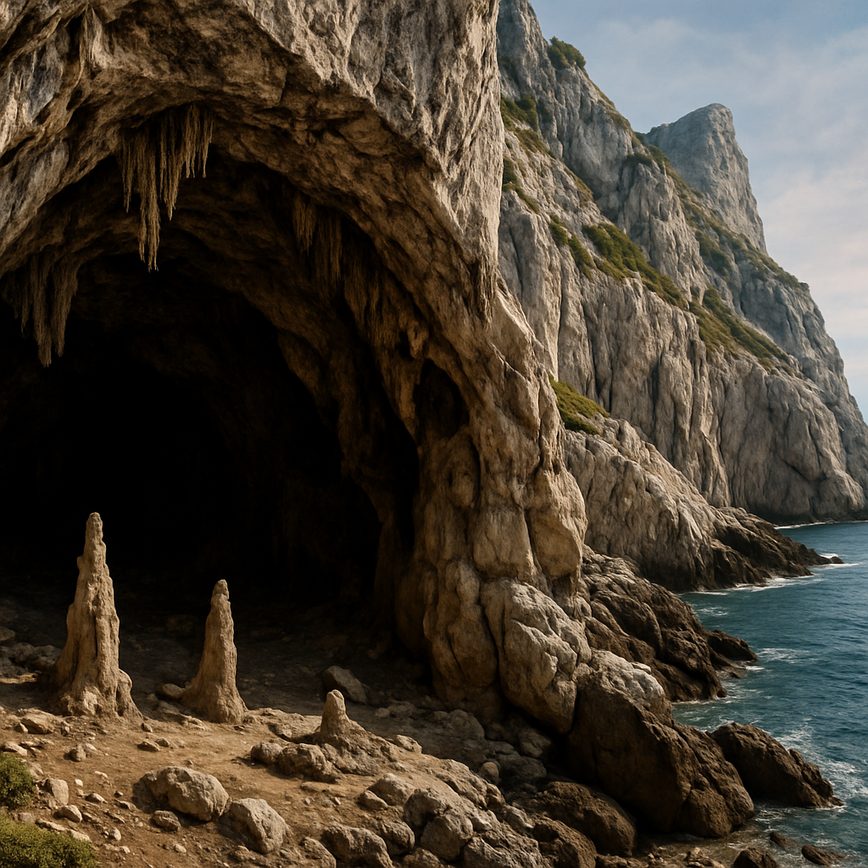
Overview of Gorham’s Cave Complex in Gibraltar
Gorham’s Cave complex, nestled on the southeastern coast of Gibraltar, is one of the most remarkable prehistoric archaeological sites in Europe. This natural limestone cave system, overlooking the Mediterranean Sea, has revealed invaluable insights into the lives of early humans, making it an essential location for understanding our prehistoric heritage.
The caves are part of a larger series of Gibraltar caves that served as important shelters for Neanderthals tens of thousands of years ago. Archaeological excavations have uncovered rich deposits of stone tools, fossils, and other cultural artifacts, which have contributed significantly to our knowledge of Neanderthal behavior, diet, and adaptation to changing environments. These findings have positioned Gorham’s Cave as a key prehistoric site in paleoanthropology and archaeology.
Recognizing its outstanding universal importance, the Gorham’s Cave complex was inscribed as a UNESCO World Heritage site. This designation underscores the site’s unique contribution to humanity’s understanding of the past and the need to preserve its remarkable archaeological record. The caves not only provide a rare window into the Neanderthal occupation of Gibraltar but also highlight the broader story of human evolution in the region.
Visitors to Gibraltar can explore this historically rich area and appreciate the stunning natural beauty surrounding the cave entrances. The Gorham’s Cave complex remains a focal point for ongoing research, education, and conservation, drawing scholars and tourists alike who are fascinated by the prehistoric world and the enduring legacy of the Gibraltar caves.
Geographical and Geological Features
The Gorham’s Cave complex is situated within a striking natural landscape shaped by a unique combination of geological processes. The complex itself consists of several caves formed primarily through the erosion and dissolution of limestone rock, a process known as karstification. Over thousands of years, the relentless action of seawater and weathering carved out the intricate chambers and passageways of Gorham’s Cave, creating natural caves that stand as both remarkable geological formations and significant archaeological sites.
The geology of the Gibraltar area plays a critical role in the formation of these caves. The region is predominantly composed of Jurassic limestone, which is particularly susceptible to erosion, facilitating the development of subterranean voids. This limestone landscape, combined with the proximity to the Mediterranean Sea, allowed the caves to evolve along fissures and fault lines, resulting in extensive cave systems that open directly onto the seafront.
These geological features contributed significantly to human habitation in Gorham’s Cave. The caves offered natural shelter and stable environmental conditions, protecting early human inhabitants from harsh weather and predators. The strategic location close to abundant marine resources and the ease of access to the surrounding Gibraltar landscape made it an ideal dwelling site for prehistoric communities. Thus, the interplay of geology and landscape not only shaped the physical form of the Gorham’s Cave complex but also influenced its longstanding role as a vital habitat for human life.
Historical and Archaeological Importance
Gorham’s Cave holds immense archaeological significance as one of the last known habitations of Neanderthals, offering a unique window into prehistoric life. The cave complex has yielded a wealth of fossil discoveries that have greatly expanded our understanding of Neanderthal anatomy and behavior. Remains found within the cave have been instrumental in piecing together the timeline of Neanderthal existence and their eventual disappearance from the region.
In addition to fossil remains, Gorham’s Cave is renowned for its prehistoric artifacts. These include stone tools and other implements that shed light on the technological capabilities and daily activities of the cave’s ancient inhabitants. Such archaeological findings help illustrate the adaptation strategies Neanderthals employed to survive in their environment, providing invaluable insight into their cultural and survival practices.
The combination of fossil discoveries and crafted artifacts at Gorham’s Cave has made it a cornerstone site for paleoanthropologists and archaeologists alike. It serves not only as a testament to Neanderthal life but also as a key reference point for studying the broader patterns of human evolution and migration in prehistoric Europe.
Excavations and Discoveries at Gorham’s Cave
The Gorham’s Cave complex in Gibraltar has been the focus of numerous archaeological digs that have significantly enhanced our understanding of Neanderthal occupation in southwestern Europe. These excavations, conducted over several decades, have uncovered a wealth of information that sheds light on the lifestyle, behavior, and cultural practices of Neanderthals who inhabited the region tens of thousands of years ago.
The archaeological digs at Gorham’s Cave are among the most important in the study of Neanderthals, as the cave’s stratified deposits provide a well-preserved record of prehistoric human activity. Excavators have unearthed stone tools, hearths, and other artifacts that provide direct evidence of Neanderthal presence. These findings have been critical in demonstrating the complexity of Neanderthal life, including their tool-making skills and use of fire for cooking and warmth.
One of the major discoveries from the excavations is the presence of engraved stones and other cultural marks that suggest a form of symbolic behavior, challenging earlier assumptions about Neanderthal cognitive abilities. These engravings are believed to be some of the earliest forms of art created by Neanderthals, indicating that they may have had cultural expressions previously attributed only to modern humans.
The research findings from Gorham’s Cave have also contributed valuable insights into Neanderthal diet and environmental adaptation. Faunal remains found within the archaeological layers have allowed researchers to reconstruct the climate and landscape, revealing how Neanderthals adapted to changing conditions through time. This adaptability highlights their resilience and sophisticated knowledge of their surroundings.
In summary, the extensive excavations at Gorham’s Cave have played a crucial role in uncovering key aspects of Neanderthal life, providing compelling evidence of their occupation and cultural practices. These ongoing archaeological digs continue to refine our understanding of this ancient species and affirm the cave complex’s importance as a site of significant prehistoric research.
Key Archaeological Finds
The Gorham’s Cave complex in Gibraltar has yielded a wealth of archaeological finds that offer significant insight into prehistoric human activity. Among the most important discoveries are a variety of tools crafted from flint and stone, demonstrating the technological capabilities of early humans who inhabited the site. These implements include cutting, scraping, and hunting tools, reflecting a sophisticated adaptation to the environment.
Shell middens are another critical find at Gorham’s Cave. These ancient refuse heaps composed largely of shell remains indicate the dietary habits of the cave’s occupants. The prevalence of shellfish remains suggests that marine resources were a staple, providing valuable protein and nutrients. The middens also help archaeologists understand the seasonal patterns and ecological knowledge of prehistoric peoples.
Bone remains found throughout the site provide further evidence of the fauna that early humans hunted and consumed. The preservation of these remains helps in reconstructing past environments and human subsistence strategies, revealing a diverse diet that included both terrestrial and marine animals.
Importantly, symbolic artifacts discovered within the Gorham’s Cave complex offer a glimpse into the cognitive and cultural development of its inhabitants. These artifacts suggest the use of symbolic behavior, possibly including ritualistic or communicative functions, underscoring the complexity of human life during this period.
Techniques and Methods Used in Research
Archaeologists studying Gorham’s Cave employ a range of scientific techniques and excavation methods to uncover and understand the site’s historical significance. Central to this effort is stratigraphy, which involves analyzing soil layers to establish a chronological sequence of human activity. This method helps researchers map artifact deposition over time, ensuring precise context for each find.
Excavation techniques at Gorham’s Cave are meticulously planned to preserve delicate fossils and artifacts. Careful digging combined with detailed recording ensures that every item is documented in situ, maintaining the integrity of the site. Archaeologists also use sieving and flotation to recover smaller remains often missed during initial digging, enhancing the overall data collected.
Date estimation of fossils and artifacts is predominantly achieved through advanced dating methods. Radiocarbon dating enables scientists to determine the age of organic material by measuring isotopic decay, while other methods such as uranium-series dating are applied to cave formations and bones. These techniques provide an accurate timeline for human occupation and environmental changes within the cave.
Further analysis involves microscopic examination and chemical characterization to understand tool usage and site conditions. Together, these approaches provide a comprehensive understanding of Gorham’s Cave, revealing critical insights into prehistoric life and human evolution in the Mediterranean region.
Conservation and Tourism at Gorham’s Cave Complex
Gorham’s Cave Complex, a site of immense historical and archaeological significance, is carefully preserved under stringent conservation efforts to protect its delicate environment and priceless heritage. The conservation status of this UNESCO World Heritage site reflects a commitment to maintaining its integrity against natural and human-induced challenges. Detailed monitoring and research programs are in place to assess the cave’s condition and prevent degradation caused by factors such as erosion, humidity fluctuations, and human impact. These ongoing protection efforts ensure that Gorham’s Cave remains an invaluable source of knowledge on prehistoric human life.
Protection initiatives involve collaboration between Gibraltar’s local government, heritage organizations, and international bodies dedicated to preserving cultural landmarks. Protective measures include restricted access to sensitive areas, environmental controls within the cave system, and educational campaigns aimed at fostering respect and awareness among visitors. These efforts are complemented by continuous scientific studies that inform adaptive management strategies, making conservation a dynamic and evolving process.
As an important tourist attraction in Gibraltar, Gorham’s Cave Complex offers a unique glimpse into ancient human history while contributing to the local economy through sustainable tourism. Visitors from southern Spain and beyond are drawn to the site not only for its archaeological significance but also for its natural beauty and educational value. Tourism management emphasizes balancing public access with heritage protection, ensuring that visitor experiences do not compromise the site’s preservation.
Visitor guidelines play a crucial role in maintaining the integrity of the complex. Tourists are advised to follow established pathways, refrain from touching cave walls or artifacts, and avoid bringing food or drinks inside the cave to reduce environmental contamination. Guided tours are often recommended to provide informative and controlled access, allowing visitors to appreciate the significance of Gorham’s Cave complex responsibly. Additionally, information centers at the site provide educational materials on the cave’s history, conservation goals, and the importance of preserving such heritage sites.
In conclusion, the Gorham’s Cave Complex stands as a prime example of how conservation efforts and tourism can coexist successfully. Through dedicated heritage protection and clear visitor information, the site continues to inspire and educate while safeguarding a crucial link to our distant past for future generations. Its role in southern Spain tourism highlights the broader cultural and historical connectivity of the region, reinforcing the value of preserving cultural treasures worldwide.
UNESCO World Heritage Designation
Gorham’s Cave complex in Gibraltar has earned the prestigious designation of a UNESCO World Heritage site, marking a major milestone in its conservation and recognition at an international level. The process to achieve this status involved rigorous evaluation of the site’s unique historical and archaeological significance, emphasizing its exceptional value as a testament to prehistoric human activity and cultural heritage in the region.
Receiving the heritage status as a UNESCO site ensures dedicated protection measures that safeguard Gorham’s Cave complex against environmental threats, urban encroachment, and other potential damages. This designation not only highlights its importance but also prioritizes funding and international cooperation for its conservation, enabling sustained efforts to preserve the integrity of the caves for future generations.
International recognition through UNESCO brings heightened awareness worldwide, attracting researchers, scholars, and visitors who contribute to the understanding and appreciation of Gorham’s Cave complex. This global spotlight fosters educational opportunities and encourages responsible tourism, which in turn supports ongoing preservation and enhances the cultural identity connected to the site.
Ultimately, Gorham’s Cave’s UNESCO heritage status symbolizes a commitment to protecting one of humanity’s earliest dwellings, reinforcing its value not only to Gibraltar but to the collective heritage of humanity. It stands as a beacon of conservation success, demonstrating how international recognition can drive effective preservation and promote global cultural awareness.
Visitor Experience and Educational Opportunities
Visitors to Gorham’s Cave complex in Gibraltar can immerse themselves in a rich historical journey through well-organized guided tours that bring the site’s fascinating past to life. These tours are led by knowledgeable guides who provide detailed insights into the archaeological significance of the caves and the prehistoric human presence discovered within them. For those wishing to explore at their own pace, the nearby visitor center offers interactive museum exhibits that display artifacts, multimedia presentations, and informative panels highlighting the cave’s unique history and environment.
Educational programs at Gorham’s Cave are designed to engage audiences of all ages, from school groups to adult learners. These programs often include hands-on activities, lectures by experts, and workshops that deepen understanding of the archaeological methods used in excavation and preservation. The visitor center serves as an educational hub, featuring displays that not only narrate the story of Gorham’s Cave but also focus on broader themes such as human evolution and environmental changes over millennia.
The combination of guided tours, museum exhibits, and diverse educational programs ensures that every visitor gains a comprehensive appreciation of Gorham’s Cave complex. Facilities are thoughtfully designed to create an engaging and informative experience, fostering curiosity and respect for this remarkable testament to human history.

I have always been captivated by the unique cultural tapestry of the Rock, particularly how Moorish, Spanish, and British influences shaped its development over centuries. My passion lies in translating these complex historical narratives into engaging educational resources that make Gibraltar’s past accessible to everyone. I spend my free time exploring military fortifications and reading first-hand accounts of life at the Pillar of Hercules.