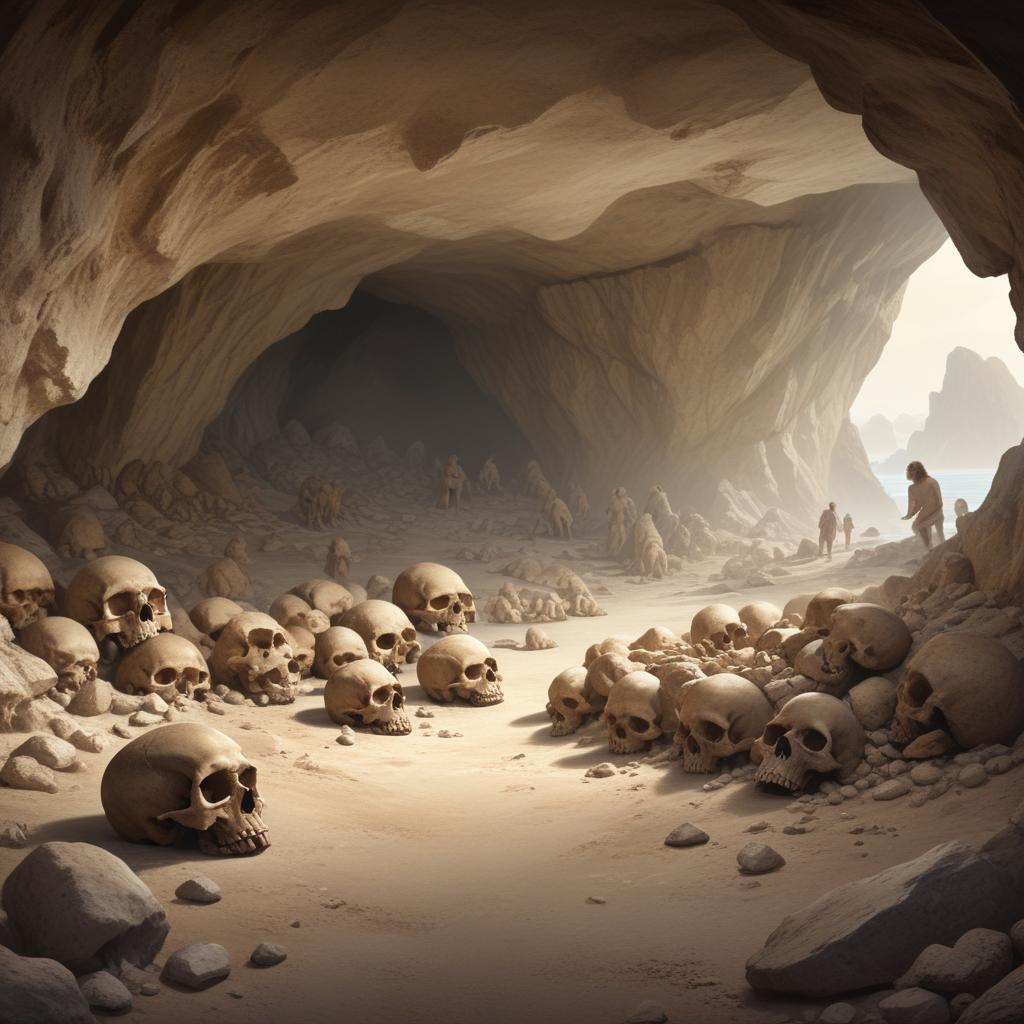
Introduction to Neanderthals in Gibraltar
The Neanderthals in Gibraltar hold a crucial place in the study of human evolution and paleoanthropology. Gibraltar, a small peninsula located at the southern tip of the Iberian Peninsula, is one of the most significant sites for understanding Neanderthal history. This region offers some of the earliest evidence of Neanderthal presence in Europe, providing invaluable insights into their way of life and eventual disappearance.
Neanderthals, often referred to as Homo neanderthalensis, inhabited Europe and parts of western Asia during the Paleolithic period. Gibraltar stands out because it is one of the last known refuges where Neanderthals lived before their extinction. The rocky caves and shelters in Gibraltar have preserved a remarkable archaeological record, revealing details about the Neanderthals’ diet, tools, and social behavior.
The discovery of Neanderthal remains in Gibraltar was a landmark moment in paleoanthropology. The first significant Neanderthal fossil was uncovered in the mid-19th century in Forbes’ Quarry, sparking widespread interest and research. Since then, other sites such as Gorham’s Cave have yielded increasingly well-preserved remains and artifacts, which have helped researchers better understand the technological advancements and adaptation strategies of these early humans.
Neanderthals in Gibraltar are especially significant because they provide evidence of how these ancient humans adapted to changing climatic conditions during the Paleolithic era. The findings in this region contribute to debates on Neanderthal cognitive abilities, their culture, and reasons behind their eventual replacement by modern Homo sapiens. The rich archaeological discoveries made in Paleolithic Gibraltar continue to challenge previous assumptions about Neanderthal extinction and offer new perspectives on their history and legacy.
Discovery and Archaeological Sites
Gibraltar is home to some of the most significant Neanderthal caves, making it a focal point for Gibraltar archaeology and the study of human evolution. Among the key archaeological sites are the Gorham’s Cave complex, Vanguard Cave, and Ibex Cave, each offering profound insights into Neanderthal life. Gorham’s Cave, in particular, is one of the most important fossil sites in Europe, where numerous Neanderthal remains and artifacts have been discovered. These caves provide exceptional preservation conditions, allowing researchers to study Neanderthal diet, tool use, and even symbolic behavior.
The discovery of fossilized Neanderthal remains in these caves has been pivotal, helping to rewrite our understanding of Neanderthal intelligence and adaptability. Gibraltar’s Neanderthal remains indicate that this group survived here until around 40,000 years ago, making them one of the last known populations of Neanderthals. The archaeological findings include stone tools, animal bones with cut marks, and hearths, which collectively paint a detailed picture of their daily lives and environment.
The importance of these discoveries extends beyond regional history; they contribute to broader discussions on human evolution, interactions between Neanderthals and modern humans, and the extinction of this archaic human species. Gibraltar archaeology continues to yield valuable data that challenges previous assumptions and highlights the complex history of Neanderthal populations through their remains and associated cultural artifacts found in these remarkable sites.
Neanderthal Lifestyle and Environment
Neanderthals living in Gibraltar during the Ice Age adapted remarkably to the region’s unique environment. The Gibraltar environment, characterized by rocky cliffs, caves, and a Mediterranean climate, provided a diverse habitat for these resilient hominins. Unlike other Ice Age habitats marked by extreme cold and glaciation, Gibraltar offered a relatively mild climate, which allowed Neanderthals to exploit a variety of food resources throughout the year.
The Neanderthal diet in Gibraltar was diverse and opportunistic. They consumed a range of resources including large herbivores, birds, fish, and shellfish, reflecting their ability to exploit both terrestrial and marine ecosystems. This varied diet not only helped them meet their nutritional needs but also demonstrated sophisticated hunting and gathering strategies adapted to the coastal environment.
Survival strategies of Neanderthals in this region were closely linked to their use of tools. Neanderthal tools found in Gibraltar show advanced craftsmanship suited for hunting, processing food, and making clothing to protect against cooler temperatures during colder periods. These tools indicate a high level of skill and adaptation to the specific challenges of the Ice Age habitat.
By effectively utilizing the natural caves for shelter and the diverse resources of the Gibraltar environment, Neanderthals exhibited resilience and adaptability. Their lifestyle reflects a complex interaction with their surroundings, combining physical endurance with innovative tool use and dietary flexibility, enabling them to thrive in this unique Ice Age landscape.
Significance of Neanderthal Findings in Gibraltar
The discoveries of Neanderthal fossils in Gibraltar hold profound scientific importance for understanding both human evolution and the eventual extinction of Neanderthals. Gibraltar represents one of the last known geographical refuges where Neanderthals lived before their disappearance, making it a crucial site for studying genetic, anatomical, and cultural aspects that shed light on the Neanderthal lineage and its interactions with modern humans.
One of the key contributions of the Gibraltar fossils is the insight they provide into Neanderthal DNA. Genetic studies on bone samples found in this region have allowed scientists to trace the genetic diversity and evolutionary adaptations that occurred in Neanderthals over tens of thousands of years. Such research has demonstrated that Neanderthals in Gibraltar, like their counterparts elsewhere, shared a common ancestry with Homo sapiens but also developed unique traits that distinguished them from modern humans. This DNA evidence is crucial in piecing together the complex web of human ancestry and migration patterns.
Furthermore, the Gibraltar findings enhance our understanding of human evolution by highlighting the interactions between Neanderthals and early modern humans. The region’s archaeological sites contain tools and other artifacts that suggest cultural exchanges or parallel developments. This evidence supports the theory that Neanderthals contributed to the genetic and cultural makeup of contemporary human populations before their extinction. Such interactions are vital to understanding how traits were passed on and how evolutionary pressures shaped the eventual dominance of Homo sapiens.
Regarding Neanderthal extinction, the Gibraltar fossils provide important context on the timing and circumstances surrounding their disappearance. The site offers some of the latest dates for Neanderthal presence, indicating they survived there later than in many other parts of Europe. This prolongation helps researchers investigate factors such as climate change, competition with Homo sapiens, and local environmental conditions that may have influenced their decline. Understanding why Neanderthals disappeared in Gibraltar is therefore pivotal in unraveling the broader narrative of human survival and adaptation.
In summary, the Gibraltar fossil importance cannot be overstated. These findings offer a unique window into the biology, culture, and extinction processes of an iconic human ancestor. By integrating Neanderthal DNA analysis with archaeological and paleoenvironmental data from Gibraltar, scientists continue to make significant strides in comprehending the evolutionary journey that shapes the history of our species.
Insights into Human Evolution
The discoveries in Gibraltar have significantly advanced the understanding of human ancestry by shedding light on the complex relationship between Neanderthals and modern humans. Gibraltar’s fossil evidence, including some of the last known Neanderthal remains, provides crucial insights into the timeline and interactions of these two species. Through detailed analysis of Neanderthal genetics extracted from these fossils, researchers have identified evolutionary links that suggest interbreeding events between Neanderthals and early modern humans. This genetic legacy, still present in non-African human populations today, underscores the role of Neanderthals as an integral part of our evolutionary tree rather than a completely separate branch.
Moreover, the Gibraltar findings have helped clarify the geographical spread and adaptability of Neanderthals, illustrating how their populations thrived in diverse environments close to early human settlements. These evolutionary links revealed by genetic data and fossil evidence challenge previous theories of a clear-cut replacement, instead supporting a scenario of coexistence and gene flow. Thus, Gibraltar stands as a pivotal site for understanding human evolution, demonstrating how Neanderthal genetics contribute to the broader story of our species’ development, adaptation, and survival.
In essence, the rich fossil evidence and genetic research from Gibraltar have deepened our knowledge of human ancestry, bridging gaps in evolutionary history and emphasizing the interconnectedness of Neanderthals and modern humans. This ongoing research continues to refine our understanding of how these evolutionary links shape the genetic makeup of contemporary populations worldwide.
Conservation and Preservation Efforts
Efforts for heritage preservation in Gibraltar focus strongly on protecting the archaeological treasures found within the famous Gibraltar caves. These caves have yielded significant Neanderthal remains and artifacts, making them critical sites for understanding human prehistory. Conservation initiatives strive to safeguard these delicate locations from natural erosion, human interference, and urban development pressures.
A key aspect of Neanderthal conservation involves strict archaeological protection measures enforced by local authorities in collaboration with international heritage organizations. These measures include controlled access to the caves and ongoing monitoring to detect any environmental changes that might threaten the integrity of the sites. Additionally, scientific research is carefully managed to ensure that excavation and analysis do not compromise the preservation of invaluable historical layers.
Despite these efforts, challenges remain. Gibraltar’s status as a strategic and densely populated area creates constant tension between urban expansion and archaeological conservation. Pollution, tourist activity, and accidental damage pose ongoing risks to the fragile heritage. Furthermore, securing consistent funding for long-term conservation projects can be difficult, which limits the scope of protection programs.
Nevertheless, continued awareness and education about the importance of these Neanderthal sites help build community support for preservation. By integrating modern conservation techniques with sustainable tourism and local engagement, Gibraltar aims to maintain the archaeological protection of its caves while promoting broader appreciation of Neanderthal conservation as a part of global heritage.
Future Research and Exploration
The future of neanderthal studies in Gibraltar is promising due to the convergence of advanced archaeological technology and innovative research approaches. As excavation techniques continue to evolve, there is an increasing opportunity to uncover more detailed evidence about Neanderthal life, behaviors, and environmental interactions. Future expeditions and digs in Gibraltar will likely employ cutting-edge tools such as 3D scanning, ground-penetrating radar, and drone mapping to gain unprecedented access to hard-to-reach cave systems and sediment layers, allowing researchers to explore sites with greater precision and minimal disruption.
In particular, the integration of paleoanthropology future trends will shape how scientists examine fossil remains and artifacts. We anticipate improvements in DNA analysis and molecular techniques will reveal deeper insights into Neanderthal genetics and their connection to modern humans. These advancements will also enhance our understanding of Neanderthal adaptation strategies within the unique Gibraltar ecosystem across millennia.
The Gibraltar excavation projects will benefit from interdisciplinary collaboration, bringing together experts in fields such as geology, chemistry, and computer sciences alongside archaeologists. Such cooperation can unlock complex data sets, offering comprehensive reconstructions of Neanderthal habitats and social structures. Moreover, digital modeling and virtual reality reconstructions will likely become integral to presenting these findings to both academic audiences and the public, enriching educational outreach on Neanderthal legacy.
Continuous investment in technological innovation and method refinement is essential for pushing the boundaries of research in this region. Future directions in neanderthal studies emphasize sustainability, ethics, and community engagement to ensure the preservation of Gibraltar’s archaeological heritage. By utilizing a blend of traditional excavation and novel analytical techniques, researchers aim to answer lingering questions about the daily lives, migrations, and eventual disappearance of Neanderthals, securing Gibraltar’s place as a cornerstone location in the study of human evolution.
Emerging Technologies in Archaeology
In recent years, emerging technologies have revolutionized the field of archaeology, significantly advancing our understanding of Neanderthals in Gibraltar. Among these innovations, DNA analysis stands out as a groundbreaking tool. By extracting and studying genetic material from fossilized remains, researchers can now trace lineage, migration patterns, and even health aspects of Neanderthal populations. This genetic insight is crucial for piecing together how Neanderthals lived and interacted with their environment.
Another transformative technology is 3D scanning, which allows archaeologists to create detailed digital models of artifacts, fossils, and excavation sites. In Gibraltar, 3D scanning has enabled precise documentation of Neanderthal skeletal remains and cave structures without damaging delicate materials. This supports high-resolution analysis and helps reconstruct physical features and tools used by Neanderthals, enriching our understanding of their daily lives and capabilities.
Remote sensing technologies, such as ground-penetrating radar and aerial drones, are also increasingly applied in neanderthal research. These non-invasive methods help locate hidden archaeological sites and map underwater or underground areas that are otherwise inaccessible. In Gibraltar, remote sensing has unveiled new excavation areas, providing fresh opportunities to discover Neanderthal artifacts and remain evidence.
Together, DNA analysis, 3D scanning, and remote sensing are dramatically enhancing neanderthal research in Gibraltar, offering deeper insights and preserving invaluable data with unprecedented accuracy. These technological advancements mark a new era in archaeology, where the mysteries of ancient human relatives are uncovered with innovative precision and care.

I have always been captivated by the unique cultural tapestry of the Rock, particularly how Moorish, Spanish, and British influences shaped its development over centuries. My passion lies in translating these complex historical narratives into engaging educational resources that make Gibraltar’s past accessible to everyone. I spend my free time exploring military fortifications and reading first-hand accounts of life at the Pillar of Hercules.