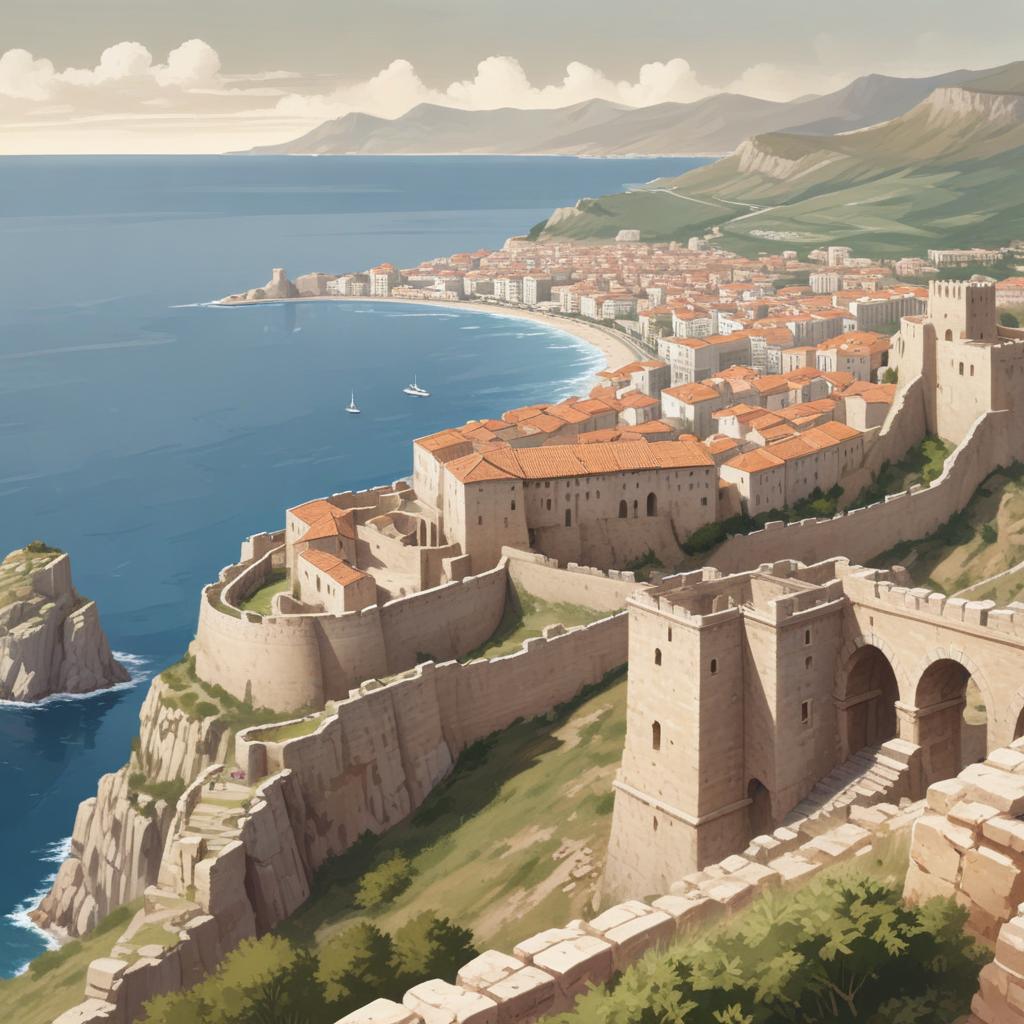
Overview of Roman Gibraltar
The history of Roman Gibraltar reveals a fascinating chapter in the ancient history of this strategically significant peninsula. During Roman times, Gibraltar, known as Calpe, held immense strategic importance due to its location at the entrance to the Mediterranean Sea. This vital position allowed the Romans to control naval passage between the Atlantic Ocean and the Mediterranean, making Roman Gibraltar a key military and commercial outpost.
The early settlements on Roman Gibraltar were influenced by both indigenous populations and the expanding Roman Empire. The Romans established a presence in the area as part of their broader conquest of the Iberian Peninsula. They constructed fortifications and established a naval base to secure their interests in the Strait of Gibraltar, recognizing the natural defensive advantages provided by the towering rock and its surrounding waters.
Ancient Gibraltar, under Roman rule, also served as a symbol of power and control, marking the edge of the Roman world. The settlement provided an essential foothold for interactions with local tribes and the facilitation of trade routes connecting various parts of the empire. Roman history records indicate that Gibraltar’s geological features were noted for their imposing appearance and usefulness in surveillance and defense.
Throughout the Roman period, Gibraltar’s importance extended beyond mere military utility. It functioned as a hub for economic activity, linking the resources of North Africa and the Iberian Peninsula. The presence of Roman roads and infrastructure developments attest to the integration of Roman Gibraltar into the broader network of the empire’s provinces. Archaeological findings such as coins, pottery, and remnants of Roman architecture further emphasize the longevity and significance of this ancient settlement.
In summary, Roman Gibraltar was much more than a remote outpost. It was a critical strategic site that played a significant role in the military, economic, and cultural history of the region. The legacy of Roman history in Gibraltar continues to be a point of interest, shedding light on the early foundations that shaped the identity and importance of this unique location in ancient times.
Geographical and Strategic Importance
Gibraltar’s unique geographical position at the southern tip of the Iberian Peninsula made it an invaluable asset during the Roman Empire. Situated at the entrance of the Mediterranean Sea from the Atlantic Ocean, Gibraltar’s geography provided a natural gateway for naval and commercial vessels. The towering Rock of Gibraltar offered unparalleled visibility over the surrounding waters, allowing the Romans to monitor maritime traffic and potential threats with ease.
The strategic location of Gibraltar was crucial for the Romans both militarily and commercially. Militarily, it served as a defensive stronghold to control naval passage between the Mediterranean and the Atlantic, deterring enemy fleets and protecting Roman territories in the region. The Romans recognized that maintaining dominance over this narrow strait was essential for the security of their expansive empire, which spanned multiple continents.
Commercially, Gibraltar functioned as a hub for trade routes. Its proximity to vital sea lanes enabled the Romans to facilitate and regulate commerce between different parts of the empire and beyond, ensuring the smooth flow of goods such as spices, metals, and other valuable commodities. The combination of Gibraltar’s geography and its strategic location ensured it remained a pivotal point in the Roman Empire’s network of military control and commercial exchange.
Roman Settlements and Infrastructure
The Romans left a significant mark on Gibraltar through their well-planned settlements and impressive infrastructure. Roman settlements in Gibraltar typically included fortified villas, military forts, and small urban centers designed to support both civilian life and military operations. These settlements were strategically located to maximize control over the key maritime routes and to guard the southern entrance to the Iberian Peninsula.
Among the most notable infrastructure built by the Romans were roads, aqueducts, and defensive walls. Roman roads facilitated rapid movement of troops and trade goods, linking Gibraltar with other important Roman cities and settlements across the region. The road network was essential for maintaining Roman authority and managing the flow of commerce.
Water management was another critical aspect of Roman engineering in Gibraltar. Aqueducts and sophisticated drainage systems were constructed to ensure a reliable water supply and to prevent flooding, which was vital in the dry Mediterranean climate. These infrastructure elements supported both the local population and the maintaining of a military presence.
Today, ancient ruins scattered around Gibraltar provide valuable archaeological evidence of Roman settlement patterns and their infrastructure achievements. These ruins, which include remnants of buildings, roadways, and fortifications, allow historians and visitors to appreciate the scale and ingenuity of Roman construction efforts in this historically strategic location.
Roman Influence on Gibraltar’s Culture and Economy
The Roman period marked a significant chapter in the history of Gibraltar, bringing lasting changes to the region’s culture and economy. The Roman influence was evident in various aspects of local life, from social customs to economic practices, shaping Gibraltar into an important hub within the Roman Empire.
Culturally, the Romans introduced their language, lifestyle, and religious beliefs to the local population. Latin became the dominant language, fostering communication and administration across the empire. Roman customs, such as public baths, forums, and festivals, were adopted by the inhabitants of Gibraltar, blending with indigenous traditions to create a unique cultural fusion. This amalgamation contributed to the development of Llanito, a distinctive local dialect and cultural identity that still reflects Roman linguistic roots.
Economically, Gibraltar flourished under Roman rule due to its strategic location at the entrance to the Mediterranean Sea. The Romans capitalized on Gibraltar’s position as a key point for ancient trade, turning it into a vital trading post for goods moving between continents. Local economic activities expanded around maritime trade routes, involving the exchange of goods such as olive oil, wine, pottery, and metals. The introduction of Roman coinage and standardized weights and measures streamlined commercial transactions, boosting economic stability and growth.
Roman infrastructure projects, including the construction of roads and ports, further enhanced Gibraltar’s economic potential. These developments facilitated the efficient movement of goods and armies, reinforcing the area’s importance as both a military stronghold and commercial center. Additionally, Roman agricultural techniques improved local farming, enabling the production of surplus crops that supported both local consumption and trade.
In summary, the Roman influence left a profound legacy on Gibraltar’s culture and economy. Their contributions shaped local customs and expanded economic activities, integrating Gibraltar more deeply into the ancient trade networks of the Mediterranean. This period laid the foundation for the cultural and economic character that Gibraltar would develop in subsequent centuries.
Trade and Commerce Under Roman Rule
During the Roman era, Gibraltar emerged as a crucial trade hub, capitalizing on its strategic location at the entrance to the Mediterranean Sea. The Roman trade network was vast and well-established, and Gibraltar served as a pivotal port facilitating maritime commerce between the Iberian Peninsula, North Africa, and other parts of the Roman Empire.
The Gibraltar port was not only a stopover point for vessels but also a bustling center for the exchange of goods. Roman traders utilized its harbors to import and export a variety of products that were essential to the Roman economy. Among these were precious metals, olive oil, wine, and grains, which were transported from surrounding regions and distributed throughout the empire.
Moreover, Gibraltar’s port contributed to the exchange of luxury items such as spices, ceramics, and textiles brought from distant lands via Roman maritime routes. The commerce here was not limited to goods alone; it also involved cultural and technological exchanges that influenced the development of the area.
The infrastructure developed under Roman rule, including warehouses and docking facilities, bolstered Gibraltar’s role as a trade hub. This prominence in Roman trade enabled the region to thrive economically and strategically, reinforcing its importance in the empire’s vast commercial network.
Cultural and Religious Practices
The Roman presence in Gibraltar brought significant shifts in cultural and religious practices that left a lasting legacy in the region. Roman culture, known for its structured social customs and civic life, introduced new ways of community organization, entertainment, and art to the local inhabitants. Archaeological findings have unveiled various artifacts such as pottery, coins, and mosaics that bear testament to the daily life and aesthetic preferences of the Romans who settled or passed through Gibraltar.
Religion played a central role in Roman society, and this influence extended into Gibraltar as well. The Romans brought with them a pantheon of gods and religious rituals, many of which were adapted or blended with local traditions. Temples and shrines dedicated to deities such as Jupiter and Venus have been identified through architectural remains and religious artifacts found in excavations, highlighting the spiritual life during Roman times in the region.
Among the artifacts discovered, religious items such as small statues, altars, and votive offerings illustrate the importance of worship and ceremonies. These finds provide invaluable insights into the religious landscape and the cultural synthesis between Roman settlers and indigenous communities. Overall, the cultural and religious practices introduced by the Romans in Gibraltar significantly shaped the historical identity of the area, enriching its archaeological heritage and offering a window into past civilizations.
Legacy of the Romans in Gibraltar Today
The Roman legacy in Gibraltar remains an essential part of the region’s rich historical tapestry. The influence of Roman civilization is still evident today, particularly through various archaeological sites scattered across the territory. These remnants provide valuable insights into Gibraltar’s historical importance during Roman times and contribute significantly to the broader understanding of Gibraltar history.
Archaeology has played a crucial role in uncovering and preserving Gibraltar’s Roman heritage. Excavations have revealed several notable sites that continue to attract researchers and tourists alike. These sites not only highlight the architectural and engineering prowess of the Romans but also reflect the strategic significance of Gibraltar as a fortress and trading hub in antiquity.
| Site Name | Description | Significance | Current Status |
|---|---|---|---|
| Roman Baths | Ruins of a complex bathhouse dating back to the Roman Imperial era. | Showcases Roman engineering and recreational culture in Gibraltar. | Open to public, ongoing preservation efforts. |
| Forum Area | Archaeological traces of a public gathering space used for administration and markets. | Highlights the social and political structure under Roman rule. | Partially excavated, some artifacts displayed in local museums. |
| Roman Road | Remnants of an ancient roadway connecting Gibraltar to other Roman provinces. | Evidence of Gibraltar’s integration into the extensive Roman trade network. | Visible in certain locations, archaeological studies ongoing. |
| Amphitheatre Foundations | Foundations of a Roman amphitheatre used for entertainment and public events. | Reflects cultural influences and the role of entertainment in Roman Gibraltar. | Excavations continue; site is protected under heritage laws. |
In conclusion, the Roman legacy in Gibraltar is not just a chapter in Gibraltar history but a living connection to the past, preserved through dedicated archaeology. These sites provide a tangible link to Roman civilization’s enduring impact, making Gibraltar a fascinating destination for history enthusiasts and scholars.
Archaeological Discoveries
Gibraltar is home to a number of significant archaeological sites that have unveiled a wealth of Roman artifacts, providing crucial insights into the Roman presence in this strategic location. Excavations in the area have uncovered Roman ruins including remnants of ancient buildings, fortifications, and everyday items that paint a vivid picture of life during the Roman era. These archaeological sites not only highlight the importance of Gibraltar as a military and trading post but also help historians understand the extent of Roman influence in the western Mediterranean.
The discoveries of Roman artifacts, such as pottery, coins, and tools, have been instrumental in dating the occupation periods and understanding the economic activities that took place. Among the Gibraltar ruins, vestiges of Roman roads and walls demonstrate the sophisticated infrastructure that supported the settlement. These finds contribute to the broader historical narrative by linking Gibraltar to the expansive Roman Empire, underscoring its role as a connecting point between continents.
Overall, the archaeological discoveries in Gibraltar serve as a testament to its historical significance and preserve the legacy of its Roman past for future generations. They continue to be a vital source for researchers and visitors alike, shedding light on the ancient civilization’s impact on the region and enriching our appreciation of Gibraltar’s rich cultural heritage.
Impact on Modern Gibraltar Identity
Roman history plays a vital role in shaping the modern Gibraltar identity, deeply influencing its cultural fabric and tourism appeal. As a crossroads of civilizations, Gibraltar’s Roman heritage serves as a foundational chapter in its long and diverse historical narrative. This legacy is not merely confined to academic interest but actively informs how residents of modern Gibraltar perceive and celebrate their own unique cultural identity.
The imprint of Roman occupation is evident in archaeological sites, place names, and the remnants of ancient structures that dot the landscape. These tangible connections to the past foster a sense of pride and belonging among the people, linking modern Gibraltar to its historical roots. Furthermore, the Roman period is frequently highlighted in local education and cultural events, reinforcing its importance in the collective memory.
Tourism in modern Gibraltar heavily leverages this rich Roman heritage, drawing visitors eager to explore the ancient remnants and learn about the area’s historical significance. Museums and guided tours often emphasize Roman contributions to the development of the region, making them key attractions. This focus not only supports the local economy but also promotes a deeper appreciation of Gibraltar’s role in broader Mediterranean history.
In essence, the Roman legacy is an integral part of Gibrlatar’s cultural identity today, serving as a bridge between past and present. It enriches the community’s understanding of itself while enhancing its appeal as a destination where history and modernity intertwine seamlessly.

I have always been captivated by the unique cultural tapestry of the Rock, particularly how Moorish, Spanish, and British influences shaped its development over centuries. My passion lies in translating these complex historical narratives into engaging educational resources that make Gibraltar’s past accessible to everyone. I spend my free time exploring military fortifications and reading first-hand accounts of life at the Pillar of Hercules.