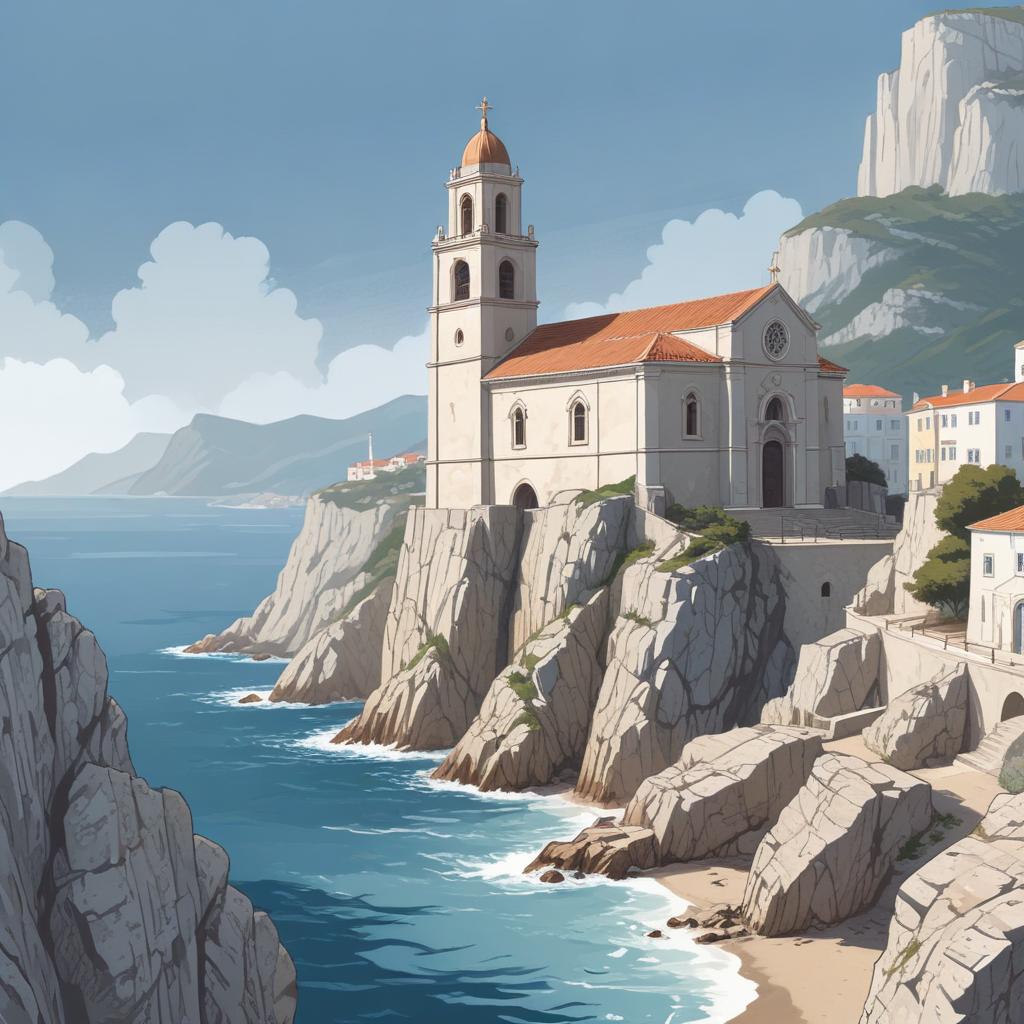
Early History of the Catholic Church in Gibraltar
The Catholic Church holds a profound place in the rich tapestry of Gibraltar history, tracing its origins back to the earliest days of Christianity. Before Gibraltar became a British territory, its religious landscape was shaped by centuries of Roman, Visigothic, and later Moorish influence, which laid the foundation for the establishment of the Catholic faith that persists today.
Early Christianity likely reached the Rock of Gibraltar during the Roman Empire, when the region was part of the Roman province of Hispania. Christian missionaries traveled through these lands spreading the message of the new faith, and while concrete evidence of early Christian communities in Gibraltar is sparse, the broader historical context suggests a slow but steady Christian presence emerging over the centuries. The subsequent Visigothic rule in the Iberian Peninsula reinforced Christianity’s foothold, as the Visigoths were themselves Christians adhering to the Catholic tradition.
However, Gibraltar’s strategic position at the entrance to the Mediterranean also meant it underwent significant cultural and religious shifts. Beginning in the early 8th century, Moorish conquest brought Islam to the region, which led to a period during which Christian religious activities were suppressed or transformed. Despite this, small Christian enclaves may have persisted covertly, and the legacy of early Christianity remained evident in the region’s religious consciousness.
The restoration of Christian rule under the Crown of Castile in the late 15th century marked a crucial turning point for the Catholic Church in Gibraltar. This reconquest restored Catholicism as the dominant faith and led to the more organized establishment of ecclesiastical structures. Churches and chapels were built, and the Catholic Church played a central role in the daily lives and governance of the local population. Religious institutions were deeply intertwined with the community, influencing education, social services, and cultural life.
Thus, the Catholic Church’s early history in Gibraltar is a complex narrative of religious origins shaped by missionary activity, cultural transformations, and political change. This early Christian heritage set the stage for the continuing influence of the Catholic Church on Gibraltar’s identity, even before the British rule that would come to define the later centuries.
Religious Influence Before British Control
Before British control, Gibraltar’s religious landscape was deeply shaped by Catholicism, reflecting its complex history through Spanish and Moorish periods. During the Spanish rule, Catholicism was the dominant faith, profoundly influencing daily life, culture, and governance. The Catholic Church played a central role in education and social services, intertwining religious authority with political power. Numerous churches and religious institutions were established, serving as spiritual centers and symbols of Catholic influence.
Despite the Moorish occupation, which lasted over three centuries, Catholicism retained its significance. Though the Moors, who were Muslim, introduced Islamic influence, they generally allowed the practice of Christianity to continue, albeit under certain restrictions. This coexistence created a unique historical religious landscape, where Catholic traditions endured amidst Islamic cultural elements.
The pre-British Gibraltar era encapsulates a period where Catholic influence was resilient, surviving transitions of power and cultural shifts. The Catholic Church’s presence was not only spiritual but also instrumental in shaping Gibraltar’s identity, laying a foundation that would persist even after British sovereignty was established.
Establishment of Catholic Institutions
The establishment of Catholic institutions played a crucial role in the early development of Gibraltar’s community. Among the earliest church foundations was the Church of St. Mary the Crowned, which became a central place of worship and symbol of faith for the local population. This church not only served religious purposes but also acted as a communal hub where residents could gather, celebrate, and find spiritual guidance.
In addition to St. Mary the Crowned, several other key Catholic churches were founded during Gibraltar’s formative years. These institutions were instrumental in preserving Catholic traditions and bolstering the religious identity of the community amidst the diverse cultural influences present on the Rock. The establishment of these Gibraltar churches underscored the significance of faith in daily life and provided educational and charitable services that supported the vulnerable.
The founding of these Catholic institutions reflected the resilience and determination of Gibraltar’s people to maintain their religious heritage. They fostered a strong sense of belonging and continuity, linking generations through shared worship and communal activities. Today, these historic churches remain vital landmarks, representing the deep-rooted presence and influence of Catholicism in Gibraltar’s history.
The Catholic Church under British Rule
British Gibraltar marked a significant turning point in the colonial religious history of the region, where the Catholic Church found itself navigating a new and complex landscape under British rule. The transition brought about fundamental changes in church-state relations, deeply influencing the governance of the Catholic Church and its role within the community.
One of the primary challenges faced by the Catholic Church was the necessity to adapt to the British colonial administration’s policies, which were often rooted in Protestant norms and governance models. The Church’s traditional authority was tempered by British legal frameworks that emphasized secular control and the Crown’s ultimate jurisdiction over religious matters. This created tensions, as the Catholic community sought to maintain its ecclesiastical autonomy and religious traditions.
Governance changes were evident in how the British authorities handled church appointments and property. While the Catholic Church continued to serve as a spiritual bastion for much of the population, the colonial government exerted influence on clerical nominations and the management of church assets, aiming to align them with broader administrative goals. This control reflected broader colonial strategies designed to balance religious freedom with imperial oversight, sometimes fostering conflict but also encouraging negotiation and compromise.
The community response to British rule was marked by resilience and adaptation. Catholics in Gibraltar actively engaged in preserving their religious identity despite pressures to conform to a colonial regime that prioritized British interests. The Church became a focal point for cultural preservation and social cohesion, anchoring the community through rites, education, and charity. This dynamic underscored the importance of the Catholic Church as not just a religious institution but as a custodian of local identity in the face of colonial change.
Overall, British control reshaped the Catholic Church’s role in Gibraltar by forcing it to navigate a delicate balance between maintaining its spiritual mission and responding to colonial governance structures. The resulting church-state relations were characterized by both challenges and opportunities, ultimately molding the Catholic community into a resilient and adaptive force within British Gibraltar’s colonial landscape.
Religious Tensions and Adaptations
During the British rule of Gibraltar, religious tensions were a significant aspect of the local social landscape, especially between the Catholic majority and the Protestant minority. Catholic-Protestant relations were often marked by a complex interplay of coexistence and conflict, as the British authorities promoted Protestantism while a majority of the population remained steadfastly Catholic. This dynamic created occasional friction but also necessitated a degree of tolerance and practical cooperation to maintain civic order.
The Catholic Church in Gibraltar had to adapt strategically to these conditions. While firmly maintaining its traditions and influence among the population, it also sought ways to navigate the Protestant-dominated governance. The Church focused on strengthening its community institutions, such as schools and social services, to safeguard Catholic identity and values. At the same time, clergy often engaged in dialogue with Protestant leaders to ease hostilities and foster a measured coexistence.
This process of adaptation included a careful balancing act: resisting pressures to diminish Catholic presence while demonstrating that the Church could be a stabilizing social force. Over time, the Catholic Church’s approach helped mitigate some of the religious tensions by emphasizing shared values and community welfare. Although challenges persisted, this strategy of adaptation proved essential in preserving the Church’s role and influence in Gibraltar amidst the evolving interfaith landscape.
Growth and Development of Catholic Communities
The Catholic community in Gibraltar has seen significant growth and development over the years, reflecting the broader church growth within the territory. As Gibraltar’s population expanded, so too did the need for more organized and accessible religious services. This expansion was marked by the establishment of new parishes across the region, allowing Gibraltar Catholics to worship more closely to their homes and creating vibrant centers for spiritual and community life.
The growth of the Catholic community was not only spiritual but also social. New parishes often became hubs for social outreach and support, providing a range of essential services to parishioners and the wider population. These included education programs, charitable works, and initiatives to support the vulnerable and disadvantaged. The church played a pivotal role in fostering a sense of belonging and unity among Gibraltar Catholics, helping to bridge divides and nurture a cohesive community.
Moreover, the development of social services linked to the church illustrated the deep commitment of Gibraltar Catholics to both faith and social responsibility. These efforts contributed greatly to the welfare of the population, reinforcing the church’s position as a cornerstone of communal life. The combined focus on expanding places of worship and enhancing social outreach ensured that the Catholic church remained a vital and growing presence in Gibraltar’s history and society.
Modern Era and Contemporary Significance
In the modern era, the Catholic Church remains a vital and influential institution within Gibraltar, reflecting its deep historical roots and evolving role in contemporary society. As the predominant religious organization, the modern Catholic Church in Gibraltar continues to shape not only the spiritual lives of its followers but also the social and cultural fabric of the community. Its presence is a testament to the enduring legacy of Catholicism in this unique British Overseas Territory.
Gibraltar’s religion today is characterized by a strong Catholic majority, with the Church playing a central role in community life. It extends beyond religious ceremonies and rituals, actively engaging in various social initiatives. Through charities, educational institutions, and outreach programs, the Church provides support to vulnerable groups, promoting social cohesion and inclusion. These efforts underscore the church’s commitment to addressing contemporary social challenges and improving the wellbeing of all residents.
Culturally, the Catholic Church is a custodian of Gibraltar’s rich heritage. Religious festivals, processions, and traditions continue to be celebrated with enthusiasm, fostering a sense of identity and belonging among Gibraltarians. The Church’s architectural landmarks, most notably the Cathedral of St. Mary the Crowned, stand as symbols of historical continuity and community pride. Such cultural expressions highlight how the church role society extends to nurturing Gibraltar’s unique local customs and values.
Politically, while the Catholic Church maintains a distinct separation from direct governance, it wields considerable moral influence. Church leaders often contribute to public discourse on ethical and social matters, advocating for justice, peace, and respect for human dignity. This influence reflects the Church’s ongoing engagement with societal issues, helping to shape policies that align with its values. Moreover, the Church acts as a mediator in fostering dialogue within Gibraltar’s diverse community, promoting harmony amidst complexity.
In summary, the modern Catholic Church in Gibraltar is more than a religious institution; it is a cornerstone of community life that continues to adapt to contemporary realities. Its social, cultural, and political significance remains profound, ensuring that the church role society is integral to Gibraltar’s identity and future development. The ongoing devotion of its people and the Church’s proactive involvement illustrate the vibrant presence of Catholicism in Gibraltar’s modern era.
Current Leadership and Church Activities
The Catholic Church in Gibraltar is currently led by the Bishop of Gibraltar, who oversees all spiritual and administrative matters within the diocese. Supporting the Bishop is a dedicated team of clergy and lay leaders, including parish priests, deacons, and church administrators, who ensure the smooth functioning of church activities and services. The leadership structure is designed to foster a close relationship between the church authorities and the local community, promoting engagement and spiritual growth.
The church leadership actively organizes a wide range of Catholic activities aimed at nurturing faith and community spirit. Among these are regular religious services such as daily Mass, confessions, and special liturgical celebrations that mark key events in the Catholic calendar. In addition to worship services, the church runs various programs including catechism classes, youth groups, and outreach initiatives that support vulnerable populations in Gibraltar.
Moreover, the Catholic Church in Gibraltar places strong emphasis on community involvement through cultural events and social activities. These programs are designed to engage parishioners of all ages and backgrounds, fostering unity and a sense of belonging. The church leadership continually seeks to enhance its offerings to better serve the spiritual and social needs of the Gibraltar community, ensuring that church activities remain vibrant and relevant in contemporary society.
The Catholic Church’s Role in Gibraltar’s Cultural Identity
The Catholic Church has played a pivotal role in shaping Gibraltar’s cultural identity, deeply influencing its heritage through various facets of community life. One of the most visible expressions of Catholic influence is seen in the numerous festivals and religious celebrations that punctuate the local calendar. Events such as the annual Feast of Our Lady of Europe and the Corpus Christi procession are not only religious observances but also vibrant cultural occasions that bring the community together, reinforcing a shared sense of history and faith.
Beyond festivities, the legacy of the Catholic Church is embedded in Gibraltar’s traditions, from the architecture of its historic churches to the preservation of rituals passed down through generations. These traditions reflect a continuous Catholic influence which contributes significantly to the unique cultural fabric of Gibraltar, distinguishing it from neighboring regions.
Education is another vital area where the Catholic Church’s impact is profoundly felt. Several Catholic educational institutions in Gibraltar have longstanding traditions of providing quality education grounded in Christian values. These schools are instrumental in fostering a sense of identity among the youth, nurturing respect for cultural heritage while promoting community cohesion. Through its religious teachings and community engagement, the Church helps maintain a collective memory and identity that remains central to Gibraltar’s society.

I have always been captivated by the unique cultural tapestry of the Rock, particularly how Moorish, Spanish, and British influences shaped its development over centuries. My passion lies in translating these complex historical narratives into engaging educational resources that make Gibraltar’s past accessible to everyone. I spend my free time exploring military fortifications and reading first-hand accounts of life at the Pillar of Hercules.