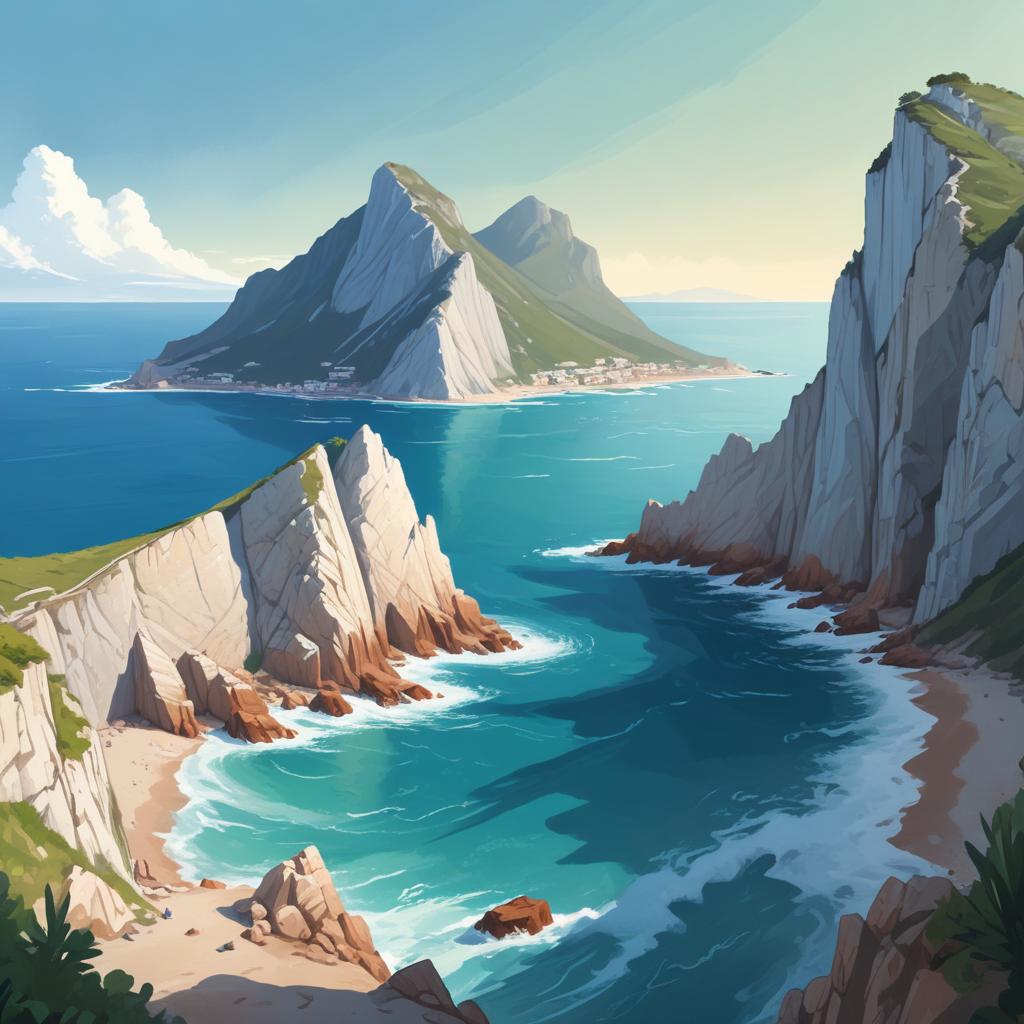
Origins of the Name Gibraltar
The name Gibraltar has a fascinating etymology rooted in history and linguistic evolution. The name originates from the Arabic name “Jabal Ṭāriq” (جبل طارق), which means “Mountain of Tariq.” This designation pays homage to Tariq ibn Ziyad, the Umayyad general who led the Islamic conquest of the Iberian Peninsula in 711 AD. The mountain served as a crucial landmark and strategic point for his forces as they crossed from North Africa into Europe.
In historical texts, early references to Gibraltar can be found in medieval Arabic sources where it is regularly mentioned as “Jabal Ṭāriq.” Over time, as the name passed into Latin and later Spanish traditions, “Jabal” translated to “Gibel” or “Gib-” and combined with “Tarik” to form the compound name “Gibraltar.” This linguistic transformation underscores how place names often evolve through cultural exchanges and conquests.
The etymology of Gibraltar is also closely tied to its geographical significance. The rock of Gibraltar, a monumental limestone promontory, served as a natural fortress and boundary marker. Its name encapsulates not only the historical legacy of Tariq ibn Ziyad but also the enduring importance of the site throughout various historical epochs, including Roman, Visigothic, Islamic, and later European influences.
Scholars studying the Gibraltar name origin emphasize the blending of linguistic elements from Arabic and Iberian languages as a reflection of the region’s complex history. These early references and the linguistic background enrich our understanding of how the name Gibraltar is not merely a label but a narrative connecting peoples, armies, and cultures over centuries.
Thus, the etymology of Gibraltar is a testament to the intertwined histories of conquest, culture, and language in the Mediterranean. It remains a powerful symbol, with its name echoing the legacy of the mountain and the man who gave it its identity—the very name Gibraltar continues to evoke stories from the past embedded deeply in its origin.
Ancient Linguistic Influences
The name “Gibraltar” is a vivid testament to the region’s rich tapestry of ancient linguistic influences, notably from the Phoenician and Arabic languages. The origins trace back to the Phoenicians, renowned seafarers and traders of the ancient Mediterranean. They planted the seeds of language that would echo through time, naming the prominent rock after the deity Melqart, a god revered in their culture. The Phoenician influence is integral, serving as a foundation for subsequent names and terms associated with the area.
With the arrival of the Moors and the ensuing Islamic rule, Arabic language influences became deeply embedded in the cultural and linguistic landscape. The Arabic term “Jabal Tariq” meaning “Mountain of Tariq” refers to Tariq ibn Ziyad, the Umayyad general who led the Muslim conquest of Iberia in the early 8th century. This Arabic naming convention directly contributed to the modern name “Gibraltar,” demonstrating the lasting impact of the Arabic language on place names in the region.
The intermingling of these ancient languages, Phoenician and Arabic foremost among them, reveals the layered history of Gibraltar’s name. Each language brought unique elements to the linguistic evolution, reflecting the area’s diverse cultural heritage. Thus, Gibraltar stands as a linguistic monument, shaped over centuries through the confluence of language influences emblematic of its strategic and historical significance.
The Role of Tariq ibn Ziyad
The name Gibraltar has a direct connection to the Moorish commander Tariq ibn Ziyad, a significant historical figure in the early 8th century. Tariq ibn Ziyad is renowned for leading the Muslim forces across the Strait of Gibraltar in 711 AD, initiating the Islamic conquest of the Iberian Peninsula. The strategic location where he landed was subsequently named after him, embodying his lasting legacy.
The derivation of the name Gibraltar stems from the Arabic term “Jabal Ṭāriq,” which translates to “Mountain of Tariq.” This name not only commemorates Tariq ibn Ziyad’s pivotal role in the region’s history but also highlights the geographical prominence of the rock of Gibraltar, which served as a crucial landmark during his military expedition. Over time, this name evolved through linguistic adaptations into the modern-day “Gibraltar.”
Tariq ibn Ziyad’s historical significance extends beyond his name’s connection to this territory. His successful campaigns marked the beginning of nearly eight centuries of Muslim presence in parts of Spain and Portugal, profoundly influencing the cultural and historical development of the region. As a name derivation, Gibraltar stands as a tribute to his strategic vision and the enduring impact he had on shaping the Mediterranean and European history.
Evolution of the Name Through History
The name Gibraltar has a rich history of evolution that reflects the complex cultural and political changes the region has experienced over centuries. The journey of the name’s evolution is a fascinating narrative of historical changes, tracing back to ancient times and progressing into modern usage. Understanding this evolution provides insight into Gibraltar’s layered past and its importance in the broader context of Mediterranean history.
The origin of the name Gibraltar can be traced to the ancient period when the area was known to the Phoenicians and later the Romans. The original name, “Calpe,” referred to the striking rock fortress that dominates the landscape. However, it was during the period of Moorish rule that the name began to take its distinctive form. The Moors named the rock “Jabal Tariq,” meaning “Mountain of Tariq,” after their leader Tariq ibn Ziyad who led the conquest of Iberia in 711 AD. This nomenclature marked the beginning of the name’s evolution from a geographical descriptor to a symbol of conquest and cultural identity.
Following the Moorish period, the name evolved further under Spanish and later British control. The Spanish adapted “Jabal Tariq” into “Gibraltar,” simplifying the pronunciation while maintaining the root connection to its original Arabic form. This linguistic shift mirrored the political transition of the territory as power passed between rulers, each leaving their imprint on Gibraltar’s history and the name itself. The progression from “Jabal Tariq” to “Gibraltar” highlights the name evolution that occurred due to historical changes and language adaptation.
In the modern era, “Gibraltar” is firmly established as the official name, recognized globally and symbolizing the territory’s unique history. Despite various cultural influences, the name retains its Arabic origin at its core, illustrating the enduring legacy of the region’s diverse past. The name’s evolution from “Calpe” to “Jabal Tariq” to “Gibraltar” encapsulates centuries of historical changes, reflecting the shifts in control, culture, and language that have shaped Gibraltar’s history.
Today, Gibraltar stands as a testament to its name’s fascinating evolution, embodying a blend of ancient roots and modern identity. The historical changes to the name have woven a narrative that connects past and present, making the study of its name evolution a key aspect of understanding Gibraltar history. Each adaptation of the name marks a chapter in the story of this strategic and culturally rich region, whose significance extends far beyond its rugged cliffs.
Medieval and Renaissance Period Usage
During the medieval and Renaissance periods, the name Gibraltar became increasingly recognized in various documents and maps, reflecting its strategic and cultural significance. The term “medieval Gibraltar” is often found in chronicles and administrative records, illustrating how the Rock was regarded not only as a fortress but also as a distinctive geographical landmark by European powers. Throughout these centuries, the name “Gibraltar” was used consistently, highlighting its rooted identity derived from the earlier Moorish “Jabal Tariq.”
In cartographic materials from the Renaissance, the depiction of Gibraltar often coincided with the rise of more detailed and accurate maps driven by enhanced navigation and exploration endeavors. The name usage on maps from the 15th to 17th centuries marks Gibraltar as a key point along Mediterranean and Atlantic routes. The Renaissance’s intellectual curiosity and expansionism ensured that Gibraltar was not merely a military stronghold but also a noted symbol in geographic literature and discourse.
The consistent inclusion of “Gibraltar” in legal documents, treaties, and maritime charts during these periods demonstrates how deeply the term had entered European vernacular and official language. This sustained name usage through medieval and Renaissance times helped cement Gibraltar’s identity in historical and geopolitical contexts, shaping perceptions still recognized today.
Modern Interpretations and Usage
Today, the name Gibraltar remains a significant marker of identity, sovereignty, and culture. In modern Gibraltar, the name not only designates the physical territory—a British Overseas Territory located at the southern tip of the Iberian Peninsula—but also symbolizes a unique blend of cultural influences, including British, Spanish, and Mediterranean elements. Gibraltar’s official name continues to carry geopolitical relevance, often invoked in discussions about sovereignty and territorial claims, especially in relation to the longstanding political discourse between the United Kingdom and Spain.
The use of “Gibraltar” extends beyond geography into civic pride and cultural heritage, embraced by the local community known as Gibraltarians. It appears in governmental contexts, legal documents, and international treaties, reinforcing its status as an official name recognized globally. Moreover, Gibraltar’s name is frequently referenced in economic and tourism sectors, emphasizing its strategic location and historic significance.
In cultural and social contexts, Gibraltar holds a distinct identity reflected through festivals, language (such as Llanito), and daily life. This distinctiveness champions the name “Gibraltar” as not merely a colonial relic but a vibrant, living symbol of resilience and multicultural harmony. Hence, modern Gibraltar’s geopolitical and cultural contexts intertwine, making the name a powerful emblem of continuity, autonomy, and diversity in an ever-evolving international landscape.
Cultural and Linguistic Significance
The name Gibraltar carries profound cultural significance that extends deeply into the identity of its local population and resonates beyond its geographical borders. Rooted in a rich historical and linguistic heritage, the name anchors the community’s sense of belonging and pride, reflecting centuries of interaction, influence, and resilience.
Culturally, Gibraltar epitomizes a melting pot where diverse traditions and peoples have converged. The name itself, derived from the Arabic “Jabal Tāriq” meaning “Mountain of Tariq,” symbolizes a historical crossroads where different civilizations intersected. This melding of cultural influences has shaped a unique local identity known as “Gibraltarian culture,” characterized by a blend of Mediterranean, British, and North African customs. The name Gibraltar is not just a geographical label; it is a powerful emblem of the community’s vibrant, multifaceted heritage.
Linguistically, the impact of the name Gibraltar extends into the local language spoken by many Gibraltarians — Llanito, a distinctive vernacular that mixes Spanish, English, and influences from other languages such as Genoese and Maltese. The name Gibraltar itself is a linguistic artifact that highlights the linguistic creativity and adaptability of the population. It serves as a daily reminder of the linguistic diversity and historical depth embedded within the culture, reinforcing the community’s bond to their land and history through language.
Beyond the local sphere, the name Gibraltar has taken on broader symbolic meanings that reflect aspects of resilience, strategic importance, and cultural fusion. It is recognized internationally not only as a place but as a symbol of enduring strength and cultural hybridity. For many, Gibraltar evokes images of steadfastness and a unique cultural mosaic that challenges simple categorization, serving as an example of how names carry layered meanings that influence identity on multiple levels.
In summary, the cultural importance and linguistic impact of the name Gibraltar is inseparable from the identity of the people who live there. It encapsulates a shared history and cultural richness that continues to influence contemporary life. The name functions as both a marker of place and a vessel of collective memory, culture, and language impact, shaping Gibraltar’s unique identity and its perception worldwide.
Influence on Local Identity
The name Gibraltar holds profound significance in shaping the local identity and culture of its inhabitants. For the Gibraltarian community, the name is much more than a geographical label; it embodies a rich history and a unique heritage that is deeply interwoven with their sense of belonging. The name’s origins, tied to historical, linguistic, and cultural influences, reflect a fusion of diverse backgrounds that characterize Gibraltarian culture today.
Local identity in Gibraltar is strongly influenced by this name, as it serves as a constant reminder of the Rock’s enduring resilience and strategic importance. The name Gibraltar evokes pride among its people and is often celebrated in their traditions, arts, and daily life. It symbolizes a shared narrative of survival, adaptation, and community cohesion, strengthening the connection between individuals and their homeland.
Moreover, the significance of the name extends into the cultural fabric of the community by reinforcing a collective identity that is distinct from surrounding regions. It anchors the Gibraltarian culture in a historical context while encouraging a forward-looking sense of unity. Through language, symbols, and social practices, the name Gibraltar continues to influence and shape the unique character of its people, making it an essential element of local identity.
The Name in Language and Literature
The name “Gibraltar” has long held a significant place in literature and language, reflecting its rich historical and cultural heritage. The name itself originates from the Arabic “Jabal Ṭāriq,” meaning “Mountain of Tariq,” named after the Umayyad commander Tariq ibn Ziyad. This etymological root enriches the linguistic narrative surrounding Gibraltar, bridging cultures and epochs. In literary works, Gibraltar is often depicted as a symbol of strength, resilience, and strategic importance, highlighting its legendary status in both historical accounts and fictional representations.
Throughout classical and modern literature, Gibraltar’s name appears as a geographical landmark and a metaphor for steadfastness. Renowned authors have referenced Gibraltar in poetry, novels, and historical texts, weaving the name into narratives that emphasize its unique position at the crossroads of continents and cultures. These literary appearances amplify Gibraltar’s role beyond mere geography; they embed the name deeply within the linguistic and cultural tapestry, showcasing its influence on language evolution and identity formation in surrounding regions.
Moreover, the use of “Gibraltar” in various languages and literary traditions underscores its role as a linguistic bridge that connects Arabic, Spanish, English, and other cultural spheres. This multilingual presence enriches the name’s legacy, providing a vibrant example of how language and literature interplay to preserve and propagate historical significance. Thus, the name Gibraltar not only signifies a place but also serves as a vessel carrying centuries of cultural dialogue and literary inspiration.

I have always been captivated by the unique cultural tapestry of the Rock, particularly how Moorish, Spanish, and British influences shaped its development over centuries. My passion lies in translating these complex historical narratives into engaging educational resources that make Gibraltar’s past accessible to everyone. I spend my free time exploring military fortifications and reading first-hand accounts of life at the Pillar of Hercules.