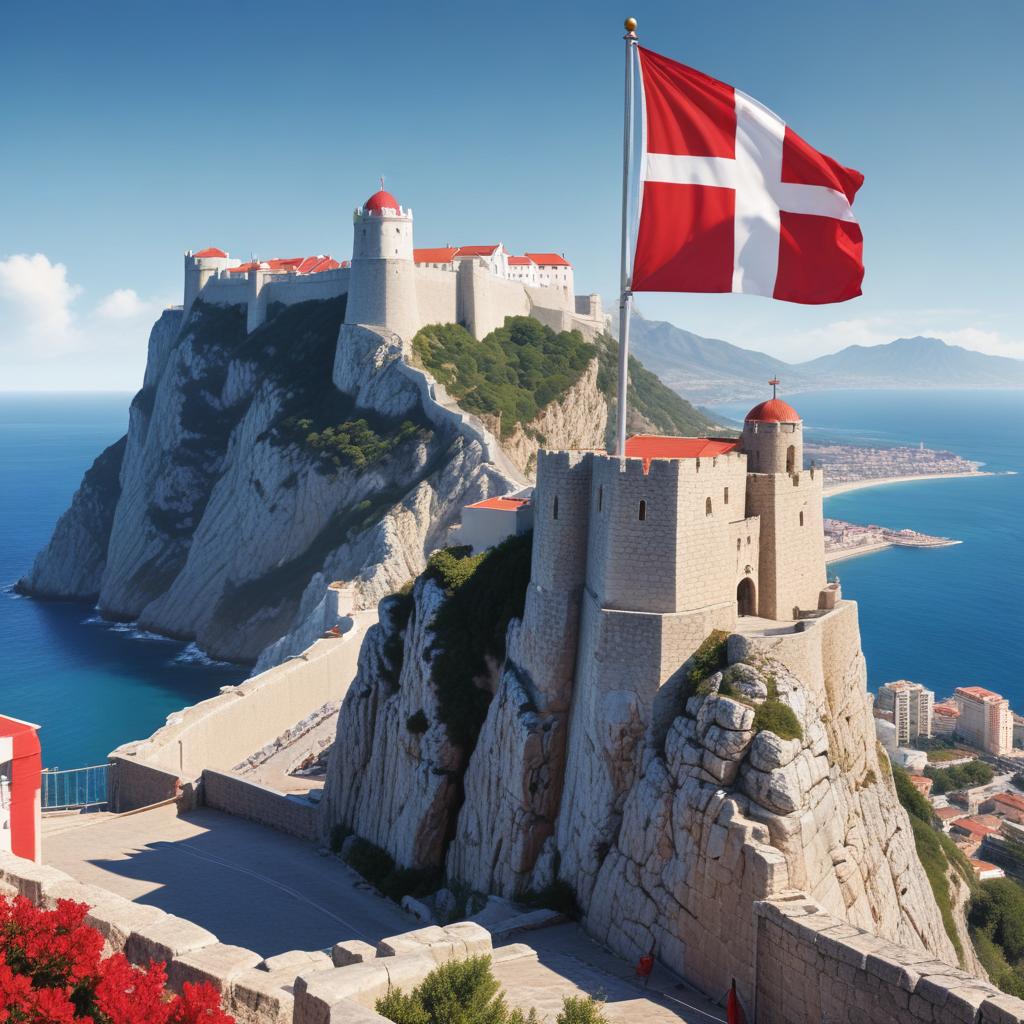
For the citizens of Gibraltar, the flag is a unifying symbol that brings together diverse communities under a shared sense of belonging. Its presence is felt in both everyday life and in important civic occasions, strengthening the collective spirit and reinforcing a strong sense of Gibraltar pride. Whether flown during local festivals, displayed on public buildings, or worn during sporting events, the flag acts as a constant reminder of the territory’s unique cultural identity and sovereignty.
Moreover, the flag plays a crucial role in distinguishing Gibraltar on the international stage. In asserting its distinctiveness, the flag encapsulates the aspirations and values of its people, fostering a profound connection to their homeland. It is a proud declaration of heritage, resistance, and community—elements that are central to Gibraltar’s national identity and its enduring cultural legacy.
Origins of the Flag of Gibraltar
The Flag of Gibraltar holds a rich significance reflecting the deep historical roots and cultural identity of this British Overseas Territory. Its origins are closely intertwined with Gibraltar history, stretching back several centuries. The design of the flag is not merely decorative but is imbued with symbolism that reflects the territory’s unique position and historical influences.
The flag features two main elements: the red castle and the golden key, each symbolizing vital aspects of Gibraltar’s past. The red castle represents the fortress of Gibraltar, a stronghold that has played a crucial role throughout history, particularly during military engagements and sieges. The fortress itself dates back to the Moorish occupation in the 8th century, a significant early influence that shaped the territory’s strategic importance. The castle emblem is a nod to this historical fortress, underscoring Gibraltar’s role as a guarded gateway.
The golden key beneath the castle further enhances the flag’s symbolism. It signifies Gibraltar as the “Key to the Mediterranean,” highlighting its strategic location controlling access between the Atlantic Ocean and the Mediterranean Sea. This key has historical connotations of power and control, often representing Gibraltar’s pivotal role in naval history and trade routes. Over the centuries, this symbolism has been crucial, especially during periods of conflict when control over the territory was highly contested.
In terms of flag origins, the current design was officially adopted in 1982, but it is based on a much older emblem granted to Gibraltar by Queen Isabella I of Castile in 1502. This royal grant laid the foundation for the flag’s elements, embedding them in Gibraltar’s heraldic tradition. The flag’s colors, red and white, also reflect the broader historical background—red symbolizing strength and valor, while white denotes peace and integrity.
Understanding the flag origins within the broader Gibraltar history reveals how its design is a testament to resilience and strategic value. The combination of the castle and the key not only reflects past sovereignties and influences but also continues to embody the pride and identity of the people of Gibraltar today.
Medieval and Early Symbols
The flag of Gibraltar draws its design and symbolism deeply from medieval coats of arms and early heraldic traditions. Central to this historical imagery is the Gibraltar coat of arms, which dates back to the early 14th century. The coat of arms features a prominent red castle and a golden key, symbols that have endured as the foundation of Gibraltar’s flag symbols. The red castle represents the fortress and strategic importance of Gibraltar as a military stronghold, while the golden key symbolizes its role as the “Key to the Mediterranean,” highlighting its control over the critical gateway between the Atlantic Ocean and the Mediterranean Sea.
These medieval symbols were not mere decorations but potent representations of power, security, and control. The castle motif, typical in medieval heraldry, underscored the defensive strength of the territory under Moorish then later Spanish and British rule. The golden key added a layer of symbolic meaning, referencing Gibraltar’s invaluable position. This combination of fortress and key became deeply ingrained in the identity and flag symbols of Gibraltar, influencing the modern flag’s design.
Throughout the centuries, while the flag underwent several changes in style and detail, the medieval symbols of the castle and key remained constant. They served as a reminder of Gibraltar’s historical significance and its enduring legacy as a fortified bastion. These emblematic images, rooted in medieval heraldic tradition, thus play a critical role in the current visual language of Gibraltar, directly inspiring the flag symbols that represent the territory today.
Adoption of the Flag Design
The official flag of Gibraltar was formally adopted on November 8, 1982, marking an important moment in the territory’s design history. The flag features a striking and unique design that has come to symbolize Gibraltar’s identity and heritage. Its adoption was the result of a long process during which local officials and historians reviewed the historical significance and symbolism of the elements included in the flag.
The design history of the flag traces back to the 16th century when the original coat of arms—a red castle with a golden key suspended beneath it—was granted to Gibraltar by the Spanish monarch, Queen Isabella I of Castile, in 1502. While the coat of arms has been a consistent symbol, it was not until 1982 that this emblem was officially placed on a white and red flag, with the white field occupying the upper half and the red stripe, along with the castle and key, on the lower half.
The flag adoption was an effort to create an official symbol representing Gibraltar’s status as a British Overseas Territory while preserving its rich history and cultural heritage. Since its adoption, the flag has been proudly flown on public buildings and during official events, becoming a recognized emblem of Gibraltar’s distinct identity within the region.
Symbolism and Meaning Behind the Flag
The flag of Gibraltar is rich in symbolism and meaning that reflects the territory’s unique cultural and historical identity. At the heart of the flag’s design lies the striking Gibraltar emblem, a red castle and key set against a white and red field. Each element on the flag carries significance that goes beyond mere decoration, serving as a visual narrative of Gibraltar’s past and its enduring legacy.
The flag’s colors—predominantly red and white—play an important role in its symbolism. The white background represents peace and honesty, while the bold red is indicative of strength, bravery, and valor. Together, these colors symbolize the resilience and fortitude of the people of Gibraltar in the face of historical challenges and their steadfast commitment to their homeland.
Central to the flag symbolism is the red castle, an emblem that stands for Gibraltar’s fortress-like nature due to its strategic military importance throughout history. This castle reflects Gibraltar’s role as a guardian and protector, echoing the strength of its natural rock formation that has sheltered inhabitants for centuries. The castle also signifies the territory’s connection to the Kingdom of Castile, acknowledging a significant chapter in Gibraltar’s historical ties to Spain and later to British sovereignty.
Below the castle hangs a golden key, another crucial symbol with layered meanings in the flag meaning context. The key represents Gibraltar’s strategic position as the “key to the Mediterranean,” highlighting its importance in military and trade routes between Europe and Africa. Culturally, it symbolizes control, security, and the power to open or close access points, underscoring Gibraltar’s geopolitical significance over the centuries.
Overall, the flag colors and emblem together form a powerful visual representation of Gibraltar’s identity. They encapsulate a narrative of resilience, strategic prominence, and a vibrant cultural heritage that binds its community. The flag is not just a banner but a symbol that honors the territory’s history, its people’s courage, and the enduring spirit of Gibraltar itself.
The Red Castle and its Significance
The red castle emblem displayed prominently on the flag of Gibraltar is not just a simple design element but a powerful symbol steeped in history. Often referred to as the “red castle,” this iconic image represents the Gibraltar fortress, a fortress that has stood as a steadfast guardian over the strategic territory for centuries. The castle icon on the flag serves as a reminder of Gibraltar’s military importance and its role as a bastion of defense against invasions throughout history.
The red castle’s significance goes beyond its visual appeal; it encapsulates the resilience and strength of the people of Gibraltar. This fortress was a critical Mediterranean stronghold, highly sought after by different powers due to its position controlling the entrance and exit to the Mediterranean Sea. The flag icon symbolizes the heritage and continuity of Gibraltar’s identity, embodying protection, sovereignty, and endurance.
Historically, the Gibraltar fortress was constructed in the Middle Ages, and its robust walls and towers have witnessed numerous sieges and battles. The red castle on the flag serves as a testament to the enduring strategic and cultural significance of this fortress. The emblem is a proud declaration of Gibraltar’s fortified past and its pivotal role in the region’s history, making it a cherished and meaningful icon for the territory.
The Golden Key and Its Interpretation
The golden key depicted on the flag of Gibraltar holds deep symbolic significance, representing the territory’s strategic importance and its historical role as a gateway between continents. This golden key is a central element in the flag symbolism, embodying Gibraltar’s position as the “key to the Mediterranean.” Throughout history, control over Gibraltar meant holding a vital stronghold that could control naval passage between the Atlantic Ocean and the Mediterranean Sea, making the key a powerful emblem of security and authority.
The Gibraltar key meaning extends beyond just a military or geographical symbol; it is also a representation of the territory’s identity and pride. The golden key symbolizes unlocking opportunities and safeguarding the territory from external threats. For the people of Gibraltar, the key is a reminder of their resilience and strategic prominence, reflecting the community’s connection to their unique location and history.
In the broader context of flag symbolism, the golden key stands out as an enduring icon that communicates strength, protection, and significance. It is an important element of Gibraltar’s identity, serving as a visual metaphor for its pivotal role in maritime history and ongoing importance as a cultural and geopolitical landmark. The presence of the golden key on Gibraltar’s flag continues to inspire pride among its residents and conveys a powerful message to the world about the territory’s legacy and enduring value.
The Flag of Gibraltar in Modern Times
The flag of Gibraltar remains a powerful symbol of identity and pride for the people of Gibraltar today. It continues to be prominently used across the territory in official capacities, cultural events, and daily life, embodying both the region’s unique heritage and its current political status. This modern flag use reflects a continued respect for the historical roots while adapting to Gibraltar’s evolving role in the contemporary world.
In contemporary Gibraltar, the flag is a common sight, flying proudly on government buildings, schools, and public spaces. It also features prominently during national celebrations and commemorative events, reinforcing a sense of community and shared history. The design itself, with its distinctive red and white colors and iconic castle and key motif, has seen little alteration over the years, illustrating a strong attachment to its traditional symbolism and meaning.
Despite this continuity, the flag has not been entirely free from recent discussions and controversies. Debates occasionally arise surrounding the flag’s symbolism in the context of Gibraltar’s political relationship with the United Kingdom and Spain. Some voices call for adjustments or alternative representations that reflect evolving political realities or aspirations, while others advocate firmly for preserving the flag’s original elements as a testament to Gibraltar’s enduring identity.
The evolution of the flag in modern times, therefore, is less about physical changes and more about the dynamic meanings attributed to it by the people of Gibraltar. The current symbolism embodied by the flag continues to represent Gibraltar’s resilience, strategic importance, and cultural heritage. It acts as a visual assertion of the territory’s distinctiveness on the world stage, even as political and social landscapes shift around it.
In summary, the flag of Gibraltar today is much more than a historical emblem; it is a living symbol of Gibraltar itself—its history, challenges, and hopes. The flag’s continued use across all facets of Gibraltar’s public and private life demonstrates its central role in modern identity and national pride, while also serving as a focal point for ongoing discussions about the region’s future.
Display and Official Usage
The flag of Gibraltar holds a significant place in both governmental and public settings, serving as a symbol of identity and pride. Officially, the flag is prominently displayed on government buildings, including the Parliament House, administrative offices, and other key public institutions. This ensures that the government flag is visible at the heart of the territory’s political and administrative activities, reinforcing its official status and continuous use in formal government protocols.
In addition to its governmental display, the flag is also widely used in public spaces across Gibraltar. It can be seen flying on memorials, monuments, and during official celebrations and public holidays, where it embodies the community’s unity and historic heritage. This widespread flag display not only honors Gibraltar’s distinct identity but also promotes civic pride among residents.
Moreover, official use of the flag extends to ceremonial occasions, such as parades and official visits by dignitaries, where the flag underscores Gibraltar’s sovereignty and cultural significance. It is customary for the flag to be handled with respect and displayed in accordance with established flag protocol, ensuring its dignified use at all times. Through these various forms of flag display, the government flag remains a powerful emblem of Gibraltar’s historical legacy and contemporary governance.
Flag in Gibraltar’s National Identity
The flag of Gibraltar stands as a powerful cultural symbol that deeply resonates with the people of this unique territory. More than just a piece of cloth, it embodies the national identity and pride that Gibraltar has cultivated over centuries. The red and white colors, along with the iconic castle and key emblem, serve not only as visual markers but also as a reminder of Gibraltar’s rich historical heritage and resilience.

I have always been captivated by the unique cultural tapestry of the Rock, particularly how Moorish, Spanish, and British influences shaped its development over centuries. My passion lies in translating these complex historical narratives into engaging educational resources that make Gibraltar’s past accessible to everyone. I spend my free time exploring military fortifications and reading first-hand accounts of life at the Pillar of Hercules.