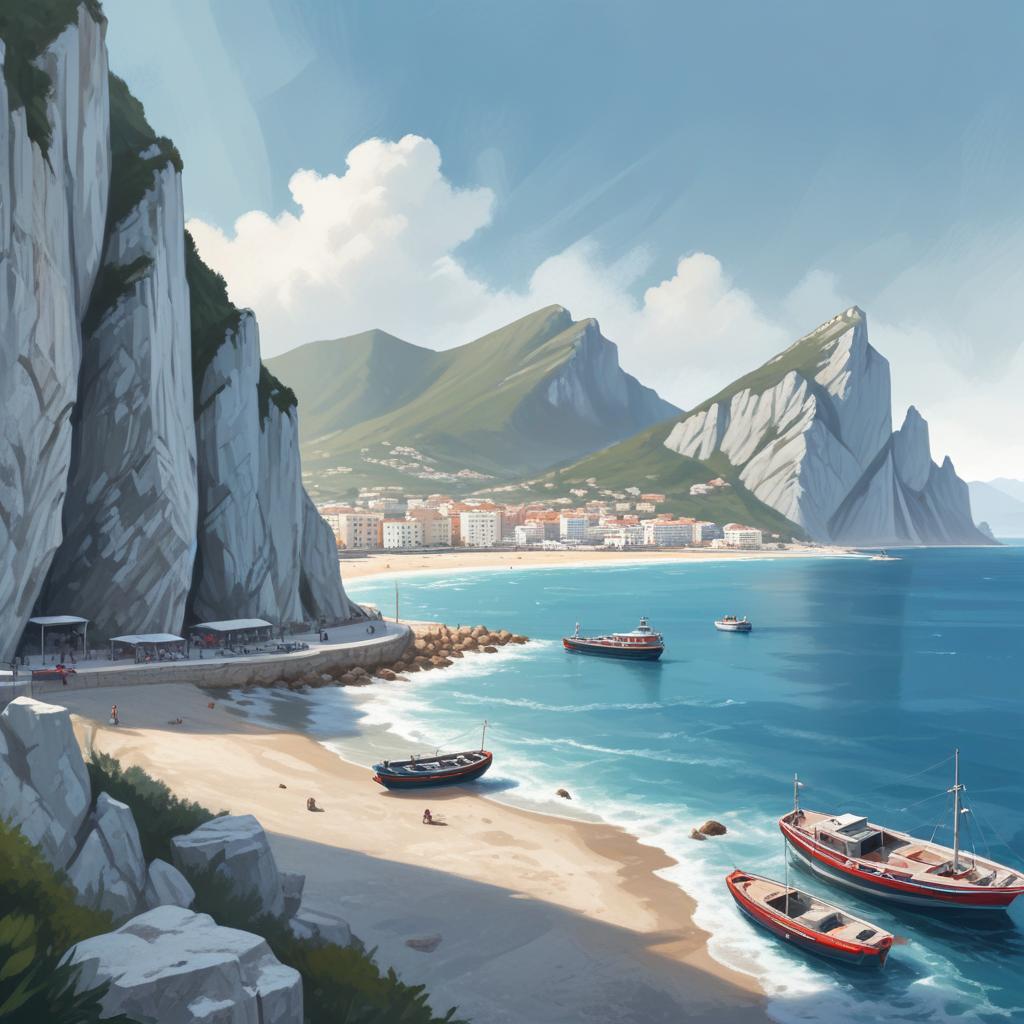
Introduction to the Rock of Gibraltar
The Rock of Gibraltar is a renowned landmark steeped in rich history and geographical significance. Perched at the southern tip of the Iberian Peninsula, this towering limestone promontory overlooks the strategic entrance to the Mediterranean Sea from the Atlantic Ocean. It is situated within the British Overseas Territory of Gibraltar, which shares its name with the rock itself.
Geographically, the Rock of Gibraltar rises dramatically to about 426 meters (1,398 feet) above sea level, making it a prominent natural feature visible from miles around. Its unique shape and sheer cliffs have made it a natural fortress and an iconic symbol associated with strength and endurance. The distinctive appearance of the rock, combined with its lush greenery and natural caves, captivates many visitors and historians alike.
The landmark holds immense significance not only as a natural marvel but also as a strategic military and historical site. Throughout Gibraltar’s history, the Rock has served as a crucial defensive outpost controlling naval access between the Mediterranean and the Atlantic, especially during times of conflict. This makes the Rock of Gibraltar a focal point in Gibraltar history, celebrated for its role in various military campaigns and treaties.
Beyond its military importance, the Rock has become a cultural and natural emblem recognized worldwide. It attracts tourists, historians, and geologists who come to explore its rich biodiversity, including the famous Barbary macaques, and to trace the layers of human history embedded in its caves and fortifications. Its unique blend of historical depth, strategic geography, and striking natural beauty firmly establishes the Rock of Gibraltar as one of the most distinguished geographical landmarks on the globe.
Historical Significance of the Rock of Gibraltar
The Rock of Gibraltar has long stood as a monumental symbol of strategic military importance, commanding a pivotal location that has influenced countless historical events. Situated at the entrance of the Mediterranean Sea from the Atlantic Ocean, this iconic landmark has framed the course of military history through its excellent vantage point and unmatched defensive potential. Throughout history, the Rock of Gibraltar’s strategic location has made it a coveted stronghold, playing a critical role in numerous Gibraltar battles and military campaigns.
The historical importance of the Rock of Gibraltar dates back to antiquity when it was recognized as one of the Pillars of Hercules. However, its more tangible military significance emerged in the early modern period. The rock became a key naval base that allowed control over the narrow strait, essential for safeguarding maritime trade routes and securing naval dominance. Control of Gibraltar meant control over naval traffic between the Atlantic and the Mediterranean, making the site a critical asset in regional and global military strategy.
One of the most notable episodes highlighting the strategic military importance of Gibraltar was the Great Siege (1779–1783). During this protracted battle, Spanish and French forces attempted to reclaim the rock from British control but were ultimately unsuccessful. The fortification of Gibraltar was enhanced with extensive tunnels, artillery batteries, and supply systems, underscoring its military resilience and the effort invested to hold this strategic location. The siege cemented Gibraltar’s status as a fortress of immense strategic value and marked a significant event in its military history.
Further military significance was demonstrated during the two World Wars, where Gibraltar served as a vital naval and air base for the Allies. Its strategic location facilitated the control of the Mediterranean sea lanes and supported the defense against Axis forces. The Rock’s military installations, radar stations, and underground complexes played a crucial part in monitoring enemy movements and securing Allied operations. This continuous role in military history reflects its enduring strategic value and highlights why the Rock of Gibraltar remains a symbol of military strength and geopolitical significance.
In summary, the Rock of Gibraltar’s historical importance is deeply rooted in its strategic location and military history. The key Gibraltar battles, especially the Great Siege, reflect its enduring role in shaping military and geopolitical dynamics in the region. The Rock stands not only as a natural wonder but as a fortress whose significance has persisted through centuries of conflict and strategic maneuvering.
Ancient and Classical Periods
The Rock of Gibraltar holds a significant place in ancient history, standing as a landmark that has fascinated civilizations for millennia. Situated at the strategic entrance to the Mediterranean Sea, the Rock was well known to ancient mariners and various cultures, including the Phoenicians and Romans, who recognized its importance both geographically and symbolically. The Phoenicians, skilled seafarers of the ancient world, viewed Gibraltar as a critical point for trade and navigation. They are believed to have established early settlements around the Rock, using it as a navigational marker along their trade routes connecting the Mediterranean with the Atlantic.
During the classical era, the Romans also acknowledged the Rock of Gibraltar’s prominence. They referred to it as one of the Pillars of Hercules, a legendary boundary marking the edge of the known world. This designation underscored the Rock’s symbolic role in the ancient imagination as a gateway to distant lands and uncharted waters. The Romans utilized the area for military and trade purposes, appreciating its natural fortification and strategic position controlling access to the Mediterranean basin.
Throughout ancient history, the Rock of Gibraltar served not only as a physical landmark but also as a cultural symbol for early civilizations. Its imposing presence influenced mythologies and navigation, emphasizing its enduring legacy from the Phoenician age through the classical era of Roman dominance. Today, Gibraltar’s ancient past continues to capture the imagination, reminding us of its timeless role in the maritime history of the region.
Medieval and Early Modern History
During the medieval period, the Rock of Gibraltar experienced significant shifts in control that shaped its strategic importance. Initially, the region was under Moorish rule following the Muslim conquest in the early 8th century. The Moors fortified the Rock extensively, recognizing its value as a defensive stronghold controlling access between the Mediterranean Sea and the Atlantic Ocean. This period saw Gibraltar as a key military and trade asset, serving as a gateway for various powers vying for dominance in the area.
By the late medieval era, the balance of power began to shift. The Spanish crown sought to reclaim the territory, and after centuries of conflict, the Rock finally came under Spanish control in the late 15th century. Under Spanish rule, Gibraltar retained its strategic military significance, with fortifications maintained and improved to protect against seaborne invasions and control naval access to the Strait of Gibraltar.
Entering the early modern era, Gibraltar continued to serve as a critical military outpost due to its commanding position at the crossroads of Europe and Africa. Its role expanded beyond mere defense, becoming a pivotal naval base in Mediterranean power struggles. The changes in control through these periods highlight how the Rock’s strategic utility was recognized and contested by successive powers, each seeking to leverage its commanding location to influence maritime and territorial dominance.
British Sovereignty and Modern Era
The British acquisition of Gibraltar dates back to 1713, following the Treaty of Utrecht, where Spain ceded the territory to Great Britain. This marked the beginning of British rule, which has profoundly influenced Gibraltar’s cultural and political landscape ever since. One of the most defining events under British sovereignty was the Great Siege of Gibraltar (1779–1783), when Spanish and French forces attempted to seize the fortress from the British. Despite enduring intense bombardments and blockades, Gibraltar’s resilient defenders successfully repelled the siege, solidifying British control.
In the 20th century, Gibraltar played a crucial role during World War II as a strategic naval base controlling access to the Mediterranean. Its location allowed the Allies to monitor and disrupt Axis maritime movements, making it a key asset in the war effort. The territory was heavily fortified and served as a refuge for evacuees during the conflict, underscoring its military and humanitarian significance.
Today, modern Gibraltar retains its unique status as a British Overseas Territory. It boasts a vibrant community with deep British cultural ties while also preserving its distinct Mediterranean character. Political and economic developments have continued to evolve, but Gibraltar remains a symbol of resilience and strategic importance, reflecting its rich history from the Great Siege through to its pivotal role in World War II and beyond.
Cultural and Natural Heritage of the Rock of Gibraltar
The Rock of Gibraltar is a remarkable site that boasts a rich cultural significance intertwined with an extraordinary natural history. This unique blend makes it not only a symbol of heritage but also a thriving habitat for diverse flora and fauna, attracting visitors from across the globe.
Historically, the Rock has been a crossroads of civilizations, contributing to its deep cultural heritage. The people of Gibraltar have developed a distinct identity, known as Llanito, which reflects a fusion of British, Spanish, and Mediterranean influences. This cultural mosaic is evident in the language, traditions, and daily life of the local community, underlining the Rock’s importance beyond its geological prominence.
Beyond its cultural importance, the Rock of Gibraltar is home to a variety of natural features that highlight its environmental value. The limestone formation harbors unique ecosystems supporting rare plant species and remarkable wildlife. Among the most famous inhabitants are the Barbary macaques—the only wild monkey population in Europe—which have become an iconic symbol of the Rock. In addition, the cliffs and caves provide shelter to numerous bird species, making it a key site for birdwatching and biodiversity.
Tourism plays a vital role in Gibraltar’s economy, largely fueled by interest in its cultural and natural heritage. Visitors are drawn not only to the historical landmarks and museums that tell the story of Gibraltar’s past but also to the natural nature reserves and scenic views from the summit of the Rock. Activities such as hiking, wildlife observation, and exploring subterranean caves add to the allure for tourists seeking a blend of education, adventure, and natural beauty.
In summary, the Rock of Gibraltar’s cultural significance and natural environment together form an invaluable heritage site. Its diverse flora and fauna, combined with rich traditions and an active tourism sector, ensure that the Rock remains a vibrant destination for both heritage enthusiasts and nature lovers alike.
Wildlife and Environment
The Rock of Gibraltar is not only a historical landmark but also a vital natural reserve, home to a unique array of indigenous wildlife. Among its most famous inhabitants are the Barbary macaques, the only wild monkeys in Europe, which have become iconic symbols of the Rock. These macaques thrive in the protected environment, and their population is carefully monitored to ensure their health and well-being, reflecting a broader commitment to wildlife protection.
Beyond the Barbary macaques, the Rock supports a diverse ecosystem that includes various bird species, reptiles, and plant life. The natural reserve status helps maintain this delicate balance, protecting native flora and fauna from urban development and human interference. Conservation measures are continually implemented to preserve the Rock’s unique environment, promoting sustainability and biodiversity.
Efforts to preserve the Rock’s natural environment involve collaboration between local authorities, environmental organizations, and the community. These initiatives include habitat restoration, pollution control, and educational programs designed to raise awareness about the importance of protecting Gibraltar’s wildlife and ecosystem. Through these combined efforts, the Rock of Gibraltar remains a sanctuary not only for its iconic Barbary macaques but for all native species that contribute to its rich natural heritage.
Tourism and Cultural Impact
The Rock of Gibraltar remains a major draw for tourism, captivating visitors with its rich heritage sites and vibrant cultural events. Its unique blend of natural beauty and historical significance offers a multifaceted visitor experience that appeals to a wide audience. Tourists often explore iconic landmarks such as the ancient Moorish Castle, the Great Siege Tunnels, and the famous Barbary macaques, all of which contribute to the area’s deep historical narrative.
Cultural events on the Rock also play a crucial role in promoting local traditions and fostering community pride. Annual celebrations, music festivals, and art exhibitions highlight the diverse cultural fabric of Gibraltar, enriching the visitor experience by providing immersive opportunities to engage with the local heritage. These events not only attract tourism but also strengthen the connection between residents and their history.
Tourism infrastructure, including guided tours and museums, further enhances the appeal of the Rock by educating visitors about its strategic importance and unique cultural identity. This thoughtful integration of heritage sites and cultural programming helps ensure that tourism benefits both the economy and the preservation of Gibraltar’s history. Overall, the Rock’s tourism and cultural scene remains a vital part of its contemporary identity, drawing thousands annually to explore and celebrate its enduring legacy.

I have always been captivated by the unique cultural tapestry of the Rock, particularly how Moorish, Spanish, and British influences shaped its development over centuries. My passion lies in translating these complex historical narratives into engaging educational resources that make Gibraltar’s past accessible to everyone. I spend my free time exploring military fortifications and reading first-hand accounts of life at the Pillar of Hercules.