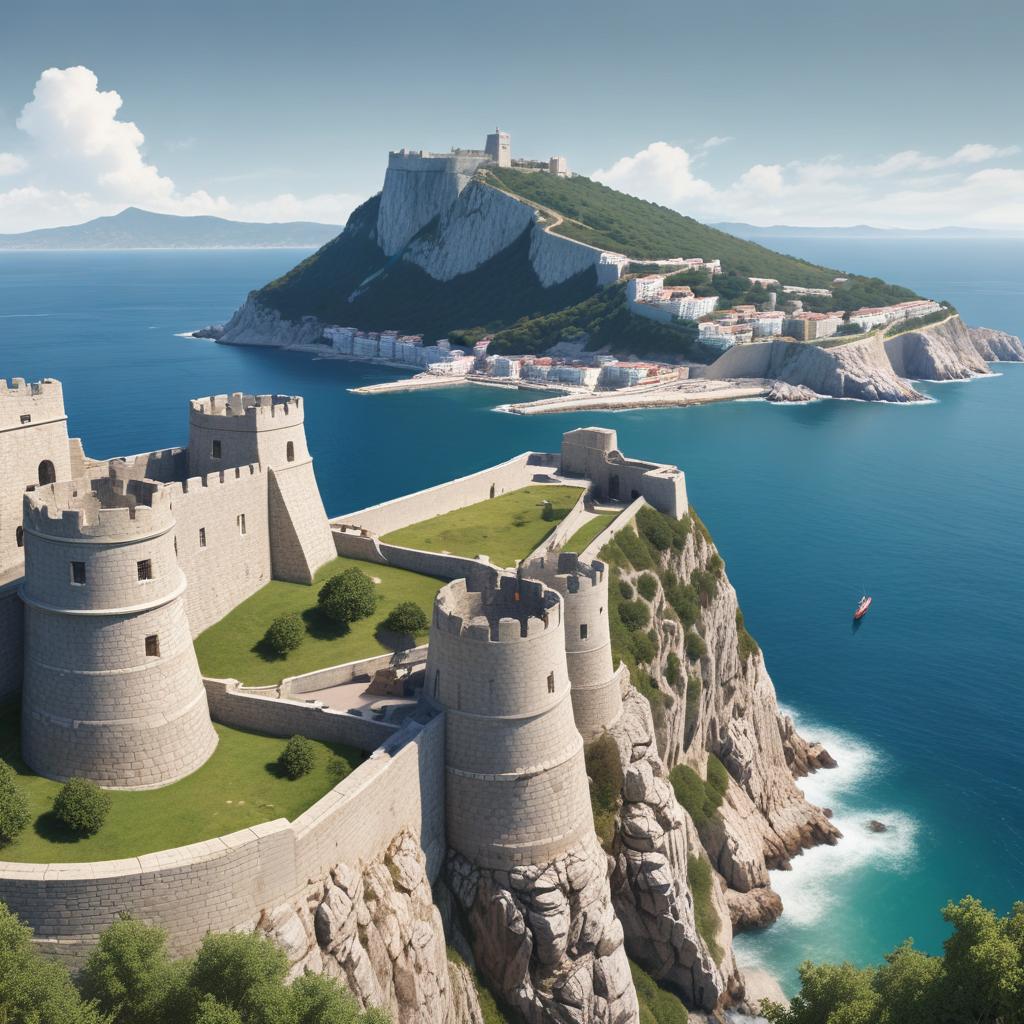
Military architecture in Gibraltar also highlights the use of underground tunnels and casemates. These subterranean passages allowed troops to move unseen and safely between key points within the fortress, enabling rapid reinforcement during attacks. The tunnels also protected artillery placements from enemy bombardment, extending the defensive capacity of Gibraltar’s fortifications far beyond the visible surface structures.
The design integrates advanced features such as angled walls and embrasures, which maximize defensive potential while minimizing exposure to enemy fire. Defensive walls often include constructed loopholes — narrow vertical slits for muskets and rifles — and gun ports for artillery. These features provide defenders with protected firing positions, ensuring that attackers are exposed to constant resistance without creating large vulnerable openings.
Furthermore, the strategic design accounts for the elongated shape of the Rock, with multiple lines of defense converging toward the town and harbor areas below. Defensive walls spiral upwards along the contours, controlling access and preventing enemy forces from gaining a foothold. The use of natural escarpments paired with masonry engineering exemplifies the ingenuity behind Gibraltar fortress design, blending form and function to create a formidable defensive system.
In summary, the architectural and strategic elements of Gibraltar’s fortifications exemplify a sophisticated approach to military architecture. The combination of defensive walls, bastions, underground tunnels, and smart integration with the natural landscape makes these fortifications a timeless symbol of military ingenuity and resilience.
Walls, Bastions, and Batteries
The fortress walls of Gibraltar stand as formidable barriers protecting the territory from invasions and attacks. These fortress walls are constructed with thick layers of stone and mortar, designed to withstand bombardments and resist scaling attempts by enemy forces. Their height and thickness vary according to the terrain and strategic needs, creating a continuous defensive boundary around the fortress.
Bastions Gibraltar are key elements of the fortress’s defensive architecture. These angular structures project outward from the main walls, enabling defenders to cover adjacent wall faces with crossfire, thus eliminating blind spots. The bastions also serve as platforms for heavy artillery, enhancing the fortress’s capacity to repel attackers from multiple directions. Each bastion is carefully positioned to maximize its defensive and offensive effectiveness within the overall fortification system.
Artillery batteries complement the fortress walls and bastions by providing concentrated firepower against advancing enemies. These artillery batteries are strategically placed at points offering the widest range of targets, often elevated or near key entry points. Equipped with cannons and later more advanced gun types, the batteries focus on breaking enemy formations, destroying siege equipment, and defending vital approaches. Together, the fortress walls, bastions Gibraltar, and artillery batteries create a layered defense system that has made Gibraltar a virtually impregnable stronghold throughout history.
Tunnels and Underground Defenses
The Gibraltar tunnels are an extraordinary network of underground fortifications that played a critical strategic role during various wars and sieges. Carved deep into the limestone rock of the Rock of Gibraltar, these war-time tunnels provided shelter, storage, and movement corridors for troops, allowing defense forces to operate unseen by the enemy. Their extensive design enabled quick and safe access to key points across the fortress, offering both protection from bombardments and a tactical advantage.
These underground fortifications were essential when Gibraltar faced prolonged sieges, as they allowed for continuous defense and communication even under heavy attack. The tunnels housed ammunition depots, command centers, and even living quarters, making them self-sufficient and secure from surface threats. The strategic importance of these war-time tunnels was profound, as they permitted the defenders to outlast sieges, control the high ground internally, and launch surprise attacks.
Today, Gibraltar’s tunnels stand as a testament to innovative military engineering. Their complexity and scale reflect the necessity of subterranean defense systems in a region heavily contested over centuries. The Gibraltar tunnels remain a fascinating symbol of resilience and tactical ingenuity, illustrating how underground fortifications dramatically shaped the military history of this key stronghold.
Modern Usage and Conservation Efforts
The fortifications of Gibraltar, renowned for their historical significance and strategic importance, continue to play an essential role in contemporary heritage preservation and tourism. Modern fortification conservation efforts focus on maintaining the structural integrity and historical authenticity of these remarkable military constructs. Various government agencies, heritage organizations, and local community groups actively collaborate to safeguard these sites from environmental wear, urban development pressures, and the passage of time.
Today, many parts of the fortifications serve dual purposes: they are preserved as cultural heritage monuments and utilized as dynamic venues for educational and touristic activities. Restoration projects regularly address aging stonework, tunnels, and artillery placements to ensure the fortifications remain accessible and safe for visitors. These efforts not only preserve Gibraltar’s military legacy but also enhance its role within the tourism industry by providing immersive historical experiences.
Gibraltar tourism benefits greatly from the appeal of these well-preserved fortifications, which attract thousands of visitors annually. Tourists can explore extensive networks of tunnels, bastions, and batteries, gaining insight into the region’s military history and architectural ingenuity. Guided tours, interactive exhibits, and heritage trails have been developed to enrich visitors’ understanding and appreciation of Gibraltar’s unique fortification system, positioning it as a key highlight on the cultural tourism map.
Importantly, these conservation initiatives are deeply intertwined with the broader goals of heritage preservation. By protecting the fortifications, Gibraltar protects not only its military past but also its cultural identity. The preservation work ensures that future generations can experience and learn from these historic structures, fostering a sense of pride and continuity within the local community. Furthermore, responsibly managed tourism around the fortifications provides sustainable economic benefits, reinforcing the value of heritage sites as assets that contribute to both cultural enrichment and economic vitality.
In summary, the modern usage and conservation of Gibraltar’s fortifications exemplify a successful balance between historical preservation and contemporary function. Through dedicated fortification conservation measures, these iconic structures remain a vibrant part of Gibraltar’s tourism appeal and cultural heritage landscape, ensuring their stories continue to resonate with visitors and locals alike.
Preservation and Restoration Projects
Recent restoration projects at the fortifications of Gibraltar have been pivotal in maintaining the site’s historical integrity while adapting to modern conservation standards. Heritage management teams have faced the challenge of balancing preservation with accessibility, ensuring that structural repairs do not compromise the original materials and designs. Efforts have included meticulous stonework restoration, reinforcing defensive walls, and stabilizing aging foundations to prevent further deterioration.
One notable success involved the comprehensive restoration of key bastions where advanced techniques were employed to replicate original construction methods, enhancing both authenticity and durability. These projects have not only conserved the physical structures but have also revitalized public interest and educational outreach centered on Gibraltar’s rich military history.
Challenges in fortifications conservation stem largely from environmental factors such as salt corrosion and weathering, compounded by the complexity of the fortifications’ layered historical phases. To address these issues, restoration teams have incorporated modern technology and materials that offer long-term protection without undermining heritage values. Collaborative efforts among historians, engineers, and conservators have set a benchmark in heritage management, ensuring that Gibraltar’s fortifications remain preserved for future generations.
Tourism and Educational Activities
The fortifications of Gibraltar stand as iconic landmarks that attract numerous visitors each year as part of Gibraltar tours. Their strategic and historical significance has been preserved not only through careful maintenance but also by their transformation into engaging tourist attractions. Visitors to Gibraltar can explore the extensive network of tunnels, battlements, and weaponry that reveal insights into centuries of military defense and geopolitical importance.
Beyond their appeal to tourists, these fortifications serve as vital venues for educational programs. Schools, historians, and military enthusiasts frequently participate in specialized programs designed to deepen understanding of Gibraltar’s role in global military history. These educational programs highlight the architectural ingenuity, tactical adaptations, and cultural impact of the fortifications over time, offering rich, immersive learning experiences that connect participants with the past.
Historical attractions within the fortifications, such as museums and guided tours, provide detailed narratives and displays that bring to life the stories of the soldiers and leaders who once defended this strategic location. The combination of firsthand exploration and curated educational content makes Gibraltar’s fortifications a unique blend of tourism and learning, appealing to a wide audience eager to discover the military heritage embedded in this remarkable site.
Historical Overview of Gibraltar’s Fortifications
The history of Gibraltar’s fortifications is a rich tapestry that reflects its strategic importance throughout the ages. From ancient times, Gibraltar has been recognized as a vital military stronghold due to its commanding position at the entrance of the Mediterranean Sea. The earliest known fortifications date back to the Moorish period in the 8th century, when the Nasrid rulers constructed initial defenses to control access and protect the territory. These early structures laid the foundation for what eventually became one of the most formidable fortress complexes in the world.
During the medieval era, Gibraltar’s fortifications evolved significantly. The site changed hands multiple times, leading to enhancements and expansions by successive rulers, including the Spanish after the Reconquista. Enhancements included thickening walls, building towers, and adding battlements to withstand sieges and artillery. These developments mark a critical phase in the military history of Gibraltar, underscoring the fortress development as a continuous effort to adapt and reinforce the defenses in response to advances in warfare technology.
The most transformative period in the history of Gibraltar fortifications came after 1704, during the War of Spanish Succession, when British forces captured Gibraltar. Recognizing the fortress’s immense strategic value, the British extensively modernized and expanded the fortifications over the following centuries. They introduced complex bastions, deep ditches, and extensive tunnel networks, establishing Gibraltar as a key naval and military base. This period not only highlights the ongoing fortress development but also cements Gibraltar’s role in military history as a symbol of British colonial strength.
In the 19th and 20th centuries, Gibraltar’s fortifications continued to reflect advances in military engineering and artillery. The addition of coastal batteries and anti-aircraft defenses during both World Wars exemplified the fortress’s enduring military significance. Today, Gibraltar’s fortifications stand as a testament to centuries of military history and strategic defense, attracting historians and tourists alike interested in the evolution and resilience of fortress development in this unique location.
Origins and Early Defenses
The early Gibraltar forts represent a fascinating chapter in the history of fortifications, marked by the construction of ancient fortifications that preceded modern military technology. These initial defense structures were fundamentally influenced by the strategic importance of Gibraltar, serving as a gateway between the Mediterranean and the Atlantic. The earliest fortifications were established by the Moors during their control of the region, which began in the early 8th century. The Moors constructed robust walls and lookout posts strategically placed to monitor approaching enemies and control access points.
Following the Moorish period, the Spanish authorities further enhanced the early Gibraltar forts with their own architectural and military innovations. They built on the existing foundations, adding bastions and improved curtain walls designed to withstand the attacking techniques of their time. These initial defense structures effectively combined Moorish ingenuity with Spanish military knowledge, creating a formidable defense system that protected the rock from numerous sieges and invasions over the centuries.
Despite their simplicity compared to modern fortifications, the early Gibraltar forts played a crucial role in establishing the Rock’s reputation as a military stronghold. The ancient fortifications laid down the groundwork for later expansions and adaptations, preserving Gibraltar’s strategic significance by utilizing natural geography and early engineering methods. This blend of Moorish and Spanish influences remains a testament to the evolving art of defense prior to the advent of gunpowder and modern artillery.
British Era Fortifications
The British military Gibraltar fortifications underwent significant enhancements from the early 18th century onwards. Following the capture of Gibraltar by Anglo-Dutch forces in 1704, the British recognized the strategic importance of the Rock and invested heavily in reinforcing its defenses. During this era, the 18th century fortifications were expanded with new bastions, batteries, and tunnels designed to maximize the natural defensive advantages of Gibraltar’s terrain.
A pivotal moment that tested these fortifications was the Great Siege of Gibraltar (1779-1783), when Spanish and French forces attempted to reclaim the territory. The British military Gibraltar defenses were integral to withstanding the prolonged assault. The fortifications featured intricate networks of artillery emplacements and underground passages, which allowed British forces to endure intense bombardment and maintain control despite being heavily outnumbered.
Enhancements during the British era prioritized not only increasing firepower but also improving supply lines and communication within the fortress. The Great Siege demonstrated the effectiveness of these upgrades, as the resilience of the fortifications contributed significantly to the British retention of Gibraltar as a critical naval base. These British military Gibraltar improvements cemented the Rock’s reputation as one of the most formidable fortresses in Europe throughout the 18th century and beyond.
Architectural Features and Defensive Structures
The fortress design of Gibraltar is a remarkable example of military architecture developed to exploit the strategic advantages of its unique geography. Situated on the Rock of Gibraltar, the fortifications incorporate natural features such as steep cliffs and rugged terrain, which are skillfully integrated into defensive walls and structures. This synthesis of natural and man-made elements creates a nearly impregnable stronghold that has evolved over centuries.
One of the primary characteristics of Gibraltar fortress design is the layered system of defensive walls that surround the Rock. These walls were constructed using local limestone and feature various thicknesses and heights tailored to the threat level and line of sight. Their strategic placement provides crossfire capability, effectively deterring direct assaults. The walls are complemented by bastions and batteries positioned to cover critical access points and vulnerable flanks, ensuring overlapping fields of fire.

I have always been captivated by the unique cultural tapestry of the Rock, particularly how Moorish, Spanish, and British influences shaped its development over centuries. My passion lies in translating these complex historical narratives into engaging educational resources that make Gibraltar’s past accessible to everyone. I spend my free time exploring military fortifications and reading first-hand accounts of life at the Pillar of Hercules.