Origins and Early Development of Gibraltar Dockyard
The Gibraltar dockyard history begins with its establishment as a key naval base during a period when controlling the Mediterranean was strategically crucial. Founded in the early 18th century, the dockyard was constructed shortly after Gibraltar was captured by Anglo-Dutch forces in 1704 during the War of the Spanish Succession. Recognizing the strategic importance of Gibraltar’s location at the entrance to the Mediterranean Sea, the British set about developing a dockyard that would serve as a vital support and repair center for naval operations in the region.
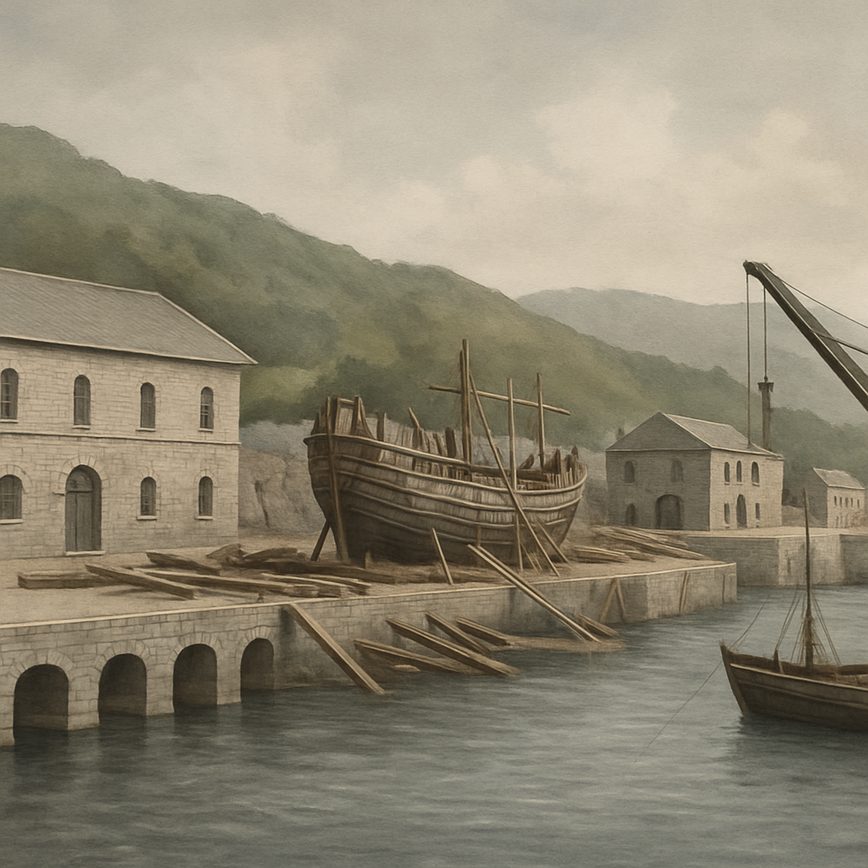
The initial construction of the dockyard focused on creating basic yet effective facilities capable of servicing and maintaining warships that operated far from their home ports. Early developments included the building of dry docks, slips for ship repairs, storehouses for supplies, and accommodations for dockyard workers and naval personnel. The natural deep-water harbor of Gibraltar made it an ideal location for anchorage, further enhancing its utility as a naval base. These early stages laid the foundations for what would become one of the Royal Navy’s most important dockyards.
Strategically located at the crossroads between the Atlantic Ocean and the Mediterranean, the dockyard provided the British Navy with a critical foothold to control naval traffic and protect trade routes. During the 18th and 19th centuries, the dockyard’s role expanded significantly, providing ongoing support to Royal Navy vessels engaged in various conflicts and policing duties. Its early use in naval operations included ship refitting, armament storage, and logistical support for fleets operating in the Mediterranean theater.
Gibraltar dockyard history shows how the origins and early development of this naval base were tightly linked to Britain’s broader imperial and maritime ambitions. It served not just as a repair and resupply point but also as a symbol of British naval dominance in the region. The dockyard’s establishment marked the beginning of a long period where Gibraltar became an indispensable naval hub, underpinning the security and operational effectiveness of the Royal Navy across the Mediterranean Sea and beyond.
Founding and Strategic Importance
The founding of the Gibraltar dockyard was driven primarily by its unparalleled strategic location at the entrance to the Mediterranean Sea. In the 18th century, this site became crucial for the British Empire’s naval ambitions, allowing control over one of the world’s busiest maritime routes. The dockyard’s establishment was not just a logistical necessity but a calculated move to enhance Britain’s naval significance in an era marked by intense maritime rivalry.
Situated on the Rock of Gibraltar, the dockyard offered a natural fortress and a safe harbor for the British fleet to repair, resupply, and refit its ships quickly and efficiently. This capability was essential for maintaining a continuous naval presence and projecting power across the Mediterranean and beyond. By securing a base so close to the vital Strait of Gibraltar, the British Navy could effectively monitor and control naval traffic, thwart enemy movements, and protect key trade routes.
Furthermore, the dockyard symbolized Britain’s growing naval dominance in the 18th century, reflecting the importance of establishing forward bases in strategic locations. Its founding was pivotal in supporting British military campaigns and fostering rapid response during conflicts. The dockyard helped to ensure that Britain maintained an edge over other European powers by keeping its fleet battle-ready and enhancing its ability to exert influence on a global scale.
Early Infrastructure and Expansion
The early infrastructure of the Gibraltar dockyard laid the foundation for its strategic naval significance. Beginning in the 18th century, initial efforts focused on creating basic dock facilities that could support the maintenance and repair of Royal Navy vessels stationed in the region. These early constructions included dry docks, storehouses, and basic workshops essential for ship servicing. The natural harbor was gradually enhanced with stone quays and piers to accommodate larger ships and increased naval activity.
Throughout the 18th and 19th centuries, significant expansions were undertaken to modernize and enlarge the dockyard. With the growing importance of Gibraltar as a naval base, the dock facilities were improved to handle a larger tonnage of ships, including the introduction of more advanced dry docks and wet docks. These expansions reflected the operational demands placed on the base due to rising geopolitical tensions and the ever-increasing size of naval fleets.
The expansion of infrastructure during this period also included improved roadways, barracks for dockyard workers, and enhanced armament storage facilities. By the mid-19th century, the dockyard had evolved into a complex maritime hub capable of servicing not only British warships but also merchant vessels passing through the Mediterranean. This era of continuous development established Gibraltar dockyard as a critical asset in British naval dominance.
Role During Major Conflicts
The Gibraltar dockyard has played a pivotal part in naval wars throughout history, serving as a strategic asset especially during the world wars. Its location at the crossroads of the Mediterranean Sea and the Atlantic Ocean made it an essential military hub for commanding naval operations and supporting fleets engaged in conflict. During both World War I and World War II, the dockyard’s role was crucial in maintaining and repairing warships, ensuring readiness for military operations.
In World War I, the dockyard was a key support point for the British Royal Navy. It facilitated the repair and resupply of vessels escorting convoys and engaging enemy submarines and surface raiders. The dockyard’s ability to swiftly service ships helped maintain naval dominance in the region, disrupting enemy supply lines and protecting allied maritime traffic. Its strategic importance came not only from the repair capabilities but also from its defensive role in securing the entrance to the Mediterranean.
During World War II, the dockyard’s conflict role expanded significantly. It became an indispensable element in the broader military operations of the Allies, serving as a forward base where extensive repairs and modifications could be carried out on a wide range of naval vessels. This capability allowed the Royal Navy and allied forces to maximize their operational reach in the Mediterranean theater. The dockyard’s workforce, skilled in rapid turnaround times, was instrumental in restoring damaged vessels to fighting condition, thereby sustaining naval strength during intense periods of hostilities.
The dockyard also played a defensive role during these major conflicts, with fortifications and anti-aircraft defenses protecting the port and its assets from enemy attacks. Its resilience and strategic value helped ensure that it remained a steadfast naval base throughout the prolonged periods of war. The commitment and expertise demonstrated at the dockyard underscored its intrinsic connection to Britain’s naval war efforts and its broader military operations in the region.
Overall, the Gibraltar dockyard’s contribution during naval wars and world wars was marked by its critical support functions, from ship repair and resupply to its defensive capabilities. This made it a cornerstone of military operations that contributed significantly to the Allied war efforts and the ultimate success in these major global conflicts.
World War I Impact and Activities
During World War I, the Gibraltar dockyard played a vital role in supporting the military efforts of the Allied forces. Serving as a strategic naval base, the dockyard was heavily involved in the repair and maintenance of warships, ensuring that vessels damaged in combat or wear during extended operations could quickly return to service. Its location at the entrance to the Mediterranean made it a pivotal point for controlling naval traffic and supporting military campaigns in the region.
The dockyard’s facilities were adapted to meet wartime demands, with an increase in workforce and resources dedicated to military use. Ship repairs became the core function, including fixing hull damage, overhauling engines, and replenishing supplies. This enabled the Royal Navy to maintain a robust presence in the Mediterranean theater, where control of sea lanes was crucial for the movement of troops and supplies.
Besides repair activities, Gibraltar dockyard also served as a logistical hub, coordinating the arrival and departure of naval units. It provided essential refueling and resupplying services, making it indispensable for prolonged naval operations. The dockyard’s contribution during World War I significantly bolstered the Allies’ naval capabilities, showcasing its enduring military use and strategic importance.
World War II Expansion and Strategic Use
During World War II, the Gibraltar dockyard underwent significant expansion to meet the increasing demands of the conflict. Recognizing Gibraltar’s vital position as a naval base controlling access to the Mediterranean, the British military invested heavily in enlarging the dockyard facilities. New docks, repair shops, and storage areas were constructed, allowing the dockyard to accommodate a larger number of naval vessels, including battleships, cruisers, and submarines. This expansion was crucial for maintaining and repairing the fleet operating in the region.
The dockyard’s strategic importance grew as it became a key hub for Allied naval operations. Its location enabled control over the Strait of Gibraltar, a critical maritime chokepoint, ensuring the secure passage of convoys and warships between the Atlantic Ocean and the Mediterranean Sea. This control was essential for blockade enforcement against Axis forces and for launching offensive operations in North Africa and Southern Europe.
Moreover, the expanded dockyard supported a wide range of strategic activities including refueling, re-arming, and major repairs, which kept the naval forces operational under intense wartime conditions. The increased capacity and enhanced infrastructure allowed Gibraltar to serve not only as a repair and maintenance center but also as a formidable defensive base, playing a pivotal role in the success of strategic Allied operations throughout the war.
Post-War Developments and Legacy
The post-war period marked a significant chapter in the history of Gibraltar Dockyard, characterized by both modernization efforts and gradual transformation. After World War II, the dockyard, which had been a crucial naval base during the conflict, faced the challenge of adapting to peacetime needs and the evolving maritime landscape. The shift from wartime urgency to a focus on maintenance, repair, and modernization defined much of its activity in the ensuing decades.
Modern developments during this era involved the introduction of new technologies and infrastructure upgrades aimed at improving the dockyard’s efficiency and capabilities. This included the modernization of dry docks, workshops, and support facilities to handle more advanced naval vessels and commercial ships. Despite these advancements, the dockyard also experienced a decline in its strategic military importance as naval operations globally restructured and downsized following the war’s end.
Alongside the decline in naval prominence, the dockyard began to transform, partly shifting from a purely military installation to a mixed-use maritime facility. This transformation allowed Gibraltar Dockyard to maintain relevance by supporting commercial shipping and local maritime industries, thus contributing to the economy beyond its traditional naval role. Such shifts underscore the dockyard’s adaptability in an era of rapid technological change and shifting geopolitical priorities.
Today, the dockyard’s legacy is deeply ingrained in Gibraltar’s maritime heritage. It stands as a testament to the region’s strategic naval history and its capacity to embrace modernization while honoring its past. Efforts to preserve historical elements of the dockyard coexist with ongoing commercial and repair activities, ensuring that the site remains a vibrant part of Gibraltar’s cultural and economic fabric. This enduring legacy highlights the importance of post-war developments not only in shaping the dockyard’s physical and operational landscape but also in cementing its place in maritime heritage.
Overall, the post-war period was a time of both challenge and opportunity for Gibraltar Dockyard. Its story reflects broader themes of modernization, decline, and transformation that are common to many historic naval facilities worldwide, making its legacy a valuable chapter in the narrative of maritime history.
Modernization Efforts and Decline
Following World War II, significant modernization efforts were undertaken at the Gibraltar dockyard to adapt to evolving military and technological demands. The post-war period saw the introduction of advanced machinery and improved infrastructure, aimed at enhancing efficiency and supporting newer classes of naval vessels. These upgrades were part of a broader strategy to maintain the dockyard’s strategic value in an era increasingly shaped by rapid technological progress and shifting geopolitical priorities.
However, despite these modernization initiatives, the dockyard faced mounting challenges throughout the 20th century. Military reductions and changing defense policies led to a gradual decline in the need for extensive dockyard operations. As naval focus shifted away from large-scale surface fleets, the dockyard’s role diminished, and its once-bustling facilities increasingly saw underutilization. The decline was further accelerated by economic pressures and competition from more modern shipyards elsewhere.
Ultimately, these factors contributed to the dockyard’s repurposing and partial closure. While some sections continued to function in limited capacities, much of the site was transformed to accommodate commercial and civilian uses. This trajectory reflects broader 20th century changes in military infrastructure, where historical naval establishments like Gibraltar’s dockyard adapted to new realities through modernization but could not escape the impact of military reductions and technological shifts.
Heritage and Cultural Significance Today
The Gibraltar dockyard holds a vital place in the maritime heritage of the region, reflecting centuries of naval history and industrial activity. Today, efforts to preserve and commemorate the dockyard underscore its importance to Gibraltar’s cultural and historical identity. While the dockyard is no longer operational, many of its historic structures have been maintained and incorporated into heritage sites that attract both locals and tourists alike.
These preserved areas serve as tangible links to Gibraltar’s past, offering insights into the maritime engineering and naval operations that once flourished here. Through museums, guided tours, and informational plaques, visitors can explore the dockyard’s legacy, enhancing the local tourism industry by providing a unique window into Gibraltar history. This cultural significance extends beyond tourism, instilling a sense of pride and continuity among the community.
The dockyard’s preservation initiatives are complemented by cultural events and educational programs that highlight its role in shaping Gibraltar’s identity. These activities not only honor the legacy of the dockyard but also emphasize the broader maritime heritage that has influenced Gibraltar’s development on both regional and global stages. In this way, the dockyard remains a cornerstone of cultural significance, bridging past and present through ongoing commemorative efforts.

I have always been captivated by the unique cultural tapestry of the Rock, particularly how Moorish, Spanish, and British influences shaped its development over centuries. My passion lies in translating these complex historical narratives into engaging educational resources that make Gibraltar’s past accessible to everyone. I spend my free time exploring military fortifications and reading first-hand accounts of life at the Pillar of Hercules.