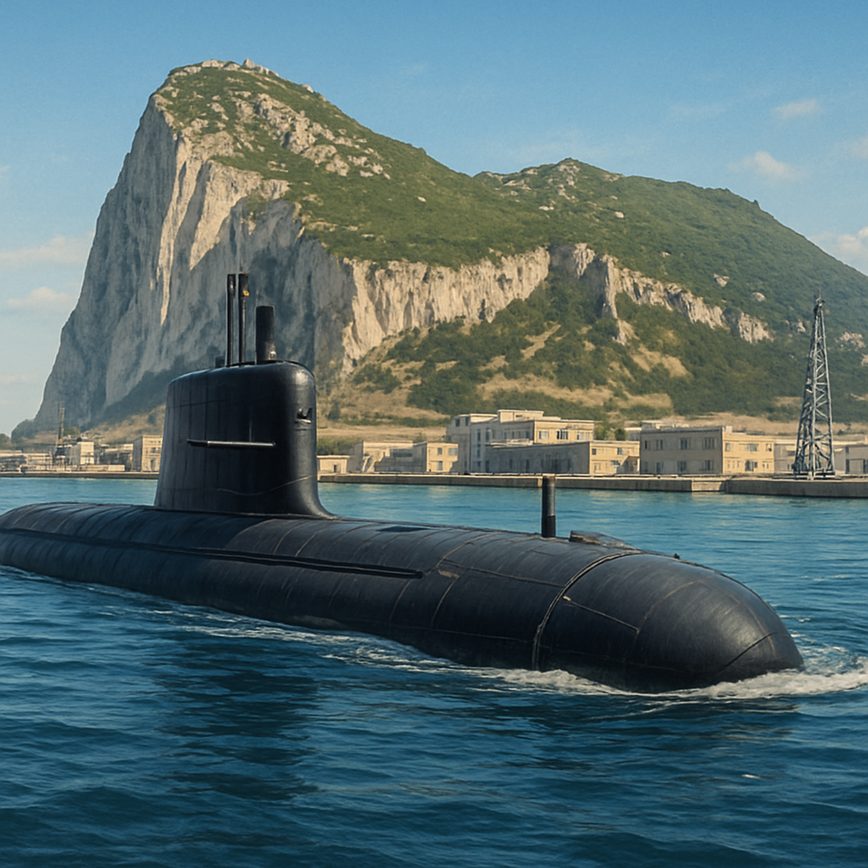
Overview of Submarine Operations from Gibraltar
Submarine operations conducted from the Gibraltar naval base hold a critical strategic importance that extends beyond simple maritime defense. Situated at the crossroads of the Atlantic Ocean and the Mediterranean Sea, Gibraltar serves as a vital hub for underwater missions that ensure the security and control of these crucial waterways. The unique geographical position allows submarines operating from Gibraltar to monitor the passage of vessels, conduct reconnaissance, and prepare for rapid deployment in a range of naval scenarios.
The operational roles of submarines based in Gibraltar are diverse and multifaceted. These underwater missions often include intelligence gathering, surveillance, and special operations support that help maintain regional stability. The ability of these submarines to operate stealthily under the sea enables them to collect critical information without detection, providing a strategic advantage in both peacetime and conflict. Gibraltar’s naval base acts as a point for maintenance, refueling, and resupplying, which enhances the endurance and range of submarine patrols.
Logistically, the Gibraltar naval base plays a pivotal role in sustaining submarine operations in the region. It is equipped with specialized facilities designed to support the complex needs of submarines, including dry docks, repair workshops, and advanced communication systems. This infrastructure ensures that submarines are kept in optimal condition and ready for deployment at any time. Moreover, the base facilitates swift turnaround times between missions, enabling a continuous presence of submarines in this strategically vital area.
In summary, submarine operations from Gibraltar are essential to maintaining naval dominance and monitoring underwater activities in one of the world’s most significant maritime chokepoints. The integration of logistical support and advanced operational capabilities at the Gibraltar naval base ensures that these underwater missions can be executed with efficiency and effectiveness, underlining the base’s indispensable role in global maritime security.
Strategic Importance of Gibraltar Location
Gibraltar holds a pivotal position in global naval operations, primarily due to its strategic location at the entrance to the Mediterranean Sea. As a critical naval chokepoint, Gibraltar controls one of the world’s busiest maritime routes, making it indispensable for submarine forces aiming to regulate and monitor naval traffic between the Atlantic Ocean and the Mediterranean basin. This unique geographical placement allows submarine units to quickly access both strategic waters, enhancing their operational flexibility and response times.
The region’s natural topography provides significant tactical advantages for submarine operations. The deep waters surrounding Gibraltar offer excellent cover and concealment, essential for stealth and surprise in underwater warfare. Additionally, its location facilitates intelligence gathering and surveillance over naval movements, making it a cornerstone in military strategy for controlling key maritime corridors.
Furthermore, Gibraltar’s proximity to major shipping lanes enables naval forces to enforce blockades or exert control over maritime traffic, which is crucial during conflicts or strategic standoffs. Its military installations and support facilities bolster the sustainability and effectiveness of extended submarine deployments. Thus, Gibraltar’s strategic location, combined with its status as a naval chokepoint, underscores its vital role in modern military strategy focused on undersea dominance and maritime security.
Types of Submarine Missions from Gibraltar
Submarine missions launched from Gibraltar typically encompass a range of strategic operations essential for maintaining dominance in the region. One of the primary mission types is reconnaissance, where submarines covertly gather intelligence on enemy movements and positions. This information is crucial for planning naval operations and ensuring situational awareness in the Mediterranean and surrounding waters.
Surveillance missions form another significant part of submarine operations from Gibraltar. These missions involve monitoring maritime routes, tracking surface vessels, and detecting potential threats. Submarines engaged in surveillance provide early warning and real-time data to naval command, which enhances maritime security and helps in enforcing naval blockades or embargoes when necessary.
Combat operations are also integral to submarine missions in this strategic location. Submarines are tasked with engaging enemy naval forces, protecting friendly vessels, and disrupting hostile maritime activities. Their stealth and firepower make them vital assets in naval warfare, capable of executing precision strikes and deterrence roles. These varied missions—reconnaissance, surveillance, and combat—demonstrate the multifaceted role submarines play in securing Gibraltar’s maritime interests.
Technological and Logistical Support Infrastructure
Gibraltar boasts a robust technological and logistical support infrastructure meticulously designed to sustain continuous submarine operations. Central to this support system is the state-of-the-art submarine maintenance facility, equipped with advanced diagnostic and repair technologies. These facilities allow for thorough inspections, routine upkeep, and critical repairs, ensuring that submarines remain mission-ready at all times without the need for extended downtime away from the region.
The naval support infrastructure encompasses specialized docks and dry docks tailored specifically for submarines, enabling secure mooring and facilitating a range of maintenance activities. These docks are supported by a skilled workforce trained in the unique demands of underwater vessels, from hull integrity to propulsion system performance. This workforce operates in seamless coordination with cutting-edge technology, including computer-aided maintenance tracking systems that optimize repair schedules and resource allocation.
Technological advancements play a pivotal role in submarine operations at Gibraltar. The integration of advanced sensors and automated monitoring systems within the support facilities allows immediate detection of potential technical issues, reducing the risk of in-field failures. Additionally, Gibraltar’s logistics are underpinned by a sophisticated supply chain network ensuring timely delivery of spare parts, fuel, and other essentials critical for uninterrupted submarine functionality. This network leverages both land and sea transport routes optimized through modern inventory management software.
Moreover, the infrastructure includes comprehensive communications and command centers, facilitating real-time coordination between submarine crews and surface support teams. These centers utilize encrypted communication technologies to maintain operational security while enabling swift decision-making and logistical adjustments. Such integration of technology in submarine operations not only enhances operational efficiency but also strengthens safety protocols, underpinning Gibraltar’s strategic maritime significance.
In summary, Gibraltar’s technological and logistical support infrastructure represents a sophisticated amalgamation of specialized facilities, cutting-edge technology, and expertly managed naval support systems. This infrastructure is vital to maintaining the readiness and effectiveness of submarine operations, ensuring Gibraltar continues to serve as a critical hub in the region’s naval defense network.
Dockyard and Maintenance Facilities
Gibraltar boasts a robust dockyard and maintenance infrastructure that is pivotal for ensuring the operational readiness of submarines stationed in the region. The dockyard is equipped with state-of-the-art submarine repair capabilities, allowing for efficient handling of both routine maintenance and unexpected repairs. These facilities are designed to support the unique demands of underwater vessels, with specialized equipment and skilled technicians ready to address any technical challenges.
The maintenance infrastructure at Gibraltar’s dockyard includes dry docks tailored to accommodate submarines, secure berths for overnight stays, and advanced diagnostic equipment to monitor submarine systems. This comprehensive setup enables quick turnaround times and minimizes downtime, ensuring that submarines remain in peak condition for continuous operations. Additionally, the dockyard supports a range of services such as hull inspections, engine maintenance, and system upgrades, enhancing the overall efficiency of submarine fleets.
Strategically located and expertly managed, the dockyard and repair facilities play a crucial role in sustaining the naval presence at Gibraltar. They provide a secure environment for maintenance activities while adhering to high standards of safety and operational excellence. By maintaining a high level of readiness, these facilities ensure that submarines can deploy swiftly and effectively whenever required, reinforcing Gibraltar’s significance as a key maritime hub.
Advanced Navigation and Communication Systems
Submarine operations from Gibraltar leverage cutting-edge navigation systems and communication technology to optimize effectiveness and mission success. These advanced navigation systems incorporate inertial navigation, GPS integration, and sonar mapping, allowing submarines to operate with pinpoint accuracy even in the challenging underwater terrain around the Strait of Gibraltar. Inertial navigation systems provide continuous position updates without reliance on external signals, which is crucial for stealth and precision during covert maneuvers.
Communication technology plays an equally vital role in enhancing submarine operations tech. Gibraltar-based submarines utilize secure, encrypted communication channels, including VLF (very low frequency) and ELF (extremely low frequency) radio waves, which can penetrate deep into the ocean to maintain contact with command centers. The integration of satellite communication systems further ensures real-time data exchange and command directives, even from great depths or remote locations.
Additionally, modern submarines are equipped with sophisticated data links and underwater acoustic modems that facilitate silent, rapid communication with other naval units and surface vessels. This comprehensive network of navigation and communication technology makes Gibraltar a strategic hub for submarine operations, enabling precise navigation and seamless coordination in one of the world’s most geopolitically significant maritime corridors.
Challenges and Future Developments in Gibraltar Submarine Operations
Submarine operational challenges in Gibraltar stem largely from its unique geographic and strategic significance. The Strait of Gibraltar is a narrow and highly trafficked maritime corridor, making covert submarine movements particularly difficult. Submarines operating in this area must navigate complex underwater topography and contend with intense commercial and military ship traffic, which limits stealth capabilities and operational maneuverability. Additionally, the presence of advanced anti-submarine warfare (ASW) technologies deployed by various naval forces around Gibraltar raises the bar for submarines to maintain secrecy and effectiveness during missions.
Environmental factors also contribute to the challenges facing submarine operations. The strait experiences strong and variable currents, temperature layers, and unique salinity gradients, which affect sonar performance and detection tactics. Commanders must continuously adapt their operational strategies to these dynamic underwater conditions to optimize submarine detection avoidance and communication reliability.
Looking ahead, future naval technology is poised to reshape Gibraltar naval strategies profoundly. Advances in autonomous underwater vehicles (AUVs) and unmanned underwater systems are expected to complement manned submarines, offering enhanced reconnaissance and extended underwater endurance without risking human crews. Innovations in stealth technologies, such as improved acoustic dampening materials and active noise cancellation, will further reduce the detectability of submarines operating in these contested waters.
Moreover, developments in electronic warfare and cyber capabilities will likely play a critical role in future submarine operational strategies. Submarines equipped with sophisticated electronic countermeasures can better evade detection systems and disrupt enemy communications. Integration of artificial intelligence in both navigation and threat analysis is anticipated to enhance decision-making speed and mission adaptability, which is crucial for the fast-paced environment of Gibraltar’s marine domain.
Strategically, Gibraltar naval strategies will continue to evolve by leveraging multinational cooperation among allied navies to share surveillance data and advance joint ASW tactics. The increasing use of undersea communication networks and satellite-linked sensor arrays will improve situational awareness around this pivotal maritime chokepoint, enabling submarines to operate more safely and effectively despite the operational challenges.
In conclusion, submarine operations at Gibraltar face significant operational challenges due to environmental complexities, high traffic density, and sophisticated detection technologies. However, the integration of future naval technology and strategic innovation promises to enhance the capabilities and resilience of submarine forces in this critical region, ensuring continued maritime security and operational superiority in the years to come.
Environmental and Geopolitical Challenges
Submarine operations in the Gibraltar region face significant environmental and geopolitical challenges that shape their conduct. The environmental impact of such operations is a pressing concern, particularly due to the delicate marine ecosystems present in the area. The noise pollution generated by submarines can disrupt marine life, affecting communication and breeding patterns of various species. Additionally, the risk of accidental spills or damage to underwater habitats necessitates stringent environmental safeguards. Regulatory measures often require submarines to navigate carefully to minimize ecological disturbance.
Geopolitical tensions around Gibraltar further complicate submarine activities. The strategic importance of this narrow gateway between the Atlantic Ocean and the Mediterranean Sea means that various nations closely monitor naval movements, including submarine operations. Territorial disputes and differing national interests contribute to a climate of heightened alertness and scrutiny. This tense atmosphere results in naval restrictions imposed by multiple governments, constraining where and how submarines can operate.
Moreover, international maritime laws and regional agreements influence submarine navigation rights and operational protocols. Naval restrictions are often enforced to balance military security interests with environmental conservation and political diplomacy. These geopolitical and environmental factors require careful planning and coordination by naval authorities to ensure that submarine operations comply with regulations while maintaining operational effectiveness in this strategically vital region.
Innovations and Upgrades in Submarine Capabilities
Gibraltar is set to become a focal point for submarine innovations, reflecting significant naval upgrades designed to enhance the operational capabilities of future submarines. These enhancements are centered on integrating cutting-edge technology and improving infrastructure to support increasingly sophisticated and stealthy underwater vessels.
One of the key innovations includes the adoption of advanced acoustic stealth systems that reduce the noise signature of submarines, making detection by adversaries exceedingly difficult. Gibraltar’s facilities are also being upgraded to accommodate next-generation submarines equipped with autonomous systems and enhanced communication arrays, enabling these vessels to operate more effectively in complex maritime environments.
Infrastructure improvements involve the modernization of submarine docks and maintenance yards, incorporating automated repair and diagnostic technologies. This not only expedites servicing times but also increases the precision and safety of maintenance operations. Additionally, Gibraltar’s strategic location is being leveraged by installing enhanced sensor networks and rapid response capabilities, bolstering the base’s role as a pivotal hub for submarine operations.
Future submarines will benefit from these innovations as Gibraltar evolves into a cutting-edge support center that integrates naval upgrades with local expertise and technology. This forward-looking approach ensures that Gibraltar remains at the forefront of submarine operations for years to come, effectively supporting the mission readiness and strategic superiority of submarines navigating critical maritime routes.

I have always been captivated by the unique cultural tapestry of the Rock, particularly how Moorish, Spanish, and British influences shaped its development over centuries. My passion lies in translating these complex historical narratives into engaging educational resources that make Gibraltar’s past accessible to everyone. I spend my free time exploring military fortifications and reading first-hand accounts of life at the Pillar of Hercules.