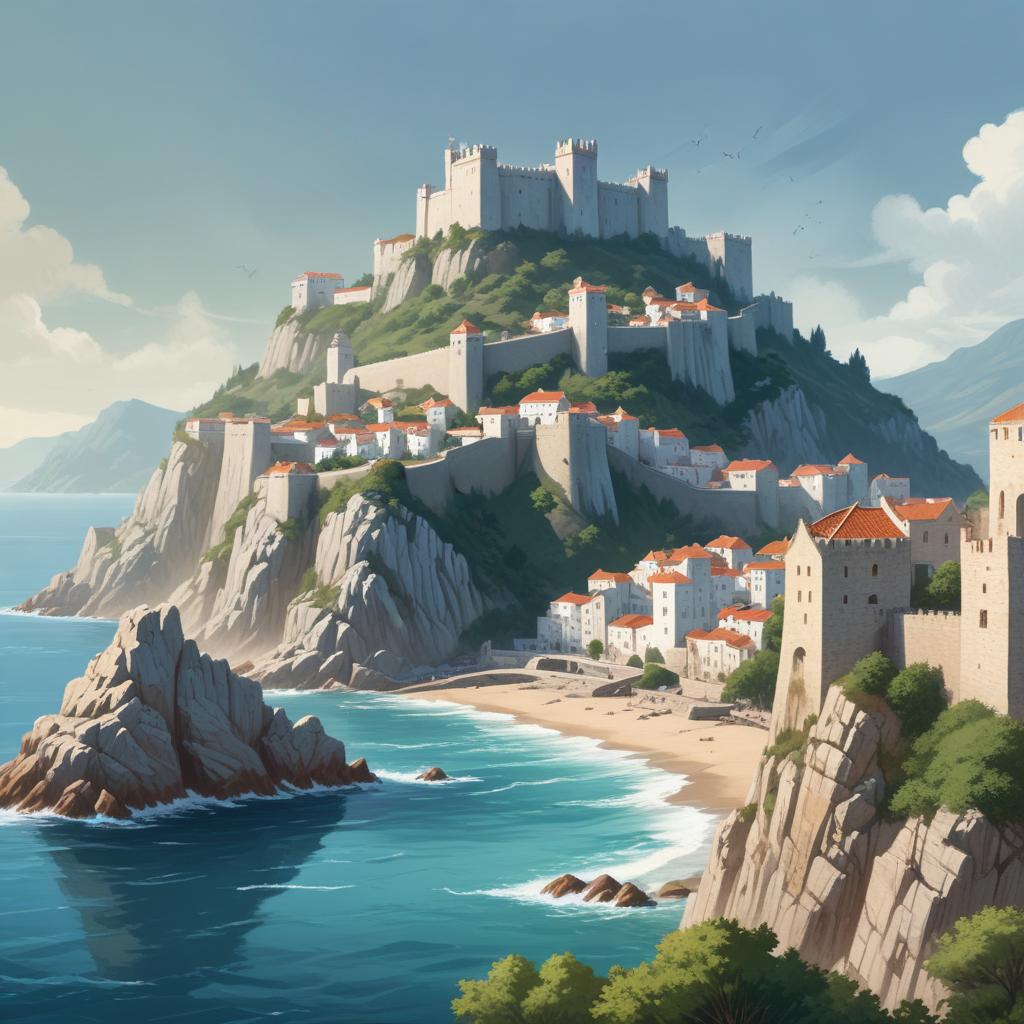
Historical Background of Gibraltar in the Middle Ages
The history of Gibraltar during the Middle Ages is one marked by a complex geopolitical and cultural landscape. Situated strategically at the southern tip of the Iberian Peninsula, Gibraltar was a coveted stronghold for various powers throughout medieval times. This unique geographical position made medieval Gibraltar a focal point of military, political, and cultural significance from the early Middle Ages onward.
During the early Middle Ages, Gibraltar fell under the control of the Visigoths before succumbing to the Islamic conquests of the early 8th century. The Moors established Gibraltar as part of the larger Al-Andalus territory, naming it “Jabal Tariq” after the Berber commander Tariq ibn-Ziyad who led the initial invasion. This marked the beginning of centuries of Muslim influence in Gibraltar, making it a vital naval base and a gateway between Europe and Africa.
Throughout the medieval period, Gibraltar’s control oscillated between Muslim and Christian rulers. The Reconquista, a prolonged series of campaigns by Christian kingdoms to reclaim Iberian lands, dramatically impacted Gibraltar. In 1309, the Kingdom of Castile succeeded in recapturing Gibraltar from the Moors, establishing it as a frontier fortress, crucial for defense and trade control. However, the region often changed hands, reflecting the tumultuous military and political environment of the Middle Ages.
Medieval Gibraltar was more than just a military outpost; it was a melting pot of cultures. Under Muslim rule, it flourished as a trading hub and cultural crossroads where Islamic, Christian, and Jewish influences mingled. This cultural diversity was reflected in architecture, language, and everyday life, making medieval Gibraltar a microcosm of the broader Iberian Peninsula dynamics during that era.
In essence, the geopolitical and cultural status of Gibraltar in the Middle Ages was shaped by its strategic location and the ebb and flow of medieval power struggles. The legacy of these historical developments laid the foundation for Gibraltar’s continuing importance in regional history, echoing through the centuries as a symbol of resilience and multicultural heritage within Gibraltar history.
Early Medieval Period Influences
During the early Middle Ages, Gibraltar experienced significant influences from various medieval cultures that shaped its historical and cultural landscape. The region first saw the presence of Berber tribes, whose arrival introduced distinct North African customs and traditions to Gibraltar. These Berber peoples played a crucial role in the early medieval period, as their interactions with local populations laid the foundation for further cultural developments.
Following the Berber influence, the Visigoths established control over Gibraltar, integrating it into their wider kingdom on the Iberian Peninsula. This period saw the mingling of Gothic traditions with earlier Roman and Byzantine elements, further enriching the cultural tapestry of the area. The Visigothic era also contributed to the architectural and social structures, making Gibraltar a strategic and symbolic location during the early Middle Ages.
The most transformative influence arrived with the early Islamic presence in Gibraltar. Beginning in the early 8th century, Islamic forces, largely composed of Berber soldiers, conquered the territory and introduced new religious, administrative, and cultural practices that profoundly impacted the region. This period marked Gibraltar as a gateway between Europe and North Africa, facilitating exchanges that enhanced its role in medieval geopolitics and trade. The merging of Berber, Visigothic, and early Islamic influences created a unique cultural synthesis that defined Gibraltar’s identity throughout the early Middle Ages.
Role in the Islamic Caliphate
During the Middle Ages, Gibraltar held a critical role under the Islamic Caliphate, becoming a vital stronghold that shaped the region’s strategic and cultural landscape. As part of the medieval Muslim rule, Gibraltar’s position at the entrance of the Mediterranean Sea made it a key military and naval base, allowing control over naval passage between the Atlantic Ocean and the Mediterranean. This control was crucial for the Islamic Caliphate during its expansion and defense against European Christian kingdoms.
Beyond its military importance, Gibraltar was a flourishing center of culture and learning within the Islamic Caliphate. It served as a hub where Islamic scholars, traders, and settlers converged, facilitating the exchange of knowledge in fields such as science, philosophy, and architecture. The medieval Muslim rulers developed Gibraltar’s infrastructure, including fortifications and water supply systems, boosting its sustainability and capacity as a fortified city.
The town’s integration into the Islamic Caliphate also enriched its social and cultural fabric by blending Berber, Arab, and Andalusian influences, which left lasting impacts on the region’s language, customs, and traditions. Gibraltar’s significance under the Islamic Caliphate thus extends beyond military strategy; it highlights a vibrant period where the fortress was not only a line of defense but also a beacon of cultural and intellectual vitality during medieval Muslim rule.
Military and Strategic Importance
Throughout the Middle Ages, Gibraltar’s military history was profoundly shaped by its unparalleled strategic location at the crossroads of Europe and Africa, commanding the entrance to the Mediterranean Sea. This crucial position made Gibraltar a coveted military stronghold, fiercely contested by various armies seeking control over the vital maritime routes it overlooked.
The natural geography of the Rock of Gibraltar provided formidable defenses that were enhanced by medieval fortifications constructed by its rulers. These fortifications included thick stone walls, watchtowers, and battlements designed to resist sieges and protect against invading forces. The defensible high ground, coupled with the limited access points, made Gibraltar extremely difficult to assault, effectively turning it into a military bastion.
During the Middle Ages, Gibraltar changed hands several times between Muslim Moors and Christian forces, each recognizing its intrinsic strategic value. The Moors initially fortified the Rock after their conquest in 711, establishing it as a key base for controlling the Strait. Later, the Christian Reconquista efforts intensified the military significance of Gibraltar; sieges were common as kingdoms vied for supremacy, often resulting in prolonged and brutal confrontations.
The military importance of Gibraltar was further highlighted by its use as a launch point for military campaigns and its role in controlling naval traffic between the Atlantic and Mediterranean. Control of Gibraltar allowed armies to monitor and restrict the movement of enemy fleets, making it an essential asset for any power seeking dominance in the region. The Rock’s fortifications were continuously improved to counter advances in siege technology and weaponry, ensuring Gibraltar remained a formidable defensive site throughout the medieval period.
In sum, Gibraltar’s military history during the Middle Ages is a testament to its strategic location and robust medieval fortifications. Its role as a military stronghold saw it endure numerous sieges and shifts in control, underscoring its enduring importance in the geopolitical and military landscape of the time.
Gibraltar’s Fortifications and Castle
Gibraltar’s medieval fortifications represent a remarkable blend of construction techniques driven by strategic necessity. The Gibraltar castle, rising prominently atop the Rock, served as the linchpin of the town’s defenses during the Middle Ages. Originally constructed by the Moors in the 8th century, the castle’s robust stone walls and elevated position allowed for effective control over both land and sea approaches, deterring potential invaders.
The structure of the Gibraltar castle evolved significantly over the centuries. Early fortifications were characterized by thick, irregular walls designed to withstand siege engines and projectile attacks. As military technology advanced, the castle’s defenses were augmented with battlements and lookout towers to enhance the castle’s surveillance capabilities. The purpose of these fortifications was not only to protect the inhabitants but also to assert control over this crucial gateway between the Atlantic Ocean and the Mediterranean Sea.
Alongside the castle, extensive medieval defensive walls encircled the settlement, constructed with large stones and mortar. These walls were strategically placed to take advantage of the natural rock formations, creating formidable barriers that complemented the castle’s defensive strength. Over time, the medieval defenses saw adaptations that responded to changing military tactics, including reinforcement to resist cannon fire as artillery became more prevalent.
The ongoing evolution of Gibraltar’s fortifications highlights their critical importance in medieval defense strategy. Together, the castle and its surrounding walls formed a comprehensive system that not only protected the strategic fortress but also played a pivotal role in the historical conflicts that shaped the region.
Key Sieges and Battles
Throughout the Middle Ages, Gibraltar was a focal point of numerous sieges and battles, owing to its strategic location at the crossroads of the Mediterranean and the Atlantic. These conflicts were often rooted in the desire to control the vital maritime routes and the fortress’s commanding position over the entrance to the Mediterranean Sea. Medieval warfare in Gibraltar was marked by prolonged sieges and fierce battles, with key players including the Moors, Castilians, and other European powers vying for dominance.
One of the most significant sieges was the capture of Gibraltar by the Moors in 711 AD, which marked the beginning of Muslim rule in the region. This event catalyzed a series of conflicts as Christian kingdoms sought to reclaim the territory during the Reconquista. The periodic sieges in the 14th and 15th centuries, especially those led by Castilian forces, highlighted the fortress’s importance. These battles saw advances in siege technology and tactics, reflecting the evolving nature of medieval warfare.
The sieges often ended with the fortress changing hands multiple times, influencing the political and military landscape of southern Iberia. Each battle and siege shaped Gibraltar’s fortifications and military readiness, setting the stage for its enduring role as a heavily contested stronghold throughout history. Ultimately, these medieval conflicts underscored Gibraltar’s value as a crucial military asset and a symbol of control over the region’s trade and naval power.
Cultural and Economic Life in Medieval Gibraltar
During the Middle Ages, Gibraltar was a vibrant hub where culture and economy intertwined to shape the daily lives of its inhabitants. The medieval economy of Gibraltar was deeply influenced by its strategic location at the crossroads of Europe and Africa, making it a key player in regional trade networks. The town’s economy thrived on maritime commerce, fishing, and local agriculture, supporting a diverse population engaged in various trades and crafts.
Trade in Gibraltar was particularly significant due to its position on the narrow passage between the Mediterranean Sea and the Atlantic Ocean. Merchants and traders from Europe, North Africa, and the Middle East frequented the harbor, exchanging goods such as spices, textiles, precious metals, and agricultural produce. This bustling trade not only enriched the local economy but also facilitated a rich cultural exchange, bringing together a mosaic of languages, traditions, and beliefs.
The cultural life in medieval Gibraltar reflected this diversity. The population consisted of Christians, Muslims, and Jews who coexisted and contributed to the unique social fabric of the town. Religious festivals, markets, and artisan guilds were central to daily life, fostering a sense of community and shared identity despite the cultural differences. Architectural influences from Islamic, Christian, and Jewish traditions could be seen in the town’s buildings, highlighting the interconnectedness of these cultures.
The medieval economy was also supported by agriculture in the surrounding areas, where olive groves, vineyards, and cereal crops provided sustenance and trade goods. Fishing was another essential component, with Gibraltar’s fishermen harvesting the rich waters and supplying both local needs and export markets. These economic activities were regulated by local authorities who managed taxes and trade policies to maintain the town’s prosperity.
In essence, medieval Gibraltar was not just a military stronghold but a flourishing center of economic activity and cultural interaction. The combination of trade, agriculture, and artisanal crafts, along with the vibrant exchange of ideas and traditions, helped shape a unique medieval society that laid the groundwork for Gibraltar’s historical importance in the centuries to follow.
Trade Routes and Economic Activity
Gibraltar’s strategic location at the entrance to the Mediterranean Sea made it a critical hub for trade routes during the medieval period. The peninsula served as a gateway between the Atlantic Ocean and the Mediterranean, facilitating the movement of goods, merchants, and cultures. The most important trade routes passing through Gibraltar connected northern Europe with North Africa and the Levant, allowing for the exchange of spices, textiles, precious metals, and other valuable commodities.
During the Middle Ages, Mediterranean trade flourished as maritime powers like the Genoese, Venetians, and Moors used Gibraltar’s natural harbor to anchor their ships. This location enabled control over naval passage and taxation of passing vessels, which in turn spurred economic activity in the region. Markets and ports developed in and around Gibraltar, becoming lively centers for commerce, where merchants traded goods such as silk, saffron, gold, and pottery.
The medieval economy of Gibraltar was deeply intertwined with these trade routes, as the flow of goods brought wealth and cultural exchange. Local industries, including shipbuilding, fishing, and warehousing, thrived because of the steady influx of merchants and their cargoes. The resulting prosperity allowed Gibraltar to evolve from a simple fortress town into a bustling economic and trade center that played a pivotal role in Mediterranean commerce throughout the Middle Ages.
Cultural Influences and Population
Throughout the Middle Ages, Gibraltar was a melting pot of diverse cultures and populations, which profoundly influenced the development of its medieval society. The strategic location of Gibraltar at the crossroads of Europe and Africa made it a vital hub for cultural exchanges between different civilizations. Various groups, including Moors, Christians, Jews, and later on, Genoese and other Mediterranean peoples, contributed to the vibrant tapestry of its population.
This blend of peoples fostered an environment rich in cultural exchanges, as traditions, languages, and religious practices intermingled. The Moorish presence, which began in the early 8th century, left a lasting imprint on the architecture, agriculture, and scholarly pursuits in the region. Christian reconquest efforts introduced new administrative systems and religious customs, while Jewish communities significantly influenced trade and intellectual life.
The demographic diversity of Gibraltar during the medieval period created a society that was not only culturally vibrant but also economically dynamic. The continuous interaction among these varied groups allowed for a unique fusion of ideas and customs, shaping a distinctive medieval society. This multicultural milieu was essential in defining Gibraltar’s identity and resilience through changing political and social landscapes in the Middle Ages.

I have always been captivated by the unique cultural tapestry of the Rock, particularly how Moorish, Spanish, and British influences shaped its development over centuries. My passion lies in translating these complex historical narratives into engaging educational resources that make Gibraltar’s past accessible to everyone. I spend my free time exploring military fortifications and reading first-hand accounts of life at the Pillar of Hercules.