Historical Background of the Islamic Period in Gibraltar
The Islamic period in Gibraltar marks a significant chapter in the region’s history, characterized by the early Islamic rule that shaped the cultural and political landscape of this strategic territory. The timeline of Islamic Gibraltar history begins in the early 8th century, specifically around 711 AD, when Muslim forces crossed from North Africa into the Iberian Peninsula. This event catalyzed the conquest of Gibraltar, positioning it as a key stronghold in the expanding Islamic dominion.
The conquest of Gibraltar was part of a broader military campaign led by Tariq ibn Ziyad, a Berber general commanding the Umayyad Caliphate’s forces. He famously landed at the rock of Gibraltar — the name itself deriving from the Arabic “Jabal Tariq,” meaning “Mountain of Tariq” — and initiated the passage into Spain. This initial conquest opened the doors for the rapid spread of Islamic rule across the peninsula, marking the start of nearly eight centuries of Islamic presence in the region.
Following the capture of Gibraltar, it became a fortified base from which Muslim rulers could defend their territories against Christian forces and maintain control over important trade routes between Europe and Africa. The early Islamic rule established a governance structure grounded in the principles of the Umayyad administration, fostering advances in agriculture, trade, and culture. Gibraltar’s strategic location at the entrance to the Mediterranean Sea made it an essential asset in securing maritime dominance.
Key events leading to the establishment of Islamic Gibraltar include the consolidation of power by subsequent rulers who fortified the area further and integrated it into the greater Caliphate of Córdoba. The period saw the construction of military fortifications and the establishment of Islamic law and institutions that reinforced the social fabric of the region. This era witnessed the blending of local Iberian traditions with Islamic culture, which profoundly influenced Gibraltar’s identity and legacy.
Thus, the Islamic conquest and rule over Gibraltar set the stage for a transformative era, characterized by a fusion of cultures, economic development, and strategic military importance. The early Islamic rule not only shaped Gibraltar’s historical trajectory but also laid foundational elements that continue to resonate in the cultural heritage of the region today.
The Umayyad Conquest of Gibraltar
The Umayyad conquest of Gibraltar marked a significant chapter in the early Islamic expansion into the Iberian Peninsula. This strategic takeover was part of a larger campaign led by the Umayyad Caliphate in the early 8th century. The Umayyads, after establishing their rule in North Africa, crossed into the Iberian Peninsula, where Gibraltar played a crucial role as a gateway between Africa and Europe.
Gibraltar’s capture was critical for the Umayyad forces, as it provided them with a fortified stronghold controlling the narrow passage between the Atlantic Ocean and the Mediterranean Sea. This control allowed the Umayyad Caliphate to secure their maritime routes and establish a foothold for further military and cultural expansion into the heart of the Iberian Peninsula. The conquest not only symbolized the spread of Islamic rule but also set the stage for the establishment of Al-Andalus, where Islamic culture, science, and architecture flourished.
The Umayyad conquest of Gibraltar thus represents more than a military victory; it underscored the significance of Gibraltar as a strategic entry point in the Islamic expansion. The takeover facilitated the integration of Gibraltar into the Umayyad domain, shaping the region’s historical trajectory and influencing the cultural and religious landscape of the Iberian Peninsula for centuries to come.
Governance and Administration under Islamic Rule
During the Islamic period in Gibraltar, the governance and administration were characterized by well-structured systems reflecting broader Islamic governance principles. The Muslim rulers of Gibraltar implemented a sophisticated administrative framework designed to maintain order, ensure justice, and manage the region’s diverse population. Central to this system was the appointment of a governor or emir who exercised both political and military authority on behalf of the Islamic Caliphate or regional emirates.
Islamic governance in Gibraltar emphasized the integration of religious and civil duties, where the ruler was responsible not only for the security and administration of the territory but also for upholding Islamic law (Sharia). This legal framework guided judicial decisions and daily administrative operations, creating a cohesive societal structure. Supporting the governor was a council of advisors and officials who managed various aspects such as tax collection, trade regulation, and public works.
Administration in Gibraltar under Islamic rule also featured a system of local governance through appointed officials who oversaw smaller districts or neighborhoods, facilitating efficient management and communication between the central authority and the local populace. This decentralized approach helped maintain stability and promoted economic prosperity, particularly in trade, which was a significant aspect of Gibraltar’s importance during this period.
Overall, the governance in Islamic Gibraltar was marked by a blend of religious legitimacy and practical administrative measures, reflecting the Muslim rulers’ commitment to maintaining a balanced and effective rule over this strategic territory. The legacy of this era’s Islamic governance can be seen in the organizational foundations it laid for the region’s subsequent historical developments.
Cultural and Architectural Contributions During the Islamic Period
The Islamic period in Gibraltar marked a significant era of cultural enrichment and architectural innovation. During this time, the influence of Islamic art in Gibraltar became increasingly prominent, leaving a lasting legacy that shaped the region’s identity. The blend of Andalusian styles with local traditions resulted in unique architectural forms that reflected the spiritual and practical needs of the community.
Islamic art in Gibraltar is characterized by intricate geometric patterns, calligraphy, and vegetal motifs, all of which were carefully integrated into public and private buildings. These decorative elements not only enhanced the aesthetic appeal but also held symbolic meanings rooted in Islamic philosophy. Artistic expression was not limited to visual aspects but also extended to crafts such as pottery and metalwork, showcasing the high level of skill and creativity of artisans during the period.
The architecture in Gibraltar during the Islamic era included the construction of fortifications, mosques, baths, and residential complexes. The use of horseshoe arches, courtyards, and water features became prevalent, emphasizing both functionality and beauty. The Great Mosque of Gibraltar, though now lost, was once a focal point of religious and social life, embodying the architectural principles of purity and harmony. The strategic location of Gibraltar made these architectural feats not only impressive but also essential for defense and governance.
Islamic cultural impact extended beyond mere buildings; it influenced urban planning and agricultural practices as well. The introduction of advanced irrigation techniques allowed for the cultivation of exotic crops and gardens, which became an integral part of the city’s layout. Public baths and marketplaces reflected the social norms and communal lifestyle embraced under Islamic rule, promoting cleanliness, trade, and social interaction.
In summary, the Islamic period contributed profoundly to the cultural fabric and architectural landscape of Gibraltar. The fusion of Islamic art and architecture introduced during this time not only enhanced the aesthetic and functional aspects of the region but also left a rich cultural heritage. Today, traces of this era’s contributions continue to inform Gibraltar’s historical narrative and architectural identity.
Islamic Architecture and Fortifications
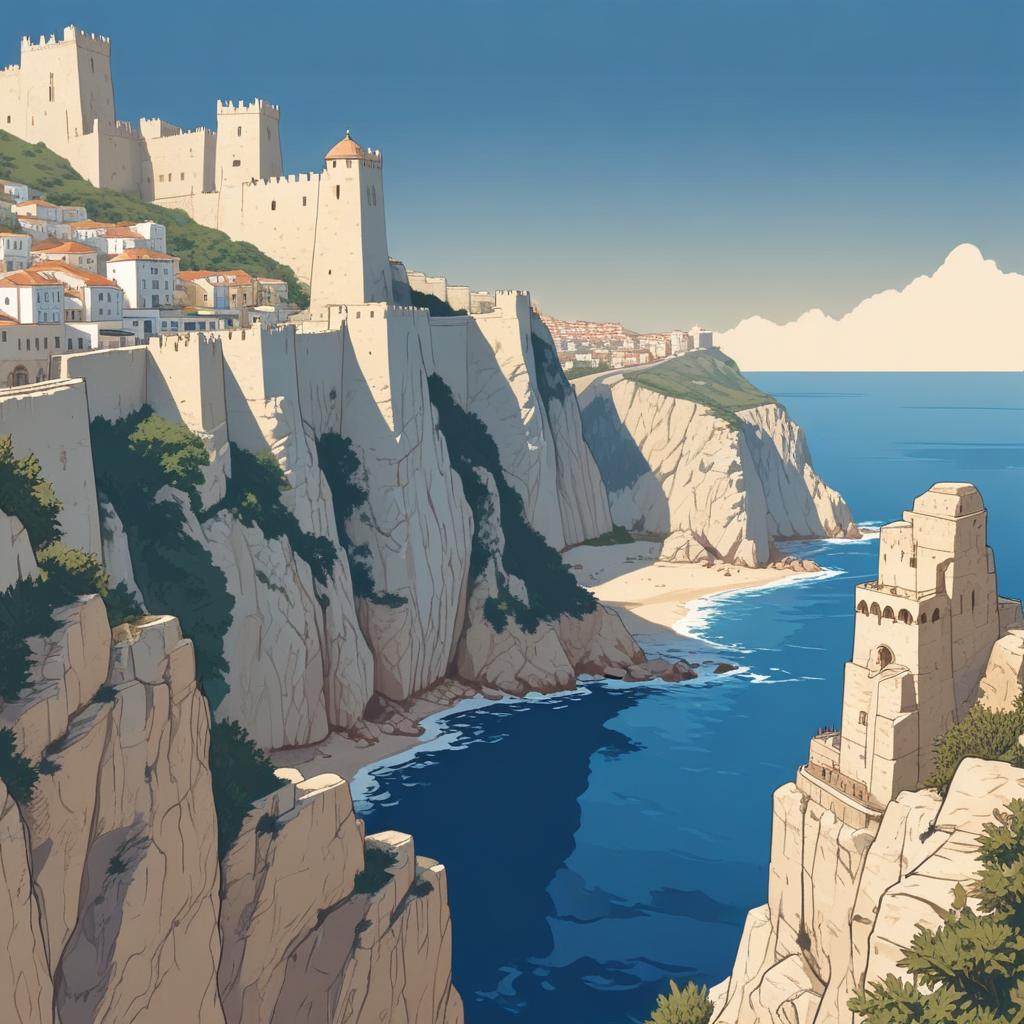
Gibraltar’s landscape is marked by the enduring legacy of Islamic fortifications and Moorish architecture, which played a significant role during the Islamic period. Among the most notable examples are the ancient castles and defensive walls that illustrate the strategic importance of the region as a fortress and gateway.
The Moorish castle, or “Gibraltar Castle,” originally constructed in the 8th century, exemplifies Islamic fortifications adapted to the rocky terrain of the peninsula. This castle served as a formidable military stronghold, with thick walls and robust towers designed to withstand sieges.
Additionally, the use of horseshoe arches and intricate tile work reflect the aesthetic sensibilities of Islamic architecture. The influence of Moorish design is also evident in the layout of residential areas, which featured narrow winding streets and enclosed courtyards to maintain privacy and provide respite from the Mediterranean sun.
Islamic architectural innovations in Gibraltar extended beyond military purposes, influencing local construction techniques and contributing to the cultural fusion that characterizes the region today. These fortifications not only provided defense but also symbolized the advanced engineering and artistic achievements of the Islamic world in Gibraltar.
Cultural Influence and Daily Life
Under Islamic rule, daily life in Gibraltar was deeply influenced by Islamic culture, which shaped both social customs and cultural practices. The streets and marketplaces buzzed with activity as merchants, artisans, and residents embraced Moorish traditions, evident in their clothing, cuisine, and public rituals. Homes typically featured open courtyards to provide privacy and coolness, reflecting Islamic architectural principles.
Social interactions were guided by Islamic values emphasizing community, hospitality, and respect. Families played a central role in society, with strong kinship ties and clearly defined roles for men and women within both private and public spheres. Religious observances punctuated daily routines, with calls to prayer heard throughout the city, fostering a rhythm that intertwined faith with everyday life.
The presence of mosques served as focal points not only for worship but also for education and community gatherings, reinforcing a sense of shared identity. Artistic expressions, including calligraphy and geometric patterns, adorned buildings and personal items, showcasing the rich artistic heritage of the Islamic world. This vivid cultural tapestry created a unique way of life that distinguished Islamic Gibraltar from neighboring territories.
Overall, the blending of Islamic culture with local traditions during the Islamic period in Gibraltar created a vibrant society where daily life was imbued with spiritual meaning, social cohesion, and cultural richness, highlighting the enduring legacy of Moorish influence in the region.
The Decline and Legacy of the Islamic Period in Gibraltar
The Islamic decline in Gibraltar was a multifaceted process influenced by both external military pressures and internal socio-political changes. After centuries of Muslim rule that began in 711 AD, the strategic importance of Gibraltar made it a coveted prize for various European powers, notably the Christian kingdoms of Spain. The gradual weakening of the Muslim hold was precipitated by the Reconquista, a series of campaigns by Christian forces intent on reclaiming territories in the Iberian Peninsula. This extended effort culminated in the late 15th century with intensified military sieges and political maneuvers aimed at reclaiming Gibraltar from Muslim control.
Another critical factor contributing to the end of Muslim rule was internal division within the Islamic territories. Fragmentation and rivalry among local rulers weakened their ability to mount a unified defense against the advancing Christian forces. Moreover, economic challenges and shifting alliances further eroded Islamic dominance in the region, allowing the Christian reconquest to gain momentum.
The conclusion of Muslim rule did not erase the profound and lasting impact of the Islamic period on Gibraltar’s cultural and social identity. Architecturally and linguistically, the Islamic legacy persisted, influencing local traditions, place names, and even aspects of the dialect spoken in Gibraltar today. The historical legacy of this period serves as a testament to the region’s diverse past, enriching its character by blending Islamic influences with later European traditions.
Today, the end of Muslim rule is reflected not only in the political transformations that shaped Gibraltar’s modern trajectory but also in the collective memory and heritage of its people. The Islamic decline did not signify cultural erasure; instead, it marked a transformation where Islamic contributions continued to resonate in the arts, agriculture, and urban development. This blending of histories has crafted a unique identity for Gibraltar, showcasing a region that stands at the crossroads of civilizations and historical epochs.
Reconquista and Christian Reclamation
The Reconquista in Gibraltar marked a crucial turning point in the region’s history, as Christian forces sought to reclaim the territory after centuries of Muslim rule. This extended conflict, known as the Reconquista Gibraltar, was part of a larger campaign to restore Christian control over the Iberian Peninsula. Gibraltar held strategic military and commercial importance, making it a significant target for Christian conquest.
Christian forces, motivated by political, religious, and territorial interests, gradually advanced into Islamic-held lands through a series of military campaigns. The Christian conquest of Gibraltar culminated in the capture of the fortress and its surrounding areas, effectively ending centuries of Muslim rule. The city’s capture not only symbolized the decline of Islamic dominance in the region but also facilitated the expansion of Christian influence across southern Spain.
The end of Muslim rule in Gibraltar triggered significant changes in the governance, culture, and demographics of the area. Christian authorities implemented new administrative systems and fortified the city against potential counter-attacks. This period of reclamation helped establish Gibraltar as a key stronghold on the border between Christian Spain and remaining Muslim territories, reflecting the ebb and flow of control during the Reconquista.
Cultural and Historical Legacy
The Islamic period in Gibraltar left an indelible mark on the region’s cultural and historical legacy, which continues to be evident long after Muslim rule ended. The Islamic heritage in Gibraltar can be seen in its architectural remains, such as defensive structures and fortifications that blend Islamic design principles with local styles. These constructions not only served practical purposes during their time but also contributed to the rich architectural tapestry that defines Gibraltar today.
Beyond architecture, the Islamic period influenced Gibraltar’s cultural fabric, including linguistic contributions and customs that were integrated into the local traditions. This historical influence is a testament to the interconnectedness of civilizations and how Islamic culture helped shape the societal norms and daily life in the region.
Historically, the narrative of Gibraltar acknowledges the Islamic legacy as a pivotal chapter, recognizing its role in the broader Mediterranean and North African context. The stories and records from this era provide insight into the dynamic exchanges of commerce, knowledge, and governance that defined Gibraltar’s strategic importance. Consequently, the legacy of the Islamic period remains an essential chapter in understanding the identity and evolution of Gibraltar.

I have always been captivated by the unique cultural tapestry of the Rock, particularly how Moorish, Spanish, and British influences shaped its development over centuries. My passion lies in translating these complex historical narratives into engaging educational resources that make Gibraltar’s past accessible to everyone. I spend my free time exploring military fortifications and reading first-hand accounts of life at the Pillar of Hercules.