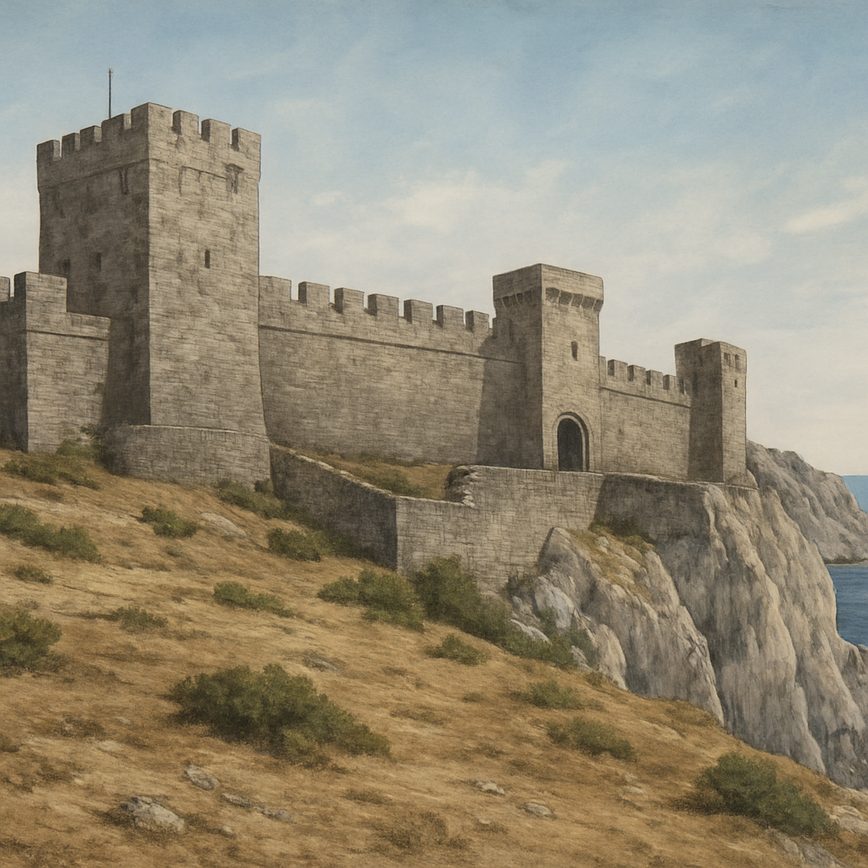
Origins and Early History of the Gibraltar Garrison
The Gibraltar garrison was established in the early 18th century following the strategic capture of Gibraltar by Anglo-Dutch forces during the War of the Spanish Succession in 1704. Its initial purpose was to serve as a key military fortification, securing control over the narrow entrance to the Mediterranean Sea and ensuring dominance over this vital maritime passage. The fortress quickly became a linchpin in British military strategy, as the ability to defend Gibraltar meant controlling naval access between the Atlantic Ocean and the Mediterranean, a critical point of geopolitical and commercial interest.
The early history of the Gibraltar garrison reflects its significance as both a military stronghold and a symbol of British power abroad. The initial military origins centered on fortifying the Rock, erecting batteries, and establishing barracks to support the troops stationed there. These early fortifications were vital in repelling multiple sieges, most notably the prolonged Great Siege from 1779 to 1783, which underscored Gibraltar’s defensive resilience and its importance in military planning.
From the outset, the Gibraltar garrison was more than just a defensive installation; it was a hub of military innovation and adaptation. The rugged terrain of the Rock demanded creative engineering solutions, which led to the construction of tunnels, fortified walls, and artillery positions that took full advantage of Gibraltar’s unique geography. The garrison not only protected the territory but also formed the basis for projecting British naval power throughout the Mediterranean basin.
In summary, the Gibraltar garrison’s early history is tightly intertwined with the military origins of this crucial fortification. Established to safeguard the strategic gateway to the Mediterranean, it grew into a vital defensive position that played a key role in British imperial and military ambitions. The legacy of these early years continues to influence Gibraltar’s enduring military significance.
Spanish and Moorish Fortifications
The history of Gibraltar’s defenses is deeply rooted in the enduring legacy of Spanish and Moorish fortifications, which played a crucial role before British control was established. The stronghold’s strategic location made it a coveted military asset, prompting successive civilizations to build robust defensive structures that could withstand prolonged sieges and naval assaults. The Spanish fortifications, constructed during their rule, reflect a blend of Renaissance military engineering adapted to the unique topography of the Rock. These fortifications included thick walls, bastions, and carefully designed gun emplacements, all intended to maximize defense against invaders. Such measures laid the groundwork for future enhancements and set a standard in sophisticated military architecture.
Before the Spanish, the Moors influenced Gibraltar’s early military history, introducing advanced fortification techniques learned from the Islamic world’s frontier defenses. Their contribution not only included the construction of initial walls and towers around the Rock but also the implementation of clever defensive strategies that utilized the natural landscape. The Moorish influence is evident in the initial layering of Gibraltar’s defenses, incorporating narrow access points and elevated positions to monitor and repel attackers. These designs fundamentally shaped the defensive mindset that would permeate the subsequent developments of the Gibraltar garrison.
Overall, the Spanish and Moorish fortifications created a formidable foundation for Gibraltar’s defenses. Their architectural ingenuity and strategic use of the landscape ensured that the garrison was well-prepared for various military challenges. These early fortifications not only symbolize the area’s complex history but also significantly influenced the evolution of the British garrison, providing a crucial starting point for one of the most heavily fortified positions in the region.
British Acquisition and Initial Military Presence
The British control of Gibraltar began with its capture in 1704 during the War of the Spanish Succession. A combined Anglo-Dutch fleet, seizing the opportunity to weaken Spanish influence, successfully took the fortress after a strategic assault. This decisive event marked the start of Gibraltar’s transition from Spanish to British possession. The 1704 capture was not just a military victory but the foundation for a long-term British presence in this key strategic location at the entrance to the Mediterranean Sea.
Following the capture, the British immediately recognized the importance of establishing a robust military presence to safeguard this vital naval base. The first official garrison was quickly established, serving both defensive and administrative purposes. This initial garrison laid the groundwork for Gibraltar’s future as a fortified military stronghold under British control. It consisted of soldiers tasked with fortifying the fortress and maintaining order, ensuring the security of British interests amidst ongoing conflicts in Europe.
The establishment of the garrison was crucial for consolidating British power in the region and deterring attempts to reclaim Gibraltar by Spain or other adversaries. Over time, the military presence expanded, reinforcing Gibraltar’s reputation as an impregnable fortress and a key asset in the British imperial network. The origins of this garrison remain a significant chapter in the history of Gibraltar’s British control, beginning with the pivotal events of 1704.
Role of the Gibraltar Garrison Through Major Conflicts
The Gibraltar garrison has played a pivotal role in numerous military conflicts, often shaping the course of history through its strategic position. Established as a fortress guarding the entrance to the Mediterranean, the garrison’s significance was especially pronounced during major wars and prolonged sieges. Its location at the crossroads of Europe and Africa provided a critical vantage point for controlling naval access and safeguarding maritime routes, which was indispensable in wartime history.
Throughout centuries of military conflicts, the Gibraltar garrison endured relentless sieges, notably during the Great Siege of 1779-1783, when Spanish and French forces attempted to wrest control from the British. The garrison’s resilience not only thwarted enemy advances but also demonstrated the fortress’s role as a bastion of defense. Its ability to hold firm during such sieges underscored Gibraltar’s strategic role as an impregnable stronghold, crucial for maintaining dominance over the surrounding seas.
During the Napoleonic Wars, Gibraltar’s military value was again underscored. The garrison functioned as a key naval base supporting British operations across the Mediterranean, controlling critical shipping lanes and enabling rapid deployment of troops. Its fortifications were enhanced, and its defenses expanded to prevent enemy powers from gaining a foothold that could disrupt British maritime supremacy. The garrison’s presence significantly impacted the strategic landscape of the region during these conflicts.
In both World Wars, Gibraltar’s garrison maintained its vital function, serving as a crucial hub for naval operations and intelligence. The military base facilitated the safe passage of Allied convoys, safeguarded the Mediterranean approach, and acted as a deterrent against Axis powers. Its well-fortified positions and military personnel ensured that Gibraltar remained a key asset, pivotal to Allied success in controlling the seas and executing maritime strategy.
Overall, the Gibraltar garrison’s involvement in major wars and sieges throughout history highlights its indispensable military role. By controlling access between the Atlantic Ocean and the Mediterranean Sea, the garrison was central to the defense and projection of power for the British Empire. Its wartime history is marked by steadfast defense, strategic importance, and tactical superiority, making it a cornerstone in the annals of military conflicts and Gibraltar’s enduring legacy.
The Great Siege of Gibraltar (1779-1783)
The Great Siege of Gibraltar, lasting from 1779 to 1783, stands as a monumental episode in the annals of military resilience. The 1779 siege marked an intense and prolonged assault by Spanish and French forces aiming to wrest control of Gibraltar from the British. Throughout this period, the Gibraltar defense was characterized by extraordinary strategic ingenuity and steadfast bravery by the garrison.
The Gibraltar garrison employed multiple layers of defense, utilizing the fortress’s natural rocky terrain to their advantage. Cannons were positioned in elevated batteries to maximize range and firing efficiency, disrupting enemy advances from both land and sea. The defenders also innovated with floating batteries and explosive devices, repelling repeated attacks with coordinated counter-fire.
Key to the military resilience during the Great Siege was the garrison’s ability to maintain supply lines under constant threat and to repair fortifications rapidly despite sustained bombardment. Nightly sorties disrupted enemy trenches and siege works, while relentless vigilance thwarted surprise incursions. The morale and endurance of the troops under such grueling conditions underscored the indomitable spirit that enabled Gibraltar to hold fast.
Ultimately, the 1779 siege exemplified a masterclass in defensive warfare, as the Gibraltar garrison’s strategic deployment of resources and unwavering tenacity turned the tide in one of history’s longest sieges, ensuring that Gibraltar remained an impregnable bastion for the British Empire.
The Gibraltar Garrison in the World Wars
During both World War I and World War II, the Gibraltar garrison played a crucial role as a pivotal military base in the Mediterranean. Its strategic location at the entrance to the Mediterranean Sea made it vital for the Allied forces, serving as a key point of control and defense against enemy naval and air operations. In World War I, Gibraltar’s military base was heavily fortified and used extensively for monitoring naval traffic, preventing the Central Powers from gaining advantage in the region.
As World War II unfolded, the importance of the Gibraltar garrison grew even further. It became a fortress of strategic defense, with extensive artillery, anti-aircraft batteries, and underground tunnels created to protect the garrison and the territory from potential Axis attacks. The garrison was a hub for naval operations, escorting convoys and supporting campaigns in North Africa, making it a vital link for the Allied war effort.
Throughout both World Wars, Gibraltar’s garrison was not only a symbol of military might but also a critical asset in controlling the Mediterranean maritime routes. Its role in intelligence, surveillance, and as a springboard for military operations underscored the immense strategic value of this British military base. The garrison’s resilience and adaptation to evolving wartime demands highlighted its indispensable role throughout the global conflicts of the 20th century.
Modern Developments and Legacy of the Gibraltar Garrison
The Gibraltar garrison has experienced a significant evolution in the modern era, reflecting broader changes in military strategy and technology. Once a formidable bastion of imperial defense, the garrison has adapted to the demands of contemporary warfare and geopolitical shifts. Today, the military presence in Gibraltar is not just a testament to its historical importance but a crucial element in the ongoing defense evolution of this strategic outpost.
In the aftermath of World War II and throughout the Cold War, the Gibraltar garrison modernized its infrastructure, integrating advanced radar systems, missile defense, and communications technology to maintain its edge. This transition from purely traditional fortifications to a more dynamic military role highlights the adaptive nature of the garrison. The focus shifted from large-scale artillery to sophisticated, mobile defense units capable of responding to new threats, which include airborne and maritime challenges.
Gibraltar today remains a key military hub, with its garrison enduring as a symbol of resilience and strategic foresight. The military installations are maintained not just for their defensive capabilities but also as a training ground for modern military tactics involving multinational forces. The garrison legacy here is deeply intertwined with the identity of Gibraltar, embodying centuries of defense evolution that continue to shape its role within the region.
Moreover, this legacy extends beyond the military realm. The enduring presence of the garrison has contributed to Gibraltar’s unique cultural and economic landscape. The defense evolution seen in the garrison’s capabilities translates into a broader understanding of security that encompasses disaster response, border control, and international cooperation. This multifaceted approach ensures that the garrison’s influence remains relevant in an increasingly complex global security environment.
In conclusion, the modern military developments in Gibraltar demonstrate a clear trajectory from traditional fortress defense toward a versatile and technologically sophisticated garrison. The garrison legacy is preserved not only in its historical fortifications but also in its ongoing commitment to maintaining Gibraltar’s security and strategic significance. As Gibraltar continues to navigate the challenges of the 21st century, the evolution of its garrison stands as a powerful reminder of its enduring role in regional and global defense.
Post-War Military Changes and Current Status
Following World War II, the Gibraltar garrison underwent significant post-war military changes reflecting evolving defense priorities and geopolitical realities. The extensive wartime military presence was substantially reduced as large-scale threats diminished, prompting a strategic reorganization of forces based on new defense needs. Many of the heavy artillery and large-scale troop deployments were scaled back to streamline the garrison and adapt to the modernized role of Gibraltar in regional security.
Throughout the latter half of the 20th century, the garrison shifted focus towards maintaining a smaller, more flexible force optimized for surveillance, rapid response, and support of broader British military interests in the Mediterranean. Defense updates included modernization of equipment, integration of new technologies, and adjustments in personnel to accommodate the changing nature of military threats and diplomatic contexts. This also entailed enhanced cooperation with NATO allied forces and updates in communication capabilities.
Today, Gibraltar’s current garrison maintains a continuous, though much reduced, military presence focused on border security, training, and maritime monitoring. The site remains a critical strategic point for the UK, serving as a hub for naval and air operations in the region. The post-war military legacy endures, with the garrison’s current role balancing traditional defense tasks with contemporary military needs, ensuring Gibraltar’s sustained importance as a fortified military location in the modern era.
Cultural and Historical Impact
The Gibraltar garrison has had a profound influence on the cultural heritage and identity of Gibraltar. As a military stronghold for centuries, its presence has woven a unique narrative into the fabric of local life, shaping traditions, festivals, and the collective memory of its people. This enduring military history has become an integral part of Gibraltar’s identity, embodying resilience and strategic importance that locals take pride in.
Moreover, the garrison’s historical sites attract numerous visitors, playing a crucial role in the region’s tourism industry. Tourists are drawn to the well-preserved fortifications, underground tunnels, and museums that vividly recount Gibraltar’s military past. This tourism not only educates visitors about the significance of the garrison but also supports the local economy, intertwining historical preservation with modern-day prosperity.
Through various cultural events and guided tours, the garrison’s legacy continues to be celebrated, reinforcing the connection between Gibraltar’s past and present. This blend of cultural heritage and military history enriches the tourism experience, making Gibraltar a distinctive destination. Overall, the garrison remains a symbol of Gibraltar’s strength and heritage, deeply embedded in its cultural consciousness and a pivotal asset for historical tourism.

I have always been captivated by the unique cultural tapestry of the Rock, particularly how Moorish, Spanish, and British influences shaped its development over centuries. My passion lies in translating these complex historical narratives into engaging educational resources that make Gibraltar’s past accessible to everyone. I spend my free time exploring military fortifications and reading first-hand accounts of life at the Pillar of Hercules.