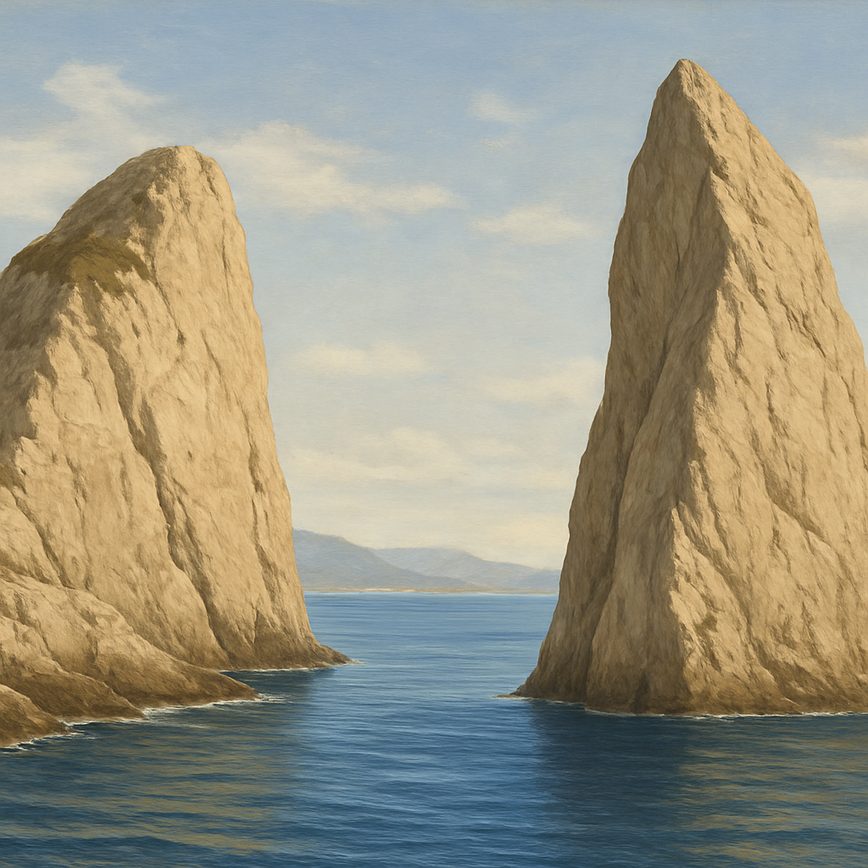
Introduction to the Pillars of Hercules
The Pillars of Hercules represent one of the most iconic and enduring symbols in Greek mythology, marking a significant point in ancient geography and mythological lore. These ancient landmarks, often identified as the two promontories flanking the entrance to the Strait of Gibraltar, have long fascinated both historians and mythologists. According to legend, the Pillars were created by the hero Hercules during one of his twelve labors, symbolizing his immense strength and heroic feats.
In Greek mythology, the Pillars of Hercules were more than just geographical markers. They stood as a boundary between the known world and the mysterious lands beyond, symbolizing the edge of the Mediterranean Sea and the gateway to the Atlantic Ocean. This mythological significance imbued the pillars with a powerful aura, representing exploration, courage, and the limits of human endeavor. The legend tells that Hercules set these pillars to discourage sailors from venturing too far, as the seas beyond were considered dangerous and unknown.
Geographically, the Pillars of Hercules correspond to the Rock of Gibraltar on the European side and Jebel Musa, a mountain in Morocco, on the African side. Together, they form a natural gateway that has been a crucial maritime passage since ancient times. These landmarks were well-known to ancient civilizations, including the Greeks and Phoenicians, who viewed them as the symbolic boundary between their familiar world and the vast ocean beyond. The narrow strait between these pillars also played a key role in trade and cultural exchange in the ancient Mediterranean world.
The mythological importance of the Pillars of Hercules extends beyond their physical presence. They symbolize human ambition and the pursuit of knowledge, often referenced in literature and historical texts as a metaphor for overcoming great challenges and venturing into unknown territories. Their enduring legacy continues to capture the imagination, linking mythology with geography and history, and offering a profound insight into the worldview of ancient civilizations.
Geographical Location and Description
The Pillars of Hercules refer to the two prominent rock formations that stand at the entrance to the Strait of Gibraltar, a narrow waterway that connects the Atlantic Ocean to the Mediterranean Sea. This ancient geographic landmark marks the boundary between the continents of Europe and Africa, making it a significant natural landmark in both historical and navigational contexts. On the northern side lies the Rock of Gibraltar, a massive limestone promontory within the British Overseas Territory of Gibraltar. On the southern side stands the Jebel Musa mountain in Morocco, towering as the counterpart to its northern neighbor.
These rock formations are not only striking natural features but also carry immense importance in ancient geography, where they symbolized the limits of the known world for early civilizations. The Strait of Gibraltar itself is a key maritime passage, crucial for trade and cultural exchange throughout history. The Pillars’ imposing presence and strategic location have made them a symbol of strength and endurance, lending their name to various myths and legends over the centuries.
As natural landmarks, the Pillars of Hercules continue to be a point of fascination, attracting visitors and scholars alike who are intrigued by their geological formation and their role as a gateway between two great bodies of water. Their enduring legacy is interwoven with the physical landscape and the human history that defines this remarkable geographic landmark.
Mythological Origins and Stories
The Pillars of Hercules are deeply rooted in ancient Greek myths, with the legendary hero Heracles (Roman Hercules) playing a central role in their origin story. According to mythology, Heracles was tasked with completing twelve legendary feats known as the Labors of Heracles. One of these feats required him to retrieve the cattle of the monster Geryon from a far western land. To mark the boundary of the known world and to aid his journey, Heracles is said to have smashed through a mountain that connected Europe and Africa, creating the two prominent rock formations now known as the Pillars of Hercules, located at the Strait of Gibraltar.
This act not only demonstrated Heracles’ incredible strength but also symbolized a gateway to the unknown, signifying the limits of the ancient Greek world. The Pillars became a legendary marker in Greek stories, warning sailors of the edge of the earth and the dangers beyond. The mythological origins of the Pillars intertwine with the heroic narrative of Heracles’ exploits, showcasing how ancient stories used these landmarks to convey themes of bravery, exploration, and the confrontation of mystery and danger.
These ancient stories have endured through the centuries, perpetuating the image of Heracles as a formidable figure in Greek myths whose legendary feats shaped not only the mythic landscape but also the geography recognized by early civilizations. The Pillars of Hercules remain a symbol of ancient exploration and the heroic spirit captured within Greek mythology.
Symbolism and Cultural Impact
The Pillars of Hercules held profound significance in ancient cultures, symbolizing the very boundaries and limits of the known world. These towering rock formations, positioned at the Strait of Gibraltar, marked the edge of the Mediterranean Sea and the entrance to the Atlantic Ocean. For ancient civilizations, they represented a physical and metaphorical frontier, beyond which lay mystery and the unknown. This symbolism underscored the ideas of exploration and the challenges of venturing into uncharted territories.
In mythology and historical narratives, the Pillars were often depicted as a natural barrier set by the gods to warn mortals against overreaching their limits. This cultural symbolism imparted a sense of caution but also inspired curiosity among early mariners and explorers. The notion of crossing the Pillars symbolized a bold step into new realms, a theme that resonated deeply in the maritime history of ancient peoples.
Beyond their mythological importance, the Pillars of Hercules played a critical role in practical navigation. Ancient sailors used these formations as key landmarks to guide their voyages between the Mediterranean and the wider Atlantic Ocean. Their towering presence provided a reliable point of reference in an era when navigation relied heavily on visible natural features. Mariners of various ancient cultures, including the Phoenicians, Greeks, and Romans, recognized the strategic importance of the Pillars in aiding their exploratory missions.
This symbolic and navigational significance intertwined, reinforcing the cultural impact of the Pillars. They became emblematic of both the physical and psychological limits of human endeavor. As navigation techniques evolved, the Pillars remained a potent symbol in maritime history, representing the intersection of human curiosity, the spirit of adventure, and the respect for natural boundaries. In essence, the Pillars of Hercules capture the enduring human quest to explore beyond the horizon while acknowledging the boundaries set by the natural world and ancient lore.
Representation in Ancient Art and Literature
The Pillars of Hercules have been a prominent symbol throughout ancient art and classical literature, serving as a powerful iconographic motif that reflects their mythological significance. In ancient art, they are frequently depicted as monumental stone columns or rugged cliffs, emphasizing their role as a boundary between the known and unknown worlds. These representations can be found in a variety of mediums including pottery, mosaics, and relief sculptures, often showcasing the heroic figure of Hercules himself, either perched atop or near the pillars during his legendary labors.
Classical literature, from poets like Homer and Hesiod to later Roman authors such as Ovid and Pliny the Elder, frequently references the Pillars of Hercules as symbols of exploration, strength, and the limits of human endeavor. Texts often describe the pillars as a gateway to the Atlantic Ocean, marking the edge of the ancient Mediterranean world and thus serving as a metaphor for ultimate challenge and adventure. These literary mentions are frequently intertwined with mythological representation, reinforcing the pillars’ significance in the cultural imagination.
Overall, the iconography surrounding the Pillars of Hercules in both ancient art and literature underscores their enduring place in myth and symbolism. Their depiction not only enhances our understanding of ancient perceptions of geography and heroism but also highlights their role as emblematic markers within the broader context of mythological and cultural narratives.
Influence on Modern Culture
The myth of the Pillars of Hercules continues to resonate deeply within modern symbolism, serving as a powerful emblem of boundaries and transition points. Today, these ancient pillars symbolize the edge of the known world and the spirit of exploration, themes that permeate various facets of pop culture. From movies and television series to video games, the imagery of the Pillars inspires narratives about overcoming limits and venturing into the unknown.
Literary references to the Pillars of Hercules often evoke a sense of epic adventure and challenge, drawing on the myth’s rich cultural legacy. Writers use the pillars metaphorically to represent obstacles that characters must confront or symbolize moments where new horizons become accessible. This enduring mythological motif has found its way into both classical literature and contemporary storytelling, illustrating its timeless appeal.
Moreover, the cultural legacy of the Pillars extends into art, logos, and even political symbolism, where they are employed to signify strength, resilience, and the boundary between the familiar and the undiscovered. The myth’s ability to bridge ancient ideas with present-day contexts highlights its importance as a source of inspiration and identity, enriching modern culture with layers of historical depth and metaphorical meaning.
Historical and Archaeological Perspectives
The Pillars of Hercules, long enshrined in mythology as monumental markers at the edge of the known world, hold significant historical and archaeological interest that transcends their legendary status. Archaeology and ancient history have offered compelling insights into these formations, identifying them with the promontories flanking the Strait of Gibraltar: the Rock of Gibraltar in Europe and the Jebel Musa in Africa. These natural landmarks have served as critical markers of exploration and maritime navigation throughout antiquity.
Archaeological evidence in the region surrounding the Pillars points to human activity dating back thousands of years, underscoring the area’s longstanding cultural and strategic importance. Excavations have uncovered artifacts ranging from Paleolithic tools to Phoenician and Roman relics, each shedding light on the historical use and significance of these landmarks. Such findings provide tangible links between the myths and the realities of ancient seafaring and trade routes that passed through this pivotal juncture between the Mediterranean Sea and the Atlantic Ocean.
Historical analysis enriches our understanding by placing the Pillars within a broader narrative of exploration and cultural exchange. Ancient texts from Greek and Roman authors often reference these pillars as boundary markers, symbolizing the limits of the known world and serving as a gateway between civilizations. This symbolism was not only mythic but also practical, reflecting the geographical and navigational challenges faced by ancient mariners. Contemporary historians interpret these records alongside archaeological findings to reconstruct the complex interactions between different peoples and cultures.
The interplay between myth and history found in the Pillars of Hercules highlights how legendary tales can often be rooted in actual locations and events. By examining the archaeological record and historical evidence together, scholars continue to explore how these towering cliffs influenced ancient exploration and shaped our understanding of the world. The enduring fascination with the Pillars reflects a deep human desire to understand both the physical and symbolic boundaries of our world.
Ancient Accounts and Exploration
Ancient explorers and historians frequently referenced the Pillars of Hercules as a critical landmark in early navigation and discovery. These natural monoliths, situated at the entrance to the Mediterranean Sea, served as a gateway and boundary for sailors venturing into unknown waters. Historical texts from civilizations such as the Phoenicians, Greeks, and Romans document the importance of the Pillars not only as a navigational aid but also as a symbol of the limits of the ancient world.
Many ancient explorers relied on the Pillars in their voyages, using them as reference points for charting courses that expanded trade routes and maritime knowledge. Navigation during those times was challenging and perilous, and the Pillars marked a significant milestone where the safe, familiar waters of the Mediterranean gave way to the vast, uncharted Atlantic Ocean. This transition influenced the ways explorers approached mapping and discovery, often marking the edge of the known world in their historical accounts.
Historical texts emphasize that the Pillars of Hercules symbolized both physical and metaphorical limits, encouraging ancient mariners to push beyond what was previously considered navigable. Their role in early navigation routes is well documented, highlighting how these ancient landmarks were instrumental in the exploration and expansion of geographic horizons. The legacy of the Pillars in ancient exploration underscores their enduring significance in maritime history.
Modern Archaeological Discoveries
Recent excavations around the Pillars of Hercules have significantly enriched our understanding of both the natural and cultural heritage of this iconic landscape. Archaeologists have uncovered a wealth of artifacts that shed light on the ancient civilizations that once thrived in the region. These research findings include remnants of ancient settlements, trading posts, and fortifications, illustrating the strategic importance of the Pillars throughout history.
The ongoing excavations have revealed pottery, tools, and inscriptions that contribute to understanding the cultural exchanges that occurred at this crossroads between continents. These artifacts provide tangible links to the mythologies and historical narratives associated with the Pillars of Hercules, grounding legend in material culture. Furthermore, geological studies conducted alongside archaeological digs have unveiled insights into the natural history, revealing how the landscape has evolved over millennia.
Preserving the cultural heritage of the Pillars remains a priority for researchers and local authorities. The discoveries have underscored the importance of careful stewardship to protect these irreplaceable sites from modern development and natural erosion. Together, the amalgamation of archaeological research and conservation efforts offers a fuller picture of the Pillars’ enduring significance, illuminating their role not only as a mythological symbol but also as a center of rich human activity through the ages.

I have always been captivated by the unique cultural tapestry of the Rock, particularly how Moorish, Spanish, and British influences shaped its development over centuries. My passion lies in translating these complex historical narratives into engaging educational resources that make Gibraltar’s past accessible to everyone. I spend my free time exploring military fortifications and reading first-hand accounts of life at the Pillar of Hercules.