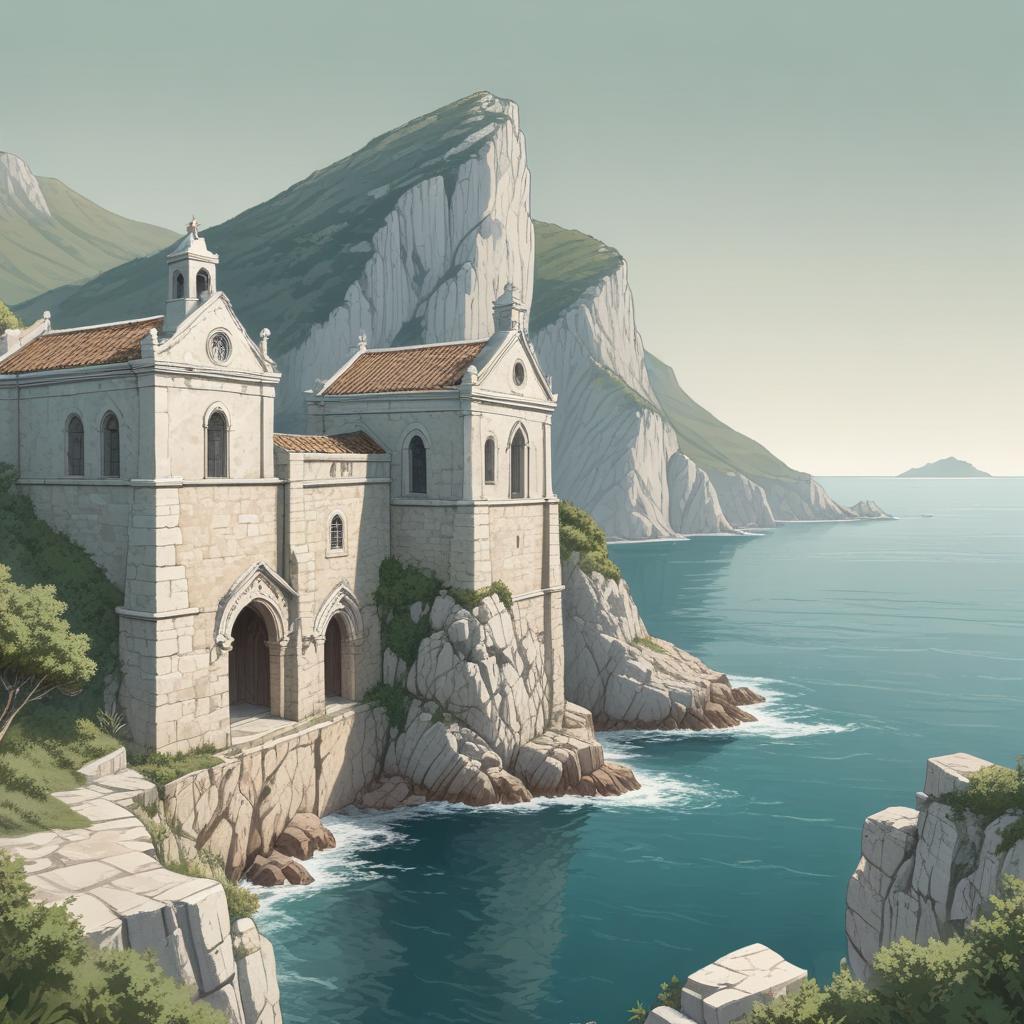
Early Religious Influences in Gibraltar
The religious history of Gibraltar is a rich tapestry woven from ancient threads, with early Gibraltar serving as a crossroads of various civilizations and their respective beliefs. The origins of religious practices in this region trace back to prehistoric times when early inhabitants likely engaged in animistic and shamanistic rituals connected to nature and the environment. These prehistoric beliefs laid the foundational spiritual framework upon which later, more structured religions would build.
As one of the prominent landmarks at the entrance to the Mediterranean, Gibraltar attracted several ancient civilizations, notably the Phoenicians, who were among the earliest seafaring traders in the region. The Phoenicians brought with them their pantheon of gods and religious customs, which significantly influenced the religious landscape of early Gibraltar. Temples and shrines dedicated to deities such as Melqart, a god linked to the city of Tyre and associated with the sun and sea, were likely established, serving as centers for religious activity and cultural exchange.
The arrival of the Romans further enriched Gibraltar’s ancient religious history. Roman rule introduced a complex array of gods and religious ceremonies adapted from Greek predecessors but integrated with uniquely Roman traditions. The imprints of Roman religious history in Gibraltar included the worship of deities like Jupiter, Venus, and Mars, reflecting the empire’s blend of political power and faith. Roman religious practices also included public rituals, sacrifices, and festivals that helped establish their cultural dominance in the region.
Early Gibraltar’s religious history also encompasses influences from other ancient civilizations such as the Carthaginians and later the Byzantines, each adding layers of spiritual and religious complexity. The interplay of these diverse beliefs and traditions illustrates how Gibraltar functioned as a melting pot for ancient religions, with the blending of ideas and practices helping shape the religious heritage that continues to be studied and appreciated today.
In summary, the religious history of early Gibraltar reveals a dynamic evolution from prehistoric animistic traditions to the structured worship systems introduced by the Phoenicians, Romans, and other ancient cultures. This deep-rooted religious past demonstrates the importance of Gibraltar not only as a strategic geographic location but also as a focal point for ancient religious developments and cultural interactions.
Prehistoric Beliefs and Pagan Practices
The earliest known religious activities in ancient Gibraltar are deeply rooted in prehistoric religion, discernible through extensive archaeological findings that shed light on the spiritual lives of its ancient inhabitants. Prehistoric Gibraltar was a site where early humans engaged in pagan rituals, reflecting a profound connection with nature and the supernatural world. These rituals were performed long before organized religions emerged, and the evidence unearthed suggests a complex system of beliefs centered on animism and the worship of natural elements and ancestral spirits.
Archaeological excavations in caves such as Gorham’s Cave and Vanguard Cave have revealed artifacts and remnants indicative of ritualistic practices, including the use of fire, the placement of symbolic objects, and possibly early forms of burial rites. These finds highlight that the early inhabitants of Gibraltar practiced prehistoric religion involving ceremonies that honored the forces of nature and sought protection or favor from deities or spirits they believed governed their world. The presence of rock art and carvings in these caves also points to the expression of religious ideas and the performance of pagan rituals connected to life cycles, hunting, and survival.
These pagan rituals in ancient Gibraltar illustrate a rich spiritual tradition that predates recorded history, offering a glimpse into the belief systems that shaped the cultural identity of prehistoric communities. Understanding these ancient practices provides valuable context for the religious history of Gibraltar, linking its earliest inhabitants to the broader story of human spirituality and the evolution of religious thought in the Mediterranean region.
Impact of Phoenicians and Romans
The arrival of the Phoenicians in Gibraltar marked a significant cultural and religious transformation. As skilled maritime traders and settlers, the Phoenicians introduced their polytheistic beliefs, centering on a pantheon of gods and goddesses representing natural forces and life principles. This Phoenician religion deeply influenced the local spiritual landscape, bringing new rituals, deities, and sacred sites. Among their revered gods were Melqart, often associated with the city and seafaring, and Astarte, a goddess linked to fertility and war.
Subsequently, Roman conquest further expanded the religious tapestry of Gibraltar. The Romans integrated their classical influences by bringing their vast array of Roman gods and goddesses to the region. These deities often overlapped with Phoenician ones, allowing for a syncretism where local and imported beliefs merged. Jupiter, Juno, and Minerva found a place alongside previously worshiped figures, thereby enriching the spiritual traditions with new myths, ceremonies, and temple-building activities.
The combined impact of Phoenician religion and Roman gods contributed to Gibraltar’s development as a spiritual crossroads in antiquity. Classical influences permeated not only religious life but also cultural expressions such as art, architecture, and literature, reinforcing the city’s role as a melting pot of Mediterranean civilizations. This blending of faiths helped shape the unique historical and religious identity that Gibraltar maintains to this day.
Religious Transitions During Moorish and Spanish Rule
The religious landscape of Gibraltar underwent significant transformations during the periods of Moorish and Spanish rule, marked by shifts in dominant faiths reflective of the broader political and cultural changes. The Moorish occupation introduced the region to Islam, establishing it as the predominant religion and deeply influencing Gibraltar’s religious and societal fabric.
When the Moors established control over Gibraltar in the early 8th century, they brought with them the tenets of Moorish religion, rooted in Islamic beliefs. The introduction of Islam marked a profound shift from the previous Christian and Jewish practices that had been present in the area. Under Moorish rule, Gibraltar became an important outpost of Islamic culture and religion, with mosques and educational institutions promoting the teachings of Islam across the territory. This era saw the flourishing of Islamic architecture and scholarship, which left an enduring legacy on the region’s cultural heritage.
The presence of Islam in Gibraltar during this time was not merely a religious phenomenon but also a symbol of political power and identity for the Moors. Islamic law and customs shaped daily life and governance, integrating Gibraltar into the wider Islamic world. The population largely practiced Islam, with religious practices and festivals becoming central to community life.
However, this dominant position of Islam was challenged during the Christian reconquest, known locally as the Reconquista, which gained momentum in the late Middle Ages. The Christian forces, aimed at reclaiming territories under Moorish control, ultimately succeeded in taking Gibraltar in 1462. This conquest ushered in a period of religious upheaval as Christian rulers sought to re-establish Catholicism as the dominant faith in the region.
Following the Christian reconquest, Gibraltar experienced the reassertion of Catholicism as the official religion. Churches replaced mosques, and Catholic rites were reinstated in public and private life. This transformation was often accompanied by efforts to convert the Muslim population or displace those who resisted the new religious order. The Spanish Crown promoted Catholicism vigorously as part of consolidating their control and unifying the region under Christian rule.
These religious transitions from Islam back to Christianity illustrate the complex interplay between religion and political power during Gibraltar’s history. The legacies of both Moorish religion and the Christian reconquest have left lasting marks on Gibraltar’s cultural identity, shaping its religious diversity and historical narrative to this day.
Islamic Influence Under Moorish Control
During the Moorish era, Islam in Gibraltar significantly shaped the religious and cultural landscape of the region. Islamic architecture flourished, with the construction of mosques and public buildings that showcased intricate designs and detailed craftsmanship. These structures were not only places of worship but also centers of community life, reflecting the importance of Muslim religious practices in daily activities.
The Moorish rulers brought with them a vibrant culture that permeated various aspects of Gibraltar’s society. Islamic customs and traditions influenced the social fabric, promoting values of learning, trade, and coexistence. The emphasis on religious education fostered a prosperous intellectual environment where scholars and theologians contributed to the dissemination of Islamic knowledge.
Socially, the era marked a period where Muslim law and governance played key roles, guiding the community’s moral and judicial norms. Religious festivals and daily prayers structured the rhythm of life, while the introduction of Arabic as the language of administration and scholarship further embedded the Muslim presence. This period established deep-rooted legacies that continued to influence Gibraltar’s identity long after Moorish control ended.
Christian Reconquest and Catholicism
The Christian reconquest of Gibraltar marked a significant turning point in the region’s religious landscape. As the territory was reclaimed from Muslim rule, the influence of the Catholic Church rapidly grew, establishing itself as the central religious authority. This period saw the founding and expansion of numerous Catholic institutions, including churches, monasteries, and educational centers that played a pivotal role in shaping local spiritual and community life.
The rise of Catholic institutions was closely tied to the broader objectives of the Christian reconquest, which aimed not only to reclaim land but also to reinstate Catholicism as the dominant faith. The Catholic Church took an active role in administering Gibraltar, guiding religious practices and integrating Catholic traditions into the cultural fabric of the area. This influence extended to education, social services, and the shaping of moral codes aligned with Catholic doctrine.
During this period, the Spanish Inquisition also left its mark, reinforcing Catholic orthodoxy and suppressing any non-Christian or heretical beliefs. This had a profound effect on local religious traditions, as existing customs were either adapted to fit Catholic teachings or eradicated. The legacy of the Spanish Inquisition helped to consolidate the dominance of Catholicism and ensured the continuity of its influence in Gibraltar’s religious life well beyond the reconquest era.
Modern Religious Landscape of Gibraltar
Modern Gibraltar is a unique example of religious diversity, where multiple faiths coexist harmoniously within a small geographical area. This diversity has shaped the cultural and social fabric of Gibraltar, fostering an atmosphere of mutual respect and vibrant interfaith relations. The community is characterized by a mosaic of religious traditions, reflecting its complex history and the varied origins of its inhabitants.
The dominant religious communities in modern Gibraltar include Christians, Jews, Muslims, and Hindus. Christianity, particularly Roman Catholicism, remains the largest faith group, deeply rooted in the territory’s traditions and daily life. Numerous churches across Gibraltar serve not only as places of worship but also as community landmarks that host cultural and social events. However, the island’s Christian population is just one facet of its religious landscape.
Gibraltar’s Jewish community is one of the oldest in the region, with synagogues that are centuries old and continue to play a vital role in religious and communal life. This community’s rich heritage is celebrated through festivals, religious education, and active social institutions, contributing to Gibraltar’s overall cultural diversity.
The Muslim community in Gibraltar is also an integral part of the religious pluralism. With mosques serving both spiritual and community functions, Muslims actively participate in interfaith dialogues and community initiatives, which strengthen the bonds among different religious groups. This openness is a testament to the peaceful coexistence and mutual acceptance that define modern Gibraltar.
Additionally, the Hindu community, though smaller in number, adds to the rich tapestry of faiths in Gibraltar. Their temples and religious celebrations are respected and often embraced by the wider population, further highlighting the inclusive nature of Gibraltarian society.
Interfaith relations in modern Gibraltar are notably positive, characterized by frequent cooperation and dialogue among religious leaders and communities. This spirit of collaboration helps address common social issues and promotes understanding across different faiths. Events that bring together representatives from various religions are common and serve as powerful symbols of Gibraltar’s commitment to religious harmony.
In conclusion, the religious diversity of modern Gibraltar is a defining feature of its identity and a source of strength. The peaceful coexistence of multiple faiths, underpinned by respectful interfaith relations, sets a remarkable example of how diverse communities can thrive together in a small yet vibrant society.
Jewish, Hindu, and Other Minority Faiths
Gibraltar is home to a diverse range of religious communities, among which the Jewish community holds a significant place. The Jewish population has contributed greatly to the cultural and economic fabric of modern Gibraltar. Synagogues such as the Great Synagogue serve not only as places of worship but also as centers for cultural preservation and community gatherings, reflecting the vibrant heritage of Jews in the territory.
The Hindu population in Gibraltar, though smaller in number compared to other groups, also plays a vital role within the social and religious life of the territory. Their temples and community centers host various cultural and religious festivals, enriching Gibraltar’s multicultural landscape. The Hindu community’s presence highlights the inclusive nature of Gibraltar’s society, where minority religions are respected and integrated.
In addition to the Jewish and Hindu populations, other minority religions coexist peacefully in Gibraltar, contributing to the unique religious mosaic of the territory. These communities often cooperate in interfaith dialogues and social initiatives, fostering understanding and mutual respect. Their collective presence underscores Gibraltar’s identity as a place of religious tolerance and cultural diversity, where minority religions are recognized for their contributions to the territory’s social cohesion and development.
Interfaith Relations and Religious Tolerance
In Gibraltar today, interfaith dialogue plays a crucial role in fostering religious tolerance and community harmony. Despite the diverse religious landscape, with significant populations of Christians, Muslims, Jews, and Hindus, the territory is known for its peaceful coexistence and mutual respect among different faith groups. This unique environment is nurtured through regular interfaith initiatives that encourage open communication and understanding.
Local religious leaders and community organizations actively participate in joint events and discussions aimed at bridging gaps and dispelling misconceptions. These interfaith activities not only highlight the common values shared by various religions but also celebrate their distinctive traditions, promoting a sense of unity without erasing diversity.
Religious tolerance in Gibraltar is more than just a passive acceptance; it is an active commitment to ensuring that all community members feel valued and respected regardless of their beliefs. Schools, civic groups, and religious institutions collaborate to educate the younger generations about the importance of this peaceful coexistence, ensuring that these principles continue to thrive.
The success of interfaith dialogue in Gibraltar serves as a model for community harmony worldwide. By fostering ongoing conversations and cooperative efforts among different religious communities, Gibraltar demonstrates how religious diversity can be a source of strength rather than division.

I have always been captivated by the unique cultural tapestry of the Rock, particularly how Moorish, Spanish, and British influences shaped its development over centuries. My passion lies in translating these complex historical narratives into engaging educational resources that make Gibraltar’s past accessible to everyone. I spend my free time exploring military fortifications and reading first-hand accounts of life at the Pillar of Hercules.