Overview of Gibraltar’s Role in the Spanish Civil War
Gibraltar, a British Overseas Territory strategically located at the southern tip of the Iberian Peninsula, played a critical role during the Spanish Civil War from 1936 to 1939. Its unique position overlooking the entrance to the Mediterranean Sea made it a key military and naval stronghold throughout the conflict. The territory’s importance was underscored by the fact that control over Gibraltar effectively meant control over one of the world’s most significant maritime chokepoints, allowing its possessor to monitor and influence naval movements between the Atlantic Ocean and the Mediterranean.
During the Spanish Civil War, Gibraltar served as a base for the British Royal Navy, ensuring that the territory remained under Allied control despite the political turbulence engulfing neighboring Spain. The proximity to loyalist and nationalist zones created a complex and tense environment, as Gibraltar was used for intelligence gathering, supply distribution, and as a refuge for those fleeing the war. The British administration carefully maintained a position of neutrality but supported the loyalist cause indirectly by preventing any unauthorized entry or arms shipments through the territory.
The Spanish Civil War highlighted Gibraltar’s ongoing strategic significance in European geopolitics. Its fortified defenses and naval facilities provided a secure point from which the British could exert influence in the region without direct involvement in the conflict. Gibraltar’s role extended beyond military considerations; it also had an impact on diplomatic relations between Britain, Spain, and other European powers involved in or affected by the civil war.
Overall, Gibraltar’s role in the Spanish Civil War was characterized by its strategic importance as a military stronghold and a hub for intelligence and logistics operations. While the territory itself was not a battleground, its proximity to the conflict zones and the presence of British forces ensured that Gibraltar was a significant factor in the broader dynamics of the war. The Spanish Civil War, therefore, underscored the value of Gibraltar not only as a geographical asset but as a pivotal element in maintaining regional stability during a turbulent period in European history.
Strategic Location and Military Significance
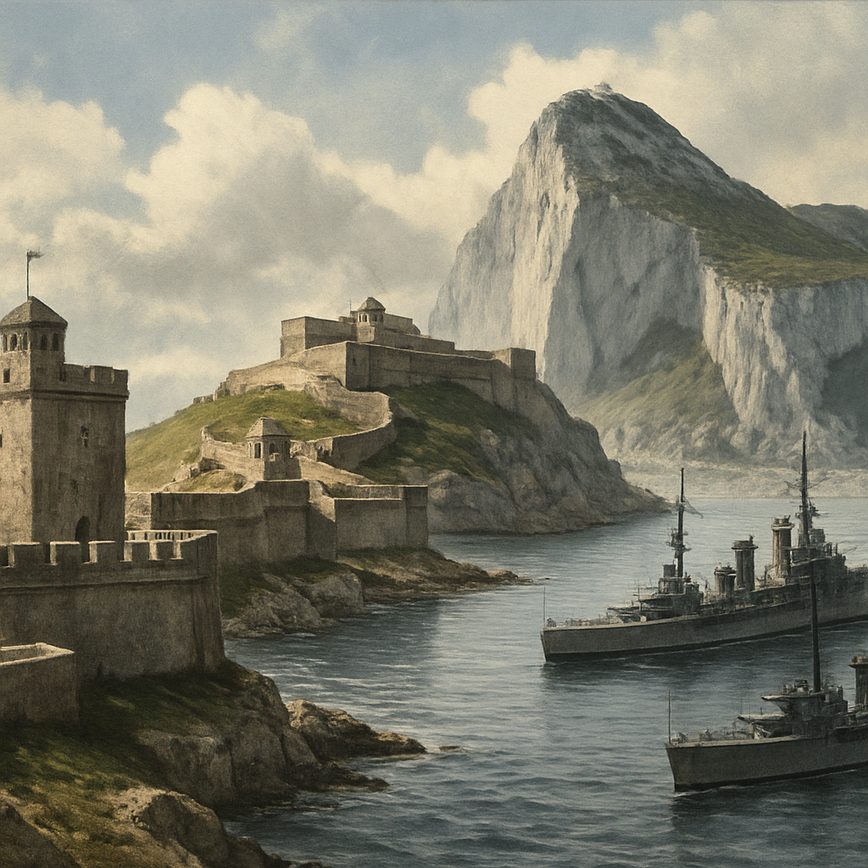
Gibraltar’s strategic location at the southern tip of the Iberian Peninsula made it a critical military asset during the Spanish Civil War. Overlooking the entrance to the Mediterranean Sea from the Atlantic Ocean, Gibraltar controlled one of the most important naval chokepoints in the world. This position allowed whichever force held the territory to monitor and potentially control naval traffic between the Atlantic and Mediterranean, making Gibraltar vital for maintaining supply lines and exerting maritime influence during the conflict.
The military importance of Gibraltar during the civil war was underscored by its formidable natural defenses, including the Rock of Gibraltar, which served as a natural fortress. Its height and rugged terrain provided unparalleled observation points and artillery positions to defend against any land or sea-based attacks. Gibraltar also served as a key base for the British Royal Navy, which played a significant role in securing the region and ensuring that naval logistics and communications were upheld throughout the civil war period.
Furthermore, Gibraltar’s proximity to Spanish territory made it a crucial staging ground for military operations for both sides in the conflict. Controlling Gibraltar meant controlling access to southern Spain and influencing the broader dynamics of the civil war. The combination of its geographic position and military capability made Gibraltar indispensable during this turbulent time, highlighting its enduring strategic and military importance in the context of the Spanish Civil War.
Political Stance and Influence
During the Spanish Civil War, Gibraltar maintained a unique political stance shaped by its strategic location and colonial ties. As a British territory, Gibraltar largely aligned itself with the United Kingdom’s interests, adopting a neutral yet vigilant position. This political stance was crucial in safeguarding Gibraltar’s stability amid the volatile regional conflict. While Gibraltar did not directly participate in the war, its geopolitical influence extended beyond its borders, affecting both local and regional politics.
The presence of British military forces in Gibraltar ensured that the territory remained a critical outpost against fascist and nationalist advances in southern Spain. Gibraltar’s political alignment leaned towards supporting the Republican cause indirectly, primarily by acting as a refuge for those fleeing the conflict and as a listening post for intelligence purposes. This stance impacted local political opinions, fostering a community sympathetic to anti-fascist efforts, while also reinforcing loyalty to British governance.
Regionally, Gibraltar’s role as a communication and supply hub gave it considerable influence during the Spanish Civil War. Its political significance was recognized by both sides in the conflict, who sought to either control or neutralize the territory. Consequently, Gibraltar became a focal point in the broader geopolitical struggles of the war, influencing diplomatic relations and military strategies throughout the region. The political stance adopted by Gibraltar during this time helped shape the dynamics of the conflict and left a lasting legacy on its local and regional politics.
Impact of the Spanish Civil War on Gibraltar’s Society and Economy
The Spanish Civil War had a profound impact on Gibraltar’s society and economy, reshaping everyday life in this strategic British territory. Nestled just across the border from Spain, Gibraltar experienced a unique set of challenges and transformations as the conflict unfolded. The war not only stirred political anxieties but also triggered significant social and economic shifts within its population.
During the Spanish Civil War, Gibraltar’s society was deeply affected by the uncertainty and tension that permeated the region. Many families in Gibraltar had close ties to Spain, and the conflict created divisions as loyalties were split between the Republican and Nationalist sides. This period saw a heightened sense of caution among the residents, leading to a cautious social atmosphere marked by surveillance and suspicion. The proximity to the conflict meant that refugees and political exiles often crossed into Gibraltar, influencing its cultural fabric and adding complexity to local social dynamics.
Economically, Gibraltar’s position as a British stronghold meant that it became a vital logistical hub during the Spanish Civil War. The impact on Gibraltar’s economy was twofold: on one hand, the conflict disrupted traditional trade routes with Spain, causing shortages and economic strain for many local businesses dependent on cross-border commerce. On the other hand, Gibraltar’s port and facilities saw increased military and maritime activity, which temporarily boosted certain sectors such as shipping and supplies related to the British Navy’s operations.
Everyday life in Gibraltar was altered by wartime measures and the economic fluctuations brought on by the Spanish Civil War. Rationing of goods became commonplace as imports from Spain dwindled, and the community had to adjust to a limited availability of certain foodstuffs and commodities. Employment patterns shifted as both military and civilian jobs were affected by the evolving demands of the wartime environment. Social services and local governance in Gibraltar adapted to address the challenges posed by the influx of refugees and to maintain order amid heightened tensions.
Ultimately, the impact of the Spanish Civil War on Gibraltar society and economy was significant, disrupting daily routines and reshaping the territory’s social and economic landscape. The war underscored Gibraltar’s strategic importance and resilience, highlighting how external conflicts can profoundly influence a community’s internal life and economic stability. Through the trials of this period, Gibraltar emerged with a strengthened identity shaped by its unique position at the crossroads of British and Spanish history.
Economic Changes and Trade Disruptions
The Spanish Civil War brought significant economic impact to Gibraltar, altering its traditional patterns of trade and commerce. As a strategic port, Gibraltar had long relied on extensive trade connections with neighboring Spain and across the Mediterranean. However, the outbreak of war caused severe trade disruptions, as blockades, military controls, and political instability severely restricted the movement of goods. These challenges disrupted the usual flow of imports and exports, affecting local businesses and the broader Gibraltar economy.
One of the key economic challenges was the sudden reduction in trade volumes, especially with Spain, which was one of Gibraltar’s primary partners. Many goods became scarce, and prices rose due to limited supply and increased transportation risks. Additionally, the war diverted resources and attention away from economic activities toward security and defense measures. The port itself was heavily controlled and monitored, further hindering free trade and complicating routine business operations.
Moreover, the conflict caused a shift in trade routes, with Gibraltar seeking to strengthen ties with British markets and other Mediterranean partners less affected by the war. This realignment fostered a temporary economic resilience but also underlined the fragility of Gibraltar’s reliance on neighboring Spain. Overall, the economic impact of the Spanish Civil War was profound, forcing Gibraltar to navigate through a period marked by uncertainty, changing alliances, and persistent trade disruptions that shaped its economy well beyond the conflict’s end.
Social Dynamics and Refugee Movements
The Spanish Civil War significantly altered the social dynamics within Gibraltar, as the territory experienced notable population changes and an influx of refugees. Due to its geographical proximity to Spain and its strategic position, Gibraltar became both a refuge and a point of transit for those fleeing the violence and chaos engulfing neighboring regions. This sudden arrival of refugees introduced a complex social landscape, challenging the existing structures of Gibraltar society.
Many refugees sought safety in Gibraltar, which led to a temporary but substantial increase in population. This demographic shift brought together a diverse mix of people, including families torn from their homes, political exiles, and those escaping persecution. The refugee influx tested Gibraltar’s resources and infrastructure, but it also fostered a sense of shared experience and resilience among residents. The local community often had to navigate the pressures of accommodating these new arrivals while maintaining everyday life.
Social tensions arose in some quarters due to competition for jobs, housing, and basic necessities, as well as political divisions echoed from the conflict. However, these challenges also prompted moments of cohesion, where solidarity and mutual aid emerged as vital responses. Gibraltar society during the civil war period thus reflected a dual character: it was marked both by strains linked to displacement and conflict, and by acts of cooperation and humanitarian support that helped forge stronger communal bonds amid adversity.
Legacy and Historical Significance of Gibraltar in the Spanish Civil War
The legacy of Gibraltar during the Spanish Civil War is marked by its strategic importance and the lasting historical significance it holds in the context of 20th-century European conflicts. As a British territory located at the southern tip of the Iberian Peninsula, Gibraltar played a crucial role in the war, not only as a military stronghold but also as a symbol of geopolitical influence in the region. Its involvement had long-term effects that extended well beyond the immediate military engagements of the war itself, shaping diplomatic relations and military strategy in the years that followed.
Historically, Gibraltar’s position at the entrance to the Mediterranean Sea gave it immense value to both the Republican and Nationalist factions. The territory’s control allowed for monitoring and controlling naval traffic, which was vital for supply routes and strategic movements. Gibraltar’s legacy includes its use as a base for British naval operations, which indirectly influenced the outcome of the Spanish Civil War by restricting the movement of Nationalist and Republican forces alike. This military utility underscores Gibraltar’s historical significance as more than just a fortress; it was a key player in the broader conflict dynamics.
Beyond its military role, Gibraltar’s involvement in the Spanish Civil War had long-lasting diplomatic implications. The war intensified the political tensions between Spain and Britain, with Gibraltar often at the heart of disputes. The legacy of these tensions is evident in the continued diplomatic sensitivity surrounding Gibraltar’s sovereignty, which remains a contentious issue to this day. The Spanish Civil War thus cemented Gibraltar’s role as a focal point of political and territorial contention, influencing national policies and international relations.
The historical significance of Gibraltar during the Spanish Civil War is further reflected in its social and cultural impact. Gibraltar served as a refuge for those fleeing the violence in Spain, contributing to the complex demographic and cultural tapestry of the territory. This aspect of its legacy highlights how Gibraltar’s role extended beyond military and political considerations, deeply affecting the lives of individuals and communities connected to the conflict.
In summary, the legacy and historical significance of Gibraltar in the Spanish Civil War are multifaceted. Gibraltar’s strategic military role, its influence on diplomatic relations, and its cultural impact during this turbulent period have all contributed to shaping its contemporary identity. The Spanish Civil War underscored Gibraltar’s importance on the global stage and left an indelible mark on its history, ensuring its place as a key historical landmark in the narrative of the 20th century.
Post-War Relations Between Gibraltar and Spain
The aftermath of the Spanish Civil War marked a crucial turning point in the political and diplomatic relations between Gibraltar and Spain. The war had left deep scars and a legacy of mistrust that significantly influenced the post-war relations. Gibraltar, a British Overseas Territory with a strategic position at the entrance of the Mediterranean, became a focal point in the complex history between the two regions.
Following 1939, Spain, under Franco’s regime, maintained a tense and often hostile stance towards Gibraltar. The Spanish government viewed Gibraltar as a symbol of foreign control and influence, which heightened political sensitivities. The war’s aftermath saw Spain reinforcing its claim over the territory, leading to a series of diplomatic disputes and a hardened border, affecting the daily lives of residents and cross-border interactions.
Despite diplomatic tensions, Gibraltar’s administration sought to balance its strategic importance with the need for peaceful coexistence. The history of the Spanish Civil War’s aftermath directly impacted negotiations and efforts to improve relations, but significant challenges remained due to underlying political differences and nationalistic sentiments.
Overall, the Spanish Civil War aftermath shaped the post-war relations between Gibraltar and Spain by embedding a legacy of caution and conflict into their interactions. The history of this period remains essential to understanding the persistent issues and diplomatic efforts in the Gibraltar-Spain relationship today.
Commemoration and Historical Memory
The events of the Spanish Civil War hold a significant place in Gibraltar’s historical memory, with commemoration efforts ensuring that this critical period is neither forgotten nor overlooked. Gibraltar’s unique position during the war, as a British territory adjacent to the conflict, has shaped the way its residents remember and honor these times.
Today, Gibraltar commemorates the Spanish Civil War through various cultural and educational activities. Local museums and historical societies organize exhibitions and talks that delve into the impact of the war on Gibraltar and its population. These initiatives aim to preserve the memory of those affected and to educate new generations about the complexities of the conflict.
Memorials and plaques can be found in Gibraltar, dedicated to those who lived through and were influenced by the Spanish Civil War. Often, these sites serve as focal points during remembrance events where communities gather to reflect on the war’s repercussions and its broader historical significance. The commemoration is also linked to Gibraltar’s broader historical narrative, emphasizing the resilience and strategic importance of the territory.
Moreover, discussions about the Spanish Civil War in Gibraltar are framed within the context of peace and reconciliation, reinforcing the importance of understanding history to prevent future conflicts. Through these remembrance efforts, Gibraltar continues to maintain a strong connection to its past, ensuring that the legacy of the Spanish Civil War remains a vital part of its collective historical memory.

I have always been captivated by the unique cultural tapestry of the Rock, particularly how Moorish, Spanish, and British influences shaped its development over centuries. My passion lies in translating these complex historical narratives into engaging educational resources that make Gibraltar’s past accessible to everyone. I spend my free time exploring military fortifications and reading first-hand accounts of life at the Pillar of Hercules.