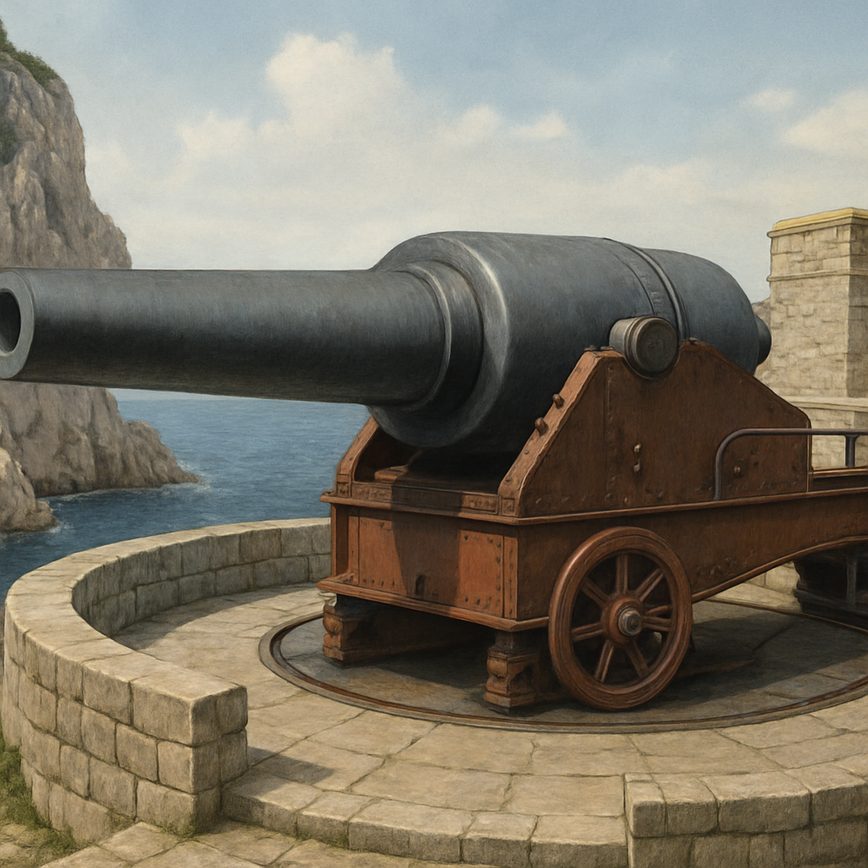
Introduction to the One Hundred Ton Gun in Gibraltar
The One Hundred Ton Gun stands as a monumental feat in the history of Gibraltar artillery, representing one of the largest and most powerful naval guns ever constructed. This giant cannon was installed on the rock of Gibraltar in the late 19th century as part of Britain’s coastal defense strategy, aiming to protect the strategic naval base and surrounding waters from enemy fleets. Its sheer size and firepower marked a significant advancement in military technology and symbolized the might of the British Empire during a period when control of the seas was paramount.
Historically, Gibraltar has been a crucial military stronghold due to its strategic location at the entrance to the Mediterranean Sea. The One Hundred Ton Gun played a pivotal role in reinforcing this defense posture. Mounted at strategic points overlooking the bay, the gun was intended to deter and if necessary, repel naval attacks from adversaries seeking to challenge British naval supremacy in the region. It demonstrated the evolution of coastal defense from traditional cannons to massive, highly destructive artillery pieces capable of firing enormous shells over long distances.
The construction and deployment of the One Hundred Ton Gun enhanced Gibraltar’s artillery capabilities significantly. It was a formidable weapon, capable of firing shells weighing almost a thousand pounds, and designed to penetrate the thick armor of the battleships of its time. This innovation in historical cannons not only emphasized Gibraltar’s defensive strength but also reflected broader shifts in military technology and tactics during the industrial era. As a result, the gun remains a symbol of Gibraltar’s enduring military heritage and its critical role in protecting the British Empire’s naval interests.
Today, the One Hundred Ton Gun is remembered as a key element of Gibraltar’s artillery history. It stands as a testament to the engineering prowess and strategic thinking of its time, and it continues to fascinate historians, military enthusiasts, and visitors alike. The gun’s role in coastal defense highlights the importance of Gibraltar as a fortress and its significant contribution to naval warfare history, making it an enduring icon of military strength and historical significance.
Historical context and purpose
The One Hundred Ton Gun was constructed during the late 19th century, a period characterized by significant advancements in artillery technology and heightened military tensions among global powers. This era, often marked by rapid industrialization and the expansion of empires, necessitated formidable coastal defenses to protect strategic naval points. The gun was commissioned as part of Gibraltar’s extensive fortification efforts, a critical stronghold controlling access to the Mediterranean Sea.
The military purpose of the One Hundred Ton Gun was to serve as a powerful deterrent against enemy battleships attempting to breach Gibraltar’s defenses. Its immense size and firepower represented cutting-edge technology aimed at securing British naval supremacy in the region. By housing such a massive artillery piece, Gibraltar’s defense history was significantly shaped, as the gun embodied the transition from traditional fortifications to modern coastal artillery capable of delivering long-range, destructive fire.
Commissioned to address the evolving threats of the time, the gun fulfilled vital military needs by providing a strategic edge in coastal defense, ensuring the protection of the gateway between the Atlantic Ocean and Mediterranean. This installation underscored the importance of Gibraltar in maintaining British imperial interests, reinforcing the territory as an impenetrable fortress during a pivotal period in the history of One Hundred Ton Gun deployments.
Location and installation
The One Hundred Ton Gun was strategically installed within the formidable Gibraltar fortifications at a designated gun emplacement on the western face of the Rock of Gibraltar. This location was chosen for its clear line of sight over the Bay of Gibraltar, providing a tactical vantage point essential for controlling naval access and defending against potential maritime threats. The gun emplacement was a carefully engineered platform, specifically designed to accommodate the immense size and weight of the gun, including its massive barrel and carriage.
Engineering the gun installation presented significant challenges due to the sheer scale of the artillery piece and the rugged terrain of Gibraltar. Constructing a stable and durable emplacement required extensive excavation and reinforcement, integrating concrete and masonry to anchor the gun securely against the powerful recoil forces generated when fired. The positioning had to ensure not only structural integrity but also effective operational mobility for the gun to be aimed and fired accurately.
Additionally, logistical considerations such as transporting the gun components to the site and assembling them in a confined and elevated area added to the complexity of the project. The successful installation of the One Hundred Ton Gun within Gibraltar’s fortifications exemplifies the remarkable engineering efforts invested in maintaining the territory’s coastal defenses during that era.
Technical Specifications and Design Features
The One Hundred Ton Gun represents a remarkable achievement in naval gun design and weapon technology of its era. As its name suggests, the gun itself weighed approximately 100 tons, making it one of the heaviest artillery pieces ever constructed. This massive weight was essential to absorb the stresses produced by firing such an enormous caliber weapon and to ensure stability during operation.
The caliber of the One Hundred Ton Gun was a staggering 17.72 inches (450 mm), a dimension that set it apart from most naval guns of its time. This large caliber allowed the gun to fire shells weighing over 2,000 pounds, designed primarily to penetrate the thick armor plating of battleships. The gun’s barrel length was also considerable, contributing to the impressive range and accuracy that it could achieve.
In terms of range, the One Hundred Ton Gun was capable of firing shells up to approximately 8,000 yards (about 7.3 km). This long-range capability made it particularly effective for coastal defense, allowing it to target enemy naval vessels before they could come within effective firing distance of the defenses it protected. Its range was competitive with or superior to many contemporary artillery pieces, making it a formidable component of Gibraltar’s fortifications.
Several design innovations were incorporated into the One Hundred Ton Gun. The gun employed a rifled barrel to impart spin to the projectile, enhancing both stability in flight and accuracy at long distances. The mounting allowed the gun to traverse across a wide arc, giving it a broad field of fire against moving targets at sea. Additionally, the breech-loading mechanism was a technical advancement, enabling faster loading times compared to older muzzle-loading designs.
The sheer dimensions and engineering complexity of the One Hundred Ton Gun made it a pioneering example of large-caliber weapon technology. Its design reflected the shifting priorities of naval artillery toward heavier shells, longer ranges, and more rapid firing capabilities. In summary, the gun’s specifications — including its weight, caliber, range, and mechanical innovations — highlight it as an extraordinary feat in the history of naval gun design and weapon technology.
Dimensions and material composition
The One Hundred Ton Gun was a remarkable feat of engineering, notable for its immense gun size and significant weight, epitomizing the advancements in heavy artillery of its era. The gun measured approximately 26 feet (8 meters) in length, with a bore diameter of 17.72 inches (450 mm), making it one of the largest rifled muzzle-loading guns ever constructed. Its substantial dimensions allowed it to launch heavy projectiles over considerable distances, asserting its strategic military importance.
Weighing in at around 100 tons (approximately 90,700 kilograms), the gun’s sheer mass was instrumental in absorbing the tremendous recoil generated when fired. This extraordinary weight necessitated a sturdy, immovable emplacement to ensure operational stability and precision. The frame and barrel were constructed primarily from high-quality wrought iron, a material chosen for its durability and ability to withstand the intense pressure within the barrel during firing.
The use of wrought iron, supplemented by steel components in critical areas, contributed to the gun’s resilience and longevity. Such materials were essential in managing the stresses imposed by the massive gun size and the power of the heavy artillery rounds it discharged. The construction process combined metallurgical expertise and heavy mechanical engineering to achieve the necessary balance of strength, weight, and durability.
In summary, the One Hundred Ton Gun’s dimensions and heavy material composition were fundamental to its role as a powerful coastal defense weapon. Its colossal size, formidable weight, and expertly selected materials underscored the pinnacle of military artillery design during its time.
Firing mechanism and ammunition
The firing mechanism of the One Hundred Ton Gun was an impressive feat of engineering for its time. To fire the gun, a reliable percussion lock system was employed. The gunpowder charge, housed in a silk bag, was carefully loaded into the breech followed by the projectile. This system required meticulous attention during the loading process to ensure the powder and projectile were correctly positioned for optimal firing power.
The ammunition types used in this massive artillery piece varied according to its intended target. Solid shot cannonballs were common for long-range bombardment, capable of devastating fortifications. Additionally, explosive shells were used, which contained gunpowder charges designed to detonate upon impact, causing significant damage. These shells offered versatility in combat and could be used against ships or fortifications alike.
Loading the gun was a laborious and time-consuming process due to its immense size. The crew used specialized equipment such as rammers and lifting gear to move the heavy ammunition into place. After loading the powder and projectile, the gun’s breech was sealed tightly to contain the immense pressure generated during firing. The loading process was repeated carefully to maintain safety and ensure the gun’s effectiveness.
Despite its gargantuan size, the rate of fire for the One Hundred Ton Gun was relatively slow. Typically, the crew could manage only one shot every several minutes due to the complexity involved in loading and aiming. Nonetheless, the weapon’s destructive potential far outweighed the limited firing speed, making it a formidable defensive asset.
Legacy and Preservation of the One Hundred Ton Gun
The One Hundred Ton Gun in Gibraltar stands as a formidable symbol of military heritage, reflecting a significant era in the evolution of coastal defense artillery. This colossal piece of historical artillery not only epitomizes the ingenuity and engineering prowess of its time but also marks Gibraltar’s strategic military importance through the centuries. The cultural and historical legacy of this gun extends beyond its physical presence, offering insight into the geopolitical and technological narratives that shaped the region.
Efforts towards the preservation of the One Hundred Ton Gun have been central to maintaining this link to the past. Recognizing its value, local authorities and heritage organizations have undertaken significant restoration and conservation projects to ensure that the gun remains intact for future generations. These preservation initiatives are crucial in safeguarding the structural integrity of the gun against natural wear and the passage of time, while also facilitating educational and cultural appreciation of Gibraltar’s military past.
In addition to its conservation, the One Hundred Ton Gun has been successfully integrated into Gibraltar’s tourist attractions, drawing visitors from around the world who are fascinated by historical artillery and military history. The gun’s imposing structure and the stories it embodies make it a captivating site for history enthusiasts and casual tourists alike. Guided tours and informative displays contextualize the gun’s role within Gibraltar’s defense systems, enriching the visitor experience and fostering greater public understanding of the site’s significance.
Today, the One Hundred Ton Gun is more than just a relic; it is a preserved piece of military heritage that continues to educate and inspire. Its status as a tourist attraction helps to promote awareness of Gibraltar’s rich and complex history while supporting local cultural tourism. Through concerted preservation efforts and active engagement with the public, the legacy of this monumental artillery piece is secured, ensuring that its story remains a vibrant part of Gibraltar’s historical tapestry.
Current condition and preservation efforts
The One Hundred Ton Gun, a significant historical artifact, is currently under active conservation to ensure its preservation for future generations. Given its age and exposure to environmental elements, ongoing restoration projects are crucial in maintaining its structural integrity and historical value. These efforts focus on combating corrosion and wear caused by the coastal climate of Gibraltar, which poses constant challenges to the gun’s metal and supporting structures.
Specialized restoration teams use advanced techniques that blend traditional craftsmanship with modern technology to carefully clean, stabilize, and protect the gun. Historical maintenance routines include regular inspections and repairs, addressing any signs of deterioration before they escalate. These projects are often supported by heritage organizations, local authorities, and conservation experts dedicated to safeguarding Gibraltar’s military history.
In addition to physical preservation, educational initiatives play a key role in raising awareness about the significance of the One Hundred Ton Gun. Through guided tours and informational displays, visitors learn about the gun’s role in Gibraltar’s defense, which further supports the ongoing conservation efforts by fostering public interest and funding. Collectively, these restoration projects and maintenance strategies ensure that the One Hundred Ton Gun remains a well-preserved emblem of Gibraltar’s rich historical heritage.
Role in education and tourism
The One Hundred Ton Gun in Gibraltar plays a significant role in historical education, serving as a powerful tool to connect visitors with the region’s rich military heritage. Through guided tours, interpretive signage, and interactive exhibits, the site educates the public on the gun’s engineering marvel, its strategic importance in the defense of Gibraltar, and its broader impact on military technology. These educational efforts provide a tangible link to history, allowing learners of all ages to appreciate the technological advancements and historical circumstances that shaped the area.
Moreover, the gun is a vital element of tourism Gibraltar, attracting thousands of visitors each year who come to explore its massive structure and learn about its historical context. As a recognized heritage site, it enhances Gibraltar’s cultural landscape by preserving an iconic artifact that reflects the region’s past resilience and strategic value. Visitors gain not only historical insights but also a unique experience that merges education with sightseeing, making it a standout attraction for tourists interested in military history and heritage tourism.
The preservation and presentation of the One Hundred Ton Gun help ensure that this irreplaceable piece of Gibraltar’s history remains accessible for future generations. By fostering an appreciation for the site’s heritage, its role in historical education and tourism is instrumental in maintaining the cultural identity and promoting sustainable tourism development in Gibraltar.

I have always been captivated by the unique cultural tapestry of the Rock, particularly how Moorish, Spanish, and British influences shaped its development over centuries. My passion lies in translating these complex historical narratives into engaging educational resources that make Gibraltar’s past accessible to everyone. I spend my free time exploring military fortifications and reading first-hand accounts of life at the Pillar of Hercules.