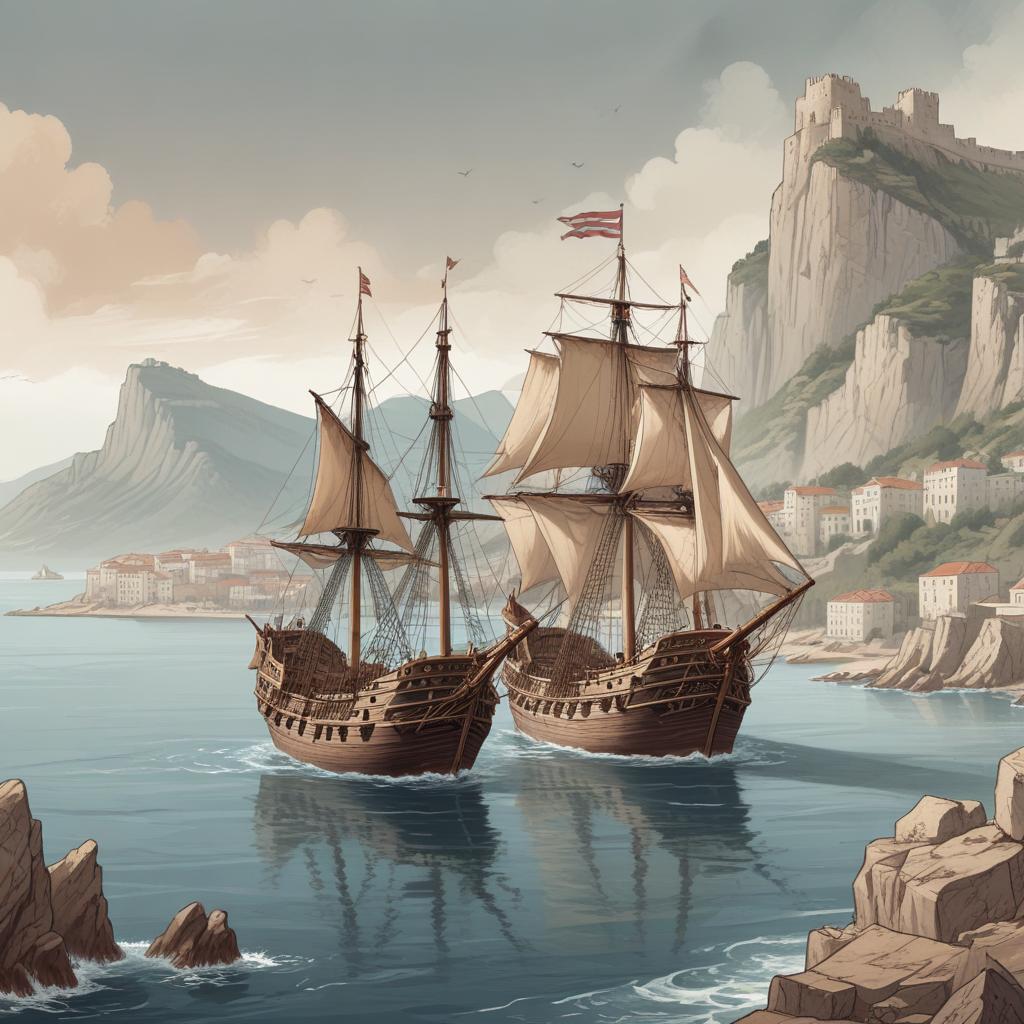
Early History of the Port of Gibraltar
The Port of Gibraltar has a rich and ancient heritage that stretches back to prehistoric times, playing a crucial role in the development of early Gibraltar and its surrounding regions. This ancient port, strategically located at the entrance to the Mediterranean Sea, was a key point for maritime activities and cultural exchanges even in antiquity. The early history of the Port of Gibraltar reveals its importance as a hub for trade, military, and navigation that shaped the course of the region’s history.
Archaeological evidence indicates that human activity in the area around the port dates back to prehistoric times. The natural harbor provided shelter to early settlers and fishermen who utilized its calm waters and abundant marine resources. These early inhabitants were likely involved in basic trading and communication along the shores of what would become a vital crossroads of civilizations. The geographical advantage of the port made it a favored location for settlement and maritime purposes from a very early period.
During classical antiquity, the Port of Gibraltar gained further significance. Ancient civilizations, including the Phoenicians, Carthaginians, and Romans, recognized the strategic importance of the port. It served as a critical waypoint for ships navigating between the Atlantic Ocean and the Mediterranean Sea. The port not only facilitated commercial exchanges but also played a role in military campaigns in the region due to its location near the Strait of Gibraltar.
Historical records and archaeological findings point to the port’s use as an anchorage and supply point, supporting the expansionist ambitions of these ancient cultures. Its waters offered safe haven from storms and a refueling stop for merchant vessels and naval fleets alike. The early Gibraltar port was thus central to maritime routes that connected various ancient economies and cultures, contributing significantly to the Port of Gibraltar history and its legacy.
In summary, the early history of the Port of Gibraltar marks it as one of the oldest and most strategically vital harbors in the Mediterranean basin. From prehistoric fishermen and settlers to the great civilizations of classical antiquity, the port’s enduring importance is evident. Its role in trade, defense, and navigation set the foundation for Gibraltar’s continuing prominence in maritime history and early Gibraltar development.
Prehistoric and Roman Era Significance
Archaeological findings have revealed that prehistoric Gibraltar was a significant area long before the advent of recorded history. Evidence from caves such as Gorham’s Cave indicates human presence dating back tens of thousands of years, showcasing early habitation and tool use. This prehistoric Gibraltar served as a crucial refuge for Neanderthals and later early modern humans, highlighting its importance as a settlement. The area’s natural geography also made it a suitable location for early maritime activity, with its coastline offering shelter for primitive boats and early forms of water transport.
During the Roman period, Gibraltar’s strategic location became even more pronounced. Known historically as Mons Calpe, one of the famed Pillars of Hercules, the region was a critical point for ancient shipping and navigation between the Mediterranean and the Atlantic. The Romans recognized the value of the port, utilizing it as a naval base and a hub for commerce. Roman artifacts and structural remains near the port area demonstrate organized maritime activities and the integration of Gibraltar into the broader trade networks of the empire. The use of this Roman port facilitated the movement of goods, troops, and cultural exchange, solidifying Gibraltar’s role as a vital maritime gateway in antiquity.
Medieval and Moorish Period
The port of Gibraltar held immense strategic importance during the Moorish occupation and throughout the medieval period. Known as a key Islamic era stronghold, Moorish Gibraltar became a vital maritime hub that connected the Mediterranean with the Atlantic. The medieval port history of Gibraltar is deeply intertwined with Moorish military and trade advancements which reshaped its role as a significant fortress and commercial center.
Under Moorish control, the port was fortified and expanded to safeguard against incursions by rival powers. Its position at the entrance of the Mediterranean Sea gave it control over naval traffic and crucial trade routes, reinforcing its status as a pivotal gateway between continents. During the Islamic era, the port supported both military operations and the flourishing of trade with the wider Al-Andalus region and beyond.
The development of Moorish Gibraltar’s port involved building docks, warehouses, and defensive walls, making it a fortified maritime center resistant to medieval sieges. This period saw the integration of advanced Moorish architectural and engineering techniques, which enhanced the port’s functionality and defense mechanisms. Thus, the port was not just a maritime passage but a strategic military bastion that played a crucial role in medieval port history.
Overall, the medieval and Moorish period established the foundation for Gibraltar’s long-lasting significance as a key maritime stronghold. The legacy of this era continues to influence its historical identity and strategic importance to this day.
Strategic Importance During British Rule
Under British control, the port of Gibraltar underwent a significant transformation, evolving into a critical military and naval hub from the 18th century onward. The strategic location of British Gibraltar at the crossroads of the Mediterranean Sea and the Atlantic Ocean made it an indispensable naval base, essential for the projection of British maritime power and the protection of its imperial interests.
The British recognized early on that controlling Gibraltar meant dominating naval passage between the Atlantic and the Mediterranean. This led to substantial investments in turning the port into a heavily fortified military port. Extensive fortifications were built, including vast underground tunnels and batteries, designed to defend against both sea and land attacks. These fortifications not only served military purposes but also symbolized Britain’s resolve to maintain control over this strategic outpost.
The naval base at Gibraltar developed as a vibrant centre for the British Royal Navy, serving as a vital repair, resupply, and refit station for naval vessels operating in the Mediterranean. This was especially crucial during times of conflict, such as the Napoleonic Wars and both World Wars, when Gibraltar’s naval facilities supported operations that were pivotal in maintaining British maritime dominance.
Throughout British rule, the port adapted to the changing nature of naval warfare. Infrastructure improvements included dry docks, ammunition depots, and advanced communication systems to coordinate naval activities. The military port also became a hub for intelligence and surveillance, monitoring crucial shipping lanes and potential threats in the region. This continuous evolution ensured that British Gibraltar remained a key strategic asset throughout the period.
By the 20th century, the naval base’s importance expanded beyond military functions, influencing local economy and society. The presence of the British military brought with it a diverse influx of personnel and resources, which further cemented Gibraltar’s role as a pivotal military port. Today, the legacy of British naval and military developments continues to define the port’s identity, highlighting its enduring strategic significance.
Capture and Transformation in 1704
The capture of Gibraltar in 1704 marked a pivotal moment in the history of the port and the wider region. During the War of the Spanish Succession, an Anglo-Dutch fleet launched a successful siege against the Spanish-held fortress, culminating in the city’s surrender after a prolonged and intense struggle. This 1704 siege was a carefully planned military operation involving naval and land forces, aimed at gaining control of a strategic point at the entrance to the Mediterranean Sea.
Following the capture of Gibraltar, the port underwent a significant transformation. Once a fortified Spanish stronghold, it rapidly evolved into a crucial naval base for the British Empire. The port’s role shifted from primarily local and regional trade functions to becoming a key military and logistical hub that supported British naval dominance in the Mediterranean. This transition facilitated increased maritime traffic and enhanced Gibraltar’s importance as a gateway between the Atlantic Ocean and the Mediterranean Sea.
The changes after the 1704 siege not only altered the control of the territory but also redefined the port’s strategic and economic functions. Over time, Gibraltar’s development as a fortified naval dockyard and supply center underscored its newly acquired geopolitical significance. The port’s transformation after the capture of Gibraltar ensured it remained a cornerstone of British naval operations for centuries, shaping its legacy well into the modern era.
Role in the World Wars
The Port of Gibraltar played a crucial strategic role during both World War I and World War II, serving as a vital military operations port and naval base. Its geographic position at the entrance to the Mediterranean Sea made it an indispensable asset for controlling naval traffic and securing Allied maritime dominance. During World War I, Gibraltar functioned as a key logistics hub, facilitating the movement of troops, supplies, and equipment between the Atlantic and the Mediterranean theaters. The port’s facilities were expanded to accommodate increased military traffic, allowing for the efficient repair and resupply of vessels engaged in maritime patrols and convoy escorts.
In World War II, the port’s significance intensified as it became one of the most fortified naval bases in the region. The World War II naval base at Gibraltar served as a launching point for Allied operations in the Mediterranean and North Africa campaigns. It enabled rapid deployment of warships and submarines, as well as air support operations. Gibraltar’s strategic location allowed Allied forces to monitor and intercept Axis naval movements, helping to secure vital supply routes. Additionally, the port’s extensive military infrastructure supported complex logistics operations, including munitions storage, vessel refueling, and crew rotations.
Throughout both conflicts, the Port of Gibraltar’s military operations port status was pivotal in maintaining naval superiority and enabling successful military campaigns. Its ability to accommodate large fleets and serve as a secure base of operations underscored its importance in the broader Allied strategy. Today, the legacy of its wartime role remains a significant chapter in Gibraltar’s history.
Modern Development and Economic Role
Following the turbulent years of World War II, the Port of Gibraltar underwent significant transformation to emerge as a modern port Gibraltar proud to be a vital commercial and shipping hub. The post-war period marked an era of extensive redevelopment, modernization, and expansion, aimed at enhancing its operational capabilities and economic importance in the region.
Investments in modern infrastructure were pivotal to this evolution. The port saw the construction of new docks, warehouses, and advanced cargo handling facilities, catering to the increasing demands of international trade. The expansion of container terminals and improvements in logistics technology enabled the port to handle larger volumes of shipping traffic with greater efficiency. These developments firmly positioned the Port of Gibraltar as a critical node in global shipping routes.
The modern port Gibraltar utilizes state-of-the-art navigation and security systems, ensuring safe and rapid turnaround times for vessels. This blend of traditional maritime heritage and contemporary technology has attracted a diverse range of maritime activities, from commercial shipping and bunkering to ship repair and logistics services. As a result, the port plays a crucial economic role, not only for Gibraltar but also for the broader Mediterranean trade network.
Economically, the port’s role extends beyond shipping operations. It supports thousands of jobs in related sectors such as freight forwarding, customs brokerage, and maritime services. Revenues generated from port activities contribute significantly to Gibraltar’s economy, underpinning its development as a commerce and finance center. Moreover, its strategic location continues to draw multinational companies seeking efficient maritime access to Europe, Africa, and beyond.
In summary, the post-war development of the Port of Gibraltar as a modern port Gibraltar facilitates has reinforced its status as a premier shipping hub with considerable economic importance. Through continuous modernization and strategic growth, it remains a vital gateway for maritime trade, supporting both regional prosperity and international commerce.
Expansion and Modernization Efforts
In recent years, the Port of Gibraltar has undergone significant port expansion initiatives aimed at boosting its capacity and operational efficiency. These expansion efforts have involved the construction of new docks and berths, allowing the port to accommodate larger vessels and an increased volume of cargo. This growth has not only enhanced the port’s ability to serve as a key maritime hub but also strengthened its competitive position in the region.
Alongside physical expansion, substantial investments have been made in upgrading the infrastructure throughout the port. Modern facilities, including advanced cargo handling systems and state-of-the-art storage warehouses, have been introduced to streamline operations and improve turnaround times. These improvements help ensure that the port continues to meet the needs of modern shipping while adhering to stringent safety and environmental standards.
Technology integration plays a critical role in the port’s modernization strategy. Digital systems for vessel tracking, automated logistics management, and electronic customs processing have been implemented to enhance transparency and efficiency. By leveraging smart technologies and innovative solutions, the Port of Gibraltar has transformed into a modern maritime facility capable of supporting increasing trade demands and providing superior service to shipping clients worldwide.
Current Economic and Strategic Significance
The Port of Gibraltar plays a vital role in the economic impact of the region, serving as a cornerstone for the local economy. Its strategic location at the crossroads of Europe and Africa, alongside the entrance to the Mediterranean Sea, makes it a critical hub for global shipping routes. The port facilitates a substantial volume of maritime traffic, enabling efficient trade and commerce that significantly contribute to Gibraltar’s economic vitality.
In addition to shipping, the port is a magnet for tourism, attracting numerous cruise ships and visitors each year. This influx of tourists fuels local businesses, including hotels, restaurants, and retail, further amplifying the economic benefits derived from the port’s activities. The dynamic tourism sector complements the bustling shipping industry, making the port a dual economic engine for Gibraltar.
Moreover, Gibraltar’s enduring military presence highlights the port’s strategic significance. The naval facilities support defense operations and serve as a base for various international military collaborations. This presence not only underlines the port’s strategic location but also contributes to the local economy through job creation and infrastructure development connected to military needs.
Overall, the Port of Gibraltar remains a pivotal asset, seamlessly combining its economic impact with strategic maritime importance. Its continued influence on the shipping industry, tourism, and military operations secures its position as a vital hub in the region today.

I have always been captivated by the unique cultural tapestry of the Rock, particularly how Moorish, Spanish, and British influences shaped its development over centuries. My passion lies in translating these complex historical narratives into engaging educational resources that make Gibraltar’s past accessible to everyone. I spend my free time exploring military fortifications and reading first-hand accounts of life at the Pillar of Hercules.