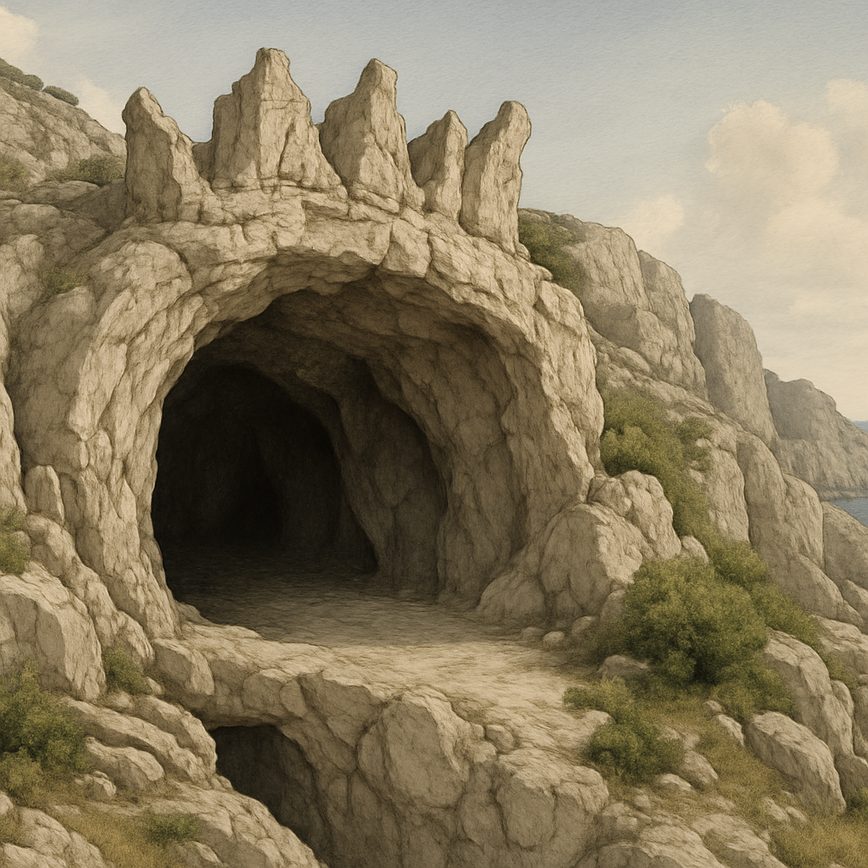
Overview of Nefertiti’s Crown Cave Gibraltar
Nefertiti’s Crown cave, located in the striking landscape of Gibraltar, is a site of immense archaeological and historical significance. Nestled within the limestone cliffs that characterize this British Overseas Territory, the cave is part of a series of natural formations that have fascinated historians, archaeologists, and visitors alike. Its unique name, Nefertiti’s Crown, derives from the striking resemblance of the cave’s rock formations to the iconic headdress worn by Queen Nefertiti, the famous Egyptian queen known for her beauty and influence during the 14th century BCE.
This Gibraltar cave stands out among the region’s many historic sites due to both its geological features and the cultural narratives it inspires. The symbolism connected to Nefertiti emerges not only from physical similarity but also from an evocative link to ancient history and mystery. While there is no direct archaeological evidence tying the site to ancient Egyptian presence, the evocative name helps to underscore the cave’s enigmatic allure and invites a deeper exploration of human history in this intersection of Europe and Africa.
Archaeologists have recognized Nefertiti’s Crown cave as a valuable source of information concerning prehistoric human activity in Gibraltar. The cave’s geological structure has preserved tools, artifacts, and fossilized remains that shed light on the lives and environments of early humans. These findings contribute to a broader understanding of Gibraltar’s role as a crossroads of civilizations over millennia. Whether for shelter, ritual, or refuge, the cave’s use throughout history continues to be a subject of active research and fascination.
For visitors and scholars, Nefertiti’s Crown cave offers a compelling glimpse into the layers of history embedded within Gibraltar’s rugged terrain. As one of the historic sites that highlight the area’s rich archaeological importance, it stands as a testament to the enduring human connection to nature and heritage. The cave not only enriches the story of Gibraltar’s past but also celebrates the cultural threads that link distant worlds—from the shimmering Nile to the windswept Rock of Gibraltar.
Geological Features and Landscape
Nefertiti’s Crown cave showcases a fascinating example of cave geology, offering visitors an opportunity to explore the intricate rock formations that define Gibraltar’s unique subterranean landscape. The cave’s structure is primarily composed of limestone, which has been naturally sculpted over millennia by water erosion and mineral deposition. This process has given rise to an array of stalactites, stalagmites, and flowstones within the cave, each formation contributing to the cave’s mysterious and majestic atmosphere.
The Gibraltar landscape surrounding Nefertiti’s Crown cave is equally impressive. Characterized by steep cliffs and rugged terrain, the region is a testament to the dynamic geological forces at play. The caves embedded in the limestone cliffs reveal the complex interaction between the earth’s tectonic activity and the erosive power of the Mediterranean Sea. This dynamic environment has fostered a wide variety of mineral deposits and rock textures, each telling a story of ancient environmental conditions.
Inside the cave, visitors can observe cross-bedded rock layers and calcite crystals that sparkle under the cave’s natural lighting conditions, highlighting the diversity of Gibraltar’s rock formations. The geological makeup of Nefertiti’s Crown cave not only presents a captivating natural exhibit but also serves as a critical resource for scientists studying cave geology and the evolution of the Gibraltar landscape over time.
Historical and Cultural Context
The cave known as Nefertiti’s Crown in Gibraltar holds a rich historical context deeply intertwined with the cultural significance of the region. Gibraltar has long been a strategic point connecting Europe and Africa, serving as a crossroads for ancient civilizations. The cave’s historical context is highlighted by its possible links to ancient Mediterranean cultures that once inhabited or passed through the area, including the Phoenicians, Romans, and Moors. These civilizations recognized Gibraltar not only for its military and navigational importance but also for its natural features, including caves that held cultural or religious significance.
From a cultural standpoint, the cave represents a tangible connection to Gibraltar’s layered history. It exemplifies how natural landmarks become embedded with cultural meaning, often linked to local legends or historical figures—potentially even those dating back to ancient dynasties, given the cave’s intriguing name associating it with the iconic Egyptian queen Nefertiti. Although definitive historical evidence directly linking the cave to Nefertiti is limited, the cave symbolizes the melding of myth and history essential to understanding Gibraltar’s cultural heritage. This multifaceted significance enriches Gibraltar history, underscoring the region’s role as a custodian of diverse cultural narratives.
In summary, the historical and cultural context of Nefertiti’s Crown cave in Gibraltar reflects the area’s longstanding importance as a hub of human activity, cultural exchange, and myth-making. Its legacy continues to captivate historians, archaeologists, and visitors intrigued by Gibraltar’s unique intersection of history and culture.
Exploration and Archaeological Discoveries
The cave known as Nefertiti’s Crown in Gibraltar has become a significant site for archaeology Gibraltar enthusiasts and professionals alike. The efforts to explore this enigmatic cave have been meticulous and methodical, involving a series of cave explorations conducted by teams of archaeologists and speleologists. Their goal has been to uncover the historical layers hidden within its depths and to document the artifacts discovery that sheds light on the region’s prehistoric and ancient human activity.
These cave explorations have revealed a remarkable collection of artifacts that span various periods in history. Items found include stone tools, pottery shards, and remnants of ancient hearths, each telling a story of survival, adaptation, and cultural development. The artifacts discovery in Nefertiti’s Crown cave provides crucial evidence about the human occupation of Gibraltar, offering clues to how early societies interacted with their environment and with each other.
The archaeological team’s systematic approach involved careful excavation and preservation practices, ensuring that the context of each discovery was maintained. This approach allows for a more accurate interpretation of the site’s historical significance and helped to establish a chronological timeline that aligns with other known archaeological sites in Gibraltar. The findings contribute to a broader understanding of human migration, settlement patterns, and technological advancement in the area.
Moreover, the implications for history and science are profound. The artifacts and data collected at the Nefertiti’s Crown cave not only enrich local history but also provide comparative material for researchers studying early human cultures in the Mediterranean and beyond. This enhances our understanding of how ancient communities adapted to changing climates and landscapes, and how they developed cultural and survival strategies over millennia.
Continuous archaeology Gibraltar efforts in this cave have also sparked interest in conservation and heritage preservation, emphasizing the importance of protecting such sites for future generations. Each artifact discovery is a piece of a larger puzzle, helping historians and scientists piece together the story of human civilization in Gibraltar, making the Nefertiti’s Crown cave a vital link in the archaeological record.
Notable Findings in the Cave
Nefertiti’s Crown cave in Gibraltar has yielded a remarkable array of archaeological findings that provide invaluable insights into ancient human activity and environmental conditions in the region. Among the most significant cave discoveries are a collection of well-preserved artifacts and remains that date back thousands of years. These include stone tools meticulously crafted for hunting and daily use, which highlight the technological ingenuity of the cave’s early inhabitants.
In addition to tools, archaeologists have uncovered bone fragments and charcoal remnants, which suggest that the cave was a site of prolonged human occupation and possibly ritualistic practices. The variety and condition of these artifacts offer crucial evidence about the lifestyle, diet, and survival strategies of prehistoric communities in Gibraltar. Such findings help trace the evolution of human behavior and the adaptation to changing climates and environments.
Furthermore, the discovery of ornamental objects and fragments of pottery enriches our understanding of the cultural and social dynamics within these early groups. These archaeological findings contribute to a broader narrative about trade, interaction, and cultural exchange in the Mediterranean basin. Overall, Nefertiti’s Crown cave stands as a vital archaeological site, preserving direct links to the distant past through its diverse cache of artifacts and remains.
Ongoing Research and Future Prospects
Current archaeological research at the Nefertiti’s Crown cave in Gibraltar is unveiling new insights into the area’s rich historical significance. Scientists and archaeologists are employing advanced scientific studies, including carbon dating and 3D imaging, to analyze artifacts and the cave’s geological structure. These efforts are helping to build a more comprehensive understanding of the site’s usage over millennia and its cultural connections.
Researchers are collaborating internationally to ensure multidisciplinary approaches, combining archaeology with geology, paleontology, and anthropology. This integrative scientific study enhances the accuracy of historical interpretations and reveals previously unnoticed details about human activity and environmental conditions within the cave. The results are promising, illustrating a dynamic past that might reshape current historical timelines associated with the region.
Looking ahead, future excavations are planned to extend beyond the currently explored areas, aiming to uncover more artifacts and structural features of the cave. These potential excavations are designed to use minimally invasive technologies to protect the cave’s integrity while extracting maximum information. This forward-thinking approach not only preserves the site but also ensures that future generations can continue studying its secrets.
Ongoing and forthcoming scientific studies and archaeological research at Nefertiti’s Crown cave highlight a commitment to uncovering deeper historical narratives. By integrating new technologies with traditional methodologies, researchers are optimistic about revealing even more fascinating discoveries that will enrich our understanding of this remarkable site.
Visitor Information and Tourism
For tourists interested in exploring the marvel of Nefertiti’s Crown cave, tourism in Gibraltar offers a unique and memorable experience. The cave is accessible to visitors through organized cave visits that prioritize safety and provide in-depth knowledge guided by expert visitor guides. Whether you are a seasoned spelunker or a casual tourist, understanding the logistics of visiting this natural wonder will enhance your trip significantly.
Accessibility to Nefertiti’s Crown cave is well-considered, with pathways and marked routes designed to accommodate a variety of visitors. Although the cave terrain can be uneven and slightly challenging in some parts, guides ensure that all visitors move safely while enjoying the stunning geological formations. It is advisable to wear sturdy shoes and comfortable clothing suited for moderate walking and occasional crouching inside the cave.
Tourism Gibraltar thrives on providing exceptional experiences, and tours to Nefertiti’s Crown cave are no exception. Visitor guides are knowledgeable and passionate about the cave’s history, geology, and cultural significance. These tours typically last around 1 to 2 hours, offering ample time for exploration and photography while providing rich context about the site’s discovery and preservation efforts.
Safety guidelines are a critical part of Nefertiti’s Crown cave tourism. Visitors are urged to follow all instructions given by guides, avoid touching fragile formations, and stay within designated paths to protect both themselves and the cave environment. The cave is equipped with emergency communication systems, and tours operate within daylight hours to ensure maximum safety.
Before visiting, it is recommended to check weather conditions and book your tour in advance, as the cave is a popular destination and has limited daily visitor capacity. Photography is allowed but flash use might be restricted to preserve the delicate ecosystem inside the cave. With proper preparation and respect for the cave’s natural beauty, your visit to Nefertiti’s Crown will be an unforgettable part of your Gibraltar travel itinerary.
For further details on cave visits and to access comprehensive visitor guides, tourism Gibraltar websites and local visitor centers provide up-to-date information, helping you plan a safe and enjoyable adventure at Nefertiti’s Crown.
Access and Guided Tours
Visitors interested in exploring Nefertiti’s Crown cave in Gibraltar can easily access the site through well-marked pathways leading from the main visitor center. To preserve the delicate environment within the cave, access is regulated, and visitors are encouraged to book guided cave tours in advance. These tours provide a comprehensive experience, allowing guests to learn about the cave’s historical significance, geological features, and the legends surrounding Nefertiti’s Crown.
Guided cave tours are conducted by knowledgeable guides who ensure a safe and informative visit. The tours typically last around 60 to 90 minutes, during which visitors will be equipped with helmets and lights to navigate the cave’s natural formations comfortably. Throughout the tour, guides share captivating stories and insights into archaeological findings, enriching the visitor experience.
Regarding cave access, visitors should wear comfortable footwear suitable for uneven surfaces and be prepared for cooler temperatures inside the cave. Photography may be restricted to protect the site, so checking guidelines with the tour operators beforehand is advisable. Visitor information regarding booking, tour schedules, and group sizes is readily available on the official Gibraltar tourism website and at the visitor center, ensuring a smooth and enjoyable adventure.
Overall, the combination of regulated cave access and well-organized guided cave tours offers a unique opportunity to explore this fascinating natural and historical landmark with expert guidance and safety considerations in place.
Preservation Efforts and Responsible Tourism
Preserving the natural beauty and ecological integrity of Nefertiti’s Crown cave in Gibraltar is a priority for environmental protection organizations and local authorities. The cave’s fragile ecosystem requires careful management to prevent damage caused by human activity. Preservation efforts include controlling visitor numbers, monitoring environmental conditions, and implementing strict guidelines to minimize impact. These measures help protect the cave’s delicate formations, native wildlife, and surrounding habitats, ensuring the site remains pristine for future generations.
Tourists play a vital role in the success of cave preservation initiatives through responsible tourism practices. Visitors are encouraged to adhere to established paths, avoid touching or disturbing cave features, and refrain from littering. Educational programs and guided tours raise awareness about the importance of environmental protection, promoting respectful and mindful behavior. By following these guidelines, tourists contribute to preserving the cave’s natural state while enjoying a safe and enriching experience.
Responsible tourism at Nefertiti’s Crown cave not only supports conservation efforts but also helps sustain the local economy by promoting eco-friendly practices. Travelers who respect the environment and local culture demonstrate a commitment to sustainable visitation, which benefits both the cave’s preservation and the community. Ultimately, the success of cave preservation depends on the combined efforts of conservation groups, authorities, and conscientious visitors committed to protecting this unique geological treasure.

I have always been captivated by the unique cultural tapestry of the Rock, particularly how Moorish, Spanish, and British influences shaped its development over centuries. My passion lies in translating these complex historical narratives into engaging educational resources that make Gibraltar’s past accessible to everyone. I spend my free time exploring military fortifications and reading first-hand accounts of life at the Pillar of Hercules.