The history of the Gibraltar garrison is a fascinating narrative shaped by the Rock’s unique strategic position, its diverse population, and the contrasting needs of a military fortress versus a thriving civilian town. For centuries, the educational landscape was defined by a struggle between religious charity, military necessity, and the gradual realization that a permanent civilian population required a structured system of learning. Unlike the systematic development seen in larger nations, education in Gibraltar evolved in a fragmented manner, starting with haphazard charity schools and military garrison classes before eventually coalescing into a more organized government framework. This journey reflects the broader social history of the territory, where British influence intersected with the cultural traditions of the Genoese, Spanish, Jewish, and Maltese communities who made Gibraltar their home.
The Military Garrison and the Roots of Schooling
During the initial decades of British rule following the capture of Gibraltar in 1704, educational provisions were almost exclusively geared toward the children of the British garrison. The authorities prioritized the needs of the military, and any formal instruction was designed to support the regimental lifestyle rather than educate the local civilian population. Soldiers’ children often received rudimentary lessons within the barracks or from regimental schoolmasters, but these were private arrangements meant to maintain literacy among the ranks. The local inhabitants, who were largely foreigners in the eyes of the military establishment, were left to their own devices regarding the intellectual upbringing of their offspring. This period saw a distinct lack of centralized educational policy, as the British government viewed the territory primarily as a fortress and secondarily as a home for a growing polyglot community.
As the civilian population began to swell with immigrants from neighboring Spain, Italy, and Portugal, the absence of schooling became a pressing social issue. The Governor and the colonial administration started to recognize that an uneducated populace could be a liability, particularly in a town that relied heavily on trade and port activities. Consequently, the early 19th century witnessed the first tentative steps toward establishing schools for the “native” children, though these efforts were often sporadic and underfunded. The distinction between the education of the British elite and the working-class locals remained sharp, setting a precedent for social stratification within the education system that would persist for many decades.
The 1804 Foundation of the Charity School System
A significant milestone in the history of Gibraltar’s education occurred in 1804 with the formal establishment of a system of charity schools. This development was largely driven by humanitarian concerns and the influence of religious organizations operating within the colony. The Committee of Public Charities, a body responsible for overseeing philanthropic efforts, took it upon themselves to provide basic education to the children of the poor. These early institutions were not free in the modern sense, as they often required a small pittance from parents, but they were heavily subsidized by public funds and private donations. The curriculum was strictly limited to the three Rs, reading, writing, and arithmetic, with a strong emphasis on religious instruction to instill moral discipline in the lower classes.
The nature of these early charity schools reflected the demographics of Gibraltar at the time. Instruction was often conducted in a chaotic linguistic environment, as the children spoke a mixture of Spanish, Genoese, and English. The schoolmasters, frequently clergymen or retired soldiers, struggled to communicate effectively with their pupils, leading to a reliance on rote memorization and strict corporal punishment to maintain order. Despite these challenges, the charity schools filled a critical void, offering a path to literacy for children who would otherwise have remained completely unlettered. They laid the groundwork for the future expansion of the educational system, proving that there was a substantial demand for schooling among the working-class families of the Rock.
Religious Denominations and Educational Segregation
Throughout the 19th century, the religious history of Gibraltar was reflected in an education system that became deeply entwined with religious denominations, mirroring the situation in the United Kingdom during the same era. The Protestant and Catholic communities operated separate schools, a division that naturally arose from the distinct cultural and linguistic identities of the population. The Catholic majority, largely descended from Genoese and Spanish settlers, relied heavily on religious orders to provide education, as the state was reluctant to fund Catholic institutions directly. Meanwhile, the Protestant minority, consisting mainly of British expatriates and some Protestant foreigners, established their own schools to preserve their Anglican traditions and the English language. This denominational split created a parallel system of education that rarely intersected.
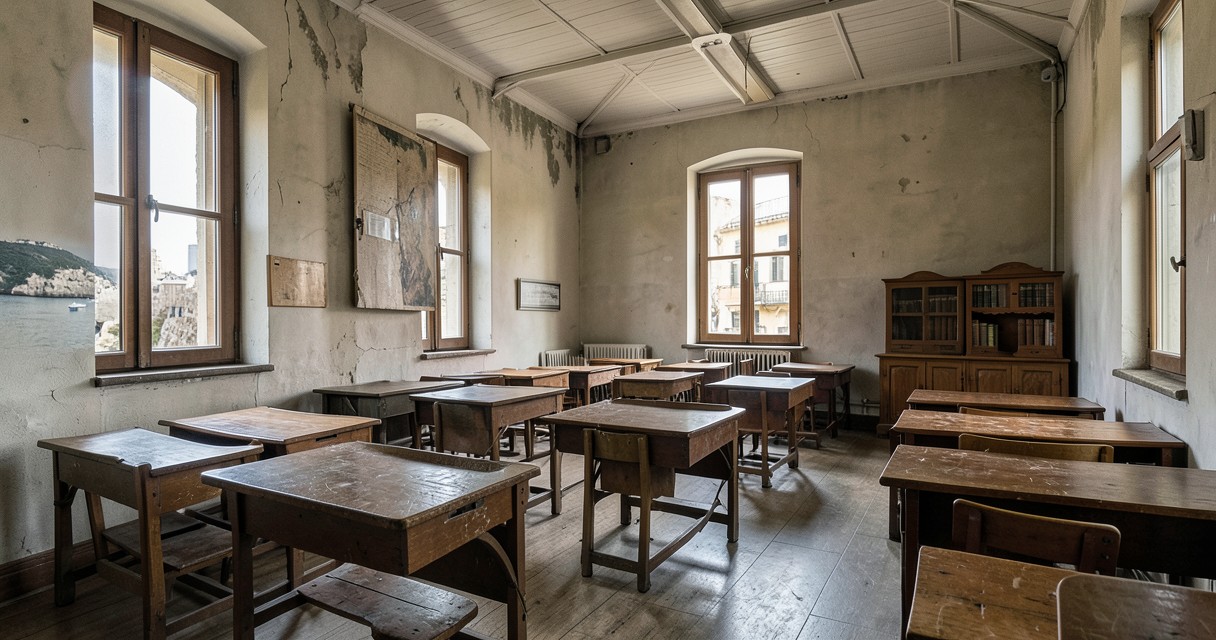
The funding for these denominational schools was a constant source of friction between the church authorities and the colonial government. While the state provided grants to some institutions, the funding was often insufficient to cover the costs of adequate buildings and trained teachers. The Catholic schools, in particular, faced financial hardship despite serving the vast majority of the local children. This era was characterized by a lack of uniformity in standards, where a child’s educational experience depended entirely on which religious order happened to run the school in their neighborhood. The curriculum in Catholic schools often included Italian and Spanish, reflecting the cultural heritage of the students, while Protestant schools maintained a rigidly English-only focus.
The Arrival of the Christian Brothers
The appointment of the Irish Christian Brothers to Gibraltar in 1835 marked a turning point in the history of male education on the Rock. Invited by the Vicar Apostolic to address the shortcomings in the education of Catholic boys, the Brothers brought with them a rigorous educational philosophy and a reputation for discipline. They established schools that quickly gained a reputation for academic excellence and strict moral guidance. The Christian Brothers introduced a more structured approach to the curriculum, expanding beyond basic literacy to include subjects like history, geography, and bookkeeping. Their presence provided a stable and professional framework for boys’ education, which had previously suffered from a lack of qualified teachers and consistent oversight.
Under the guidance of the Christian Brothers, the schools became known for producing young men who were well prepared for commercial life in the port or for further studies. Their methods were severe by modern standards, but they were effective in raising the standard of education for the local male population. The success of the Brothers created a demand for similar high-quality instruction for girls, highlighting the gender disparity in the educational opportunities available at the time. The legacy of the Christian Brothers in Gibraltar is enduring, as they effectively professionalized the teaching profession and set a benchmark for what primary education could achieve with proper organization and leadership.
The Loreto Nuns and the Education of Girls
Parallel to the developments in boys’ education, the arrival of the Loreto Nuns in the 1840s significantly advanced the schooling of girls in Gibraltar. The Institute of the Blessed Virgin Mary, commonly known as the Loreto Sisters, established a convent and school that focused on the intellectual and spiritual formation of young women. Before their arrival, educational options for girls were extremely limited, often restricted to basic needlework and domestic skills provided by lay teachers or other charitable institutions. The Loreto Nuns introduced a comprehensive academic curriculum for girls, challenging the prevailing social norms that viewed advanced education as unnecessary for women. They taught reading, writing, arithmetic, and languages, proving that girls were just as capable of academic pursuit as their male counterparts.
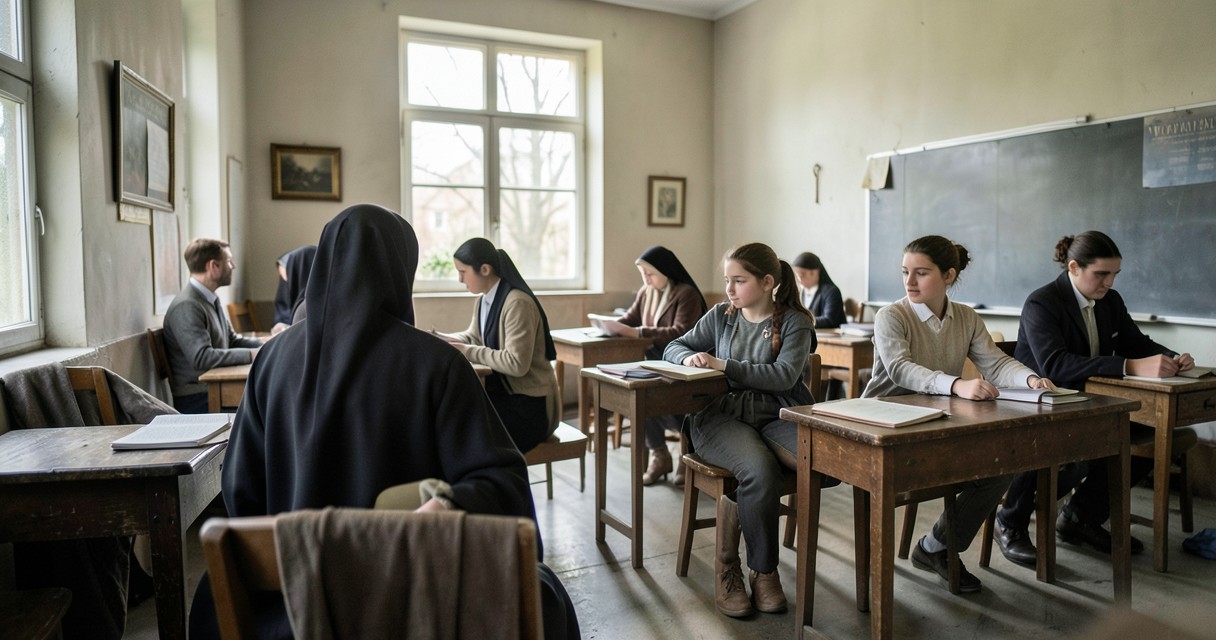
The impact of the Loreto Nuns extended beyond the classroom, as they played a vital role in the social fabric of the community. Their schools became centers of culture and refinement, attracting students from the more affluent families as well as scholarship students from the poorer districts. By providing a structured and rigorous education to girls, the Loreto order helped to elevate the status of women in Gibraltarian society. They produced generations of educated women who could enter the teaching profession themselves, creating a sustainable cycle of female education. This period was crucial in breaking down the barriers that had previously relegated half the population to the domestic sphere, laying the foundation for a more educated and progressive workforce.
The 1893 Education Commission and Reform

I have always been captivated by the unique cultural tapestry of the Rock, particularly how Moorish, Spanish, and British influences shaped its development over centuries. My passion lies in translating these complex historical narratives into engaging educational resources that make Gibraltar’s past accessible to everyone. I spend my free time exploring military fortifications and reading first-hand accounts of life at the Pillar of Hercules.