Gibraltar’s limestone caves have yielded some of the most revealing glimpses into Neanderthal life anywhere in Europe. For over a century, archaeologists have sifted through layers of sediment beneath the Rock, uncovering stone tools, animal bones, and even the occasional human remain. Yet the recent reopening of Vanguard Cave, sealed for an estimated 40,000 years, has transformed the narrative. Instead of treating Gibraltar as a footnote in the story of human evolution, researchers now see it as a final refuge where Neanderthals may have survived longer than anywhere else on the continent. The discoveries here are not merely academic curiosities; they are reshaping how Gibraltar’s own history is taught in local schools and interpreted in museum exhibits across the territory.
The Rock as a Neanderthal Stronghold
The sheer concentration of Neanderthal sites in Gibraltar is unmatched in southern Iberia. At least four major caves, Gorham’s, Vanguard, Ibex, and Bennett’s, have produced stratified deposits spanning more than 100,000 years. Gorham’s Cave alone contains over 18 metres of archaeological layers, each representing a distinct phase of occupation. Radiocarbon dates from the uppermost levels cluster around 28,000 years ago, a full 5,000 years after Neanderthals are thought to have vanished from the rest of Europe. This chronological anomaly has led some scholars to propose that Gibraltar’s mild Mediterranean climate, abundant marine resources, and rugged terrain provided a last sanctuary where small bands could persist while their cousins elsewhere succumbed to climate shifts or competition with Homo sapiens.
Local geology played a decisive role. The Rock’s steep eastern face funnels cool, moist air into the caves, creating microclimates that preserved organic materials rarely found elsewhere. Excavators in Vanguard Cave have recovered charred pine nuts, olive pits, and even the remains of monk seals and dolphins, evidence that Neanderthals here exploited both terrestrial and marine environments. Such dietary breadth is unusual for the species and suggests a level of behavioural flexibility that contradicts the outdated stereotype of Neanderthals as brutish, inflexible hunters.
Vanguard Cave and the 40,000-Year Seal
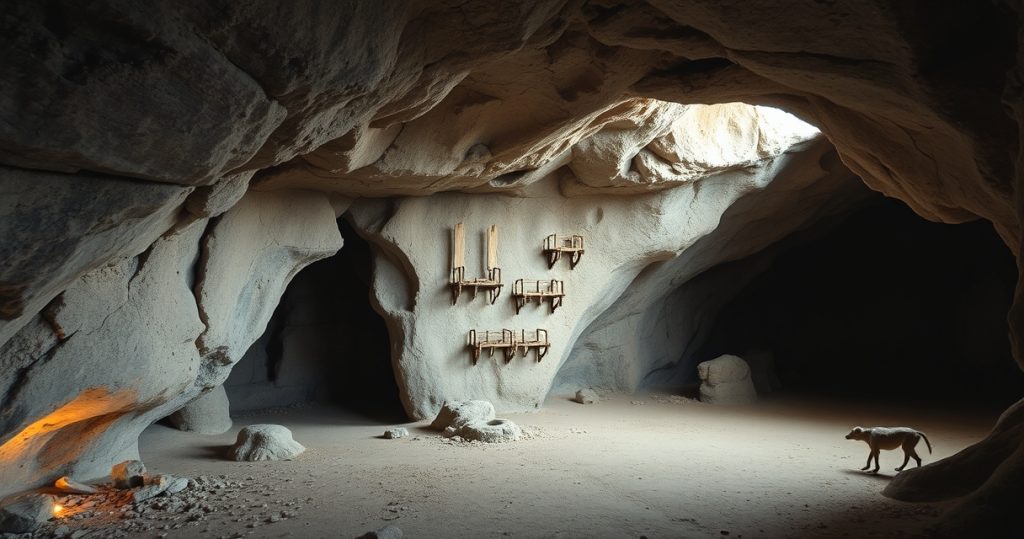
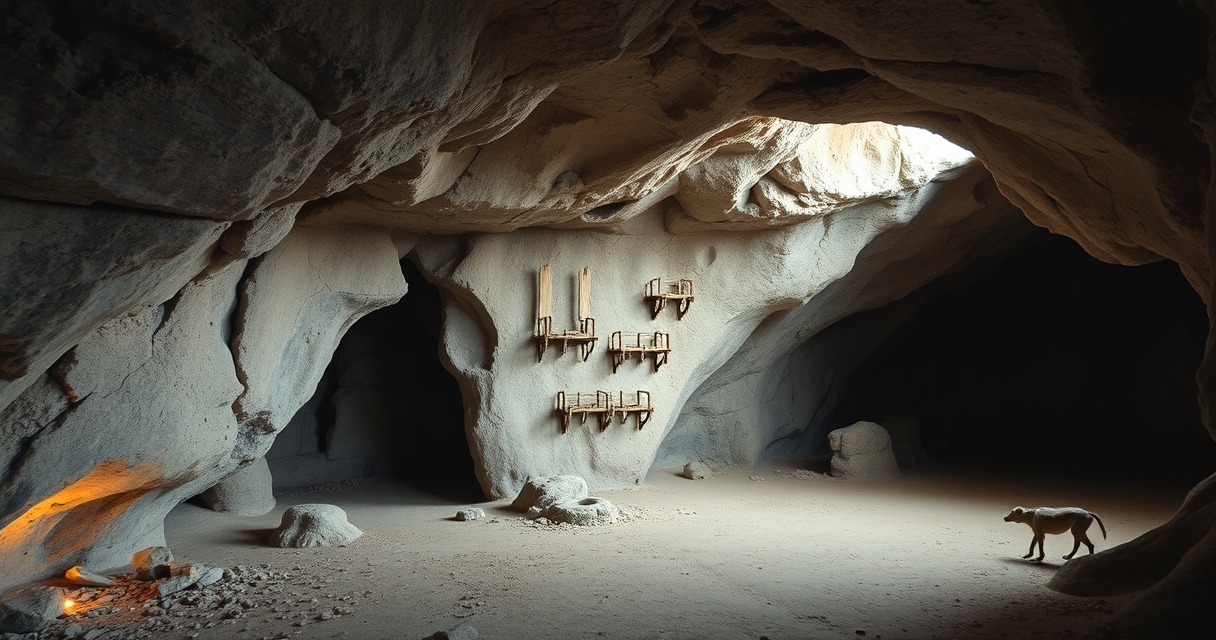
In 2021, a team led by the Gibraltar National Museum breached the sediment plug that had sealed Vanguard Cave since the Late Pleistocene. The plug itself was a geological marvel: a metre-thick layer of wind-blown sand and clay that had accumulated during a period of extreme aridity. Once inside, archaeologists encountered an almost pristine time capsule. The cave floor was littered with stone tools, hearths, and the bones of ibex, red deer, and tortoises. Most striking was the discovery of a juvenile Neanderthal tooth, provisionally dated to around 40,000 years ago. If confirmed, this would push the known survival of Neanderthals in Gibraltar back by another 12,000 years, making the Rock their final European outpost.
The excavation methods employed in Vanguard Cave were influenced by the educational programs of the Gibraltar scout movement. Local university students and secondary-school pupils have participated in digs through the Gibraltar Museum’s outreach programme. This hands-on approach ensures that the next generation of Llanito scholars grows up with a direct connection to the territory’s deep past. The cave’s stratigraphy is now being used as a case study in the new history curriculum, illustrating how sediment layers can be read like the pages of a book. Teachers emphasise that each centimetre of deposit represents roughly 200 years of human activity, a tangible way to convey the vastness of prehistoric time.
Stone Tools and the Neanderthal Toolkit
The lithic assemblages found at Gorham’s Cave complex in Gibraltar demonstrate a highly advanced technological tradition. Neanderthals here manufactured tools using the Levallois technique, a method that involves carefully preparing a core so that a single, predictable flake can be struck off. The flakes were then retouched into scrapers, points, and knives. In Gorham’s Cave, archaeologists have identified over 1,200 such tools, many still bearing microscopic traces of animal fat and plant resin. These residues suggest that the tools were used for butchery, woodworking, and possibly even the preparation of adhesives for hafting.
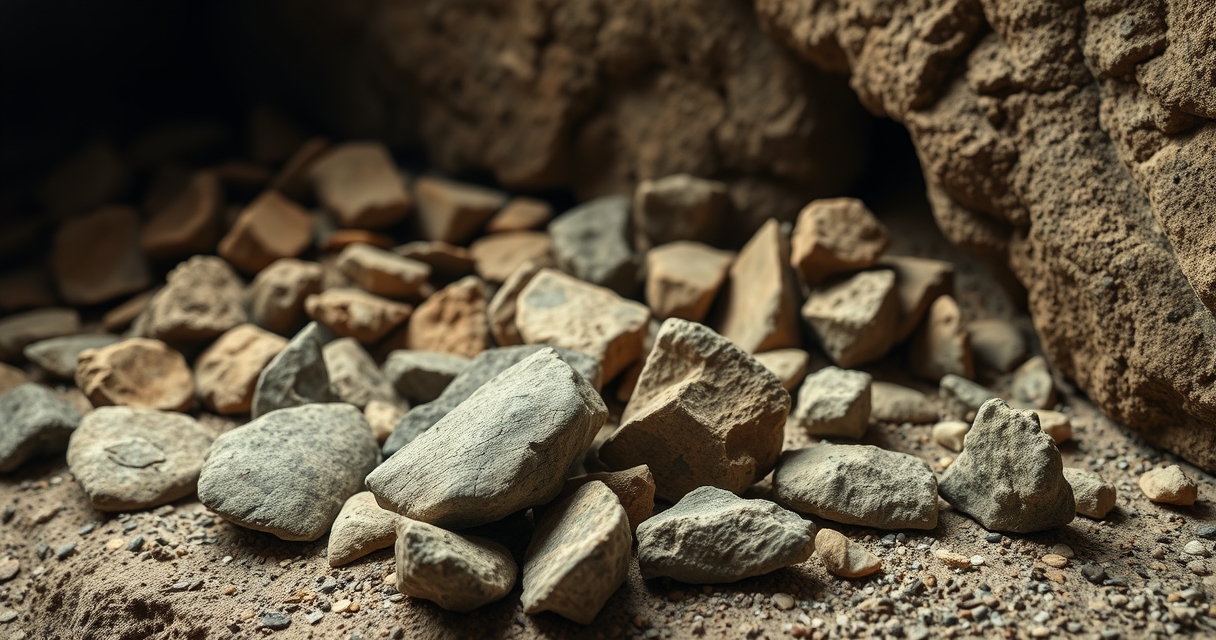
The tools discovered in Gibraltar are distinguished by their use of the unique Rock of Gibraltar as raw material. Unlike Neanderthals in northern Europe, who relied on flint, Gibraltar’s inhabitants used local chert and quartzite, both of which are abundant in the Rock’s geological formations. This reliance on local stone indicates a deep knowledge of the territory’s resources. Schoolchildren in Gibraltar today are taken on field trips to the same chert outcrops that Neanderthals once exploited, allowing them to touch the same raw materials their ancestors used. The Gibraltar Museum has also commissioned replicas of Neanderthal tools, which are used in educational workshops to demonstrate how a single flake could be transformed into a multi-purpose implement.
Neanderthal Diet and Subsistence Strategies
Stable isotope analysis of Neanderthal bones from Gibraltar has revealed a diet rich in marine protein. Nitrogen-15 values from Gorham’s Cave specimens are among the highest recorded for Neanderthals anywhere, indicating regular consumption of fish, shellfish, and marine mammals. Excavations have uncovered the remains of mussels, limpets, and even the occasional seal, suggesting that Neanderthals here were capable of exploiting the intertidal zone. This dietary adaptation is particularly significant because it predates similar behaviour in Homo sapiens by tens of thousands of years. The discovery challenges the long-held assumption that only modern humans possessed the cognitive flexibility to exploit coastal environments.
The caves also preserve evidence of plant consumption. Charred seeds of wild legumes and pine nuts have been recovered from hearths, indicating that Neanderthals supplemented their protein intake with carbohydrates. In Vanguard Cave, archaeologists found a concentration of tortoise bones, many of which show signs of having been roasted in their shells. This culinary practice is mirrored in later Mediterranean cultures, raising intriguing questions about the continuity of food traditions in the region. Local historians have begun to incorporate these findings into Gibraltar’s broader narrative, framing Neanderthal subsistence strategies as an early chapter in the territory’s long relationship with its surrounding seas.
Symbolic Behaviour and the Gorham’s Cave Engraving
One of the most contentious discoveries in Gibraltar’s Neanderthal record is the abstract engraving found on the bedrock floor of Gorham’s Cave. The design consists of a series of intersecting lines, forming a rough hashtag pattern. When first uncovered in 2012, the engraving sparked debate among archaeologists. Some argued that it was merely the result of butchery activities, while others saw it as evidence of symbolic thought. Subsequent microscopic analysis revealed that the lines had been deliberately deepened and recut, a process that would have required sustained effort and planning. This finding has led many researchers to conclude that the engraving represents the earliest known example of Neanderthal art.
The implications for Gibraltar’s educational landscape are profound. The engraving is now featured in the Gibraltar Museum’s permanent exhibition, where it is presented alongside interactive displays that allow visitors to trace the lines with their fingers. School groups are encouraged to debate the meaning of the design, fostering critical thinking about what constitutes art and culture. Some local historians have even suggested that the engraving may have served as a territorial marker, a hypothesis that resonates with Gibraltar’s own complex history of borders and identity. The discovery has also inspired a new generation of Llanito artists, who have reimagined the engraving in contemporary media, bridging the gap between prehistoric and modern Gibraltar.
Neanderthal Extinction and Gibraltar’s Last Survivors
The question of why Neanderthals disappeared remains one of the most contentious topics in Gibraltar’s prehistoric research. The traditional narrative, which posited a rapid replacement by Homo sapiens, has been complicated by the territory’s archaeological record. Radiocarbon dates from Gorham’s Cave suggest that Neanderthals and modern humans may have overlapped in Gibraltar for several millennia. This co-existence raises the possibility that the two species interacted, either through trade, competition, or even interbreeding. Genetic studies of modern Europeans have revealed that up to 2% of our DNA is derived from Neanderthals, a finding that has prompted local historians to explore the idea of a shared heritage.
Climate change likely played a decisive role in the Neanderthals’ demise. Around 28,000 years ago, Gibraltar experienced a period of extreme cold known as Heinrich Event 3. Pollen records from the caves indicate a shift from Mediterranean woodland to open steppe, a transformation that would have reduced the availability of game and plant foods. The Neanderthals’ specialised hunting strategies, which relied on ambush tactics in forested environments, may have become less effective in the new landscape. Meanwhile, Homo sapiens, with their more diverse toolkits and social networks, were better equipped to adapt. The last Neanderthals in Gibraltar may have been small, isolated groups, clinging to survival in the caves until their numbers dwindled beyond recovery.
Preserving Gibraltar’s Neanderthal Legacy for Future Generations
Gibraltar’s Neanderthal sites are now protected under the territory’s Heritage and Antiquities Act, which designates the caves as Sites of Special Scientific Interest. The Gibraltar National Museum has implemented a series of conservation measures, including climate-controlled display cases and restricted access to sensitive areas. Yet the greatest challenge lies in balancing preservation with public engagement. The museum’s education department has developed a range of programmes aimed at different age groups, from primary-school workshops on stone-tool making to university-level courses on archaeological science. These initiatives ensure that the discoveries remain relevant to Gibraltar’s community, rather than being relegated to the pages of academic journals.
The caves themselves are also being used as outdoor classrooms. Guided tours of Gorham’s Cave now include demonstrations of Neanderthal fire-making techniques, using locally sourced flint and pyrite. Visitors are encouraged to handle replica tools and try their hand at striking sparks, an experience that brings the past to life in a way that no textbook can. The Gibraltar Museum has also partnered with local schools to create a Neanderthal-themed educational trail, which winds through the Upper Rock Nature Reserve and highlights the same landscapes that Neanderthals once inhabited. These efforts are not just about preserving the past; they are about ensuring that Gibraltar’s unique place in human history is passed down to future generations of Llanitos.

I have always been captivated by the unique cultural tapestry of the Rock, particularly how Moorish, Spanish, and British influences shaped its development over centuries. My passion lies in translating these complex historical narratives into engaging educational resources that make Gibraltar’s past accessible to everyone. I spend my free time exploring military fortifications and reading first-hand accounts of life at the Pillar of Hercules.