Beyond its role as a lookout, O’Hara’s Tower was integrated into a network of communication points that facilitated the rapid relay of information across Gibraltar’s military installations. Its elevated position helped in the transmission of signals using flags or lights, which was vital before modern communication technologies. This system ensured that command centers could promptly respond to threats, strengthening the overall defense mechanism of the Rock.
Over time, as military technology evolved, the watchtower’s importance persisted as it adapted to new defensive needs. It remained a symbol of Gibraltar’s resilience and strategic military planning. The tower’s role in both observation and communication highlights its dual purpose in the defense strategy, embodying the tactical foresight that underpinned Gibraltar’s enduring military significance.
Decline and Demolition of O’Hara’s Tower
O’Hara’s Tower, once a prominent Gibraltar landmark, experienced a gradual decline that mirrored broader changes in military technology and urban development. Initially constructed as a strategic observation point, the tower’s importance diminished as advancements in military surveillance and artillery rendered its traditional role obsolete. The evolution of radar technology and aerial reconnaissance during the 20th century meant that the need for manned watchtowers decreased significantly. This technological shift contributed heavily to the tower’s reduced military relevance and initiated the start of its gradual neglect.
As Gibraltar continued to urbanize, the surrounding landscape evolved dramatically. What was once a remote lookout point became encroached upon by expanding infrastructure and residential developments. Urban growth placed increasing pressure on the area occupied by O’Hara’s Tower, leading to debates about its practicality and future. The demolition history of the tower is thus intertwined not only with military obsolescence but also with the demands of a modernizing cityscape that prioritized new infrastructure and housing over historical preservation.
The tower’s physical state deteriorated over time, hastening calls for its removal. Maintenance became economically unjustifiable given its limited use and the changing strategic priorities of Gibraltar’s defense forces. Despite its once celebrated status among Gibraltar landmarks, O’Hara’s Tower fell from prominence and was eventually dismantled. This demolition reflects a broader theme in historic military structures, where shifts in warfare capabilities and urban expansion frequently lead to the loss of historic edifices that once played crucial roles in territorial defense.
In conclusion, the decline and demolition of O’Hara’s Tower were driven by a combination of military technological progress and the pressures of Gibraltar’s urban development. The tower’s story exemplifies how historic landmarks can be sidelined by the very progress that shapes modern life, leaving only memories and records of their former significance in the landscape. Understanding this history helps contextualize the ongoing evolution of Gibraltar’s identity and landmarks in response to changing times.
Causes of Obsolescence
The obsolescence of O’Hara’s Tower can be closely attributed to the rapid military evolution and technological changes that unfolded over time. Initially designed to serve as a crucial defense point, the tower’s strategic importance diminished as advancements in artillery, surveillance, and communication shifted the nature of military defense. Newer technologies allowed for longer-range attacks and more efficient detection of threats, rendering traditional fortifications like O’Hara’s Tower less effective and increasingly redundant.
Furthermore, shifts in defense priorities contributed significantly to the tower’s decline. As military forces adapted to emerging threats and modern warfare tactics, emphasis moved towards mobile artillery units, air defense systems, and electronic warfare capabilities. These changes meant that static, heavily fortified structures were no longer the backbone of defense strategies, pushing towers such as O’Hara’s into obsolescence. The redundancy created by these advancements underscored the necessity for more dynamic and technologically advanced defense posts.
In summary, the combined impact of military evolution and technological progress played a central role in the tower’s decline. Its once vital role in Gibraltar’s defense gave way to innovations that prioritized flexibility, range, and electronic surveillance, marking the end of an era for O’Hara’s Tower as the landscape of military security continually evolved.
Impact on Gibraltar’s Heritage
The demolition of O’Hara’s Tower represents a significant moment in Gibraltar’s history, marking a loss that still resonates in the collective memory of the community. This historic landmark in Gibraltar was more than just a physical structure; it embodied the cultural significance and heritage of the region. The tower was a symbol of Gibraltar’s strategic military importance, yet its removal highlighted the tensions between preservation and modernization priorities.
Heritage loss due to the tower’s demolition has stirred reflection on the importance of protecting historic landmarks Gibraltar holds dear. Though the tower no longer stands, its narrative endures in local stories, historical records, and the consciousness of residents and historians alike. This cultural significance extends beyond its physical presence, reminding current and future generations of Gibraltar’s rich military and architectural past.
Today, the impact of O’Hara’s Tower’s demolition is remembered through various commemorative efforts and educational initiatives that emphasize the need to safeguard Gibraltar’s remaining heritage. The experience serves as a poignant reminder of how historic landmarks Gibraltar once celebrated must be preserved to maintain the cultural fabric and identity of the community. As such, the tower’s legacy continues to influence heritage conservation discussions across the territory.
Legacy and Modern Significance
O’Hara’s Tower, a once imposing structure upon the Rock of Gibraltar, holds a legacy that transcends its physical remnants. Although the tower itself no longer stands, its historical significance continues to shape Gibraltar’s cultural narrative and remains a poignant symbol for both locals and visitors. The legacy of O’Hara’s Tower is deeply intertwined with Gibraltar’s storied past, serving as a tangible connection to the strategic military importance of the region through centuries of conflict and change.
Today, O’Hara’s Tower influences Gibraltar tourism significantly by drawing interest from history enthusiasts and casual travelers alike. Visitors often seek out the site where the tower once stood, intrigued by its storied past and dramatic role in the defense strategies of the British military. This interest is supported by numerous guided tours and historical exhibits that incorporate the tower’s story, positioning it as a key highlight among Gibraltar’s many historical sites. In this way, O’Hara’s Tower contributes not only to local pride but also to the broader economic landscape through tourism.
The tower’s legacy is preserved through careful documentation, educational programs, and cultural commemorations that emphasize its role within Gibraltar’s development. It serves as a focal point for understanding the evolution of fortifications on the Rock and the broader geopolitical struggles in the region. As such, O’Hara’s Tower is more than just a historical site; it is a narrative tool that helps convey the complex layers of Gibraltar’s identity.
Moreover, the story of O’Hara’s Tower enhances the visitor experience by providing insight into the strategic foresight of military engineers of the era. This legacy enriches Gibraltar’s historical sites, contributing to a richer, more immersive exploration of the past. The tower’s tale of ambition, challenge, and eventual decline mirrors Gibraltar’s own resilience, making it a powerful emblem within the tapestry of the territory’s history.
In conclusion, the O’Hara’s Tower legacy remains a cornerstone of Gibraltar tourism and historical awareness. It invites reflection on the past while actively shaping how Gibraltar presents itself to the world today. Visitors leave not only with memories of stunning views and historic grandeur but also with an appreciation of the enduring significance of this remarkable landmark in Gibraltar’s historical sites portfolio.
Archaeological Findings and Remnants
Despite the passage of time, several archaeological remains connected to O’Hara’s Tower still offer invaluable insights into its historical significance. Tower remnants such as foundational stones, fragments of walls, and other structural elements have been uncovered during various excavations. These remnants provide a tangible connection to the site, illuminating O’Hara’s Tower’s architectural features and its role in Gibraltar’s defense system.
Archaeological efforts have focused not only on uncovering these physical traces but also on preserving them for future generations. Heritage conservation initiatives have been put in place to protect the exposed ruins from environmental damage and human interference. This dedication to conservation ensures that the site remains accessible for educational purposes and historical study.
In addition to structural remnants, smaller artifacts such as pottery shards, metal fastenings, and tools have been recovered. These findings contribute to a broader understanding of the daily activities and living conditions of those who once manned the tower. The ongoing archaeological work emphasizes the importance of integrating heritage conservation with historical research to safeguard Gibraltar’s rich legacy embodied in O’Hara’s Tower.
Overall, the combination of painstaking archaeological excavation and proactive conservation efforts plays a crucial role in maintaining the integrity of O’Hara’s Tower site as a cherished historic landmark.
Representation in Popular Culture
O’Hara’s Tower holds a unique place in popular culture, serving as a symbolic reference point in various forms of literature, media, and public memory both within Gibraltar and beyond. Its historical significance is often evoked in narratives that explore Gibraltar’s strategic military past, emphasizing the tower’s role as a vantage point overlooking the crucial Mediterranean gateway. In Gibraltar’s local culture, O’Hara’s Tower is embedded in stories and folklore, representing resilience and the enduring spirit of the territory’s inhabitants.
In literature, authors have used O’Hara’s Tower to anchor historical accounts and fictional stories set in Gibraltar, blending fact with imagination to highlight the human experience tied to this landmark. It frequently appears in historical references that examine the military and colonial history of the region, serving as a metaphor for vigilance and strategic oversight. Beyond printed works, the tower has been featured in documentaries and media productions, portraying Gibraltar’s rich history and the significance of its fortifications.
The public memory in Gibraltar preserves the image of O’Hara’s Tower as an iconic symbol of the territory’s heritage. It appears in exhibitions, local commemorations, and educational materials, reinforcing its importance in Gibraltar’s history. Globally, while the tower might be less known, its representation in popular culture contributes to a broader understanding of Gibraltar’s historical narrative, making it a point of interest for historians, tourists, and cultural enthusiasts alike.
Historical Background of O’Hara’s Tower
O’Hara’s Tower, also known historically as O’Hara’s Folly, is a significant landmark within the rich tapestry of Gibraltar’s fortifications. Constructed in the late 18th century, this tower was originally commissioned by General Charles O’Hara, the Governor of Gibraltar, as part of the British military efforts to strengthen the strategic defenses of the Rock. Although its construction slightly postdates the 17th century, the tower’s roots are deeply tied to the evolving military architecture and defensive priorities established during that earlier period, which saw Gibraltar fortified as a vital gateway between the Mediterranean and the Atlantic.
The inception of O’Hara’s Tower was driven by the need to provide an elevated lookout point from which to monitor maritime activities and enemy movements. Situated on the highest point of the Rock, the tower was meant to enable early warning signals, enhancing Gibraltar’s readiness against potential invasions or attacks, particularly from Spanish forces who contested British control during that era. This strategic purpose underlines the importance of Gibraltar not only as a military stronghold but also as a crucial naval watchtower that controlled one of the world’s busiest maritime passages.
In the broader historical context of Gibraltar’s military defenses, O’Hara’s Tower represents a continuation of fortification efforts that had begun intensively in the 17th century. The 17th century marked a period when Gibraltar underwent extensive military enhancement under both Spanish and later British rule, focusing on reinforcing bastions, curtain walls, and lookout posts. O’Hara’s Tower was an embodiment of this legacy, symbolizing the transition and augmentation of Gibraltar’s fortification system to meet emergent military technologies and tactical needs of the late 18th century.
Though later criticized for its impractical design and susceptibility to extreme weather conditions, O’Hara’s Tower remains an enduring emblem of the O’Hara’s Tower history and Gibraltar’s strategic military importance. Its establishment was an attempt to maintain dominance over the Strait of Gibraltar and extend the visual reach of Gibraltar’s defensive network. Thus, the tower holds a notable place in the chronicles of Gibraltar fortifications and serves as a reminder of the persistent strategic challenges faced by British military planners from the 17th century onward.
Construction and Design
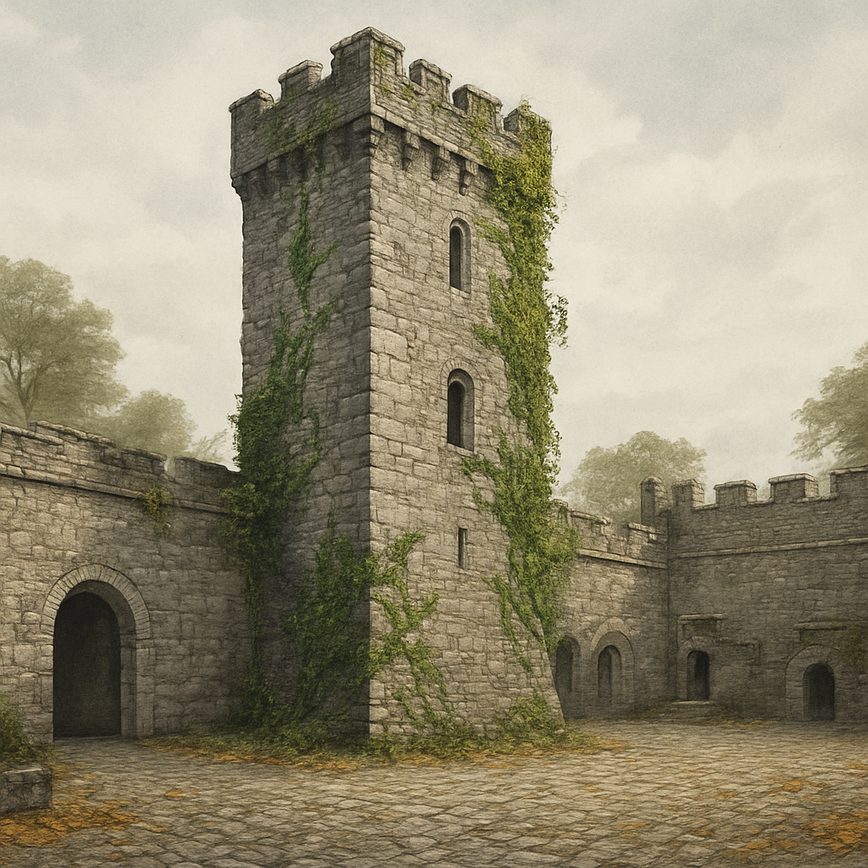
O’Hara’s Tower stands as a notable example of military architecture in Gibraltar, reflecting careful attention to construction details and strategic design principles. The tower was primarily constructed using limestone, a locally sourced material prized for its durability and resistance to the harsh coastal climate. The robust stone walls were designed to withstand both natural wear and military attacks, embodying the fortress-like qualities typical of Gibraltar’s defensive structures.
The design of O’Hara’s Tower followed classic military architectural concepts, with an emphasis on visibility and defense. It featured a solid rectangular base supporting a cylindrical tower, allowing for maximum exposure and a 360-degree view of the surrounding area. This positioning was crucial for monitoring naval movements and potential threats. The tower’s height and shape were also carefully planned to minimize blind spots and optimize line-of-sight for signal flags and artillery communication.
Architectural features such as narrow slit windows served dual purposes: allowing light into the interior while providing protected vantage points for guards and lookouts. The interior layout included multiple levels connected by narrow staircases, ensuring efficient movement while maintaining structural integrity. Overall, the tower design integrates functional military architecture principles with the practical use of local materials, underscoring its role in Gibraltar’s historic defense network.
Role in Gibraltar’s Defense
O’Hara’s Tower played a significant role in Gibraltar’s defense strategy, serving as a crucial element within the wider military history of the territory. Positioned at a vantage point, the watchtower function was primarily focused on observation, allowing for early detection of enemy movements and providing valuable intelligence to British forces. This strategic location enabled defenders to monitor sea routes and land approaches, giving them a tactical advantage during historic conflicts.

I have always been captivated by the unique cultural tapestry of the Rock, particularly how Moorish, Spanish, and British influences shaped its development over centuries. My passion lies in translating these complex historical narratives into engaging educational resources that make Gibraltar’s past accessible to everyone. I spend my free time exploring military fortifications and reading first-hand accounts of life at the Pillar of Hercules.