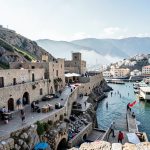
Introduction to Rock of Gibraltar Myths
The Rock of Gibraltar has long been a symbol shrouded in mystery and legend, captivating the imaginations of countless generations. Located at the southern tip of the Iberian Peninsula, this iconic limestone promontory holds a unique place in history and culture, not only as a strategic military stronghold but also as a wellspring of mythical stories Gibraltar has inspired throughout the ages.
Among the most popular Rock of Gibraltar myths are tales of ancient giants, mythical beasts, and legendary battles that have been passed down through centuries. These Gibraltar legends often reflect a blend of historical events and the cultural influences of the various peoples who have inhabited or contested the region, including the Phoenicians, Moors, and British. Each of these cultures has contributed its own rich narrative threads, building a tapestry of folklore that enhances the Rock’s enigmatic allure.
The significance of these mythical stories Gibraltar holds goes beyond simple storytelling. They serve as cultural touchstones that connect the present-day community with its diverse past, imbuing a sense of identity and continuity. Myths about the Rock often encapsulate themes of strength, resilience, and the strategic importance of this natural fortress, symbolizing Gibraltar itself as a steadfast guardian at the gateway between the Mediterranean and the Atlantic.
Furthermore, these Gibraltar legends have played an influential role in the arts, literature, and tourism, drawing visitors fascinated by the mystique of the Rock. Exploring these myths offers a deeper understanding of how history and culture intertwine in this remarkable location, revealing the layers of meaning that make the Rock of Gibraltar much more than just a geographical landmark. This article will delve into some of the most compelling Rock of Gibraltar myths, unraveling their origins, meanings, and enduring legacy.
Historical Background of the Rock of Gibraltar
The history of the Rock of Gibraltar is deeply intertwined with its strategic location at the crossroads of Europe and Africa, making it a place of great military and cultural significance over the centuries. Known for its imposing limestone promontory, the Gibraltar origins date back to antiquity, when it was regarded as one of the Pillars of Hercules by the ancient Greeks and Romans. This historical reputation contributed to the mystique of the Rock, fostering an environment rich with legends and historical myths.
Throughout different eras, the Rock of Gibraltar has witnessed various civilizations including the Moors, Spanish, and British, each adding layers to its complex history. Its geography made it a coveted site for control of naval routes and military fortifications, augmenting its legendary status in military history. The very nature of its role as a fortress and gateway encouraged the proliferation of stories and myths, crafted to highlight its perceived invincibility and almost supernatural resilience.
This blend of natural grandeur and strategic importance cultivated a fertile ground for numerous historical myths, blending fact with folklore. Tales of giants, mythical creatures, and heroic defenses stem from the cultural fusion and strategic prominence that define the history Rock of Gibraltar. These stories have helped preserve the Rock’s enigmatic allure, making it not just a physical landmark but also a symbol of endurance and mystery through the ages.
Why Myths are Important to Gibraltar’s Culture
Myths hold a special place in Gibraltar culture, serving as vital links to the past and reinforcing communal bonds. These legendary stories carry the myths significance of preserving local history and values, passing them down through generations in a way that is memorable and engaging. For the people of Gibraltar, myths act as cultural anchors, fostering a shared identity rooted in the unique characteristics of their homeland.
Beyond their historical and social importance, these myths also play a key role in local traditions. Celebrations, festivals, and storytelling sessions often feature these tales, ensuring they remain living parts of the community’s everyday life. This interweaving of myth and tradition strengthens the cultural fabric of Gibraltar, making the rock not just a geographical landmark but a symbol of collective identity and pride.
Moreover, myths about Gibraltar contribute significantly to tourism, attracting visitors keen to explore the legendary narratives alongside the physical beauty of the territory. Tour guides and cultural institutions utilize these stories to enrich the visitor experience, offering depth and context that compounds the allure of Gibraltar’s heritage. In this way, myths have become indispensable to the local economy and the promotion of Gibraltar’s distinctiveness on the global stage.
In summary, the myths significance within Gibraltar culture is profound; they are not mere stories but foundational elements that maintain and celebrate the community’s identity, traditions, and tourism appeal. Embracing these myths ensures that Gibraltar’s cultural legacy continues to thrive amidst modern challenges.
Most Famous Myths About the Rock of Gibraltar
The Rock of Gibraltar, steeped in history and mystery, has long been the subject of numerous famous Gibraltar myths. These legendary stories have fascinated locals and visitors alike, weaving a tapestry of cultural heritage and folklore. Among the many tales, three popular myths about the Rock of Gibraltar stand out for their narrative depth and intriguing origins.
The first and most enduring myth is the tale of the Barbary Apes. According to legend, the presence of the Barbary macaques on the Rock is tied to the fate of British control over Gibraltar. It is said that as long as these apes remain on the Rock, Gibraltar will never fall into foreign hands. This belief dates back to the early 18th century during the British capture of the territory. The apes became symbols of protection and good fortune, embodying a connection between nature and the destiny of the region.
The second myth revolves around the Pillars of Hercules. In ancient Greek mythology, the Rock of Gibraltar was identified as one of the two monumental pillars marking the edge of the known world, alongside the mountain now known as Jebel Musa in Morocco. This myth imbues the Rock with a sense of grandeur and mystery, representing the boundary between the Mediterranean Sea and the Atlantic Ocean. The Pillars of Hercules symbolize strength and endurance, reflecting the Rock’s formidable presence through centuries.
The third popular myth is the story of the Moorish Prince who supposedly lived within the caves of the Rock. This legend tells of a hidden treasure guarded by the prince’s spirit, protecting the Rock from invaders. Originating from the time when Moors ruled Gibraltar, this tale mixes history with supernatural elements. It captures the imagination by suggesting that the Rock holds secrets far beyond its physical presence, linking the natural formation to cultural and mystical heritage.
These three famous Gibraltar myths—the Barbary Apes, the Pillars of Hercules, and the Moorish Prince—continue to captivate those interested in the legendary stories of the Rock. Each myth highlights different aspects of Gibraltar’s identity, blending natural wonders, historical events, and folklore into a unique cultural narrative. They remain crucial to understanding how popular myths Rock of Gibraltar has shaped the collective imagination around this iconic landmark.
The Pillars of Hercules Myth
The myth of the Pillars of Hercules is a fascinating story rooted in ancient legends. According to the Hercules myth Gibraltar played a pivotal role as one of the two iconic pillars that marked the edge of the known world in classical mythology. Hercules, the legendary hero famed for his strength and adventures, was said to have created these monumental pillars during one of his twelve labors. After slaying the giant monster Geryon, Hercules was tasked with retrieving the cattle of Geryon. In his quest, he is said to have smashed through a mountain, creating a strait that connected the Atlantic Ocean to the Mediterranean Sea. This act formed the two pillars on either side of the strait: the Rock of Gibraltar to the north and Mount Hacho or Jebel Musa to the south.
These Pillars of Hercules symbolized the limit of human exploration and the boundary between the known and the unknown. Sailors and travelers in ancient times regarded the Rock of Gibraltar not only as a natural wonder but also as a significant emblem steeped in the Hercules myth and ancient legends. It represented a gateway to uncharted waters and reinforced the mystique surrounding the region. The story of the Pillars of Hercules remains an enduring element of Mediterranean mythology, highlighting Gibraltar’s prominent place in the world’s ancient storytelling and cultural heritage.
The Barbary Macaques and Their Mythical Origins
The Barbary macaques of Gibraltar have long been shrouded in myth and legend, captivating both locals and visitors alike. These famous monkeys, the only wild primates found in Europe, are at the heart of many tales explaining their mysterious presence on the Rock. One popular Barbary macaques myth suggests that their existence is intertwined with the fate of Gibraltar itself; as long as the monkeys remain on the Rock, it is believed that Gibraltar will remain under British rule. This superstition has made the macaques symbolic guardians of the territory.
Another part of the Gibraltar monkeys legend traces the macaques’ origin to North Africa, suggesting they were brought across the Mediterranean by the Moors during their occupation of the Iberian Peninsula. However, some versions of the myth hint at a more magical origin, proposing that the macaques have always been inhabitants of the Rock, descendants of creatures that once roamed this land when it was connected to the African continent. This idea adds a mystical layer to their story, enhancing their enigmatic appeal.
While scientific research supports the theory that the Barbary macaques were introduced by humans, the macaques origin stories continue to enrich the cultural heritage of Gibraltar. They embody a blend of history, legend, and myth, making the macaques more than just an animal population—they are living symbols of Gibraltar’s unique identity and its enduring legends.
The Rock as a Symbol of Invincibility
The Rock of Gibraltar has long stood as a potent symbol of strength and indestructibility, with a legacy steeped in the rock invincibility myth that has captivated imaginations for centuries. This imposing limestone promontory, strategically located at the entrance to the Mediterranean, has been perceived not just as a natural fortress but as a near-mythical bastion that no enemy could conquer. The Gibraltar fortress legend tells of countless attempts by various empires and armies to seize the Rock, only to be repelled by its seemingly impenetrable defenses and sheer cliffs.
This unconquerable Rock myth is deeply embedded in local and military folklore, painting Gibraltar as an eternal stronghold that embodies resilience and military might. Historically, its fortifications and the natural geography made it one of the most formidable defensive positions in the world, reinforcing the narrative of invulnerability. Stories circulated through generations depict the Rock as an almost living entity, impervious to siege and assault, which contributed significantly to its symbolic status.
As a result, the Rock of Gibraltar became more than a mere landmass; it emerged as an enduring emblem of power and endurance. This symbolism persists today, where references to the Rock evoke notions of unwavering defense and unyielding strength, upholding the rock invincibility myth and the Gibraltar fortress legend as cultural touchstones that celebrate its historic reputation as the unconquerable Rock.
Debunking Common Misconceptions About Gibraltar Myths
The Rock of Gibraltar, enshrouded in legends and stories, has become a subject of many myths over time. While these tales are fascinating, it is essential to debunk Gibraltar myths and separate fact from fiction to truly appreciate this iconic landmark. Many common misconceptions persist about the Rock, often fueled by popular culture and misinformation.
One widespread myth is that the Rock of Gibraltar is an impenetrable fortress guarded on all sides, making it impossible to invade. While Gibraltar’s strategic location has made it a formidable military base historically, the myth exaggerates its defensive capabilities. In reality, Gibraltar has changed hands through history due to political and military strategies rather than sheer invincibility. Understanding this myth versus fact about Gibraltar helps clarify the true historical context.
Another common misconception involves the famous Barbary macaques, the wild monkeys inhabiting the Rock. Some stories claim they were introduced by the British or are the sole reason Gibraltar remains under British control. The truth is that these primates have lived on the Rock long before British rule began. Furthermore, while the macaques are a well-known symbol of Gibraltar, their presence has no direct political implications.
Additionally, many believe that the Rock of Gibraltar is a single massive rock formation. In fact, it is composed of a series of limestone caves and tunnels, some natural and some man-made, that form a complex and extensive underground network. This misconception often leads to underestimating the geological and historical significance of the site.
These myth versus fact distinctions are critical to confronting the common misconceptions about Gibraltar. By debunking these myths, tourists and historians alike can have a more accurate understanding and appreciation of the Rock’s true history, biodiversity, and cultural significance. The enigma surrounding Gibraltar only grows stronger when myths overshadow reality, so it’s important to rely on verified information when exploring this fascinating landmark.
In summary, while the myths about the Rock of Gibraltar add to its allure, debunking Gibraltar myths uncovers a richer and more nuanced story. From its military history to its unique wildlife, separating fiction from fact enriches the experience of discovering one of the Mediterranean’s most legendary landmarks.
Separating Fact from Fiction in Gibraltar Legends
The rich tapestry of Gibraltar legends often blurs the lines between fact and fiction, leading to widespread misconceptions about the true nature of its history and culture. It is important to discern myth accuracy to appreciate the genuine legacy behind Gibraltar’s captivating stories. Many popular myths, such as the belief that the Rock is impenetrable or that it has mystical powers, often overshadow the factual accounts documented by historians and researchers.
For instance, while Gibraltar is indeed a formidable natural fortress, the myth that it is entirely impregnable discounts the numerous historical sieges and battles that have taken place. The legends of monstrous creatures lurking within the caves are also refuted by scientific exploration, which reveals a thriving ecosystem of ordinary wildlife instead. Delving into these stories with an analytical lens helps separate myth from reality, highlighting how cultural narratives can evolve into exaggerated tales over time.
Understanding the truth behind Gibraltar legends is essential for appreciating their cultural significance without perpetuating inaccuracies. This balanced approach to fact vs fiction allows us to recognize the Rock’s true historical importance while enjoying the colorful folklore that enriches its identity. By examining evidence while respecting oral traditions, the Gibraltar legends truth emerges clearly, offering a richer and more truthful connection to this iconic landmark.
Role of Tourism in Shaping Gibraltar Myths
Tourism has played a significant role in shaping and perpetuating the myths surrounding Gibraltar. These tourism myths Gibraltar are often tailored to attract visitors by emphasizing the region’s mysterious and exotic allure. The commercialization of myths has transformed many local stories into captivating tales that not only entertain but also serve as effective marketing tools. This tourism influence has led to the embellishment or exaggeration of historical events and legends to enhance the visitor experience.
One of the primary ways tourism has affected these myths is by amplifying certain elements that highlight Gibraltar’s uniqueness, such as the iconic Barbary macaques or the supposed strategic importance of the Rock throughout history. Tour guides and souvenir vendors often repeat these stories, sometimes adding sensational details to keep tourists engaged. As a result, myths commercialization sometimes blurs the lines between fact and fiction, but it ultimately benefits the local economy by increasing visitor numbers.
While some purists may criticize this approach, the tourism industry’s influence ensures that Gibraltar’s myths continue to live vividly in public imagination. These stories, whether historically accurate or not, have become an essential part of Gibraltar’s cultural identity and attraction. In essence, tourism’s role in shaping myths is a dynamic process where economic interests and cultural storytelling intertwine to maintain Gibraltar’s appeal on the global stage.

I have always been captivated by the unique cultural tapestry of the Rock, particularly how Moorish, Spanish, and British influences shaped its development over centuries. My passion lies in translating these complex historical narratives into engaging educational resources that make Gibraltar’s past accessible to everyone. I spend my free time exploring military fortifications and reading first-hand accounts of life at the Pillar of Hercules.