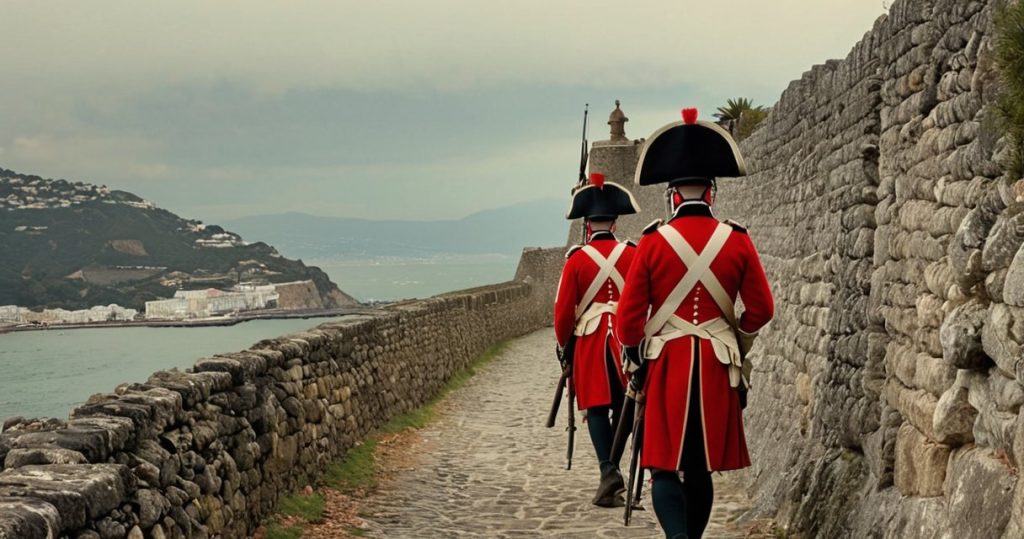
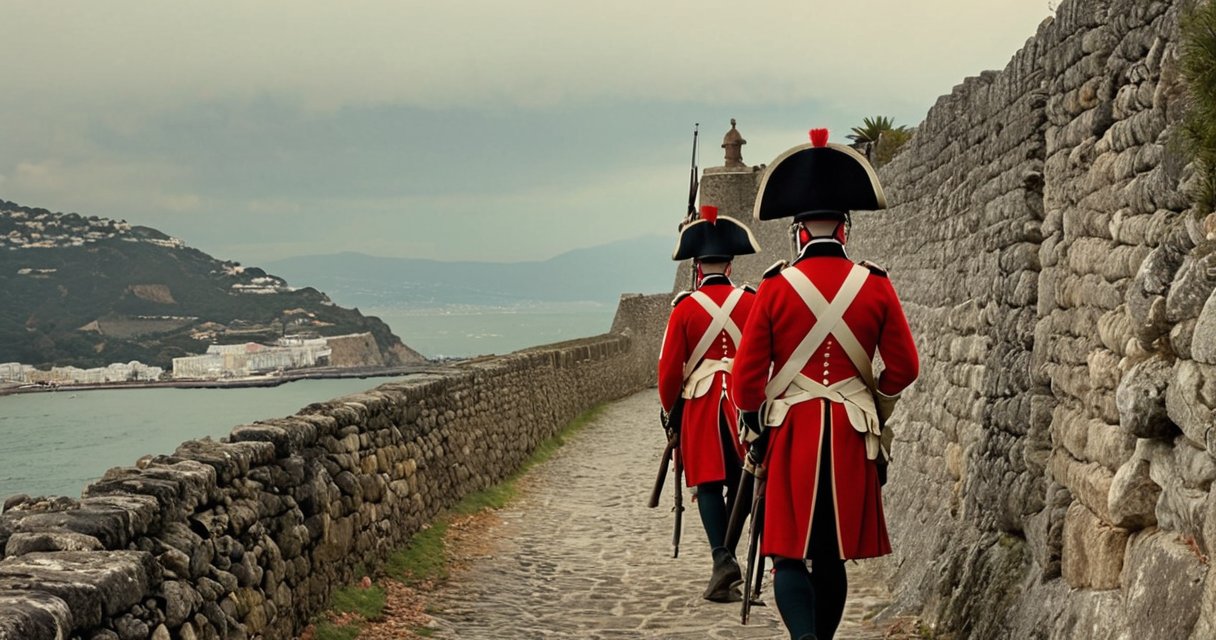
Introduction to the Great Siege of Gibraltar
The Great Siege of Gibraltar is a compelling subject that captivates historians and enthusiasts alike when examining the history timeline of 18th-century conflicts. Spanning the years 1779 to 1783, the 1779-1783 siege was one of the longest and most grueling military engagements of its time. This event occurred amid the turmoil of the American Revolutionary War, adding layers of complexity to the international alliances and strategies at play.
The primary belligerents in the Great Siege of Gibraltar were the British defenders, who had held the territory since 1713, against the Spanish and French forces intent on its recapture. Spain, allied with France, launched the siege to exploit Britain’s divided attentions during the American Revolutionary War. The combined forces numbered in the tens of thousands, employing advanced siege techniques and naval blockades to starve out the garrison.
Positioned at the southern tip of the Iberian Peninsula, Gibraltar’s strategic value as a gateway to the Mediterranean made it indispensable. Throughout the 1779-1783 siege, the British troops demonstrated extraordinary fortitude, repelling multiple assaults and enduring severe shortages. Their success in holding the Rock not only boosted morale back home but also frustrated the ambitions of their adversaries.
In the context of the American Revolutionary War, the Great Siege of Gibraltar served as a secondary but vital theater that influenced resource allocation and diplomatic maneuvers. The prolonged defense forced Spain and France to commit substantial resources away from supporting the American colonies directly. This diversion arguably contributed to the eventual British recognition of American independence while retaining Gibraltar in the peace settlements.
Delving into this history timeline provides insights into the technological advancements in artillery and fortifications that emerged from the conflict. The Great Siege of Gibraltar remains a testament to human resilience under extreme conditions, engaging readers with tales of heroism and tactical brilliance that resonate through the ages. The stories of innovation, such as the development of new gun emplacements and relief convoys breaking the blockade, further enrich our understanding of this historic endeavor.
Causes and Background of the Siege
The causes of Gibraltar siege originated in the deep-rooted Spanish British conflict that dated back to the early eighteenth century. Britain seized Gibraltar in 1704 during the War of the Spanish Succession, and the Treaty of Utrecht formally ceded the territory in 1713. Spain, however, refused to accept the permanent loss of this strategic outpost, fueling decades of diplomatic friction and occasional military skirmishes.
Gibraltar strategic importance stemmed from its location at the narrow entrance to the Mediterranean, where it controlled vital sea lanes connecting Europe, Africa, and the Atlantic. This position gave Britain a powerful naval advantage, enabling surveillance of Spanish and French fleets while protecting trade routes to India and the Americas. For Spain, recovering the Rock represented both national pride and the restoration of territorial integrity.
By the 1770s, broader geopolitical tensions converged around these longstanding disputes. The American Revolutionary War created an opportunity for Spain and France to challenge British power simultaneously on multiple fronts. Spain joined the conflict in 1779 through the Treaty of Aranjuez, aligning closely with France to launch coordinated offensives against British holdings. This alliance supplied Spain with naval support and financial resources essential for sustaining a prolonged blockade.
Territorial ambitions extended beyond Gibraltar to include Minorca and Florida, yet the Rock remained the symbolic and practical centerpiece. French and Spanish planners calculated that isolating the garrison would force Britain to divert resources from the American theater. Economic pressures, colonial rivalries, and shifting European power balances further intensified the Spanish British conflict, setting the stage for one of history’s longest sieges.
These interlocking factors—historical grievances, strategic calculations, and opportunistic alliances—directly precipitated the 1779 blockade, transforming local disputes into a major European confrontation.
Early Phase of the Siege 1779-1780
The Great Siege of Gibraltar began in June 1779 when Spain declared war on Britain and imposed a strict blockade on the peninsula. Early siege events unfolded rapidly as Spanish troops under Lieutenant General Alvarez de Sotomayor established positions along the isthmus, cutting off land access and initiating the prolonged investment of the fortress.
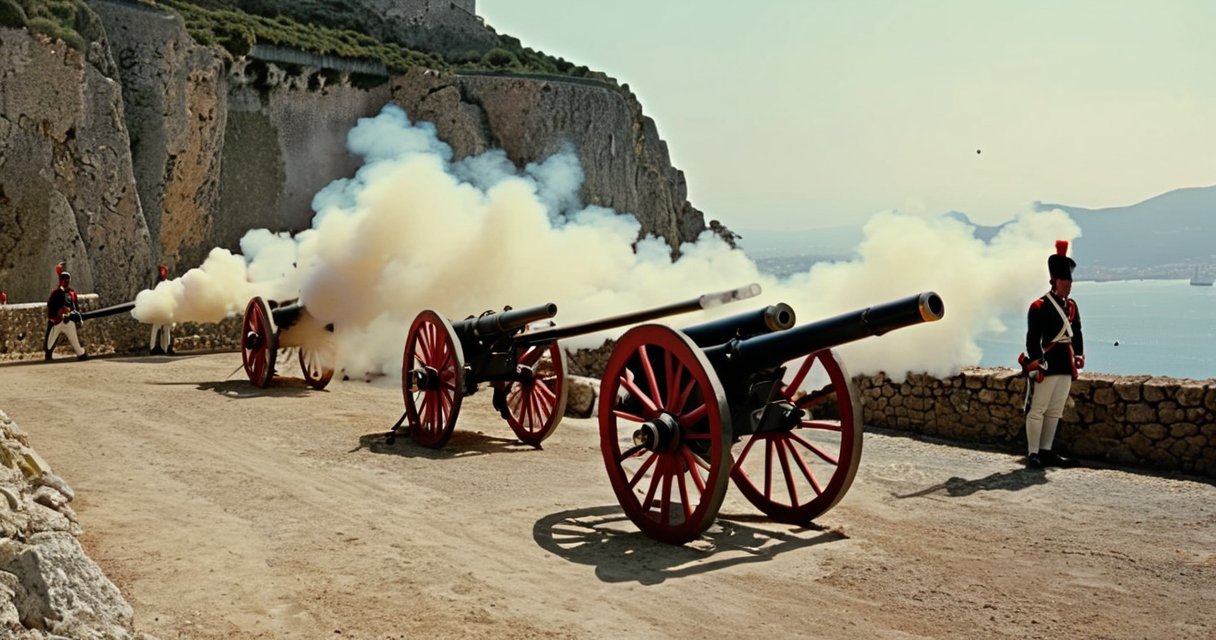
Initial bombardments Gibraltar commenced in September 1779 with Spanish artillery targeting British outposts and harbor installations. These opening salvos tested the strength of the Rock’s fortifications while British gunners responded selectively to conserve ammunition. The exchanges marked the shift from diplomatic tensions to active hostilities in the opening years of the blockade.
British defensive preparations under Governor George Augustus Eliott proved essential during this period. Work parties strengthened existing walls, constructed new batteries, and stockpiled supplies in anticipation of a lengthy siege. Tunnels were begun to provide protected gun positions, and civilian labor was organized to support military engineering efforts.
Supply challenges quickly emerged as the Spanish blockade tightened. Merchant vessels attempting to reach Gibraltar faced interception, forcing the garrison to rely on limited stockpiles and occasional daring runs by small craft. Rations were reduced and foraging parties scoured the peninsula for fresh provisions while hoping for relief from the Royal Navy.
Throughout 1780, early siege events continued with sporadic artillery duels and minor skirmishes along the lines. British defensive preparations expanded to include improved redoubts and the deployment of floating batteries in the bay. Despite mounting pressure from supply shortages, the garrison maintained high morale and readiness, setting the stage for the more intense phases of the siege that would follow.
Initial Bombardments and Skirmishes
In June 1779, Spanish forces launched the opening 1779 bombardments against Gibraltar, unleashing heavy artillery fire on British positions along the northern front. Early artillery exchanges featured Spanish batteries at the isthmus pounding the Rock with round shot and shells, met by accurate counter-battery fire from British 32-pounders mounted on the heights. These exchanges remained limited in duration but demonstrated the defenders’ readiness to answer every salvo.
Naval skirmishes quickly joined the land actions as Spanish gunboats and frigates attempted to tighten their blockade. British cutters and armed launches sortied from the harbor to disrupt enemy patrols, capturing small craft and exchanging cannon fire at close range. Such clashes kept supply routes contested and forced Spanish vessels to remain cautious.
Throughout these opening months, the garrison carried out vital fortification upgrades. Engineers strengthened existing walls with sandbag revetments, excavated additional gun emplacements, and improved covered ways to protect troops moving under fire. Fresh batteries were sited to cover dead ground, while stores of powder and shot were redistributed to sustain prolonged resistance against Spanish assaults.
These combined measures allowed the British defenders to absorb the initial pressure while steadily improving the Rock’s defenses for the larger contest ahead.
Climactic Battles and Relief Efforts 1781-1782
The years 1781 and 1782 brought the most intense phase of the Great Siege of Gibraltar, with a series of Great Siege battles that tested the endurance of both attackers and defenders. British artillery continued to dominate the Rock while Spanish and French forces escalated their bombardment from land positions across the bay.
On 27 November 1781, General George Eliott ordered the famous sortie of 1781. Roughly 2,300 troops stormed the enemy lines under cover of darkness, spiking guns, destroying batteries, and setting fire to wooden siege works. The rapid operation inflicted heavy damage and forced the besiegers to rebuild much of their forward infrastructure.
At sea, naval relief operations proved decisive in keeping the garrison supplied. In April 1781, Vice Admiral George Darby’s convoy of nearly one hundred vessels slipped past the blockade, delivering food, ammunition, and fresh troops. Additional smaller runs in late 1781 and early 1782 repeated the feat, each time frustrating Spanish attempts to starve the defenders into submission.
These naval relief operations sparked several sharp sea fights as British escorts clashed with Spanish guard ships and privateers. Although not every supply ship reached port, enough provisions arrived to maintain combat effectiveness throughout the prolonged siege.
By mid-1782 the combined Bourbon forces prepared their grand assault, yet the cumulative effect of the sortie of 1781 and repeated naval relief operations had left Gibraltar stronger than ever. The British garrison remained well-armed and well-fed, ready to repel the massive floating batteries and infantry attacks that would arrive later that year.
End of the Siege and Historical Legacy
The siege conclusion 1783 marked the end of a prolonged and arduous defense that began in 1779. The combined forces of Spain and France had laid siege to the British-held Gibraltar, aiming to recapture the strategic peninsula. However, the British garrison held firm, and with the approach of peace, the siege was lifted. This victory not only preserved British possession but also highlighted the effectiveness of the fortifications and the determination of the defenders.
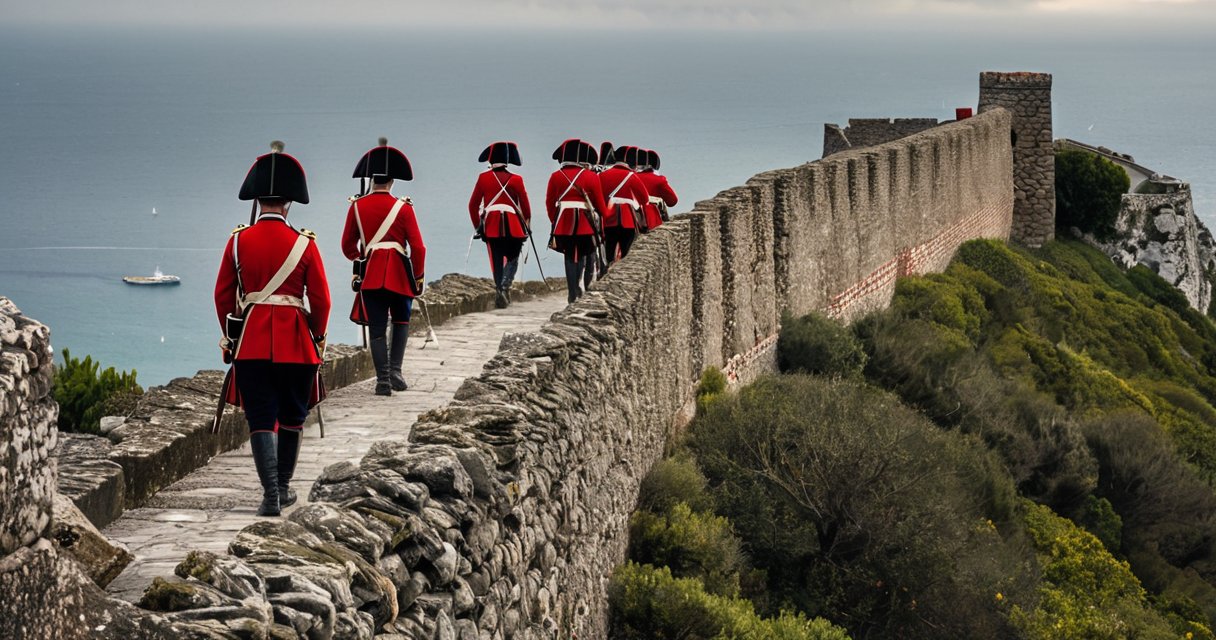
Following the military standoff, peace negotiations took center stage among the warring parties. The Treaty of Versailles, signed in 1783, formally concluded the conflict. While it granted independence to the American colonies, it also addressed European territorial disputes. Importantly, the treaty confirmed Britain’s retention of Gibraltar, thwarting Spanish ambitions and setting the stage for future relations.
The Gibraltar historical impact cannot be overstated. Its position at the entrance to the Mediterranean has made it a linchpin for British naval power, facilitating control over shipping lanes and supporting operations across the region. This has had ripple effects on trade, diplomacy, and warfare, underscoring the territory’s enduring value. The successful defense inspired innovations in siege warfare and fortifications that influenced later military engineering across the British Empire.
In the broader context, the outcome reinforced Britain’s strategic dominance in the Mediterranean, enabling the Royal Navy to project power, protect commerce, and maintain the balance of power in Europe for generations. Gibraltar’s legacy as an impregnable fortress continues to shape discussions of sovereignty and geopolitics today.

I have always been captivated by the unique cultural tapestry of the Rock, particularly how Moorish, Spanish, and British influences shaped its development over centuries. My passion lies in translating these complex historical narratives into engaging educational resources that make Gibraltar’s past accessible to everyone. I spend my free time exploring military fortifications and reading first-hand accounts of life at the Pillar of Hercules.